Fontaine Schwendi in Colmar: History and Legend
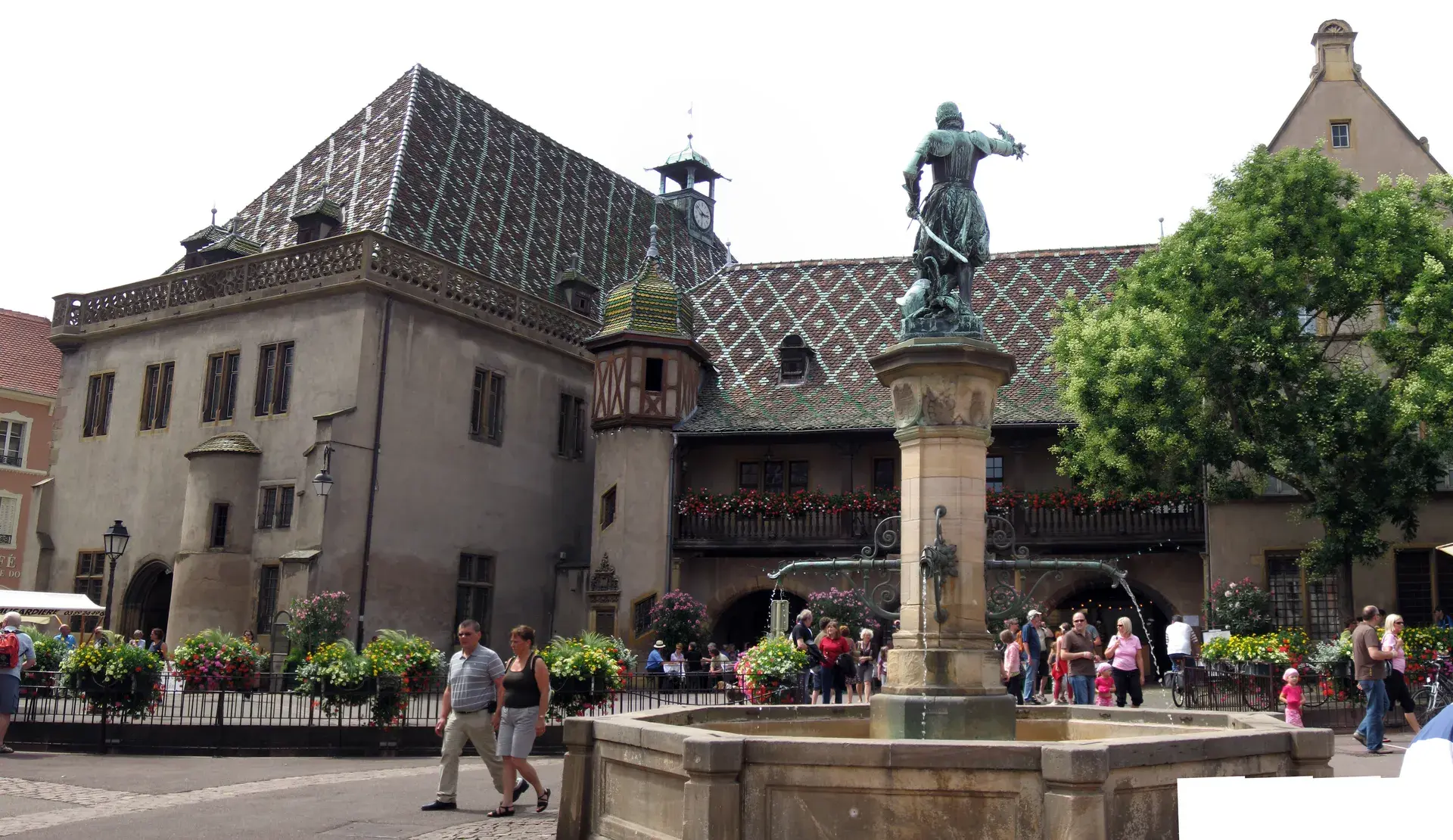
In the heart of Colmar's Old Town, the Fontaine Schwendi stands as a testament to the city's history, artistry, and resilience. Located in the picturesque Place de l'Ancienne Douane, the fountain is crowned with a bronze statue of General Lazare de Schwendi, a prominent local figure. This landmark is not only a popular gathering place but also a piece of living history, embodying stories of war, legends, and artistic genius.
The Vision of Auguste Bartholdi
The fountain's bronze statue is the work of Frédéric Auguste Bartholdi, the renowned Colmar-born sculptor most famous for creating the Statue of Liberty. The original fountain was designed by Bartholdi and built in 1898, with architect Ernest Maechler contributing to the Renaissance-style structure. The Fontaine Schwendi is one of at least seven public monuments by Bartholdi that can be found throughout his hometown, showcasing his deep artistic connection to Colmar.
Honoring Lazare de Schwendi
The statue commemorates Lazare de Schwendi (1522-1583), a war chief who served Emperor Maximilian II between 1564 and 1568. For his military service, Schwendi was rewarded with the lordship of Hohlandsberg and the Castle of Kientzheim. The town council commissioned the fountain to honor this significant historical figure from the region.
A Legend Cast in Bronze
Bartholdi depicted Schwendi holding a vine stock, inspired by a local legend. The story claims that during his campaigns against the Turks in Hungary, Schwendi brought the Tokay grape variety back to Alsace. However, historical records show this to be a myth. The grape, now known as Pinot Gris, was already present in Alsace since the Middle Ages. Furthermore, since 2007, the use of the name 'Tokay' for Alsatian wines has been prohibited, as it is exclusively reserved for wines from Hungary.
Destruction and Reconstruction
The fountain's history includes a period of significant turmoil. The original 1898 structure was demolished in 1940 during World War II. After the war, the city rebuilt the fountain, carefully preserving Bartholdi's original bronze statue. When the monument was reinstalled in 1954, the statue was re-oriented to face the historic Koïfhus, or Old Custom House, a change from its original positioning.
The Fountain in Modern Colmar
Today, the Fontaine Schwendi is a cherished landmark and a popular spot for both locals and tourists. Surrounded by historic buildings that now house shops and restaurants, its location in Place de l'Ancienne Douane makes it a natural stop for photographers and those exploring the city. During holidays like Christmas, the fountain is often adorned with festive decorations in place of flowing water.
FAQ
Who created the Fontaine Schwendi?
The bronze statue was sculpted by Frédéric Auguste Bartholdi, also the creator of the Statue of Liberty. The original 1898 fountain structure was a collaboration between Bartholdi and architect Ernest Maechler.
What is the story behind the vine stock on the statue?
The vine stock represents the legend that General Lazare de Schwendi introduced the Tokay grape to Alsace from Hungary. This is historically inaccurate, as the grape (Pinot Gris) was already known in the region since the Middle Ages.
Was the Fontaine Schwendi damaged during the war?
Yes, the original fountain was demolished in 1940 during World War II. It was rebuilt after the war, and Bartholdi's original bronze statue was preserved and reinstalled.
Where is the Fontaine Schwendi located?
The fountain is situated in the Place de l'Ancienne Douane (Old Custom House Square) in the Old Town of Colmar, France.