Place de l'Ancienne Douane: Colmar's Historic Center
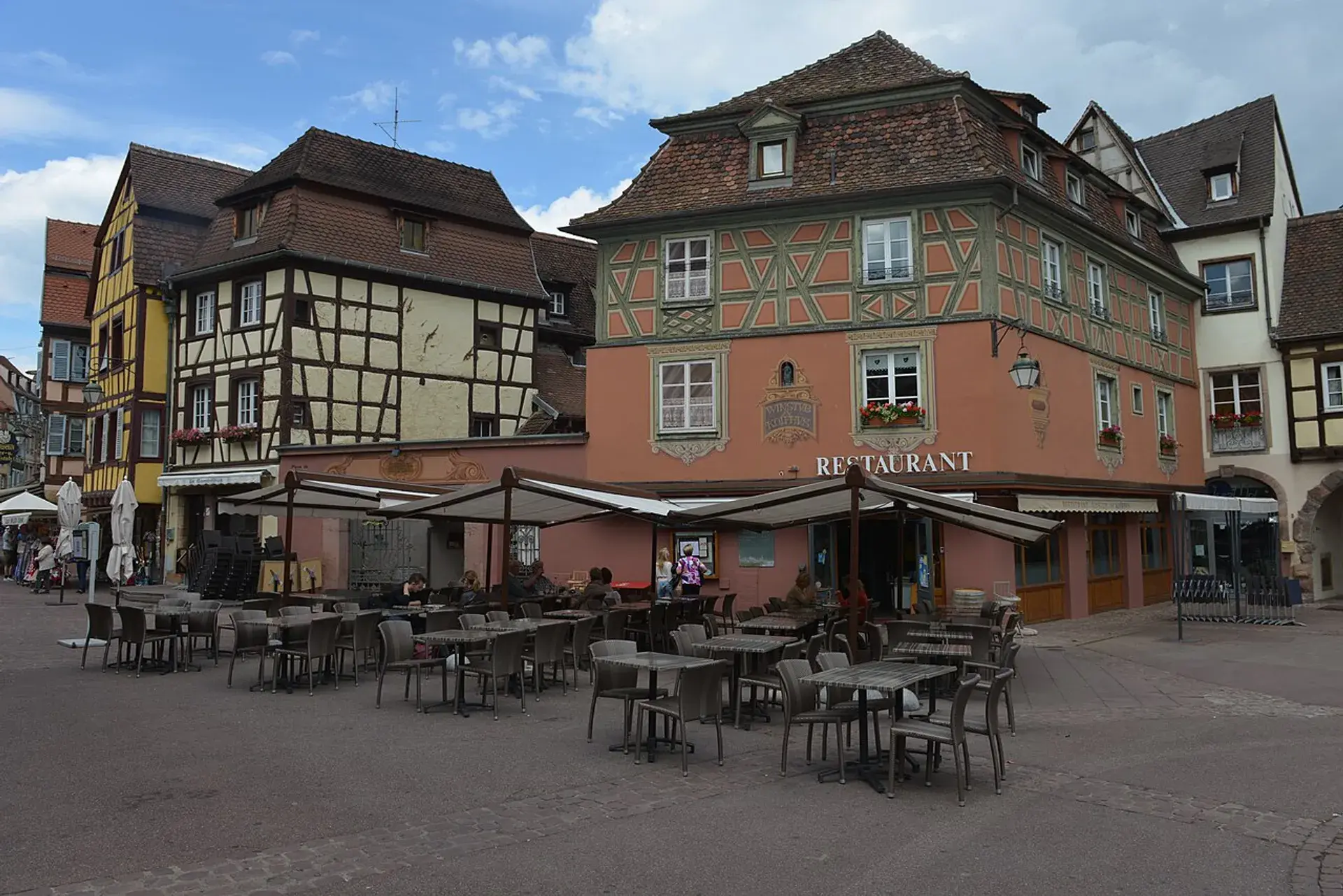
Immerse yourself in the bustling atmosphere of Place de l'Ancienne Douane, a vibrant square framed by charming half-timbered houses and historic architecture. The centerpiece of this square is the Koïfhus, also known as the Old Customs House, which stands as Colmar's oldest public building and a testament to the city's rich past.
A Center of Commerce and Power
Strategically located at the junction of Grand'Rue and Rue des Marchands, the Koïfhus was the economic and administrative heart of medieval Colmar. The primary structure was conceived in 1433 and completed in 1480, with two more buildings added in the 16th century. For centuries, it functioned as a customs house and warehouse, where taxes were levied on goods entering and leaving the city. During this era of prosperity, Colmar even minted its own currency.
The Décapole and Political Significance
The building's importance extended beyond commerce. From 1354 to 1679, the upper floor of the Koïfhus served as the meeting place for the deputies of the Décapole, a powerful federation of ten imperial Alsatian cities. This role cemented the building's status as a key political center in the region for over three centuries.
Architecture and Notable Figures
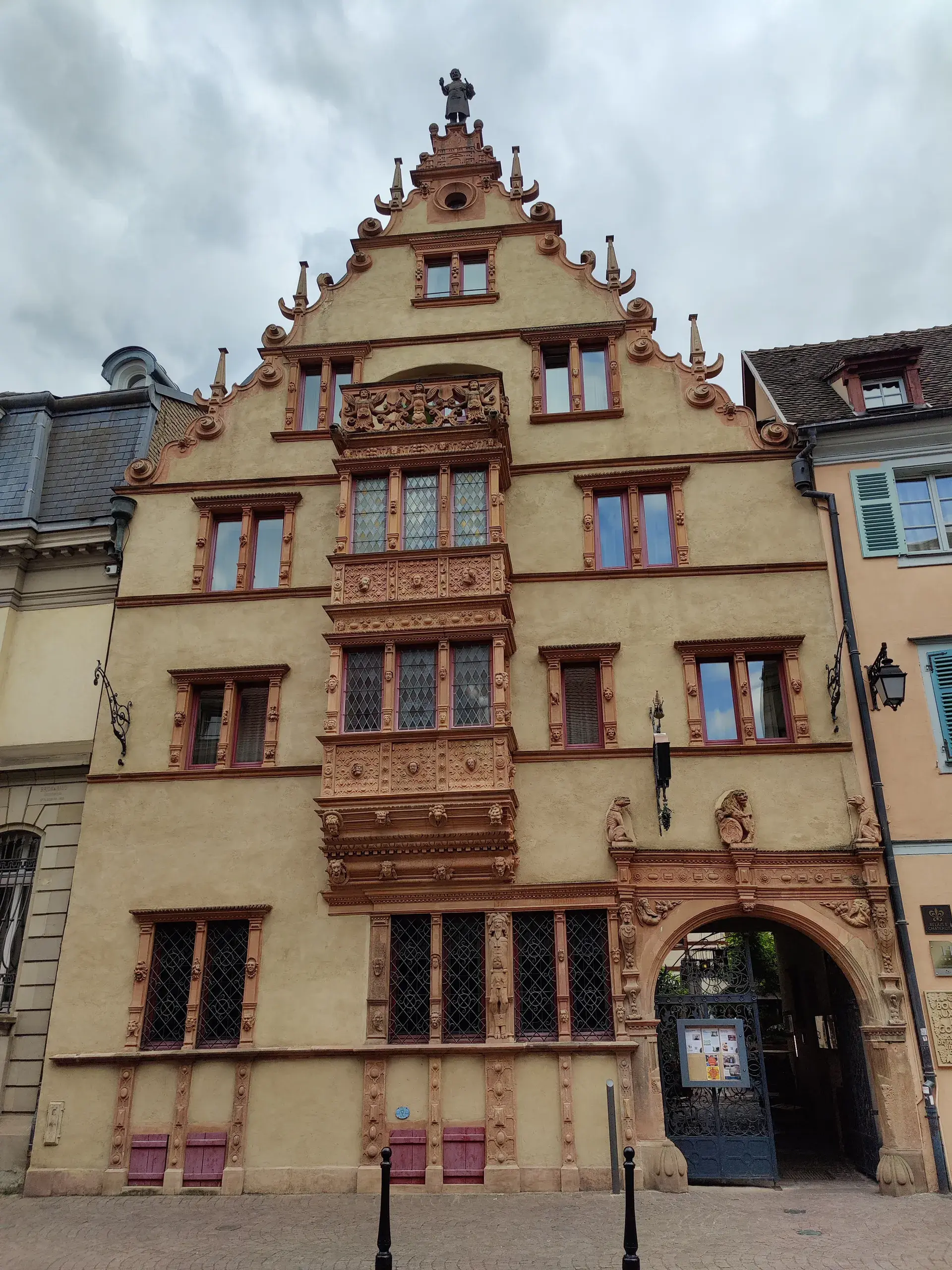
The Koïfhus showcases a blend of medieval and Renaissance architectural styles, distinguished by its ornate stepped gables, intricate carvings, and Renaissance windows. The square also honors several historical figures. A plaque marks the 1771 birthplace of Napoleonic General Jean Rapp in the northern building. In the center of the square, the Schwendi Fountain, sculpted by Auguste Bartholdi in 1898, commemorates imperial general Lazare de Schwendi. An enduring but false legend claims Schwendi introduced the Tokay grape to Alsace.
A Building of Many Lives
Following the French Revolution, the Koïfhus lost its commercial privileges and adapted to various new roles. It was used as a theatre around 1840, housed the first office of a discount bank in 1848, and served as the Chamber of Commerce and Industry from 1870 to 1930. It also functioned as a Catholic boys' school and an Israelite school. In the 19th century, the building fell into such disrepair that demolition was considered, but it was saved by extensive restorations between 1895 and 1898. The Koïfhus was classified as a Monument Historique in 1930.
A surprising aspect of its history is that alongside its prestigious functions, the building also housed the city's main abattoir until 1840. The trade of tallow and candles was also associated with the site.
The Square Today
Today, the Place de l'Ancienne Douane and the Koïfhus remain a central part of Colmar's community life. The building is a dynamic cultural venue, hosting temporary exhibitions, artisan fairs, and concerts, including events for the Festival International de Colmar. The ground floor comes alive during seasonal markets for Christmas and Easter. The surrounding pedestrianized square, filled with restaurants and cafes, is a popular gathering spot for locals and visitors exploring Colmar's historic old town.
FAQ
What was the Koïfhus at Place de l'Ancienne Douane?
The Koïfhus, or Old Customs House, was Colmar's economic and administrative center. Completed in 1480, it served as a customs office, warehouse, and the meeting place for the Décapole, a federation of ten Alsatian cities.
Who is the statue in the Schwendi Fountain?
The statue, sculpted by Auguste Bartholdi in 1898, honors Lazare de Schwendi, an imperial general. A local legend incorrectly claims he introduced the Tokay grape to Alsace from Hungary.
What is the Koïfhus used for today?
Today, the Koïfhus is a cultural venue hosting events like Christmas markets, art and craft exhibitions, and concerts. The surrounding square is a lively, pedestrianized public space with restaurants and cafes.
What is a surprising fact about the Koïfhus?
Despite its role as an elegant center for commerce and politics, the Koïfhus also functioned as the city's main abattoir until 1840. It also nearly faced demolition in the 19th century due to its poor condition before being restored.