Cathédrale de Nantes: Gothic History & Architecture
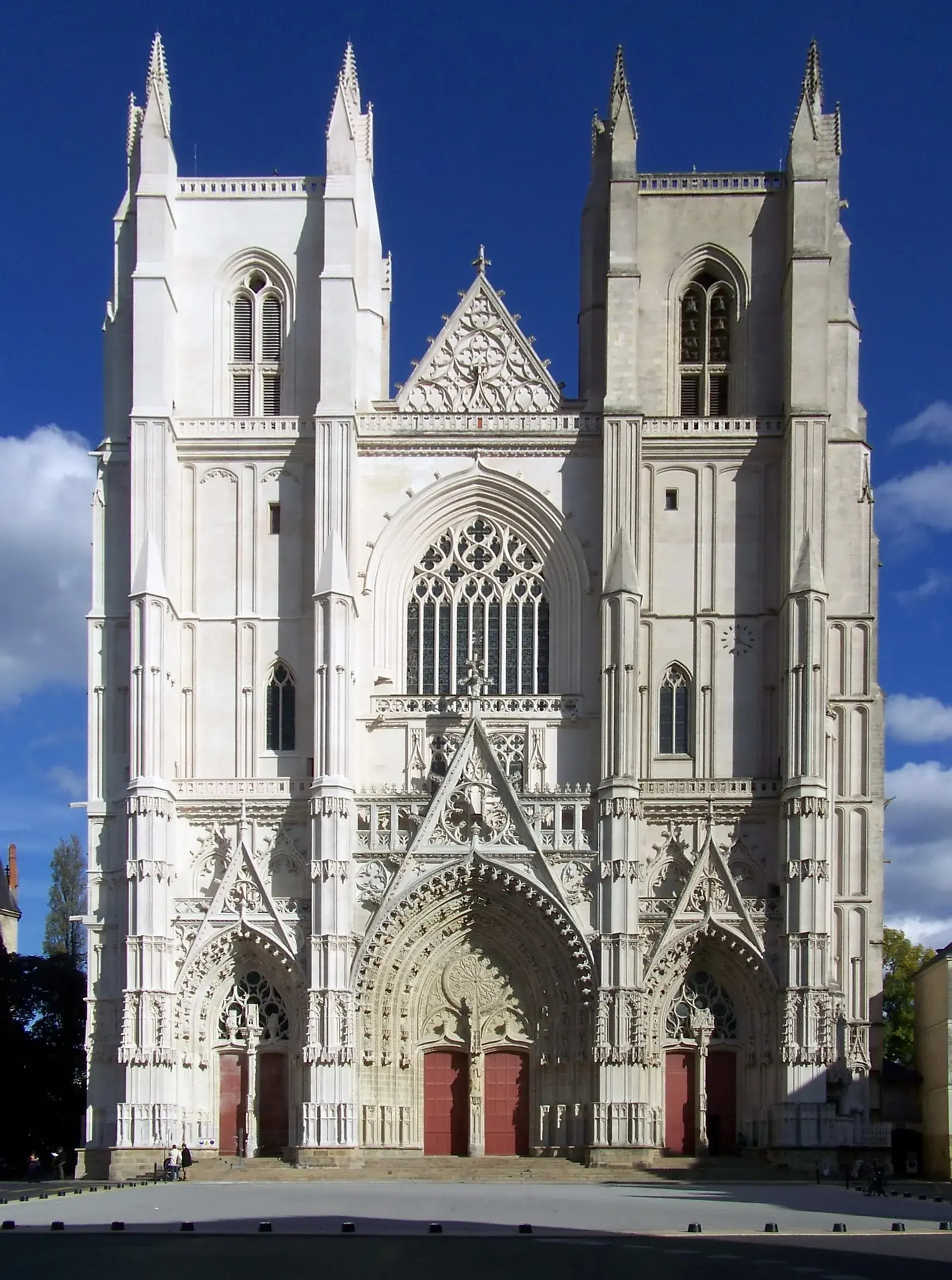
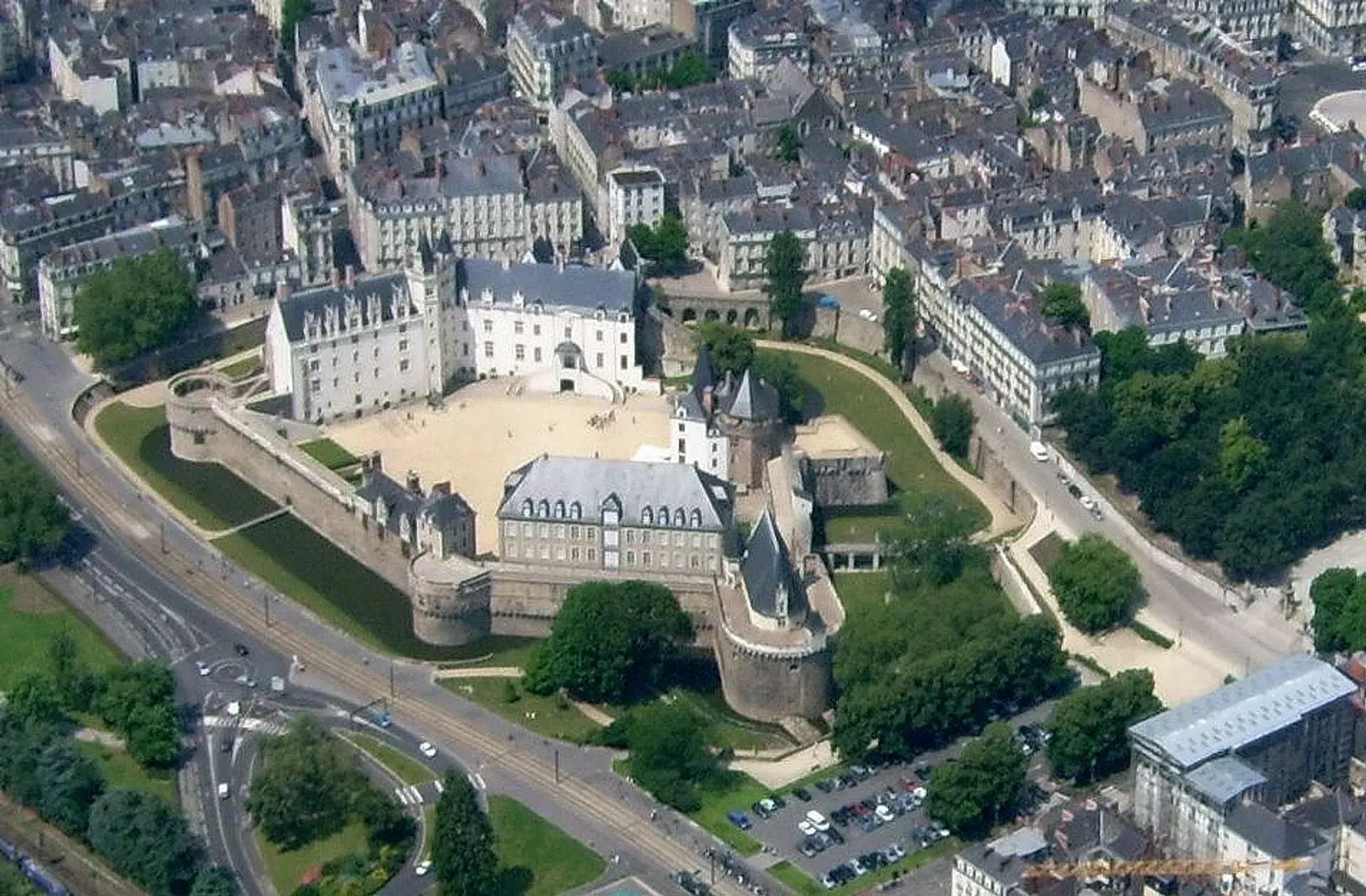
Admire the soaring white limestone facade and Gothic portals of the Cathédrale Saint-Pierre-et-Saint-Paul de Nantes rising steeply above the square. Anchoring the eastern end of the historic center in Nantes, adjacent to the Château des ducs de Bretagne and the medieval Bouffay quarter, this monument links Brittany's independent ducal era with its incorporation into the Kingdom of France.
A 457-Year Construction Journey
Construction began on April 14, 1434, under Duke John V of Brittany and Bishop Jean de Malestroit on the site of a former Romanesque cathedral. Master architects Guillaume de Dammartin and Mathurin Rodier led the early phases. The building project spanned 457 years, with the western facade and nave finished in the 15th century. City architect St. Félix Seheult officially completed the choir, transepts, and upper vaulting in 1891 with neo-Gothic additions. The cathedral's twin western towers rise 63 meters. Inside, the soaring white tufa stone vaulting reaches 37.5 meters, exceeding the height of Notre-Dame de Paris. This architecture reflects unusually bright, cool natural light throughout the interior, creating a sharp contrast with traditional dark granite Breton churches.
Resilience Through Fire and War
The cathedral has endured significant modern trauma, including damage from Allied bombing on June 15, 1944. An accidental fire on January 28, 1972, destroyed the wooden roof frame. More recently, an arson attack on July 18, 2020, destroyed a 15th-century stained-glass window and the 17th-century grand organ, while causing severe lead contamination. Following five years of state-funded decontamination and structural restoration, the active Roman Catholic cathedral and seat of the Bishop of Nantes reopened to the public on September 27, 2025. Comprehensive restoration of the western facade and grand organ tribune is ongoing, with completion targeted for 2028.
Royal Arrests and Archaeological Discoveries
The grounds outside the cathedral have witnessed major historical events. On September 5, 1661, King Louis XIV's superintendent of finances, Nicolas Fouquet, was famously arrested in Place Saint-Pierre by D'Artagnan, captain of the King's Musketeers. Inside, the cathedral is home to the Renaissance tomb of Duke Francis II and Marguerite de Foix. Local architect Mathurin Crucy dismantled and hid its pieces to protect it during the French Revolution. Currently disassembled for cleaning and desalination following the 2020 fire, the tomb is scheduled for reinstallation in late 2026. The 2020 fire also led to archaeological excavations that uncovered early medieval burials and the complete ground plan of the original Romanesque cathedral. Earlier work beneath the nave had already revealed 4th-century octagonal early Christian baptismal pools belonging to the city's earliest religious structures.
FAQ
How long did it take to build the Cathédrale de Nantes?
Construction began in 1434 and spanned 457 years across four major phases, officially concluding in 1891 with 19th-century neo-Gothic completions.
Is the Cathédrale de Nantes open to the public?
Yes, following five years of restoration after a 2020 fire, the cathedral reopened on September 27, 2025, though some restoration work will continue until 2028.
What happened in the square outside the cathedral in 1661?
On September 5, 1661, Nicolas Fouquet, King Louis XIV's superintendent of finances, was arrested in Place Saint-Pierre by D'Artagnan, captain of the King's Musketeers.