Château des ducs de Bretagne: Nantes History & Guide
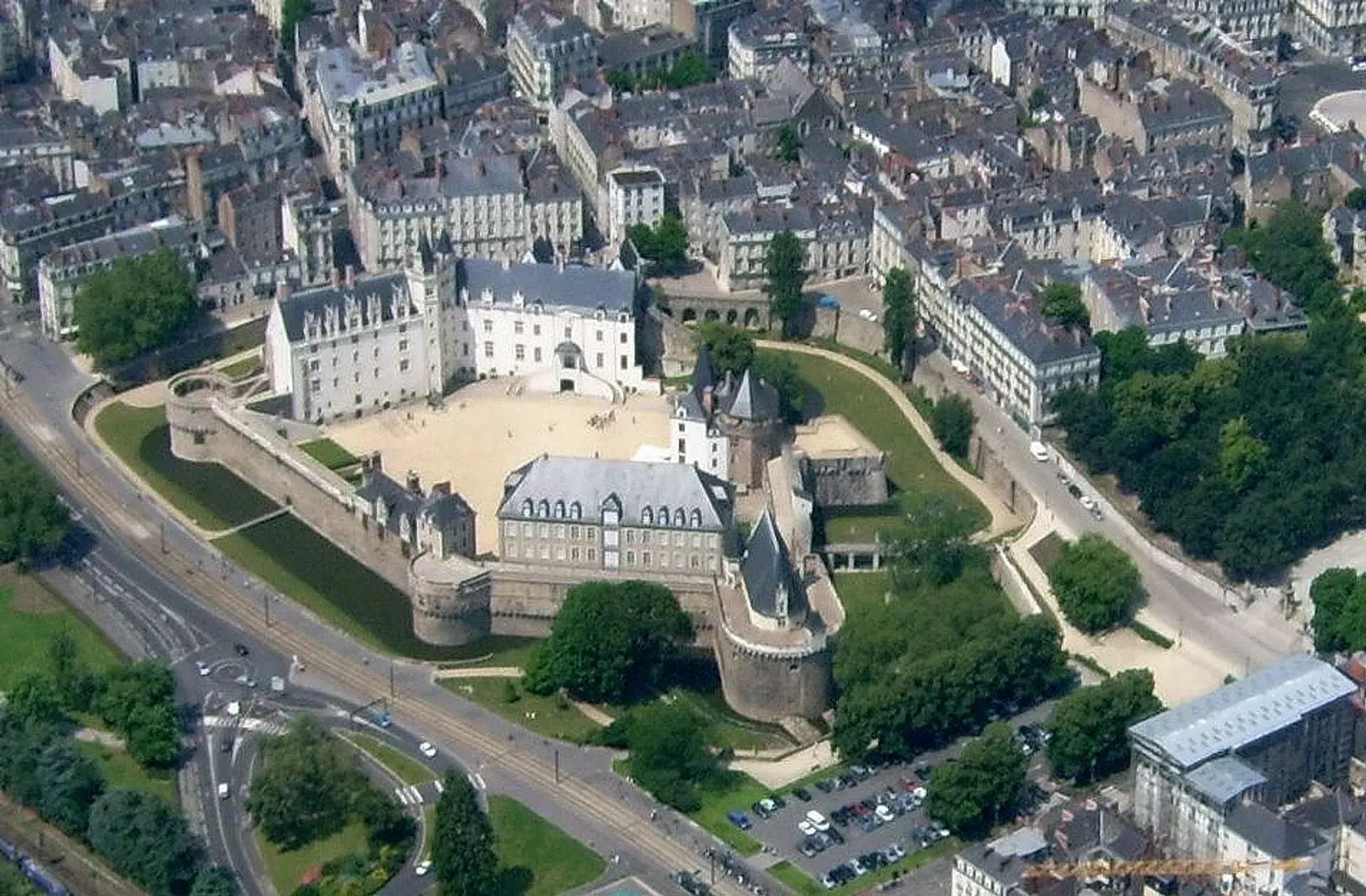
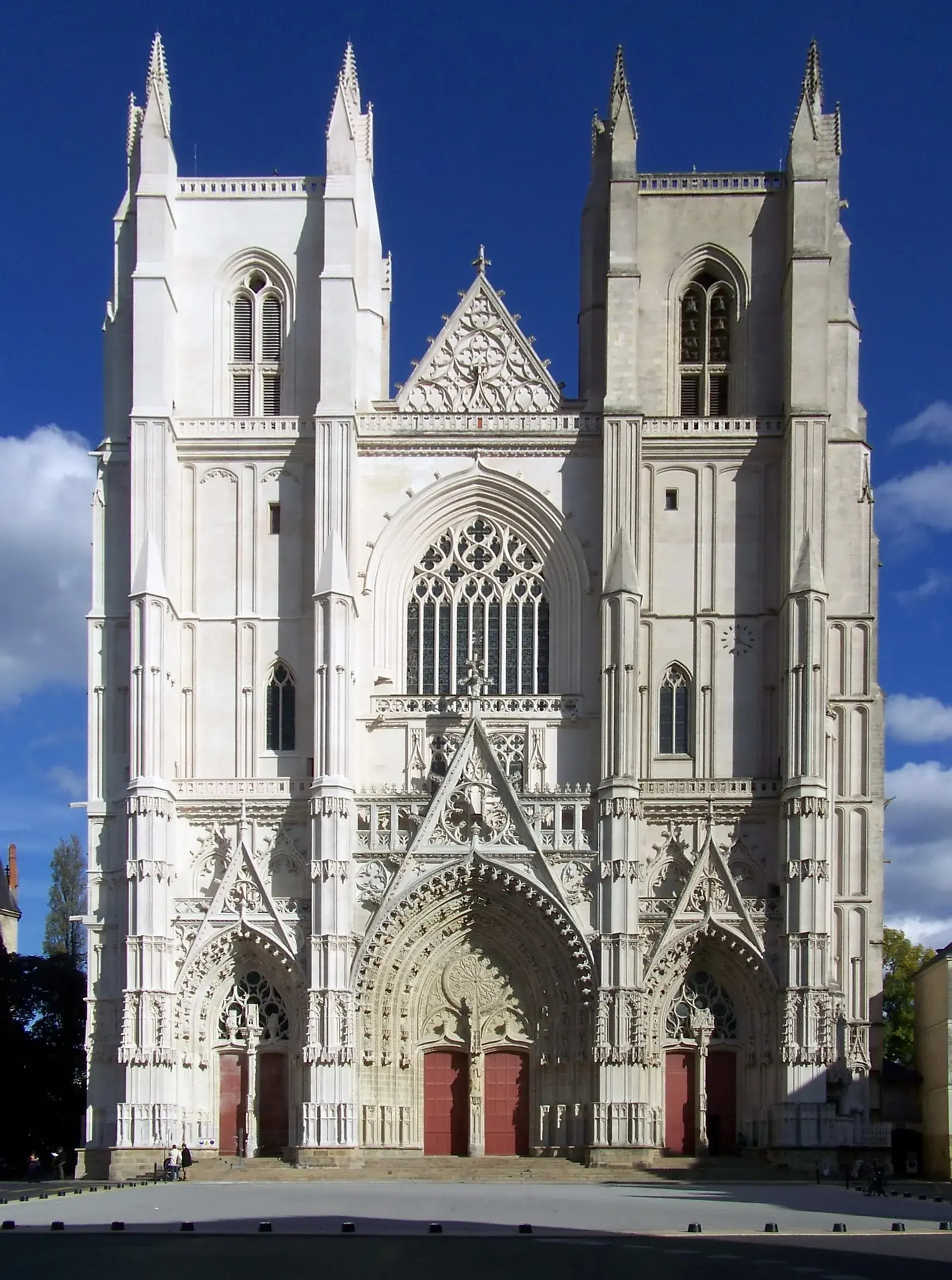
Stand before the imposing fortified walls and massive towers of the Château des ducs de Bretagne to witness the enduring ducal power of Nantes. Anchoring the city center between the Cathedral of St. Peter and St. Paul and the historic Bouffay district, this site originally sat on the edge of the Loire River, which fed its moats before 20th-century urban engineering diverted the waterways.
A Fortress of Dual Identities
The castle presents a striking architectural duality. On the outside, visitors encounter a late medieval defensive fortress complete with 500 meters of exterior curtain walls, seven rugged towers, and a deep surrounding moat. These formidable outer walls are constructed from dark, heavy granite blocks and schist layers.
Inside the courtyard, the aesthetic shifts dramatically. The residential buildings, particularly the Grand Logis, showcase Flamboyant Gothic and early Italian Renaissance designs. The facades here are built from bright white tufa stone (tuffeau), creating a stark sensory contrast with the heavily fortified exterior.
Seat of Dukes and French Kings
Construction of the current structure began around 1466 under Francis II, the last Duke of an independent Brittany, who built it over earlier 13th-century fortifications and Gallo-Roman city walls to defend against the French crown. His daughter, Anne of Brittany, was born at the castle in 1477. As Duchess and twice Queen of France, she added the Renaissance loggias and ornate decorations.
Following the 1532 union of Brittany and France, the château transitioned into a royal fortress. It hosted significant historic moments, most notably in April 1598, when King Henry IV visited to issue the landmark Edict of Nantes, granting religious tolerance to French Protestants.
Over the centuries, the site functioned as a military governor's office, an arsenal, barracks, and a state prison. It endured significant damage, surviving a major fire in 1670 and an accidental gunpowder store explosion in 1800.
The Nantes History Museum
Following a 15-year restoration, the castle reopened in 2007. Today, the Grand Logis houses the Musée d’Histoire de Nantes (Nantes History Museum). Its 32 rooms display over 1,150 historical artifacts detailing the city's complex narrative, addressing topics such as the Atlantic slave trade, industrial growth, and the impacts of World War II. Nearby, the 18th-century Harnachement building, a former military saddlery, serves as a venue for temporary cultural exhibitions.
Unexpected Discoveries
The castle grounds hold several historical curiosities. In the museum collections, visitors can view a gold reliquary that once held the heart of Anne of Brittany, returned to Nantes after her body was buried near Paris in 1514.
In a stark reminder of the 20th century, a concrete bunker constructed by occupying German military forces during World War II is still preserved inside the castle's historic inner courtyard.
Public Spaces and Grounds
Acquired by the City of Nantes in 1915, the castle serves as a focal point for civic life. The central courtyard, the sprawling moat gardens, and the entire 500-meter sentry walkway along the ramparts are maintained as a public park, accessible to all visitors free of charge.
FAQ
Is the Château des ducs de Bretagne free to visit?
The castle courtyard, the 500-meter sentry walkway on the ramparts, and the surrounding moat gardens are open to the public as a free park. However, entering the Musée d'Histoire de Nantes and temporary exhibitions requires a ticket.
Why isn't the castle located in the Brittany region today?
Due to mid-20th-century administrative regional re-alignments in France, specifically in 1956, Nantes and the historic seat of the Dukes of Brittany were placed in the Pays de la Loire administrative region rather than the modern region of Brittany.
What is inside the Musée d'Histoire de Nantes?
The museum features over 1,150 artifacts that cover the complete history of Nantes. Key exhibits explore the city's role in the Atlantic slave trade, its industrial growth, and the events of World War II.