La Tour LU: Historic Biscuit Tower in Nantes
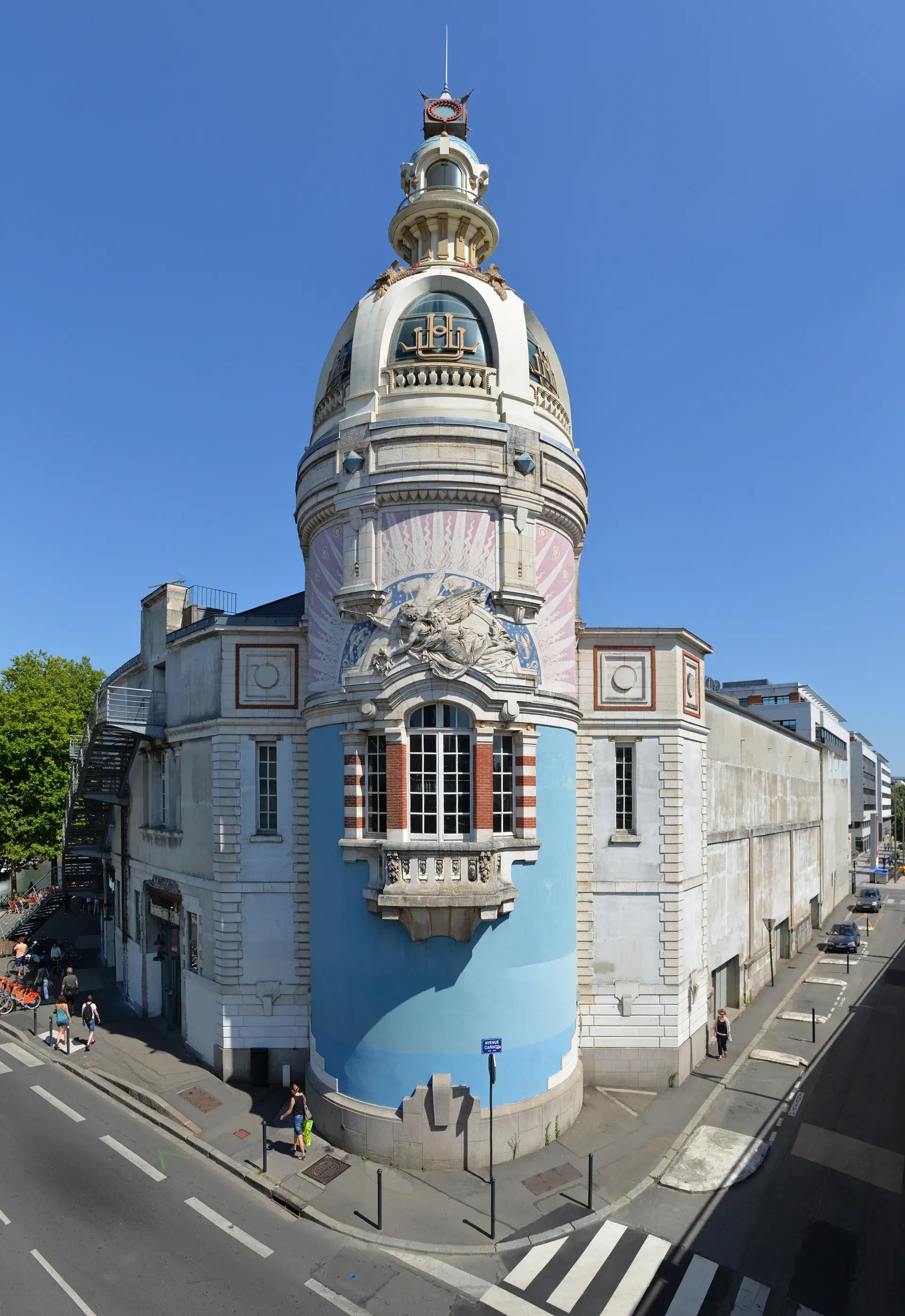
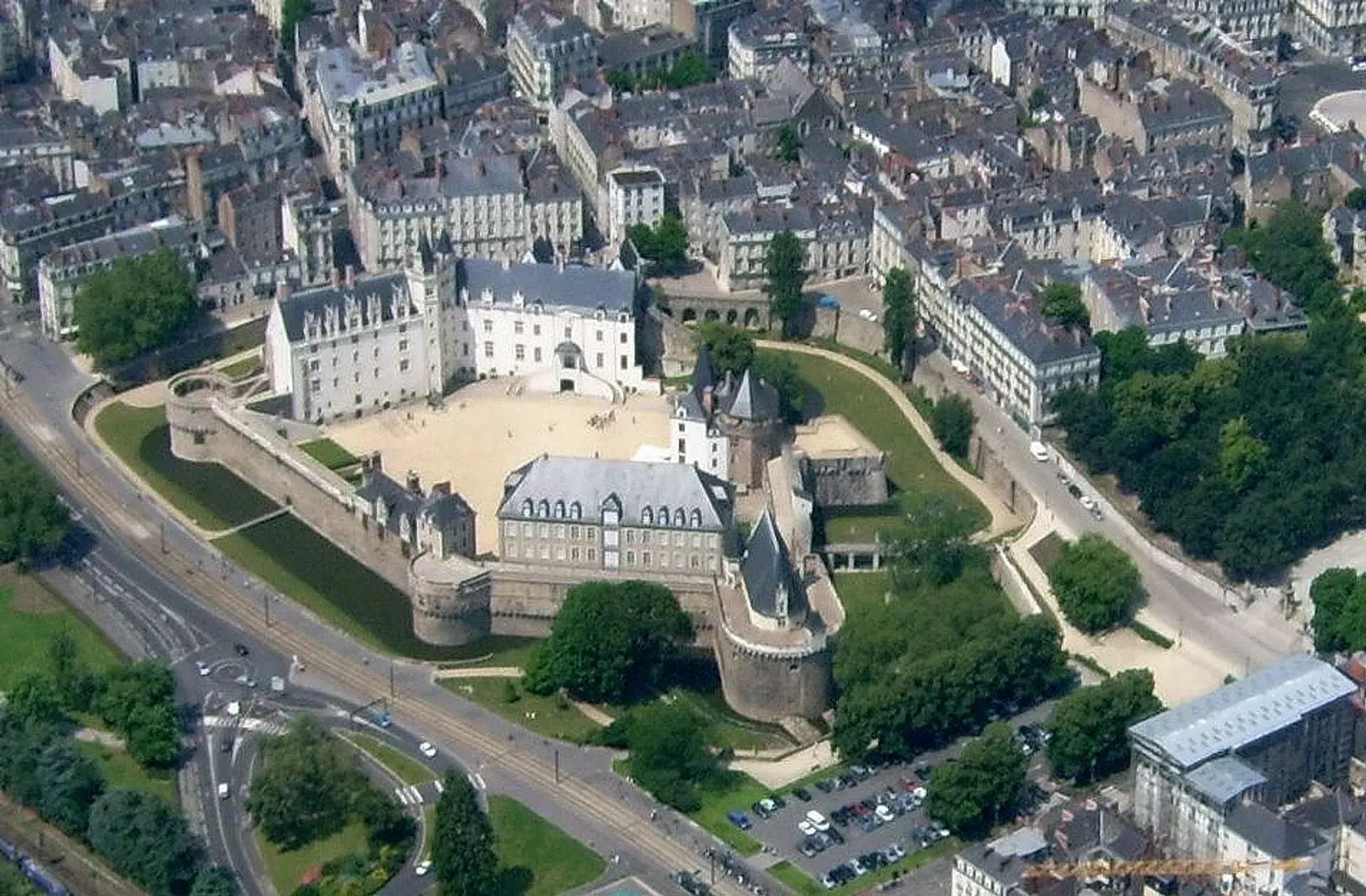
What was once a towering, colorful advertisement for butter biscuits is now the beacon of a cultural renaissance in Nantes. Situated on Quai Ferdinand-Favre along the Canal Saint-Félix, La Tour LU faces the medieval Château des Ducs de Bretagne near the city's main train station. The tower physically and symbolically links the 19th-century industrial baking empire of Nantes to its contemporary identity as a center for cultural repurposing.
The Rise of an Industrial Baking Empire
The Lefèvre-Utile (LU) company was founded as a bakery in 1846 by Jean-Romain Lefèvre and Pauline-Isabelle Utile. By 1885, their son Louis Lefèvre-Utile expanded the business by purchasing land along the quay to construct a mechanized factory complex. Local tradition states that the company's famous 1886 Petit-Beurre cookie design symbolizes a calendar, featuring four corners for the seasons, 52 scalloped edges for the weeks, and 24 central dots for the hours of the day.
As the factory grew, architect Auguste Bluysen was commissioned between 1905 and 1909 to build two symmetrical towers to frame the entrance, serving as massive advertising totems for the brand. For decades, easterly winds carried the sweet scent of baking butter biscuits across central Nantes.
Art Nouveau Architecture
The surviving tower rises approximately 38 meters and showcases a striking Art Nouveau style with Beaux-Arts influences. Bright gold, crimson red, and royal blue embellishments create a sharp visual contrast against the site's raw industrial brickwork and metal structure. The building is crowned by a dome topped with a lantern shaped like a biscuit box. This elaborate peak is adorned with sculpted eagles, six zodiac signs, and a monumental winged figure of Pheme, also known as La Renommée, blowing a trumpet.
Demolition and Restoration
Both original towers suffered damage during World War II bombings. In 1974, during a period of urban redevelopment, the right twin tower was demolished. Biscuit production eventually relocated out of central Nantes in 1986, leaving the factory abandoned. Throughout the late 1980s and 1990s, the space found a second life as an alternative venue for street theater troupes like Royal de Luxe.
Recognizing the historical value of the remaining left tower, architect Jean-Marie Lépinay used family archives and historical photographs to meticulously reconstruct its missing dome and decorative elements in 1997 and 1998.
Le Lieu Unique and The Century's Attic
Following the tower's restoration, architect Patrick Bouchain transformed the factory complex into a national multidisciplinary arts venue, which opened in 2000. Reappropriating the original company's initials, the venue was named "Le Lieu Unique." Today, the interior of La Tour LU functions as a museum featuring a five-level permanent exhibition detailing its history. An observation cupola is accessible via 130 steps or an elevator, offering panoramic views. The adjacent arts complex anchors the site with performance halls, exhibition spaces, a restaurant, a bookstore, and a Turkish bath.
A surprising feature of the modern complex is "The Grenier du Siècle" (The Century's Attic), a time capsule built into a translucent double wall. Sealed at midnight on December 31, 1999, the capsule holds nearly 16,000 personal objects donated by local residents, including the original Petit-Beurre cookie recipe. The sealed wall is scheduled to be opened on January 1, 2100, at 5:00 PM.
FAQ
What does "LU" stand for in La Tour LU?
The initials "LU" originally stood for Lefèvre-Utile, the founders of the 19th-century biscuit company. Today, the modern arts complex located at the site has reappropriated the initials to stand for "Le Lieu Unique."
Can visitors go inside La Tour LU?
Yes, the interior of La Tour LU serves as a museum with a five-level permanent exhibition about the building's history. There is also an observation cupola that can be reached by climbing 130 steps or taking an elevator.
What happened to the second LU tower?
The factory originally featured two symmetrical towers designed by architect Auguste Bluysen. Both sustained damage during World War II, and the right tower was eventually demolished in 1974 during a period of urban redevelopment.
What is inside the time capsule at Le Lieu Unique?
"The Grenier du Siècle" time capsule contains nearly 16,000 personal objects donated by residents of Nantes, including the original recipe for the LU Petit-Beurre cookie. It was sealed in 1999 and is scheduled to be opened on January 1, 2100.