Couvent des Jacobins: Toulouse's Gothic Marvel
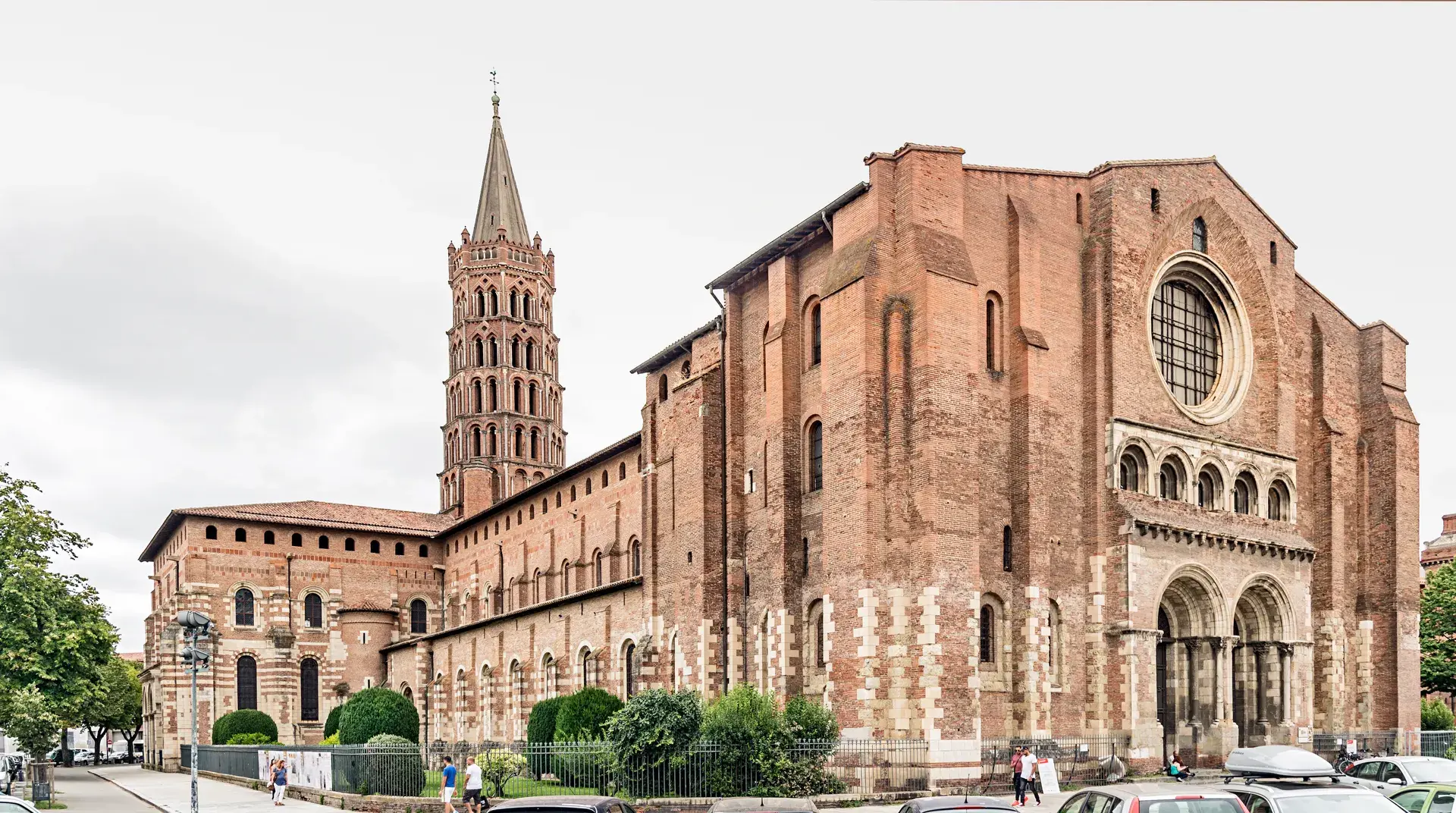
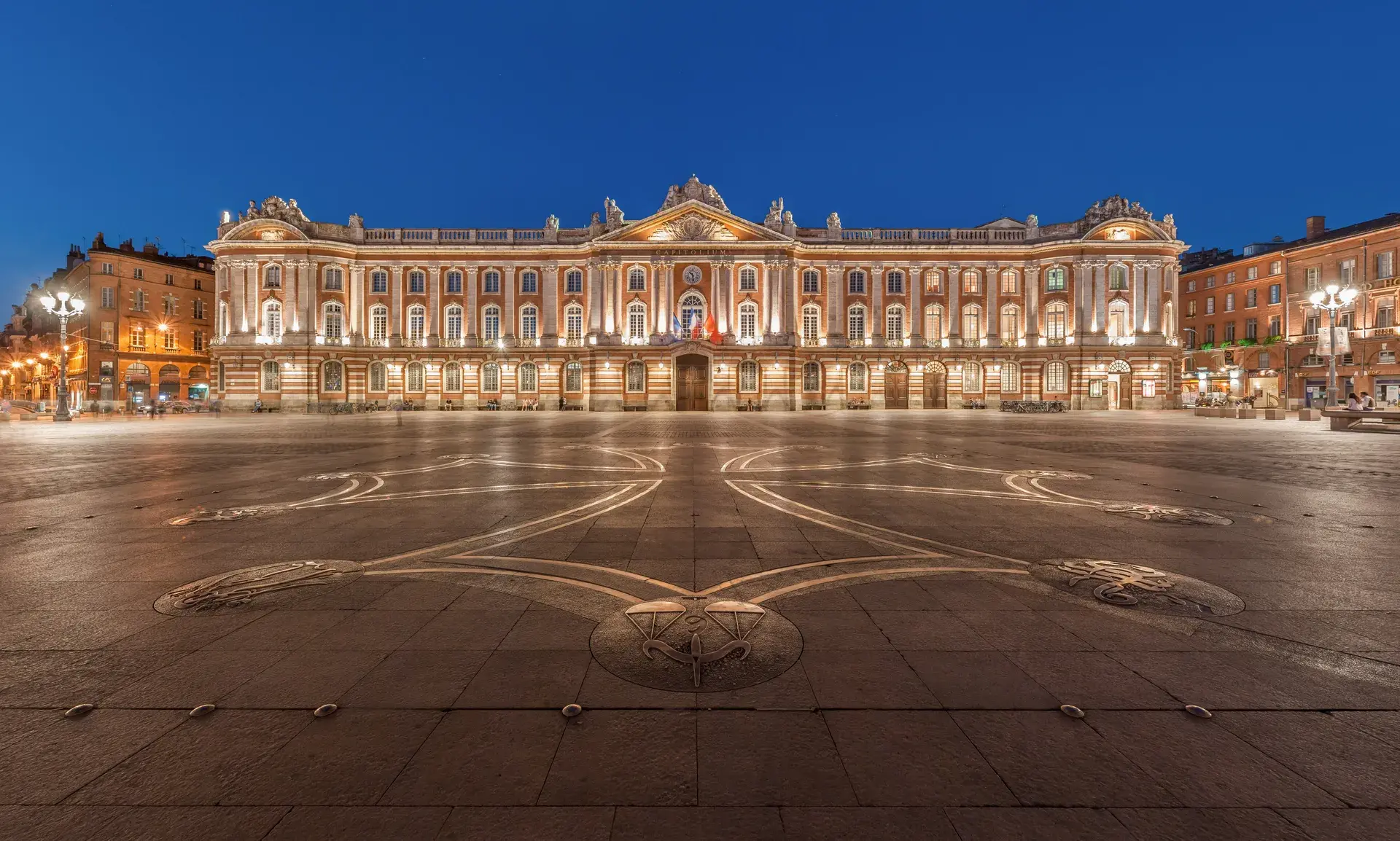
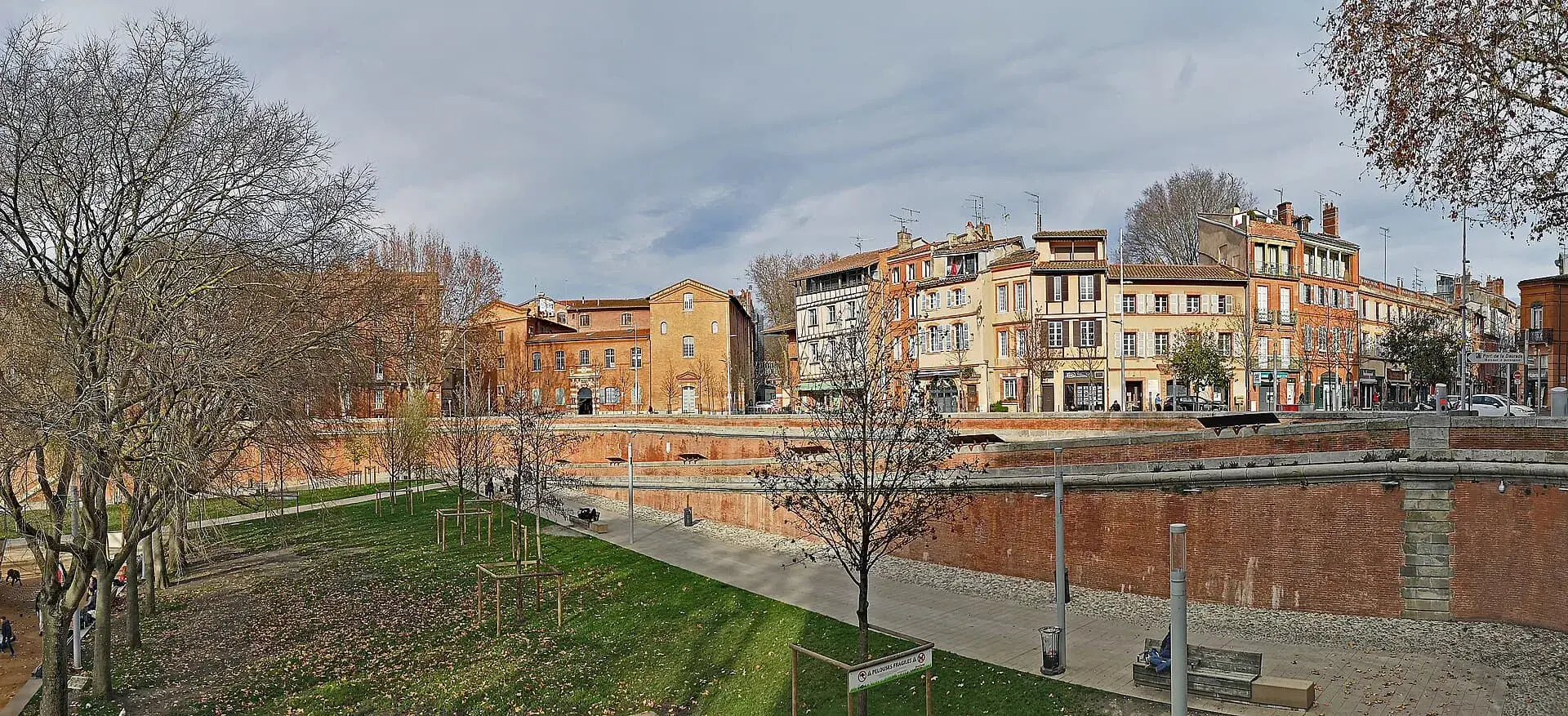
Beneath a towering stone palm tree, the remains of medieval philosophy's greatest giant rest inside a church once repurposed to stable Napoleon's cavalry. Situated between Place du Capitole and the Garonne riverfront, the Couvent des Jacobins serves as a central architectural anchor on the classic route connecting Toulouse's civic center with its Romanesque landmarks.
Southern French Gothic Architecture
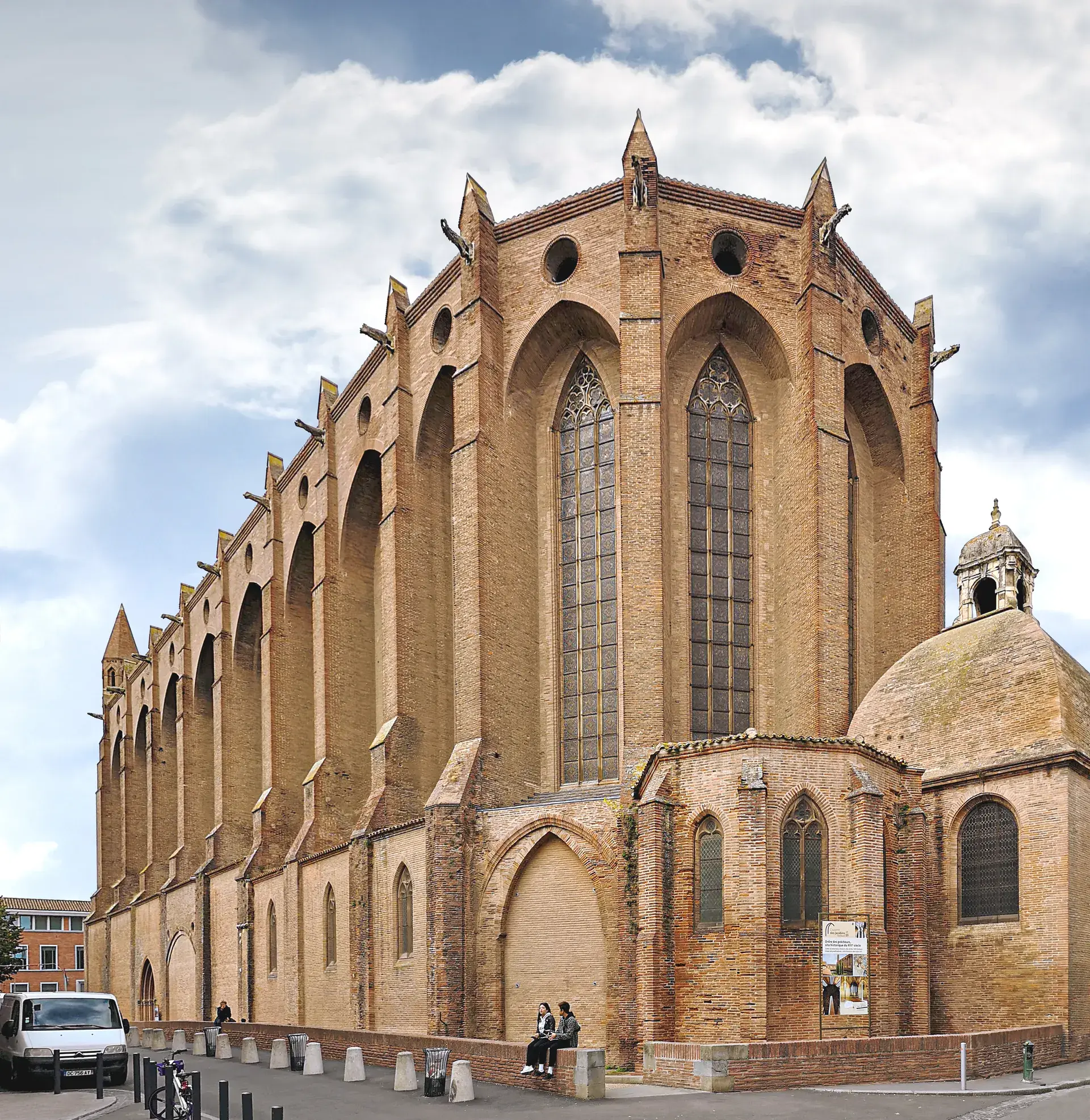
Constructed in the 13th and 14th centuries from local flat red brick, known as brique foraine, the Dominican convent is a masterpiece of Southern French Gothic (Gothique méridional) architecture. Its austere, fortress-like exterior sharply contrasts with a soaring, luminous interior. Although renowned for its brickwork, medieval builders actually considered exposed clay inferior. To compensate, the interior walls were completely covered in plaster and painted with a trompe-l'œil red mortar grid to imitate fine ashlar stonework and marble.
The church features a functional double-nave design, split lengthwise by a central row of slender 22-meter columns. Historically, this allowed friars to hold monastic services in the northern half while the public attended preaching in the south. Colored light from stained-glass windows casts shifting reds, golds, and greens over the pale stone and painted masonry.
The Famous Palm Tree Vault
The most defining architectural feature of the Couvent des Jacobins is "Le Palmier" (The Palm Tree). Built between 1275 and 1292, this 28-meter-high column supports the apse ceiling with 22 fanning stone ribs. Today, floor mirrors are placed flat beneath the apse's palm vault, allowing visitors to study the ceiling's intricate geometry without straining their necks. The expansive complex also includes a seven-story octagonal belfry, a cloister, a chapter house, a refectory, and the Saint-Antonin chapel.
The Tomb of Saint Thomas Aquinas
The convent's origins trace back to the 1215 founding of the Dominican Order in Toulouse by Saint Dominic during the counter-heresy campaigns against the Cathars. In 1369, following a decree by Pope Urban V, the remains of Saint Thomas Aquinas were transferred from Italy to honor the order's birthplace. His major relics rest beneath the high altar. In January 2023, a newly commissioned modern reliquary created by artist Augustin Frison-Roche for the saint's skull was blessed at the church.
From Barracks to Cultural Venue
During the French Revolution, the convent was seized by the state, and Aquinas's relics were moved to the Basilica of Saint-Sernin for safekeeping. Under Napoleon in 1810, the church was converted into a cavalry barracks. Over 5,000 cubic meters of earth were dumped inside to level the floor for horses.
Following extensive 20th-century restorations, the site reclaimed its historic grandeur. Aquinas's relics were returned in 1974 to mark the 700th anniversary of his death. Today, the complex is managed by the City of Toulouse as a municipal historic site and museum. It frequently functions as a cultural venue, hosting temporary exhibitions in the refectory and classical music festivals, including the annual Piano aux Jacobins.
FAQ
Why is it called the Palm Tree vault?
"Le Palmier" (The Palm Tree) is a 28-meter-high central column built between 1275 and 1292. It supports the apse ceiling with 22 fanning stone ribs that visually resemble palm fronds.
Who is buried at the Couvent des Jacobins?
The major relics of Saint Thomas Aquinas are housed beneath the church's high altar. They were transferred to the convent in 1369 by decree of Pope Urban V to honor the birthplace of the Dominican Order.
What happened to the convent during the French Revolution?
The convent was seized by the state during the French Revolution, and Saint Thomas Aquinas's relics were temporarily moved to the Basilica of Saint-Sernin for protection. By 1810, Napoleon had converted the church into a cavalry barracks, dumping over 5,000 cubic meters of earth inside to level the floor for horses.