Place de la Daurade in Toulouse: Guide & History
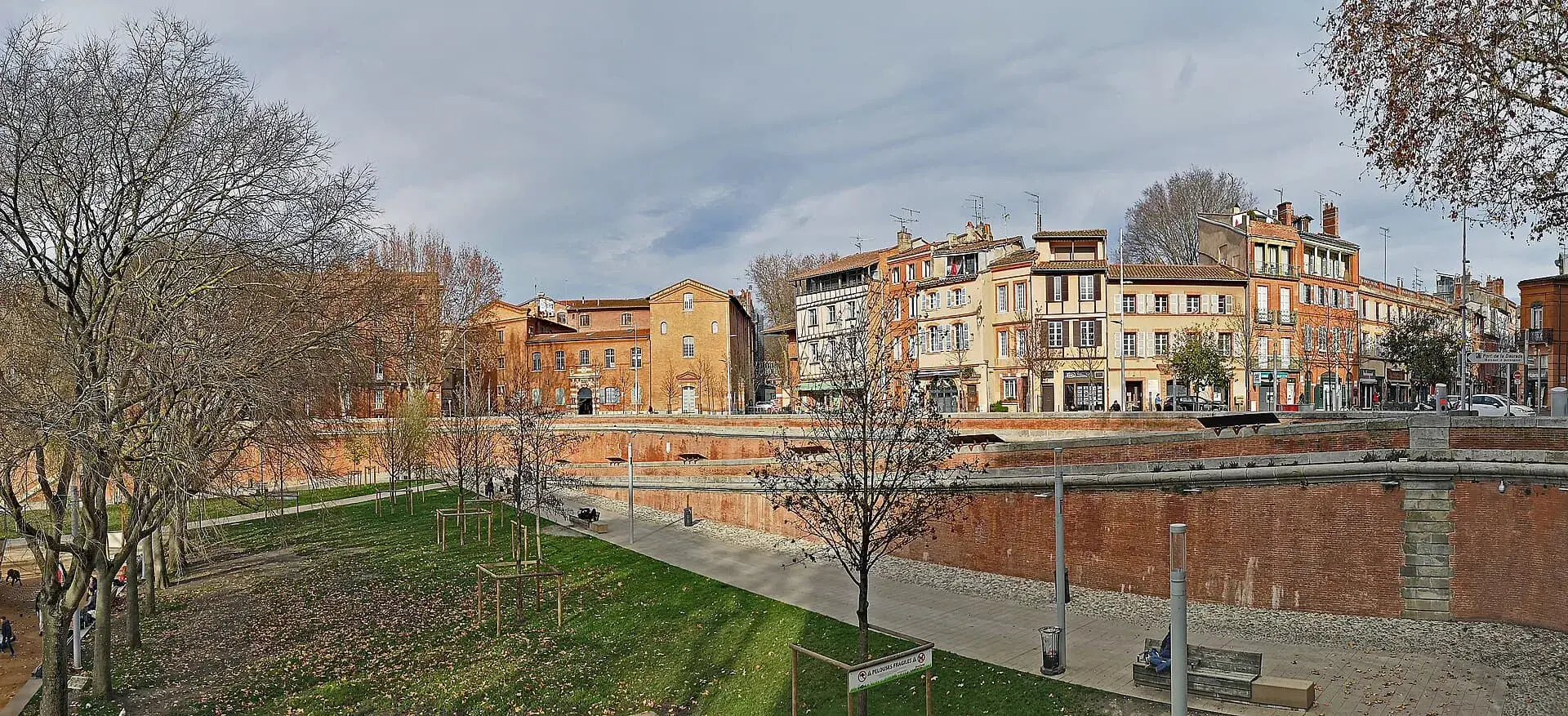
Place de la Daurade forms a crucial link between the historic core of Toulouse and the Garonne riverfront. Situated along the right bank of the river, this bustling square and the adjacent sloping lawn of the Port de la Daurade serve as primary gathering spots for locals, students, and tourists. The area provides expansive panoramic views of the river currents, taking in the stone arches of the Pont Neuf and the green dome of the Chapelle de La Grave across the water.
The Basilica of Notre-Dame de la Daurade
At the heart of the square stands the Basilica of Notre-Dame de la Daurade, an active Roman Catholic minor basilica featuring an 18th-to-19th-century Neoclassical design. The church is defined by a monumental pedimented portico, while its interior features large wall paintings by artist Joseph Roques depicting the life of the Virgin Mary. The basilica takes its name from the Latin word "Deaurata," meaning "covered in gold." This is a direct reference to the lavish 5th-century Christian gold-leaf mosaics that originally adorned the sanctuary walls.
The Black Madonna
In the dimly lit side chapels of the basilica rests the Black Madonna, a dark wooden statue revered as the protector of the city. The figure is also the traditional patroness of expectant mothers, with ribbons and maternal belts regularly blessed at her shrine. Uniquely, the Black Madonna possesses an extensive wardrobe that changes with the Catholic liturgical calendar. Her garments include vivid, heavily embroidered fabrics and custom gowns created by renowned fashion designers such as Christian Lacroix and Jean-Charles de Castelbajac.
Centuries of Transformation
The site has undergone immense structural and cultural changes over the centuries. A sanctuary was first founded here between 410 and 436 AD over the remains of an ancient Roman temple traditionally dedicated to Apollo. By the 9th century, the church became affiliated with a Benedictine monastery. The city's Fine Arts School was eventually established on the grounds of this monastery's former medieval cloister.
The original medieval Marian statue was stolen in the 15th century. Its replacement darkened over time due to candle soot and oxidation, but it was publicly burned in the Place du Capitole by revolutionaries during the French Revolution in 1799. The current Black Madonna is an 1807 recreation. Suffering from neglect and structural degradation, the medieval church itself was demolished in the late 18th century and rebuilt into its present Neoclassical form, officially being designated a basilica by Pope Pius IX in 1876.
Quayside Curiosities
The quayside retaining walls and historic facades glow deep pink and ochre in the late afternoon light, highlighting the warm terracotta brick characteristic of Toulouse. Along the riverfront, the quays offer embarkation points for riverboat cruises and access to riverside cafes. One small brick kiosk on the quayside, which has recently operated as an open-air café and ice cream stand, holds a more somber history. In the 19th century, it was originally built to serve as a river morgue used to hold and identify bodies recovered from the Garonne River.
FAQ
How did Place de la Daurade get its name?
The name originates from the Latin word "Deaurata," meaning "covered in gold." This refers to the intricate 5th-century Christian gold-leaf mosaics that originally decorated the walls of the ancient sanctuary built on the site.
Who designed the clothing for the Black Madonna?
The Black Madonna owns an extensive liturgical wardrobe that includes custom gowns created by renowned fashion designers such as Christian Lacroix and Jean-Charles de Castelbajac.
What was the brick kiosk on the Quai de la Daurade originally used for?
A small brick kiosk located on the quayside originally served as a 19th-century river morgue used for identifying bodies recovered from the Garonne River.
Gallery