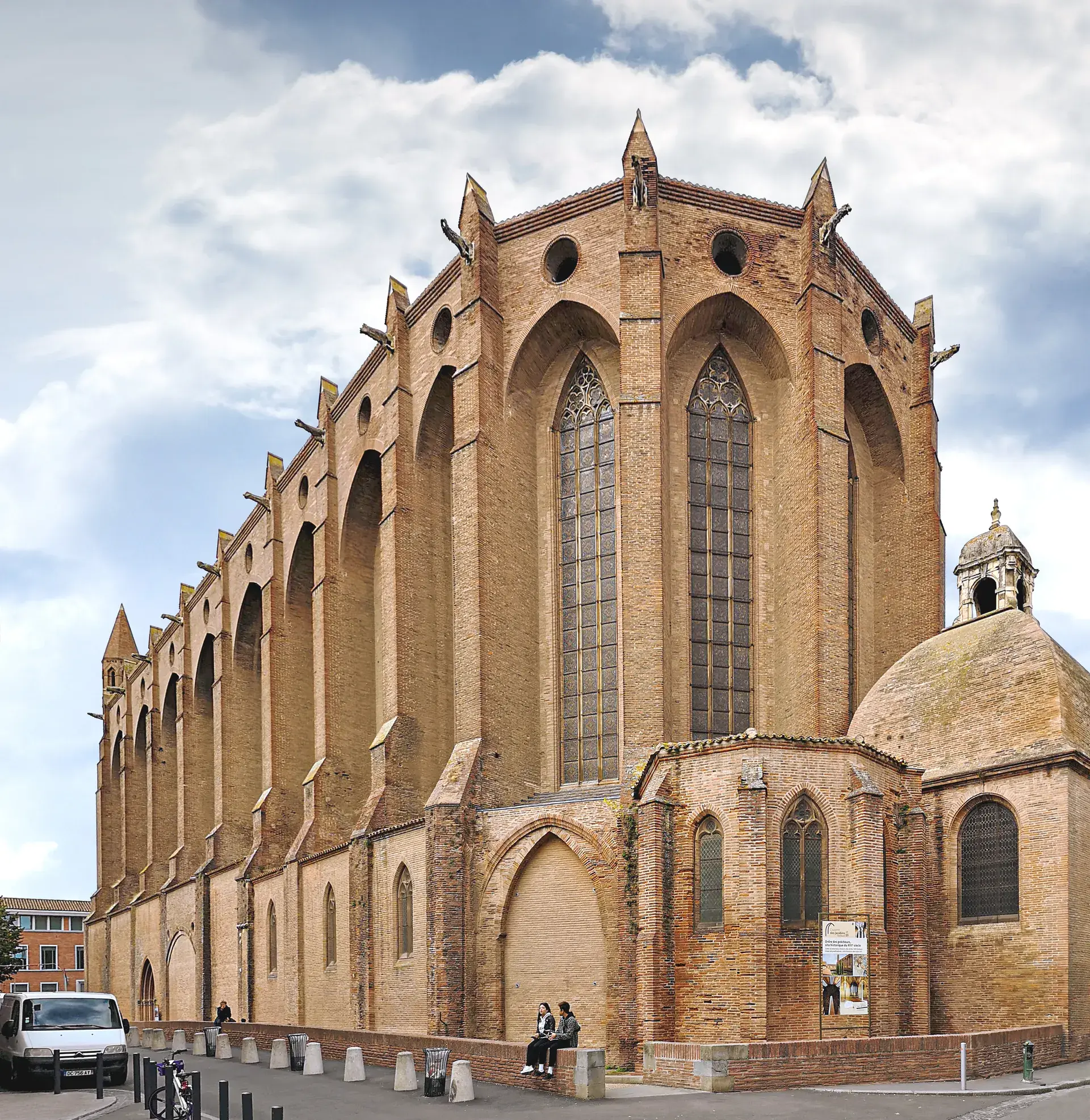
Église Notre-Dame de la Dalbade: Toulouse's White Church
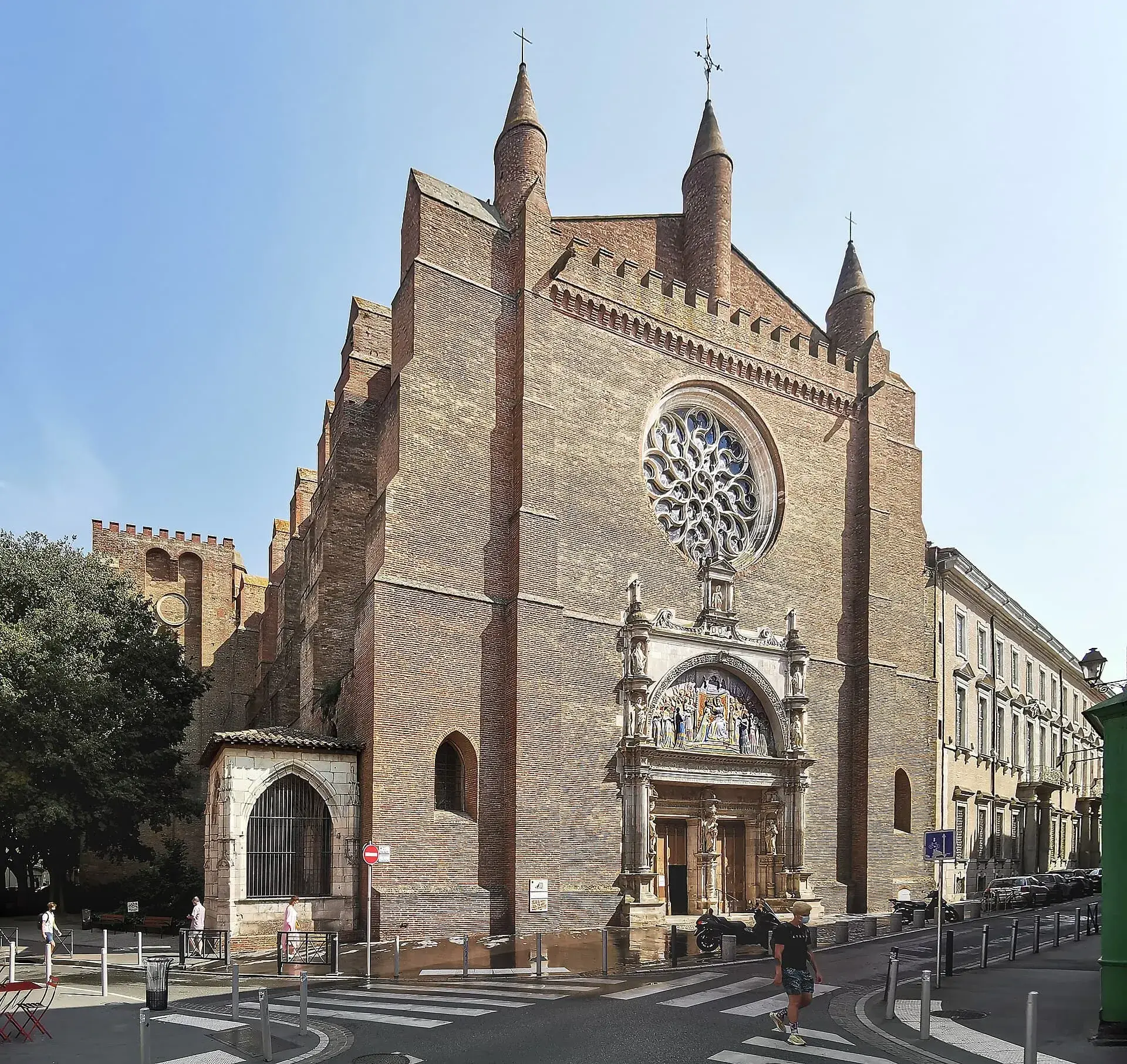
Toulouse's 'White Church' is famously built of red brick, and it once boasted a spire that towered over the entire city—until the early hours of a spring morning in 1926. Look up at the ornate facade and historic portal of Église Notre-Dame de la Dalbade along Rue de la Dalbade.
The Irony of the White Church
Despite its distinctly red-brick, fortress-like exterior, the church's name derives from the Latin 'Santa Maria Dealbata', meaning 'Saint Mary the White'. This title refers to the lime-washed exterior of the original early Christian oratory that once stood on the site, traditionally associated with a sixth-century founding by Saint Germier. The historic name 'la blanche' also formed a local pairing with another nearby Marian church in central Toulouse, Notre-Dame de la Daurade, known as 'la dorée' (the gilded).
After a catastrophic neighborhood fire completely destroyed the original building in October 1442, the church was rebuilt starting around 1480. The reconstruction followed the Southern French Gothic style, favoring thick, austere, defensive exterior walls over the ornate flying buttresses common in Northern France.
A Masterpiece of Ceramics and Brick
The building's signature feature is its Renaissance portal, added in the mid-sixteenth century and attributed to the famed Toulouse architect and sculptor Nicolas Bachelier. Topping this portal is a striking glazed ceramic tympanum depicting the Coronation of the Virgin. Crafted in 1878 by ceramicist Gaston Virebent, the artwork's vivid blue, gold, and turquoise tones stand in sharp contrast against the unadorned red-brick facade.
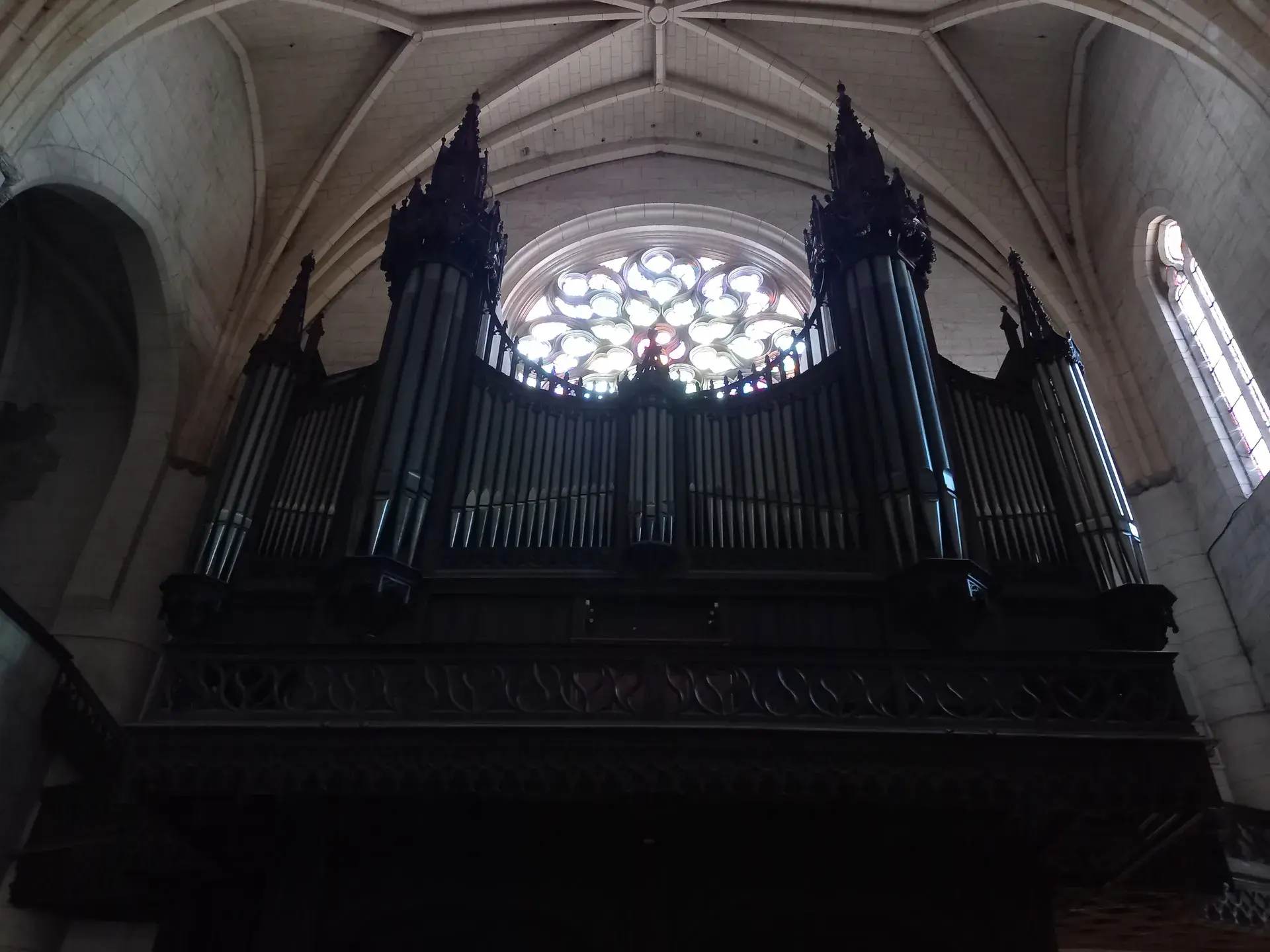
Inside, the architecture features a wide single nave without transepts. The high space retains whitewashed walls illuminated by large choir stained-glass windows and a prominent rose window above the main entrance. The church was officially classified as a French Monument Historique in 1886.
The Dramatic Tower Collapse
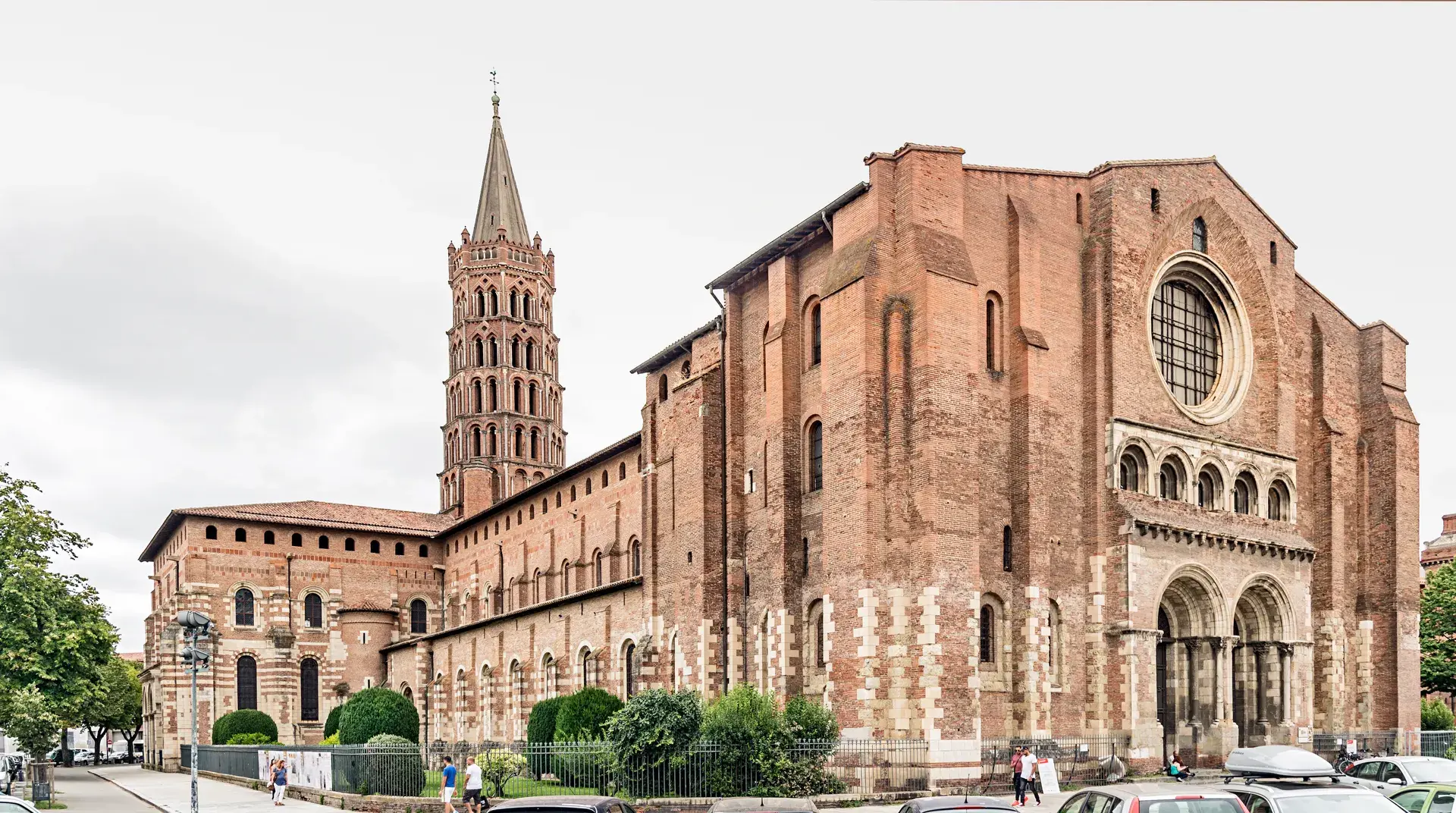
The church once possessed a towering 81-meter spire, built in 1881 and 1882 atop Bachelier's original bell tower base. Before its destruction, this spire was the highest architectural point in Toulouse, standing significantly taller than the bell tower of the Basilica of Saint-Sernin.
Tragedy struck in the early morning hours of April 11, 1926. At approximately 3:15 AM, the massive bell tower suddenly collapsed. The disaster crushed parts of the church vault, destroyed nearby houses on Rue des Polinaires, and killed two people. A replacement tower begun in the 1930s was never finished and was subsequently demolished in the 1960s, resulting in the flat, fortified roofline seen today.
A Landmark of the Carmes District
Today, Église Notre-Dame de la Dalbade functions as an active Catholic parish church within the Archdiocese of Toulouse and is open daily to the public. It sits along Rue de la Dalbade, a historic street known for the grand private mansions built by wealthy pastel merchants. The church remains a key architectural landmark in the Carmes district, situated between the Garonne riverfront and Place des Carmes.
FAQ
Why is Église Notre-Dame de la Dalbade called the 'White Church'?
The name 'Dalbade' derives from the Latin 'Santa Maria Dealbata' (Saint Mary the White), which referred to the lime-washed exterior of the original 6th-century church that stood on the site.
What happened to the bell tower of Église Notre-Dame de la Dalbade?
An 81-meter spire was completed in 1882, making it the tallest structure in Toulouse. However, it collapsed on April 11, 1926, destroying nearby homes and leaving the church with its current flat roofline.
Can visitors go inside Église Notre-Dame de la Dalbade?
Yes, the building functions as an active Catholic parish church and is open to the public daily.
Gallery