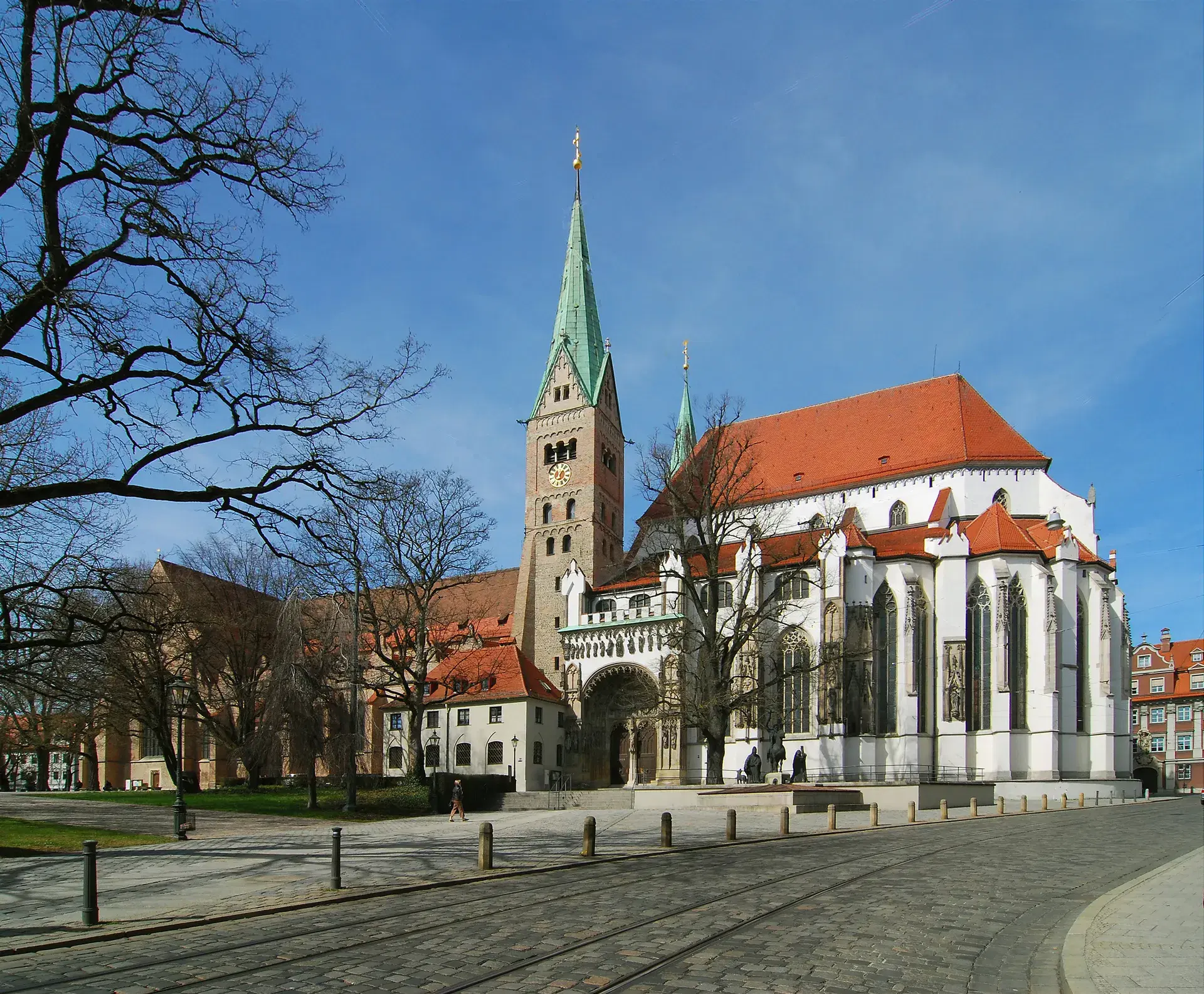
Fugger Houses in Augsburg: Jakob Fugger's Palace
The Renaissance Palace of Jakob Fugger
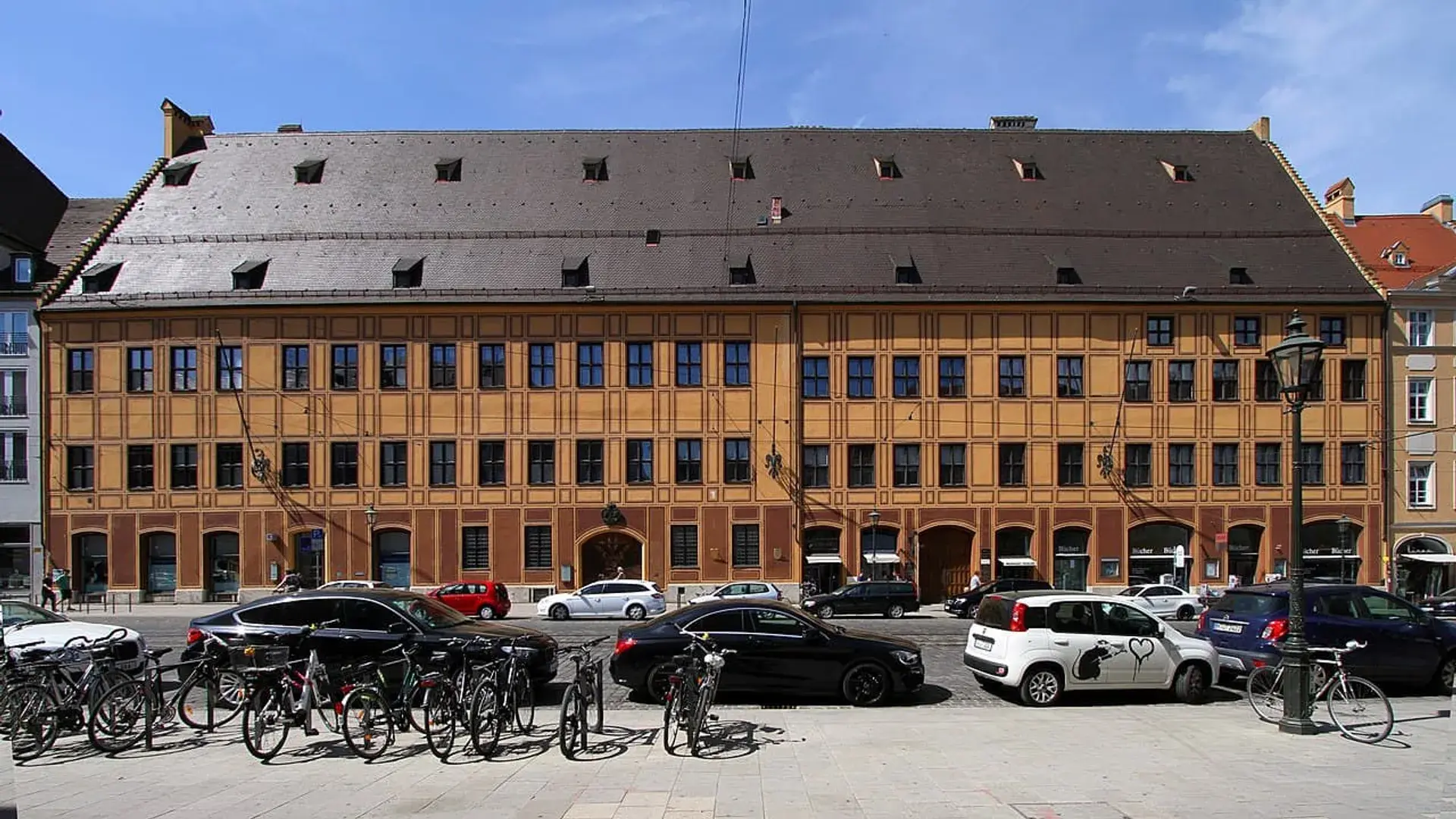
Situated along Maximilianstraße at numbers 36–38, the Fugger Houses (Fuggerhäuser) stand on the ancient route of the Roman Via Claudia Augusta. Built between 1512 and 1515 by the merchant and banker Jakob Fugger "the Rich," the complex was designed as both a prestigious private residence and the global commercial headquarters of the Fugger trading empire.
The complex holds a critical place in architectural history as the first grand secular Renaissance building erected north of the Alps. Jakob Fugger drew inspiration from his formative years between 1473 and 1487 at the Fondaco dei Tedeschi in Venice, translating Italian palazzo concepts and merchant logistics into the urban fabric of 16th-century Augsburg.
Augsburg walking tour with audio and quizzes: city of the Fuggers
2 hours8 stopsAudio guideStart any day, at your own paceTicket on your phone · 30-day refundArchitectural Strategy and Civic Dominance
Originally composed of two connected structures, the estate expanded over time across neighboring parcels into an extensive compound organized around four interior courtyards. The building's street-facing facade reflects early modern civic power. During the Renaissance, Augsburg levied property taxes based on linear street frontage. Jakob Fugger commissioned one of the widest residential street facades in the city as a deliberate, visible display of his taxpaying capacity and financial preeminence.
Commercial practicalities were seamlessly incorporated into the grand architecture. The main entrance, the Adlertor (Eagle Gate), alongside the rear portals, was engineered with exceptionally high ceiling clearance. This allowed fully laden four-horse merchant wagons to drive directly from the street into the interior Reiterhof (Rider's Courtyard) for unloading.
The Damenhof and Interior Courtyards
Beyond the outer street facade lies the Damenhof (Ladies' Courtyard), the architectural centerpiece of the complex. Passing from the bustling street into the vaulted Adlertor brings an immediate acoustic transition into an enclosed, quiet retreat.
The Damenhof is framed by slender Tuscan stone columns supporting arcaded loggias adorned with vaulted, painted ceilings. Centered on a calm water basin, the courtyard embodies Italian Renaissance design principles. Today, three of the complex's courtyards are accessible to visitors, with the Damenhof functioning seasonally as an open-air café and cocktail bar.
A Center of Imperial Power and Historical Encounters
The Fugger Houses served as a stage for pivotal events in European history. In October 1518, papal legate Cardinal Thomas Cajetan conducted formal hearings within the palace to interrogate Martin Luther, demanding that the reformer recant his 95 Theses.
The residence routinely accommodated European rulers, including Holy Roman Emperors Maximilian I and Charles V—whose imperial election in 1519 was largely financed by Jakob Fugger. During the Thirty Years' War, King Gustav II Adolf of Sweden took up residence here. The palace also served as a venue for high culture; in 1777, Wolfgang Amadeus Mozart performed a concert inside its walls. A famous legend often associated with the palace claims that Anton Fugger burned Charles V's imperial debt receipts over a fire fueled by costly cinnamon wood, though historians classify the episode as a romanticized tradition without primary documentation.
Destruction, Rebuilding, and Modern Use
The complex suffered severe destruction during Allied air raids in 1944. Rebuilt in 1951 under the direction of Prince Carl Fugger-Babenhausen, the palace remains in the private possession of the Fugger-Babenhausen family.
Today, the central wing and the Adlertor serve as the headquarters of the Fürst Fugger Privatbank. Ground-floor areas facing Maximilianstraße accommodate commercial businesses, including a public bookstore, continuing the five-century tradition of combining financial activity, commerce, and civic life on Augsburg's main boulevard.
FAQ
Can the public visit the courtyards inside the Fugger Houses?
Yes, three of the four historic interior courtyards are open to the public, including the Damenhof, which seasonally operates as an open-air café and bar.
What major historical event involving Martin Luther happened here?
In October 1518, Martin Luther was summoned to the Fugger Houses, where papal legate Cardinal Thomas Cajetan interrogated him and demanded he recant his 95 Theses.
Why is the street facade of the Fugger Houses so unusually wide?
Augsburg assessed property taxes based on a building's linear street frontage. Jakob Fugger built an exceptionally wide horizontal facade as an explicit demonstration of his financial strength and capacity to pay high taxes.
What is the Fugger Houses complex used for today?
The complex remains privately owned by the Fugger-Babenhausen family and houses the headquarters of the Fürst Fugger Privatbank, commercial storefronts like a bookstore, accessible courtyards, and a seasonal courtyard café.