Augsburg's Fuggerei: History, Rent & Visitor Guide
The World’s Oldest Social Housing Complex
Located in the historic Jakobervorstadt district of Augsburg, the Fuggerei holds the distinction of being the world's oldest continuously inhabited social housing enclave. It was established by the prominent merchant and banker Jakob Fugger the Younger and his brothers, with construction commencing around 1516 and formalized through a foundation deed signed on August 23, 1521. Conceived as an act of civic patronage during Augsburg's Golden Age, the settlement provided self-contained, dignified living conditions for impoverished day-laborers and artisans.
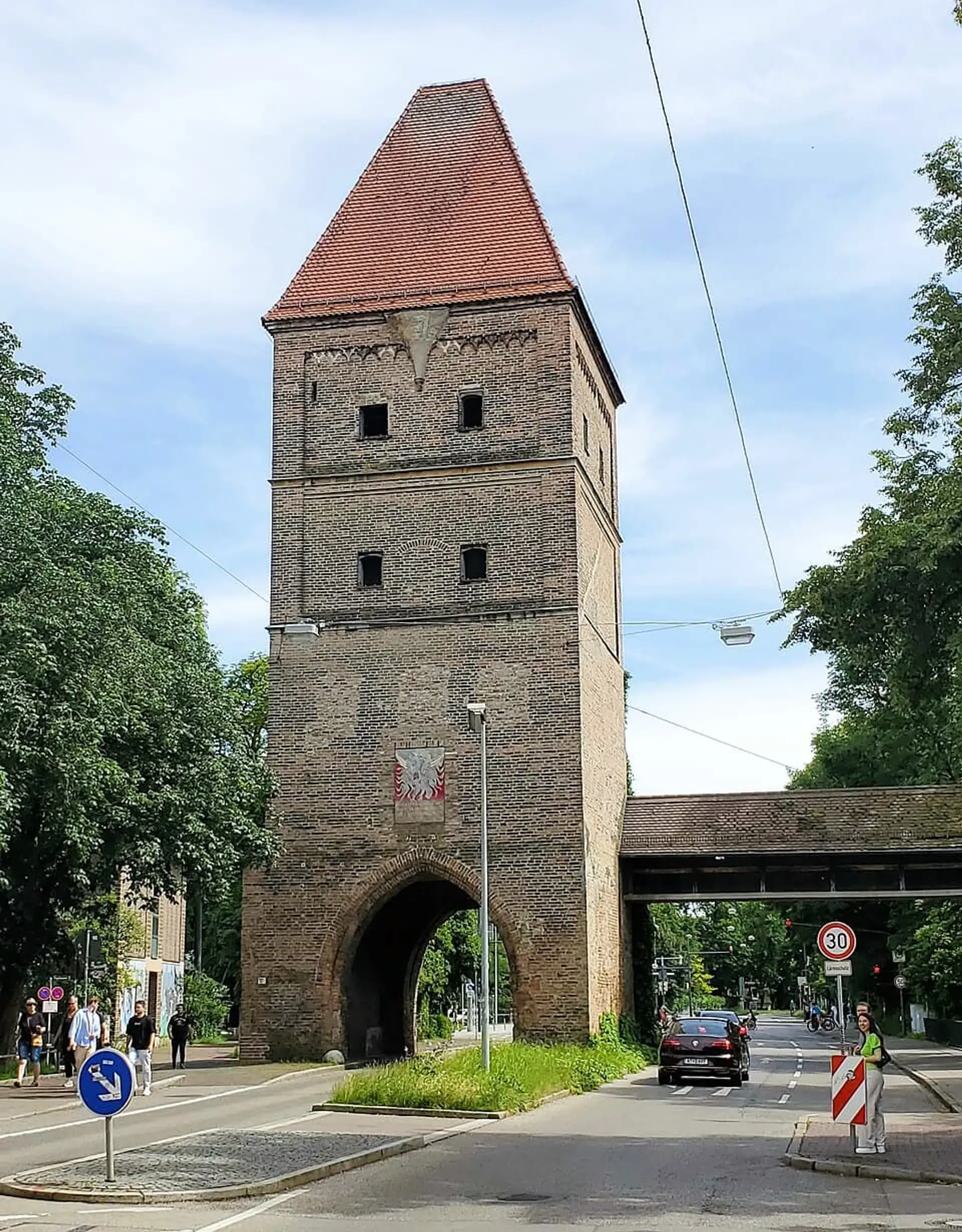
Designed as an autonomous city-within-a-city, the walled complex was laid out by master builder Thomas Krebs. It encompasses 67 houses, roughly 140 to 147 individual apartments, eight lanes, seven gates, an administrative building, and St. Mark's Church, which was added in 1582 by master builder Hans Holl. Historically, the enclave operated with its own night watch and independent water supply, sheltered behind fortified exterior walls.
Augsburg walking tour with audio and quizzes: city of the Fuggers
2 hours8 stopsAudio guideStart any day, at your own paceTicket on your phone · 30-day refundTenancy Requirements, Curfews, and Fixed Rent
For more than five centuries, the core residency requirements of the Fuggerei have remained unchanged. To qualify for housing, applicants must be registered Augsburg citizens for at least two years, practicing Roman Catholics, and impoverished through no fault of their own while remaining entirely debt-free. Approximately 150 low-income residents live in the enclave today.
The base annual rent remains fixed at the historical equivalent of one Rhenish guilder, which is calculated today as €0.88 per year, excluding heating and utility expenses. Alongside this financial sum, tenants agree to a contractual spiritual duty: offering three daily prayers—the Lord's Prayer, the Hail Mary, and the Nicene Creed—for the souls and salvation of the Fugger family.
Life inside the settlement maintains historical order. Every evening at 10:00 PM, the exterior gates are locked. Residents returning past curfew must be admitted by the night watchman and pay a nominal fee of 50 euro cents before midnight, or 1 euro after midnight.
Architecture and Notable Historic Details
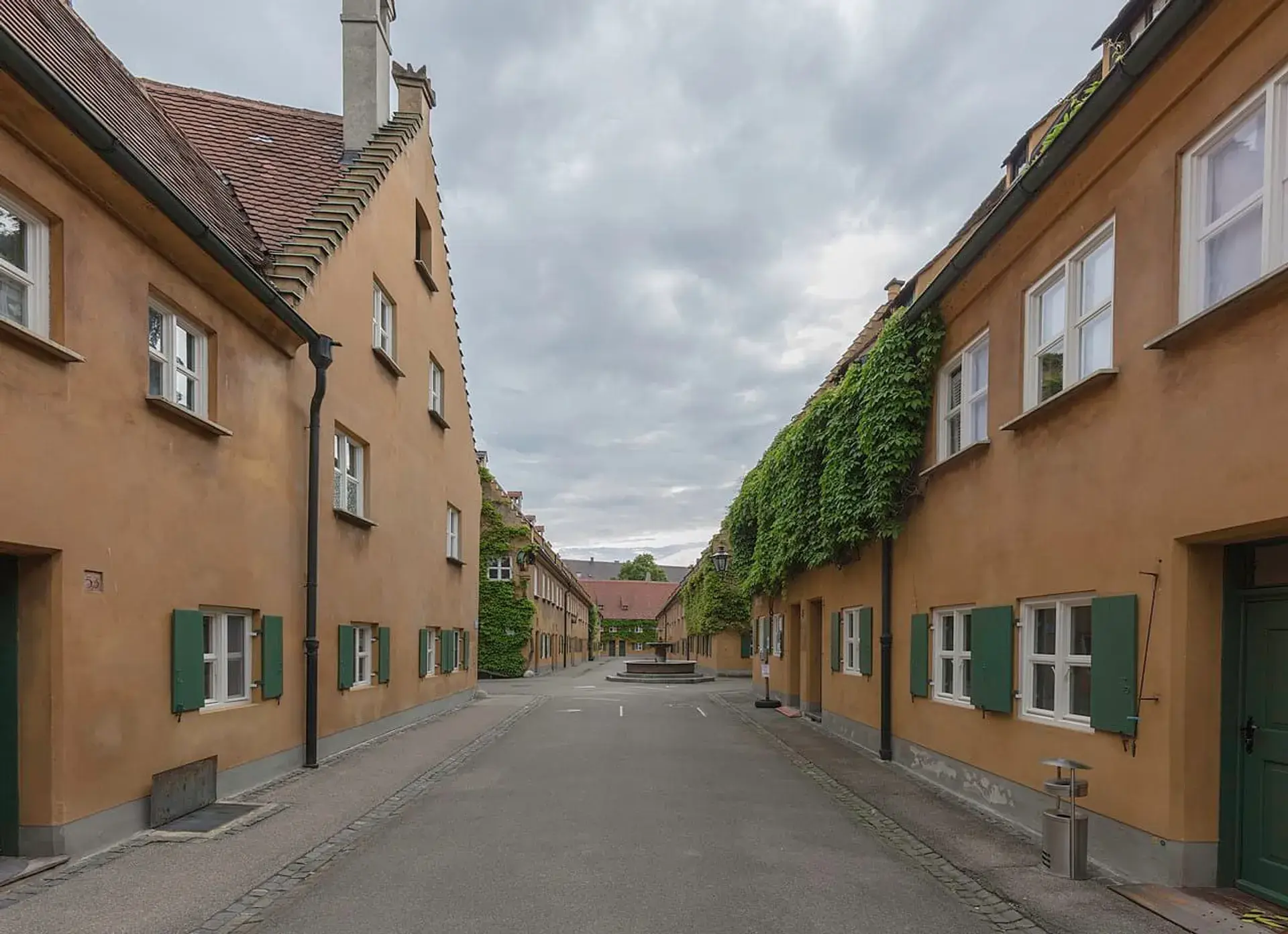
The architectural layout of the Fuggerei features uniform, two-story terraced rows along straight stone-paved alleys. The buildings are known for their ivy-covered, ochre-yellow plaster facades, identical dark green doors, and steep red-tiled roofs.
One characteristic architectural detail is the iron bell pull fitted beside each doorway. Before the advent of public street lighting, these bell handles were forged into distinct individual shapes so returning residents could identify their own entrances in complete darkness through touch alone.
The complex also possesses notable cultural history. Wolfgang Amadeus Mozart’s great-grandfather, the master mason Franz Mozart, lived in the Fuggerei at Mittlere Gasse 14 from 1681 until his death in 1694. A stone plaque on the facade commemorates his residence.
During World War II, Allied air raids destroyed approximately two-thirds of the settlement in 1944. Following the war, the Fugger Foundation faithfully reconstructed the entire complex in its original architectural style and historic street plan.
Visiting the Fuggerei and Admission Information
The Fuggerei operates without municipal or state subsidies, funded entirely by the historic endowment and extensive forestry holdings of the Princely and Comital Fugger Foundation.
Entry into the residential grounds and its facilities is ticketed and requires an admission fee. The outer perimeter walls and historic entrance gates can be viewed from the street without a ticket, but passing through the gates requires paid admission. A ticket grants access to the interior alleys as well as four museum installations: the Museum of History and Living, the Museum of the Residents, the Museum of Everyday Life, and a permanent historical exhibition housed in an authentic World War II air-raid shelter.
FAQ
Is entry to the Fuggerei free?
No, entry inside the Fuggerei is ticketed and requires an admission fee. This ticket grants access to the residential grounds and four on-site museums. The outer walls and main gates can be viewed from the public street without paying.
What are the requirements to live in the Fuggerei?
Applicants must be practicing Roman Catholics, registered citizens of Augsburg for at least two years, and destitute without debt through no fault of their own. Residents are also contractually obligated to say three specific prayers daily for the founding family.
How much is rent in the Fuggerei?
The annual base rent is fixed at the value of one historic Rhenish guilder, which equals €0.88 per year, excluding utilities and heating costs.
Why do the front doors have differently shaped bell pulls?
Each iron bell pull was forged with an individual shape so that residents could identify their own front doors purely by touch in the dark before street lighting existed.