
Lechviertel: Augsburg's Historic Canal Quarter
The Historic Craftsmen's Quarter
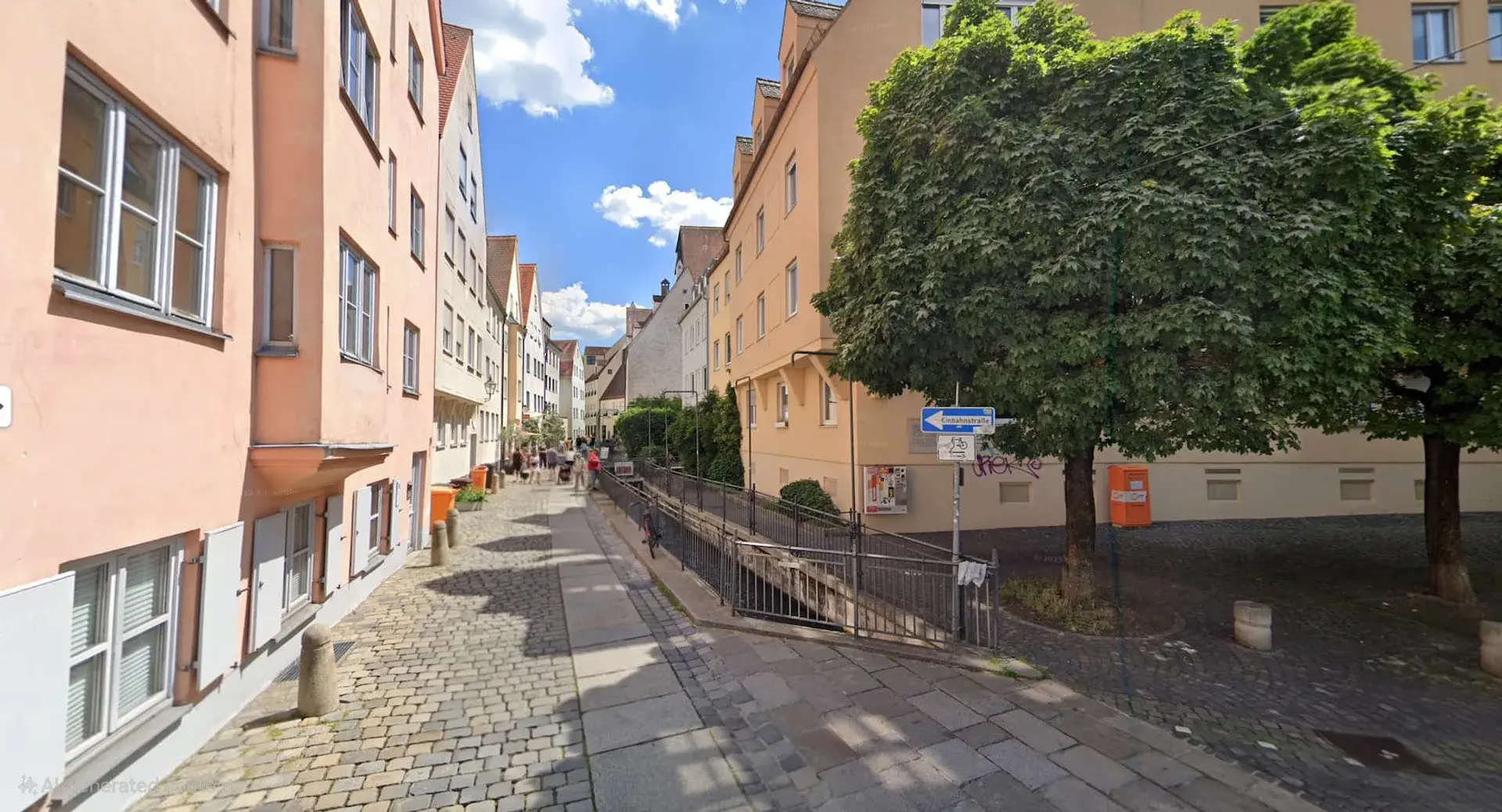
The Lechviertel forms the lower eastern section of Augsburg's historic old town, nestled beneath the steep edge of the post-glacial gravel terrace that supports the upper imperial city center. Tracing its origins back to the Middle Ages, the quarter was established along a system of open canals diverted from the Lech River via the Hochablass weir. The waterways flowing through the district include the Vorderer, Mittlerer, and Hinterer Lech, as well as feeder channels such as the Schwallech. The management of this canal network was officially codified as early as the Augsburger Stadtrecht of 1276.
Historically, the Lechviertel was defined by a distinct social and topographical divide. While wealthy patricians and merchant dynasties such as the Fugger and Welser families occupied the high, flood-safe plateau around Maximilianstraße and Rathausplatz, manual laborers and craftsmen settled in the lower basin. Tanners, dyers, weavers, millers, and metalworkers established workshops along the canals, relying on waterwheels for mechanical power and using the swift currents for process water. The productivity of these artisan trades served as the economic engine that funded Augsburg's monumental Renaissance architecture.
Augsburg walking tour with audio and quizzes: city of the Fuggers
2 hours8 stopsAudio guideStart any day, at your own paceTicket on your phone · 30-day refundHydraulic Engineering and UNESCO Recognition
The canal network of the Lechviertel is recognized globally as a core element of the "Water Management System of Augsburg," which was inscribed as a UNESCO World Heritage site in 2019. The district showcases advanced early engineering; in 1545, the city established a strict division between spring-fed drinking water and canal-based industrial process water, ensuring hygiene centuries before modern germ theory emerged.
Another example of hydraulic engineering in the quarter is the Stadtmetzg, the municipal butcher hall erected between 1606 and 1609 by master architect Elias Holl. Positioned directly over the Vorderer Lech canal, the structure harnessed the cold natural water flowing beneath its floor to cool meat storage rooms and wash away slaughterhouse waste, functioning as an early municipal refrigeration facility.
Architecture, Bridges, and Heritage
Augsburg contains over 500 bridges, surpassing the total found in Venice. This high count is largely attributable to the Lechviertel, where canals run immediately alongside streets, requiring nearly every historic house to have an individual bridge or private footway to connect its front entrance to the thoroughfare.
During the mid-20th century, portions of the canals were culverted or paved over to facilitate automotive traffic. An urban revitalization program during the 1970s and 1980s reversed this trend by uncovering the waterways and restoring the historic artisan residences. Among the notable landmarks in the quarter is the Brechthaus at Auf dem Rain 7. Situated directly beside the rushing waters of the Hinterer Lech, this house is the birthplace of playwright Bertolt Brecht, who was born there in 1898, and now operates as a memorial museum.
The Modern District
Today, the Lechviertel has transformed into a tranquil, pedestrian-friendly residential and cultural neighborhood centered around historic spots like Holbeinplatz. Restored pastel-plastered and half-timbered artisan homes house small art studios, independent galleries, boutique shops, wine bars, and waterside cafés. Fed by alpine sources, the swift-moving canals continue to produce a microclimatic cooling effect during warmer months, accompanied by the continuous sound of running water throughout the narrow alleys.
FAQ
Why does Augsburg have more bridges than Venice?
Augsburg has more than 500 bridges, largely due to the Lechviertel district. Because the historic canals run directly past residential streets, almost every artisan house along the waterways requires its own private bridge or footway to provide access to the front door.
What is the historical significance of the Lechviertel's canals?
Diverted from the Lech River and documented as early as 1276, the canals provided water power and industrial process water for tanners, dyers, weavers, and millers. In 2019, the canal system was recognized as a core part of the UNESCO World Heritage property 'Water Management System of Augsburg'.
What was the purpose of the Stadtmetzg in the Lechviertel?
Built by architect Elias Holl between 1606 and 1609, the Stadtmetzg served as the municipal butcher hall. It was constructed directly above the Vorderer Lech canal so the cold water flowing beneath could naturally refrigerate the interior rooms and carry away waste.
Where was Bertolt Brecht born in the Lechviertel?
Playwright Bertolt Brecht was born in 1898 at Auf dem Rain 7, a building situated directly beside the Hinterer Lech canal. The location is now preserved as the Brechthaus memorial museum.