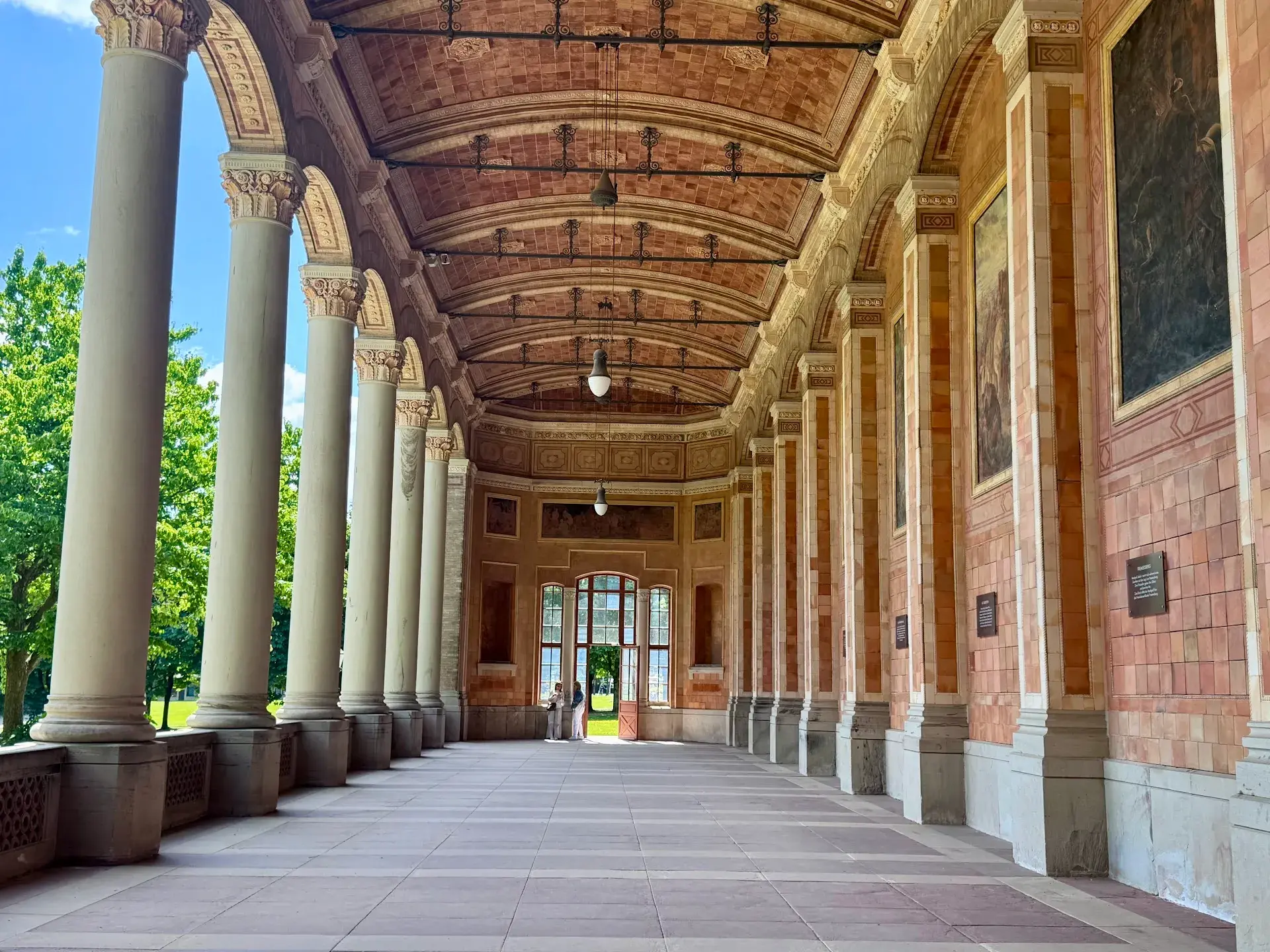
Bäderviertel Baden-Baden: Historic Roman Spa Quarter
The Geothermal Core of Baden-Baden
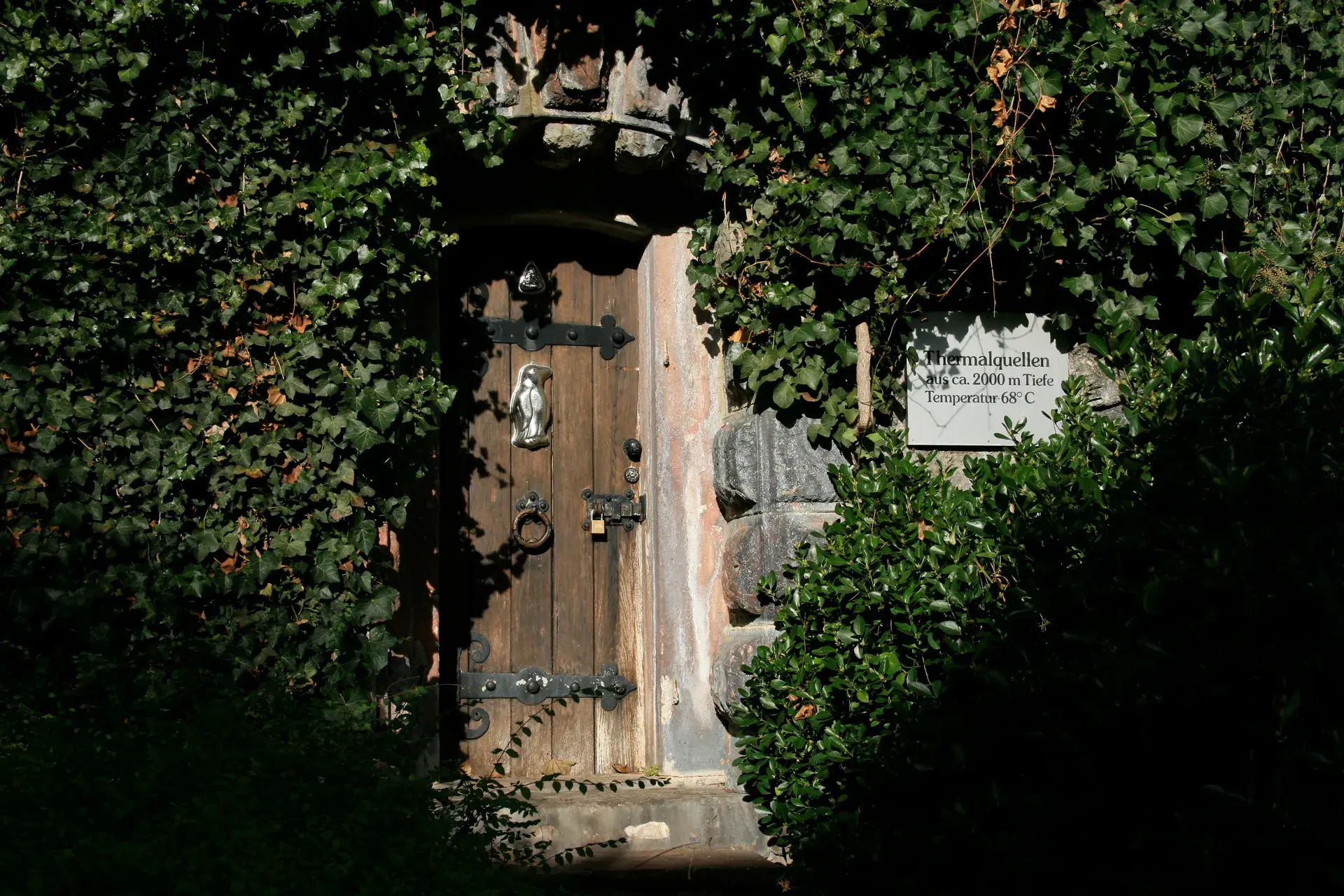
The Bäderviertel, or Bath Quarter, forms the ancient geothermal and topographical foundation of Baden-Baden. Nestled directly at the base of the Florentinerberg in the upper town, the district centers on the pedestrian expanse of Römerplatz. Its steep, dense street pattern was dictated by the natural emergence of approximately twelve artesian springs. These waters rise from depths of roughly 2,000 meters, discharging nearly 800,000 liters of sodium-chloride thermal water each day.
Reaching surface temperatures of up to 68.8°C, the springs are the hottest in the state of Baden-Württemberg. Because the water emerges at such high temperatures, the modern bath complexes do not require heating fuel to warm their pools. Instead, facility operators blend the piping-hot thermal discharge with cool, fresh spring water to reach bathing temperatures. This historic geothermal district forms a deliberate contrast to the 19th-century Kurviertel across the Oos River, which was planned across flat parklands for aristocratic leisure around the Kurhaus, Casino, and Trinkhalle.
Roman Origins and the Museum für antike Badekultur
Thermal bathing in the Bäderviertel dates back two millennia. Following earlier Celtic activity near the springs, Roman forces established the settlement of Aquae (later Aquae Aureliae) around 70–80 AD. Soldiers stationed at the garrison in Argentoratum (modern Strasbourg) used the scalding mineral pools to treat rheumatism and battle injuries. Emperor Caracalla reportedly visited the outpost between 213 and 215 AD to seek relief for his arthritis, leading to imperial patronage and an expansion of the bath facilities.
Beneath the terrace of the Friedrichsbad lie the structural remains of this era: a Roman military bathhouse known as the Soldatenbad. First uncovered in 1847 and excavated further between 1869 and 1877, the preserved archaeological site contains hypocaust underfloor heating chambers, stoking channels (praefurnia), and hollow wall flue tiles (tubuli). Today, the site operates seasonally from mid-March to mid-November as the Museum für antike Badekultur, featuring original masonry, audio guides, and digital reconstructions.
The Nineteenth-Century Balneological Revival
While thermal bathing continued through the Middle Ages—with scalding spring water even diverted to flush streets during disease outbreaks—the district underwent a major revitalization in the late 19th century. In 1872, an empire-wide ban on casino gambling prompted Baden-Baden to pivot from gaming tables back to its heritage of medical balneology.
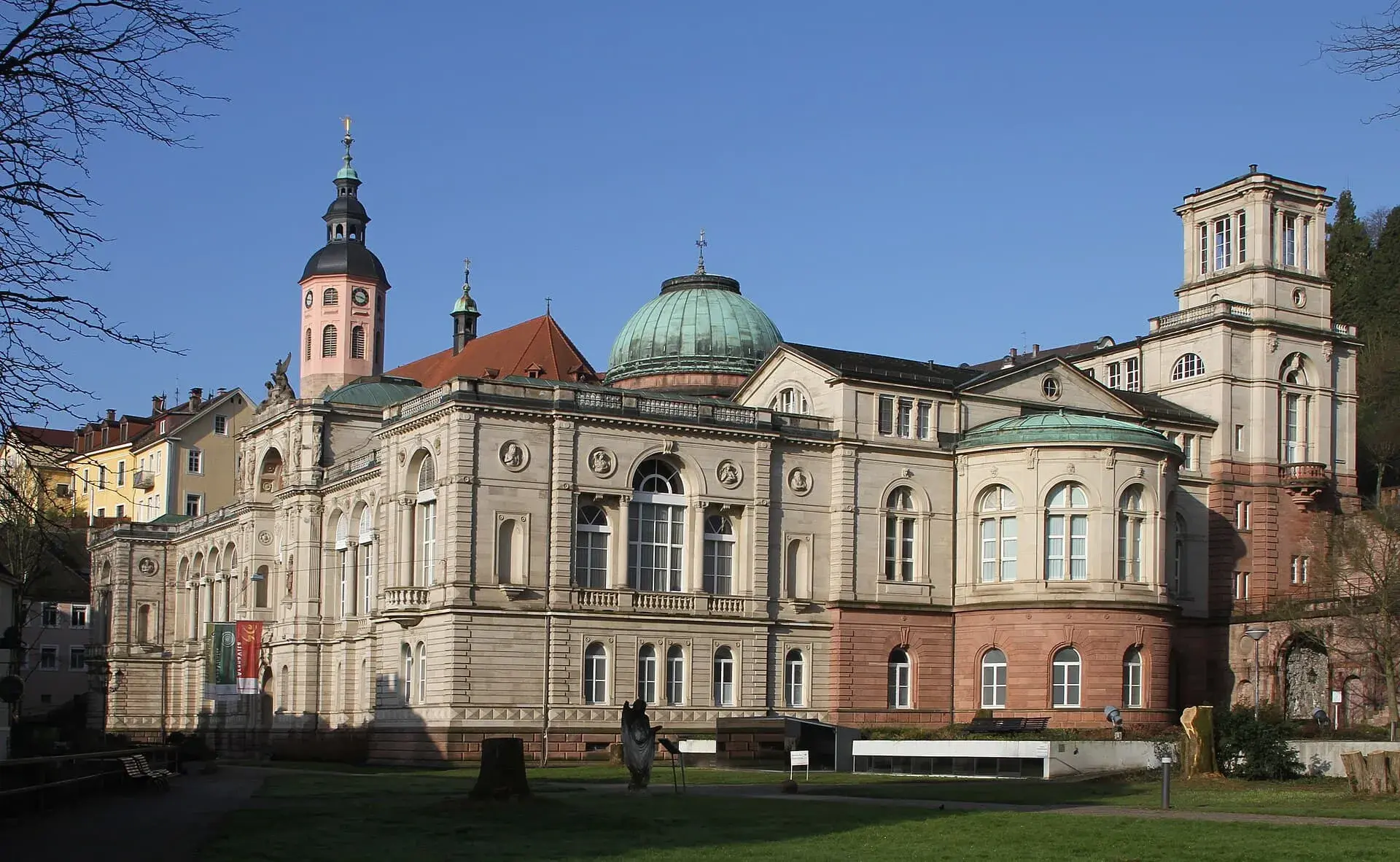
District building director Carl Dernfeld spearheaded this renaissance by overseeing the design and construction of the Friedrichsbad between 1869 and 1877. The neo-Renaissance bath palace integrated ancient Roman traditions with Irish warm-air rituals, re-establishing the Bäderviertel as a premier European wellness destination.
Landmarks Around Römerplatz
Römerplatz serves as the open pedestrian link uniting the district's historical and functional monuments. Dominating the square is the grand facade of the Friedrichsbad, which continues to operate a traditional, textile-free, 17-stage Roman-Irish bathing sequence beneath a 16-meter central dome. After experiencing the circuit shortly after its opening in 1878, American author Mark Twain remarked that after ten minutes one forgets time, and after twenty minutes one forgets the world.
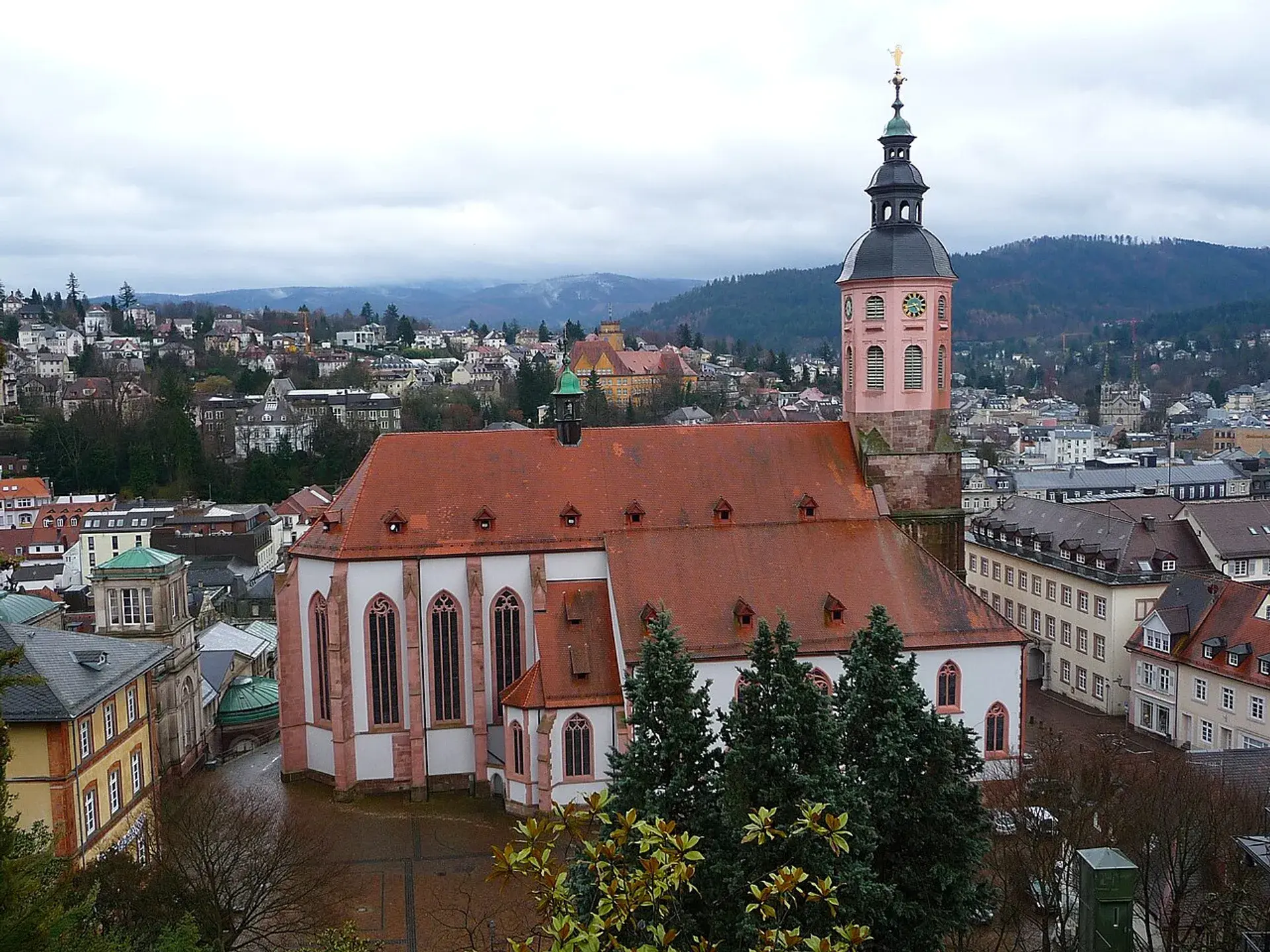
Directly adjacent stands the glass-domed Caracalla Therme, a modern, swimsuit-friendly indoor and outdoor bathing complex named in honor of the Roman emperor. Also on the square are the 17th-century Georgsbrunnen and the Fettquelle. Documented by name as early as 1606, the Fettquelle ("fat spring") earned its name from high mineral concentrations that leave a silky, greasy sensation on the skin. Warm vapor carrying the tang of sodium chloride rises visibly from its porous limestone basin, radiating palpable heat before the water is touched. The spring is accompanied by signage noting it is strictly non-potable. From the square, the Dernfeldstaffeln stairs climb the hillside toward the Florentinerberg and the historic Neues Schloss above.
FAQ
How hot are the thermal springs in the Bäderviertel?
The artesian springs emerge at temperatures reaching up to 68.8°C, making them the hottest in Baden-Württemberg. The thermal pools are brought to comfortable bathing temperatures by blending the hot spring discharge with cool, fresh water.
What Roman ruins can be seen in the Bath Quarter?
Directly below the Friedrichsbad terrace are the ruins of a 2,000-year-old Roman military bath complex (Soldatenbad). The site includes preserved underfloor hypocaust systems, stoking channels, and hollow wall tiles, accessible seasonally at the Museum für antike Badekultur.
What is the difference between Friedrichsbad and Caracalla Therme?
Friedrichsbad is a historic 19th-century neo-Renaissance bathhouse featuring a traditional, textile-free, 17-stage Roman-Irish circuit under a dome. Caracalla Therme is an adjacent modern thermal facility that requires swimsuits and provides indoor and outdoor leisure pools.
Can visitors drink the water from the Fettquelle?
No, the water from the Fettquelle on Römerplatz is non-potable and marked with signage indicating it is intended solely as thermal mineral bath water.
Gallery