Collegiate Church Baden-Baden: History & Art
A Landmark on the Florentinerberg
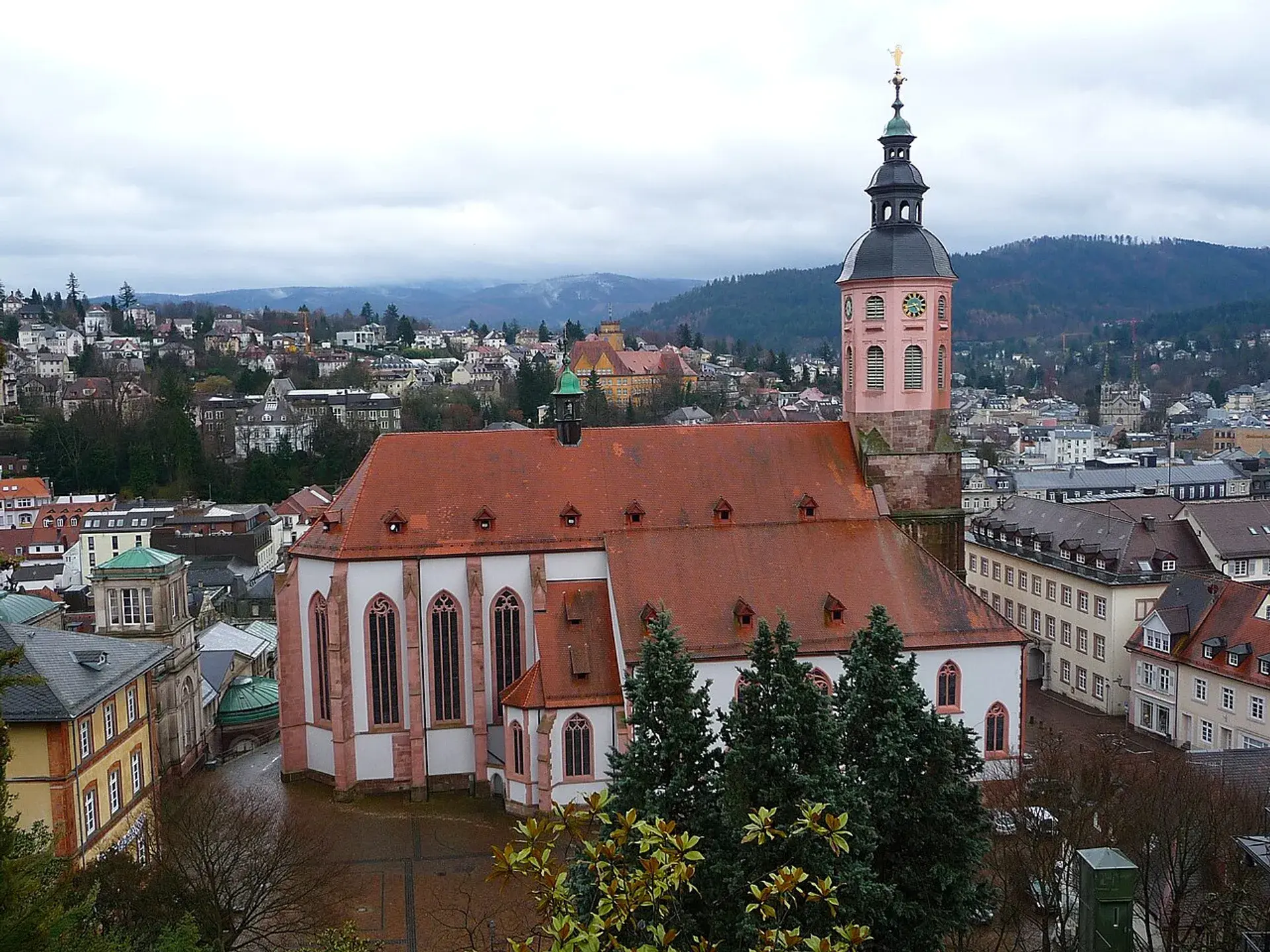
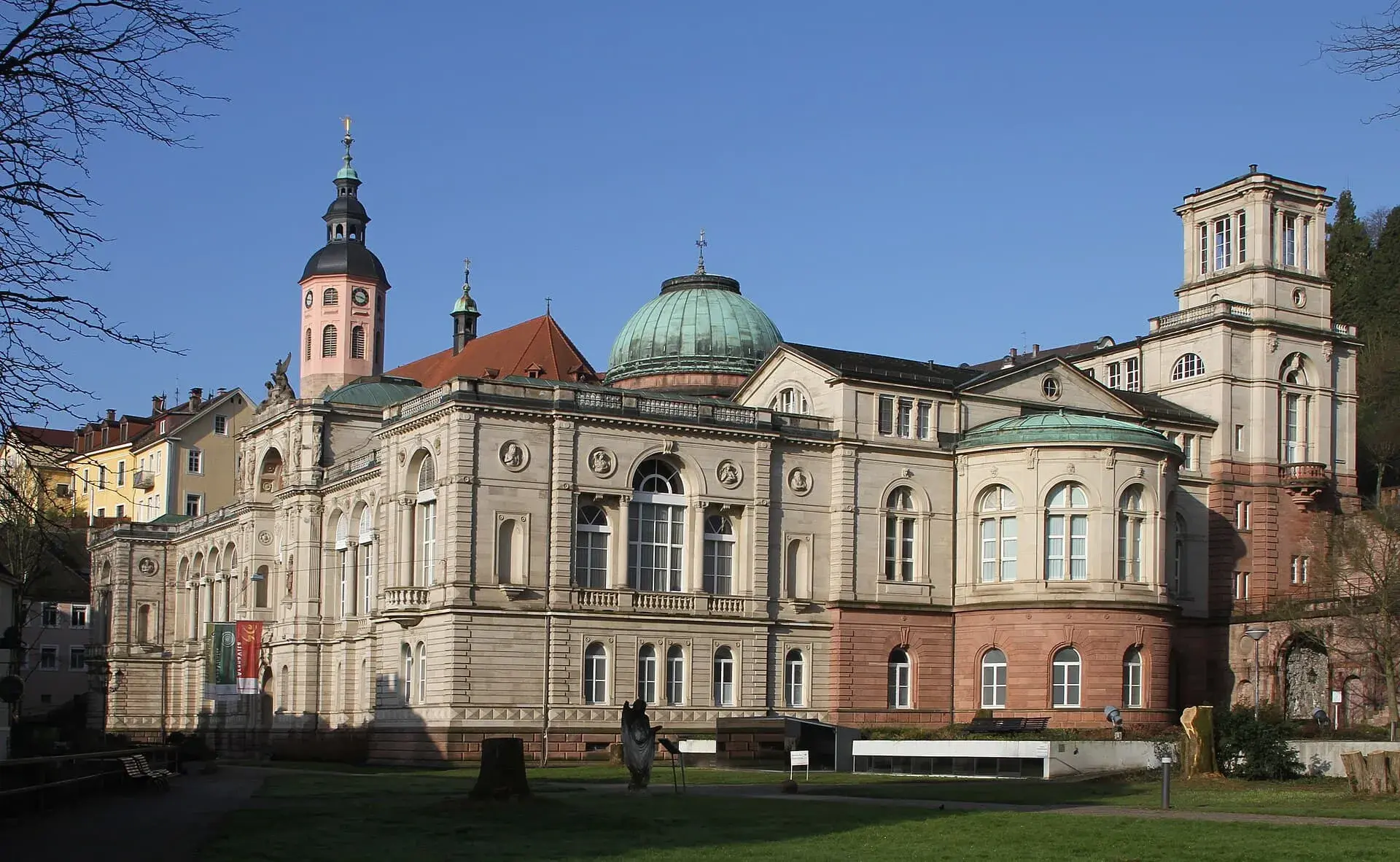
The Collegiate Church Baden-Baden (Stiftskirche Baden-Baden), formally known as Stiftskirche Liebfrauen and historically dedicated to Saints Peter and Paul, stands at Marktplatz 15 on the Florentinerberg. Positioned directly below the Neues Schloss and immediately above the Friedrichsbad and Roman bath ruins, the church historically connects the thermal bath district with the town's aristocratic seat of rule. It is recognized as the oldest continuously used building in Baden-Baden and forms part of the core zone of the UNESCO World Heritage listing "The Great Spa Towns of Europe."
First documented in 987 through a property donation charter issued by Emperor Otto III, archaeological excavations indicate that Roman settlement structures and thermal bath substructures lie beneath the site. In April 1453, Margrave Jakob I secured papal approval to elevate the parish church into a collegiate church, fulfilling a vow originally made by his father, Margrave Bernhard I.
Architectural Evolution Across Centuries
The building exhibits a blend of Romanesque, Gothic, and Baroque architecture. Its tower rests on a 13th-century Romanesque foundation, while the main hall church (Staffelhalle) and choir were reconstructed in late Gothic style between 1453 and 1474.
In 1689, French forces set fire to the city during the Nine Years' War, severely damaging the structure. Subsequent 18th-century Baroque reconstruction culminated in 1751 with the addition of a layered onion dome (welsche Haube) atop the octagonal Gothic belfry, bringing the tower to an approximate height of 68 meters. Inside the choir, tall Gothic lancet windows allow afternoon sunlight to cast shifting patterns of light across the light-grey rib vaults and surrounding stone memorials.
The Dynastic Necropolis of the Margraves
From 1391 to 1793, the church served as the official necropolis (Grablege) for the Roman Catholic line of the House of Baden. Margrave Rudolf VII was the first ruler interred in the choir in 1391, ending the family's earlier tradition of burials at Lichtenthal Abbey. Over the following four centuries, 14 ruling Margraves of Baden and their relatives were entombed within the building.
Today, the choir displays an unbroken four-century sequence of funerary art, featuring Late Gothic effigies, Renaissance reliefs, Baroque theatrical monuments, and Neoclassical tombs. A prominent feature on the north choir wall is the high-Baroque wall monument dedicated to Margrave Ludwig Wilhelm of Baden-Baden (1655–1707), known as "Türkenlouis." Commemorating his victories as an imperial commander during the Great Turkish War, the monument includes military trophies, allegorical figures, and chained captives, drawing stylistic comparisons to French royal monuments from the court circle of Louis XIV.
Notable Historic Treasures
The church preserves several significant individual works of medieval and Renaissance art. In the center of the choir stands a monumental 1467 stone crucifix sculpted from a single block of sandstone by Niclaus Gerhaert van Leyden. Renowned for its anatomical realism, the sculpture stood outdoors in the churchyard cemetery exposed to the weather until 1967, when it was relocated inside for preservation. Legally, the crucifix remains the property of the City of Baden-Baden rather than the Catholic parish.
The church interior also houses a 13-meter-high openwork stone tabernacle (Sakramentshaus) dating to around 1490. This delicate Gothic tower survived both the Protestant Reformation and the devastation of the 1689 city fire completely intact.
Parish Life and Modern Preservation
The collegiate chapter was formally dissolved in 1808 during secularization, but the church retained the title of Stiftskirche and continued to serve as Baden-Baden's primary Roman Catholic parish church. Today, it belongs to the Pastoral Unit Baden-Baden (Seelsorgeeinheit Baden-Baden) within the Archdiocese of Freiburg.
Following a multi-year €7.2 million structural and interior restoration that cleaned the choir monuments, updated the lighting, and repaired the tower, the church reopened to the public in April 2023. It continues to hold scheduled Sunday Masses, weekday services, and sacred organ and choral concerts, remaining open daily for visitors outside of worship times.
FAQ
Why is the Collegiate Church Baden-Baden historically significant?
It is the oldest continuously used building in Baden-Baden, belongs to the UNESCO World Heritage listing 'The Great Spa Towns of Europe,' and served as the official necropolis for the Roman Catholic line of the House of Baden from 1391 to 1793.
Who owns the 1467 crucifix inside the church?
The 1467 sandstone crucifix created by sculptor Niclaus Gerhaert van Leyden is legally owned by the City of Baden-Baden, not the church parish. It stood in the outdoor churchyard cemetery until 1967.
What architectural styles can be seen in the church?
The church features a 13th-century Romanesque tower base, a late Gothic hall church and choir constructed between 1453 and 1474, and an 18th-century Baroque bulbous onion dome installed atop the 68-meter tower in 1751.