Trinkhalle Baden-Baden: Colonnade, History & Murals
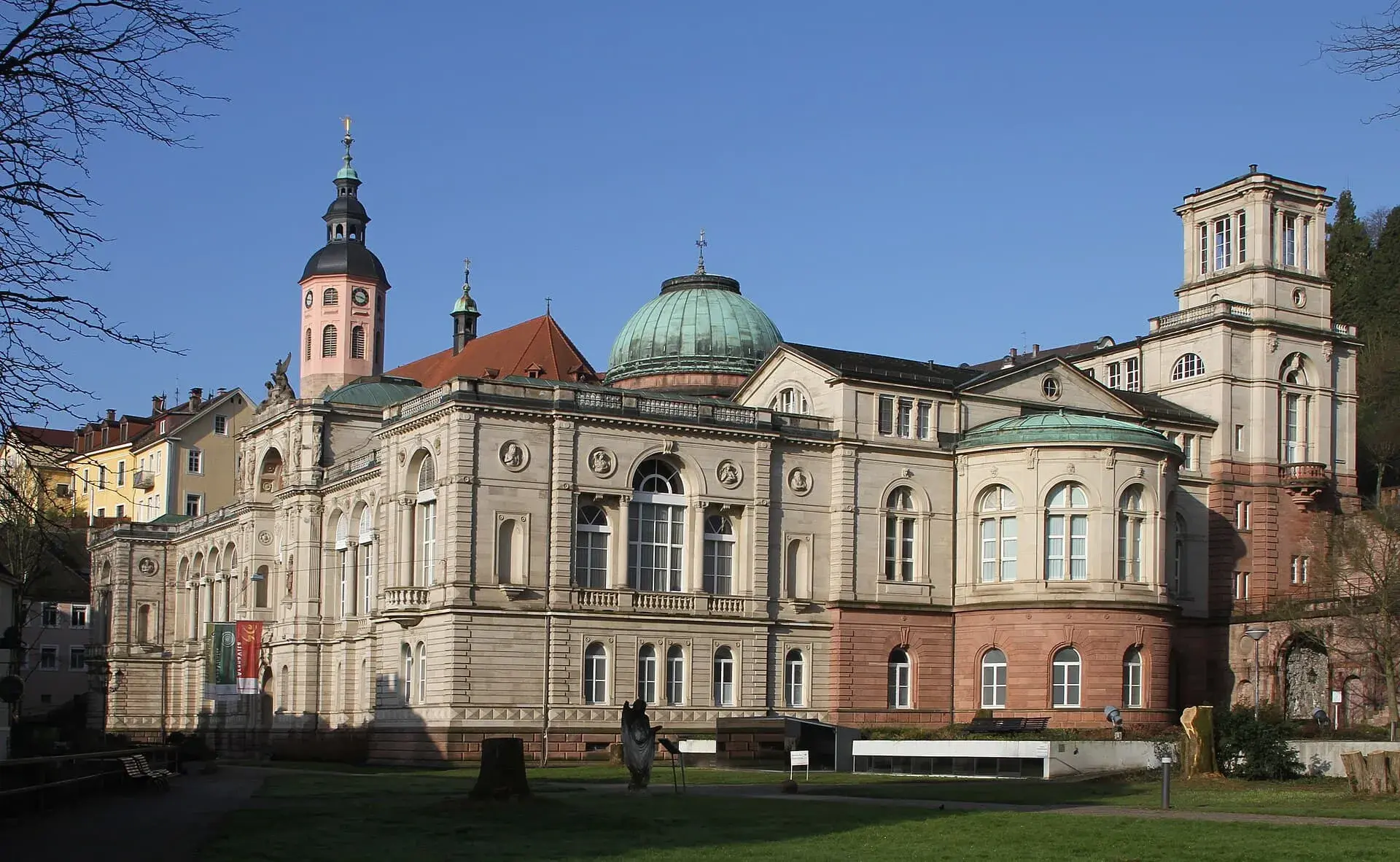
Located along Kaiserallee at the edge of the Kurgarten, the Trinkhalle stands alongside the Kurhaus and the Oos River in Baden-Baden. Forming a central part of the town's historic ensemble alongside the Casino and Theater, the hall anchors the promenade leading toward Lichtentaler Allee. As a key monument within Baden-Baden's UNESCO "Great Spa Towns of Europe" designation, the Trinkhalle exemplifies the 19th-century evolution from purely medicinal thermal bathing to public promenading and social display.
19th-Century Origins and Architecture
The Trinkhalle was constructed between 1839 and 1842 to replace an earlier, smaller pump house designed by Friedrich Weinbrenner. As Baden-Baden attracted an expanding international clientele, Weinbrenner's original structure could no longer accommodate the crowds participating in the popular drinking cure (Trinkkur).
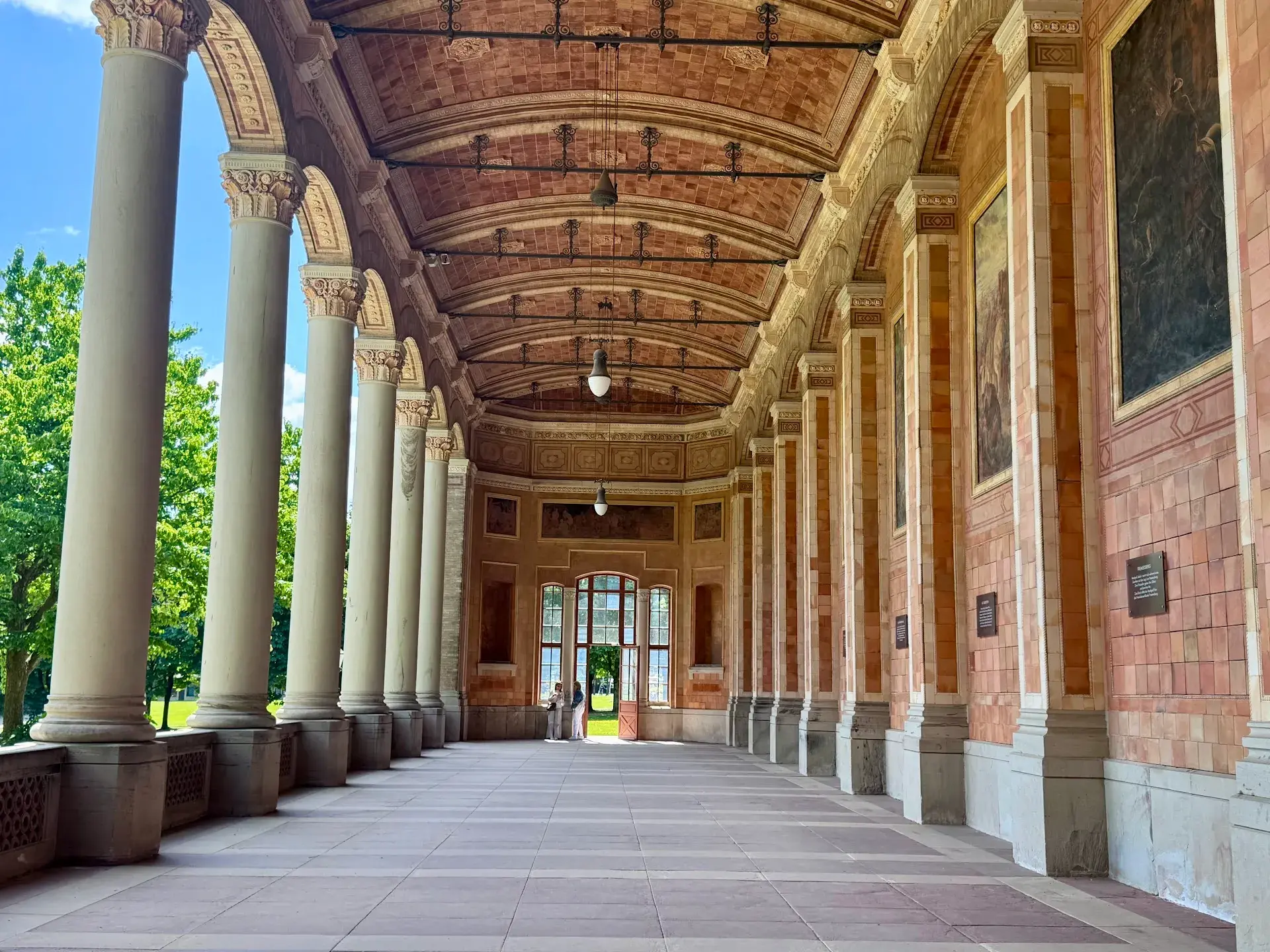
Architect Heinrich Hübsch, a student of Weinbrenner, was commissioned to design a grander replacement. His design centered on a 90-meter-long covered open walkway (Wandelgang) supported by 16 Corinthian columns. This expansive sheltered colonnade allowed 19th-century patrons to sip mineral waters and socialize regardless of weather conditions. Outside the structure, a marble bust of German Emperor Wilhelm I, sculpted by Joseph von Kopf, commemorates the monarch's 40 years of visits to the spa town.
The Murals of Black Forest Legends
In 1844, artist Jakob Götzenberger adorned the colonnade wall with 14 large narrative murals depicting regional myths and folklore. Beyond providing cultural entertainment for promenading guests, these vibrant panels served as early visual advertisements designed to encourage day trips and carriage excursions into the surrounding Black Forest.
The murals illustrate several well-known regional tales:
- Burkart Keller von Yburg: Depicts a young nobleman seduced at a pagan altar by a veiled apparition known as the White Lady, who ultimately drained his soul with a kiss.
- The Mummelsee: Shows water nymphs emerging on moonlit summer nights to dance above the waters until the Sea King calls them back to the deep.
- Hohenbaden Castle: Illustrates Margravine Katharina of Austria praying during an outbreak of the plague, after which rising thermal vapors reportedly suffocated the pestilence across the town.
- Kloster Lichtenthal: Portrays the abbess surrendering the convent keys into the hands of a statue of Mary during the Thirty Years' War, blinding Swedish soldiers and sparing the cloister from destruction.
The Thermal Fountain and Modern Guidelines
While the Trinkhalle was conceived specifically around the ritual of consuming thermal spring waters, the practice has changed significantly. Natural thermal water continues to supply the building's interior fountain basin. However, modern municipal health directives classify this spring water as unsuitable for drinking, and official notices instruct visitors not to consume it.
Contemporary Role and Visitor Services
Today, the Trinkhalle functions as a freely accessible architectural route connecting the town center with the Kurhaus gardens. Visitors passing along the stone floor encounter changing light between the tall columns, set against the sound of rustling trees in the Kurgarten.
The interior of the complex houses Baden-Baden’s tourist information bureau and ticket booking service. The Trinkhalle also contains a café, bar, and lounge with an outdoor terrace facing the Kurgarten grounds. In addition to daily visitor amenities, the sheltered 90-meter colonnade regularly hosts community events, including antique, art, and craft markets, as well as evening private receptions and galas.
FAQ
Can visitors drink the thermal water at the Trinkhalle today?
Although natural thermal water still feeds the fountain basin inside the hall, current municipal health guidelines classify the water as unsuitable for drinking and advise visitors not to consume it.
Who designed the Trinkhalle and its murals?
The Trinkhalle was designed by architect Heinrich Hübsch, a student of Friedrich Weinbrenner, and built between 1839 and 1842. The 14 folklore murals along the colonnade were painted in 1844 by artist Jakob Götzenberger.
What purpose did the wall murals serve when they were painted?
Commissioned to illustrate regional folklore, the murals entertained promenading spa guests while functioning as early visual advertisements that encouraged visitors to book carriage excursions to destinations across the Black Forest.
Discover Baden-baden like never before
Dive into Baden-baden hidden stories and secret spots with Ciceru interactive tours.
Explore tour
Audioguide
Quizzes
Maps
Solo
Couples
Groups & families

© Photo by The Cowboy via Google Maps · Google Places