Neues Schloss: Baden-Baden's Hilltop Palace
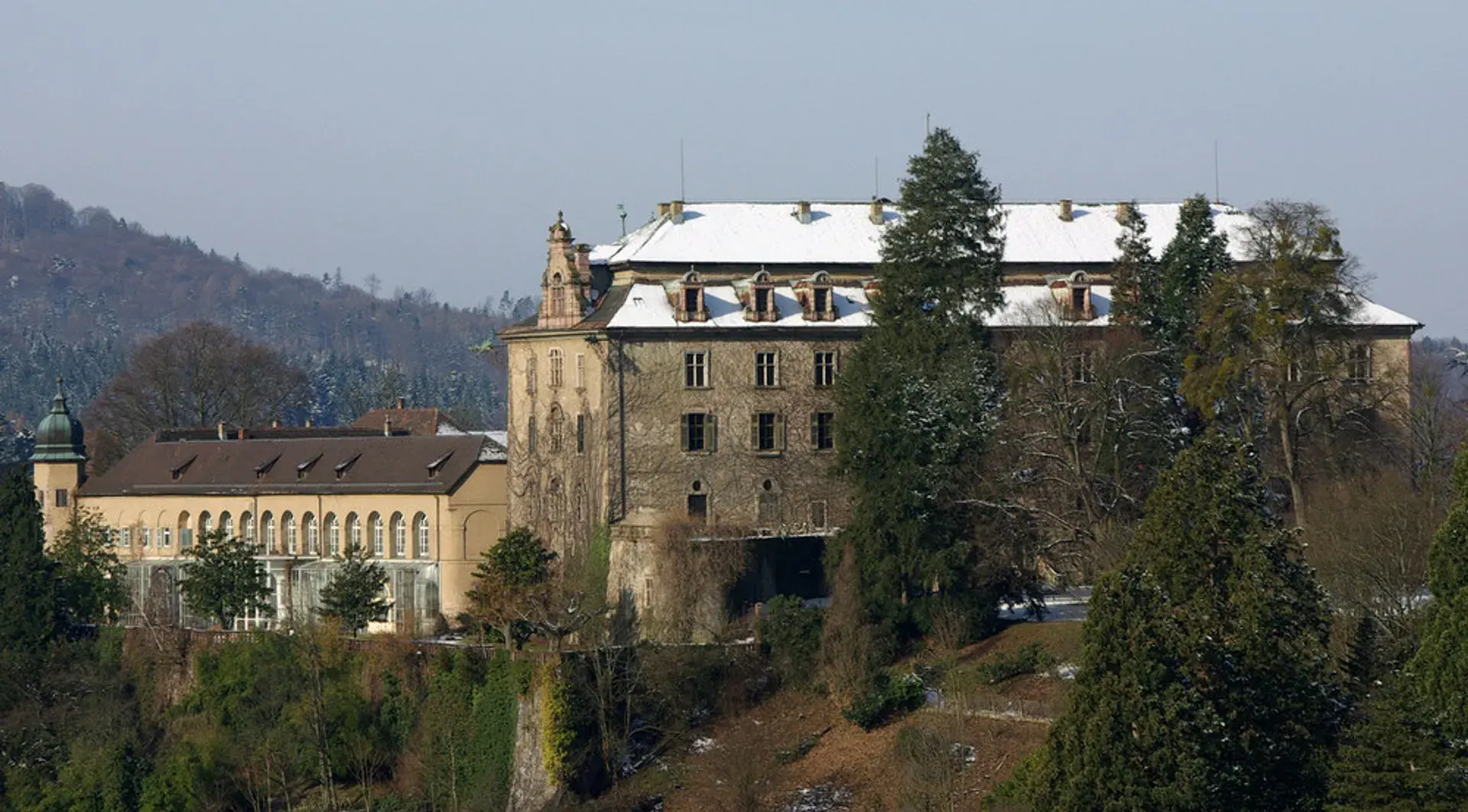
Neues Schloss stands on the Florentinerberg ridge at an elevation of 240 metres, overlooking the historic old town and market square of Baden-Baden. Despite its name translating to "New Castle," the complex is more than six centuries old. It was named solely to differentiate it from Hohenbaden Castle (Altes Schloss), the older fortified ruin situated higher up on the Battert cliffs. Serving as an architectural bridge between the region's medieval feudal era and its transition into an open valley spa town, the palace sits directly above the geological formation where Baden-Baden's mineral-rich thermal springs surge from depths of roughly 2,000 metres at temperatures reaching 68.8 degrees Celsius.
Origins and the Margravial Seat
Initial fortifications on the hilltop date to between 1388 and 1399. Around 1479, Margrave Christoph I relocated the court down from Hohenbaden, designating Neues Schloss as the official residence of the Margraves of Baden. Following a dynastic partition in 1535, the palace became the principal capital seat for the Margraves of Baden-Baden. The site also served an administrative role, housing the margravial central archives from 1529 onward. Broad structural expansions took place throughout the 16th century to accommodate the needs of the ruling court.
Devastation, Reconstruction, and Modern History
In 1689, during the Nine Years' War, troops of French King Louis XIV burned and heavily damaged the fortress. The destruction prompted Margrave Ludwig Wilhelm to move the administrative seat and construct a new Baroque residence in Rastatt. Neues Schloss was subsequently rebuilt in the early 18th century, incorporating the surviving exterior walls into the new design.
During the 19th century, the castle functioned as a summer residence for the Grand Dukes of Baden. Major historicist renovations took place between 1843 and 1847 under the direction of architect Friedrich Theodor Fischer. Following the 1918–1919 revolution, the complex became the private property of the House of Baden and accommodated the dynastic Zähringer Museum until 1981. A significant dispersal of its contents occurred in October 1995 through a large-scale auction held by Sotheby's.
Castle Architecture and the Schlossterrasse
The sprawling complex incorporates several interconnected structures, including a three-story main castle, an archive tower, a carriage house, a kitchen building, and a cavalier house arranged around an inner courtyard entered through a 15th-century gatehouse.
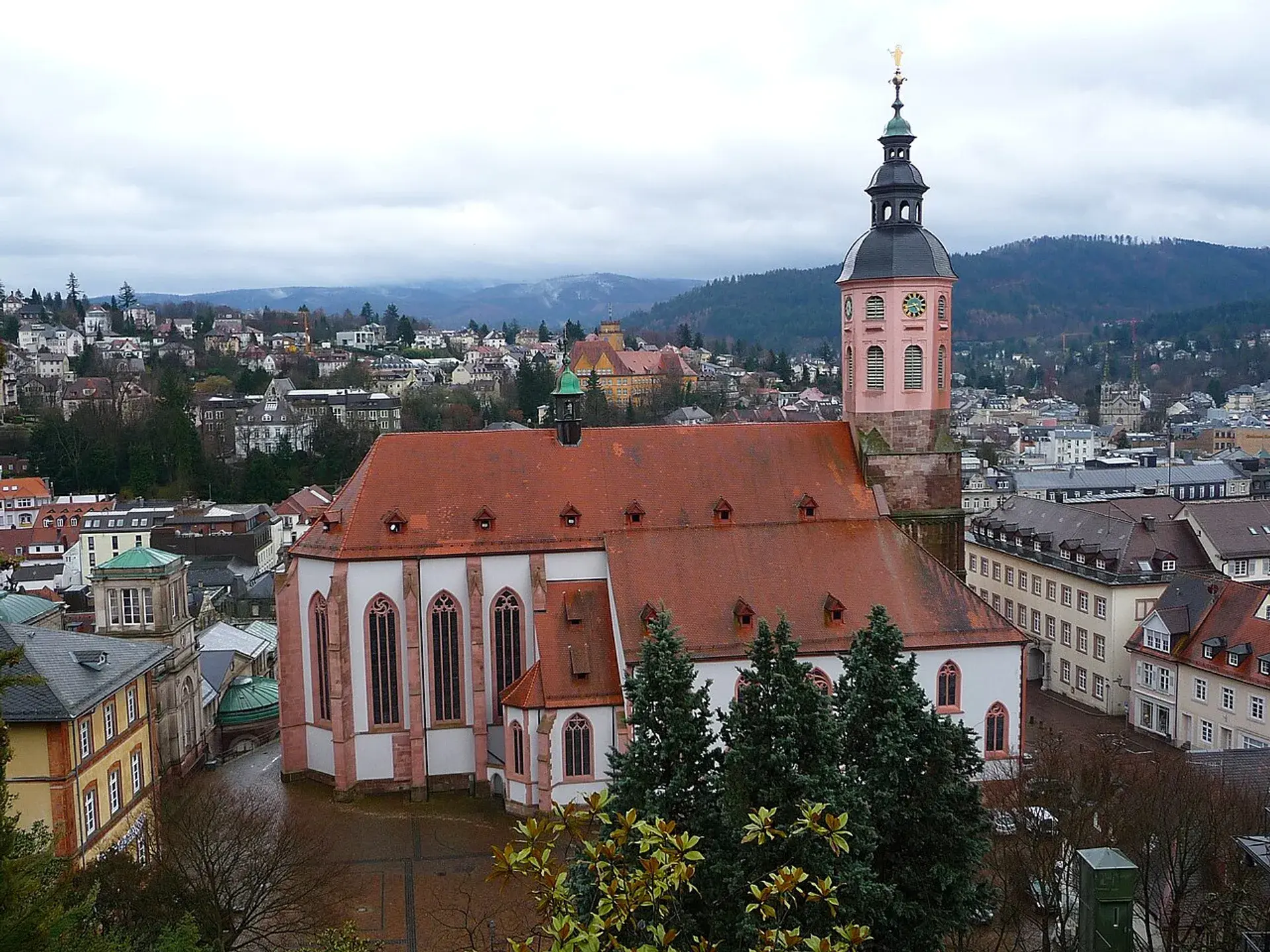
Bordering the grounds is a 130-metre-long stone balustrade terrace constructed around 1670. Situated high above the thermal quarter, the terrace offers panoramic sightlines across the old town. Key views include the copper roof and steeple of the Catholic Stiftskirche, the rooftops of the bath district, the Rhine valley plain, and the Vosges Mountains across the border in France.
Current Status and Public Access
In late 2003, the House of Baden sold the property to the Kuwaiti Al-Hassawi investment group. Subsequent redevelopment plans aimed at converting the historical estate into a luxury hotel stalled, leading the Baden-Baden municipal council to formally revoke the project's development plan in February 2022.
While the interior rooms and the historic parklands remain closed to the public, the 130-metre palace terrace remains freely accessible to pedestrians year-round. It serves as an open public viewpoint accessible via paths and steep stone stairways leading up the hillside from the thermal district below.
FAQ
Is the interior of Neues Schloss open to visitors?
No, the interior and the surrounding historic parklands are closed to the public following stalled redevelopment plans. However, the 130-metre-long stone balustrade terrace remains freely accessible to pedestrians year-round.
Why is the palace called Neues Schloss if it was built in the Middle Ages?
The complex is more than 600 years old, with initial fortifications built between 1388 and 1399. It was designated the 'New Castle' solely to distinguish it from Hohenbaden Castle (Altes Schloss), the older fortress ruins situated higher on the cliffs.
What natural feature is located directly beneath Neues Schloss?
The palace is built directly atop the Florentinerberg ridge, where Baden-Baden's natural thermal waters rise from depths of approximately 2,000 metres at temperatures up to 68.8 degrees Celsius.