Bomann-Museum: Celle's Cultural History Guide
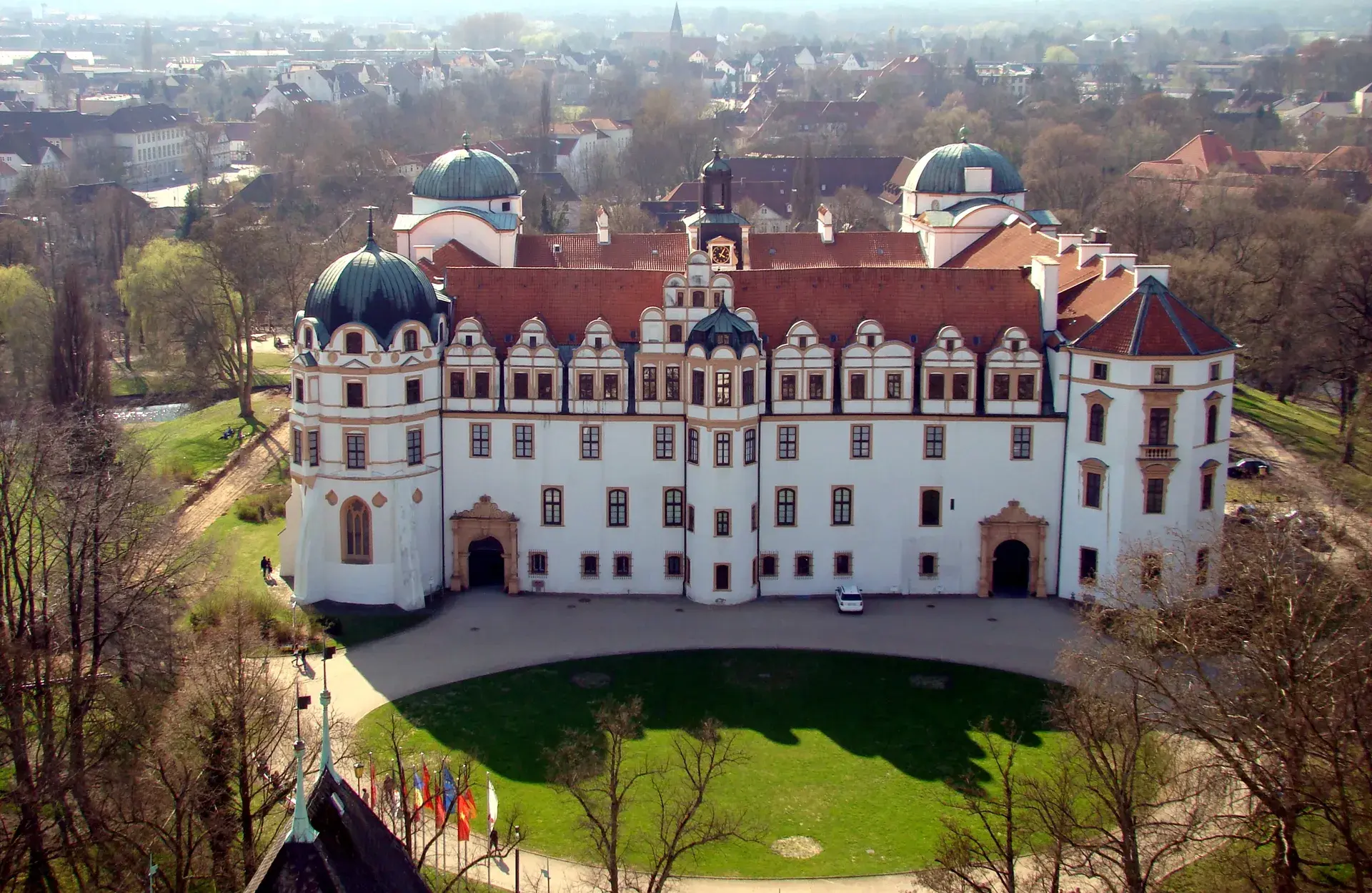
While the adjacent Celle Castle chronicles the lives of ruling dukes, the Bomann-Museum captures the everyday history of Celle's citizens and farmers. Anchoring Schloßplatz between the Old Town and the castle, this expansive cultural institution stands as a testament to the heritage of the Lüneburg Heath.
An "Architectural Pudding"
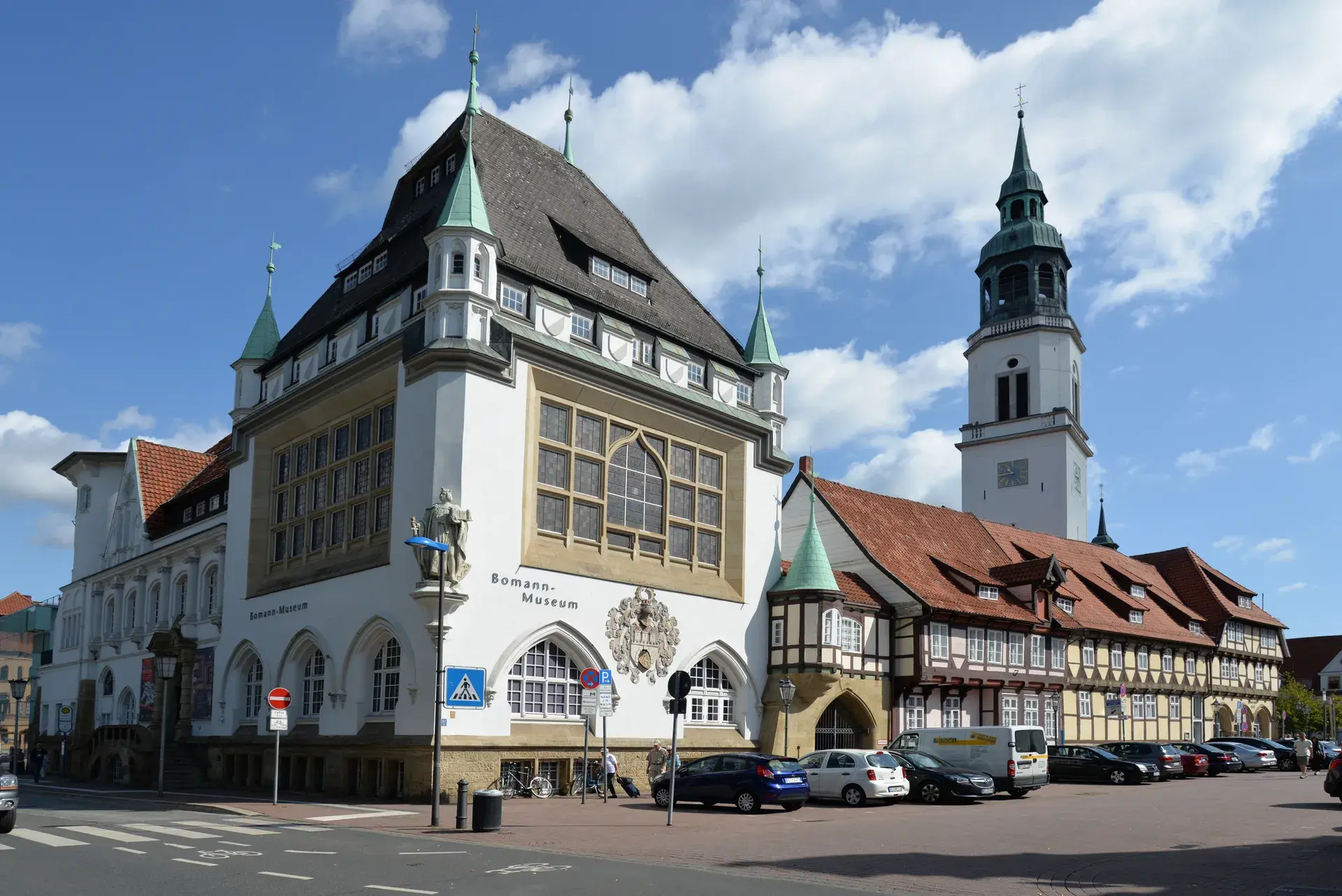
Constructed between 1903 and 1907 on the site of the former outer bailey, the museum building is a striking collage of regional styles. Hanoverian architect Alfred Sasse and museum founder Wilhelm Bomann incorporated massive stone, Gothic and Renaissance elements, and traditional timber framing into the design. This eclectic mix prompted local poet Hermann Löns to mockingly dub the structure a "veritable architectural pudding." The facade features a prominent sandstone sculpture of Duke Otto II the Strict clutching a miniature model of Celle Castle and a sword of justice. Originally, the building boasted a tall northern spire, but structural decay led to its removal in 1929, leaving an open roof terrace.
Preserving the Lüneburg Heath
Founded in 1892 as the Vaterländisches Museum to safeguard disappearing folkways during rapid industrialization, the institution was renamed in 1928 to honor Wilhelm Bomann. Today, the museum offers 3,500 square meters of exhibition space. The exhibits cover regional folklore, municipal history, and the military past of the Kingdom of Hanover. The collection garnered early imperial patronage when Emperor Wilhelm II visited the museum and gifted a monumental mural by Carl Röchling, depicting the 1813 Battle of the Göhrde, for its Hall of Honor.
Inside a 16th-Century Farmhouse
One of the museum's most immersive features is an interior reconstruction of a 1571 Lower Saxon hall house from Narjesbergen. The transition from polished modern museum galleries to the rough stone and wooden floors of a dim, open-hearth farmhouse kitchen creates a stark textural shift. Complete with authentic stalls and rural domestic equipment, this preserved structure offers a tangible connection to early agrarian life.
A Modern Cultural Hub
Operating Tuesday through Sunday, the Bomann-Museum functions as an active educational center with seven permanent thematic areas, rotating special exhibits, and specialized collections like the Tansey Miniature Collection. Modern expansions have connected the historic structure directly to the Kunstmuseum Celle, known as the world’s first 24-hour art museum. The architectural juxtaposition of the historic museum facade standing beside the glowing glass cube of contemporary art represents Celle's seamless blend of historic preservation and modern culture.
FAQ
What are the opening days for the Bomann-Museum?
The Bomann-Museum operates Tuesday through Sunday.
Who founded the Bomann-Museum?
The museum was founded in 1892 by manufacturer Wilhelm Bomann as the Vaterländisches Museum. It was later renamed in his honor in 1928.
What architectural styles are featured on the museum's exterior?
The building is an eclectic collage of Gothic, Renaissance, and traditional timber-framed architectural elements, which famously led local poet Hermann Löns to call it an "architectural pudding."
What is the 1571 hall house inside the museum?
The museum's interior galleries enclose a complete ground-floor reconstruction of a 1571 Lower Saxon hall house from Narjesbergen, featuring a historic hearth and authentic rural domestic equipment.