Hoppener Haus: Historic Timber-Framed Masterpiece in Celle
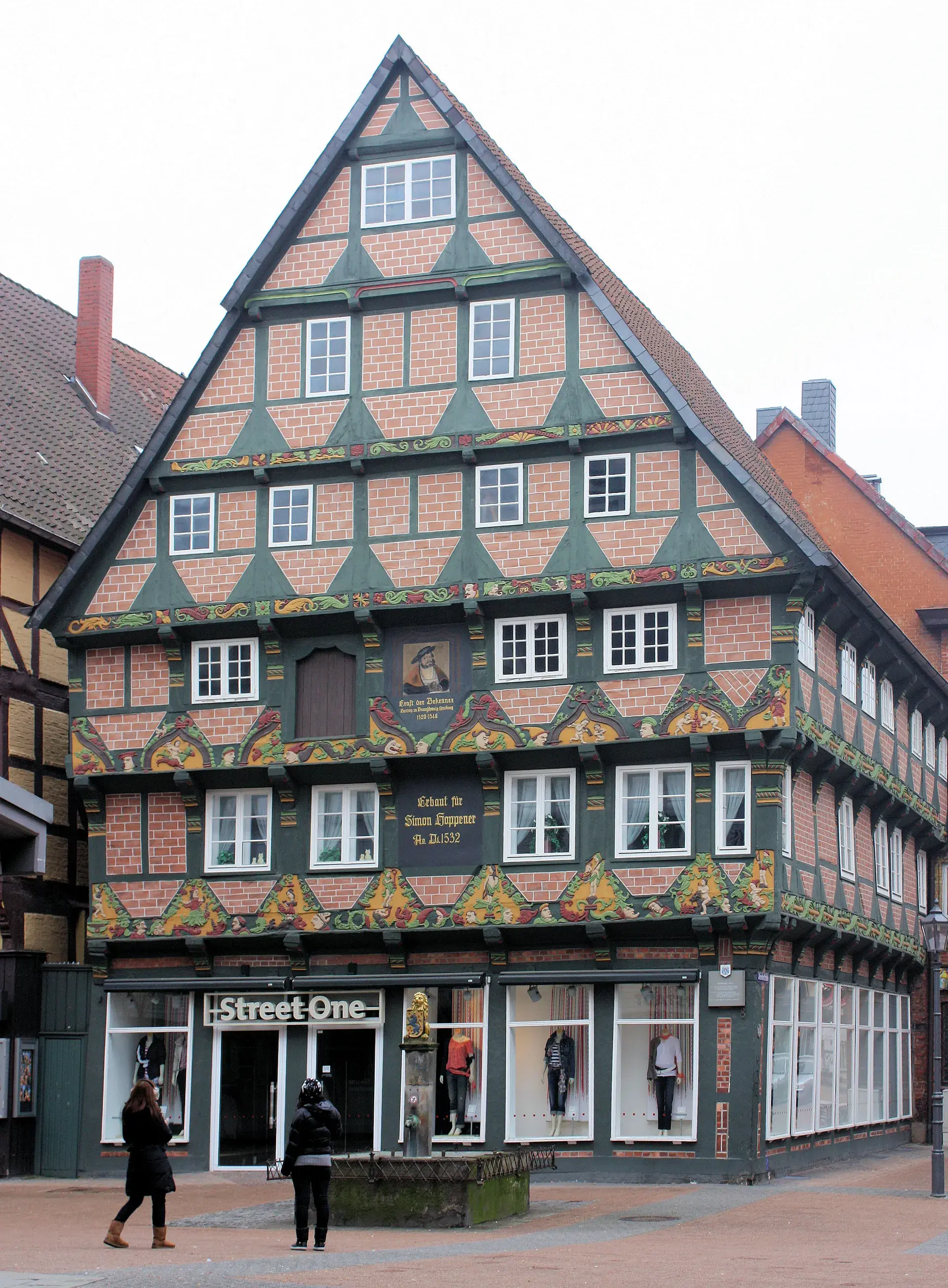
Located at the intersection of Poststraße and Rundestraße, the Hoppener Haus stands as the most famous and richly ornamented half-timbered house in Celle. Set amidst Germany's largest contiguous ensemble of nearly 500 historic timber-framed structures, this striking building serves as the visual high point of early Renaissance timber craftsmanship in the city's Old Town.
A 16th-Century Architectural Masterpiece
The Hoppener Haus was constructed in 1532 following an urban expansion initiative by Duke Ernst the Confessor. The building was commissioned by Simon Hoppener, an official scribe and treasurer in the ducal service. Featuring a traditional timber-framed structure, the house is distinguished by six projecting levels, where stories and gable overhangs are stacked atop one another.
Intricate Woodcarvings and Contrasting Facades
The elaborate relief carvings adorning the structure are attributed to master woodcarver Simon Stappen. The horizontal beams, corner posts, and diagonal braces are covered in vivid, painted carvings depicting planetary gods, mythological beasts, fools, diabolical figures, and grotesque masks. Interspersed among these figures are portrait busts believed to represent the distinct social classes and professions of 16th-century ducal society. The building also features contrasting elevations. The front-facing gable along Poststraße highlights dramatic figurative carvings, while the side along Rundestraße displays Late Gothic foliate rod moldings.
Surviving Fire and Historic Renovations
The Hoppener Haus has survived centuries, though not without damage. In October 1932, exactly 400 years after its construction, a fire destroyed the original roof. Firefighters successfully saved the carved timber facades, allowing the upper gable structure to be reconstructed in a simplified form. Additionally, a painted bust of Duke Ernst on the third floor was added during historicist renovations in 1901, rather than being part of the original 1532 design.
The Historic Pipenposten Fountain
Standing on the cobblestones directly in front of the house is the Pipenposten, a Renaissance fountain topped with a gilded heraldic lion. This landmark is one of only three surviving public utility water fountains from Celle's original 16th-century municipal pipeline network.
Modern Conservation and Use
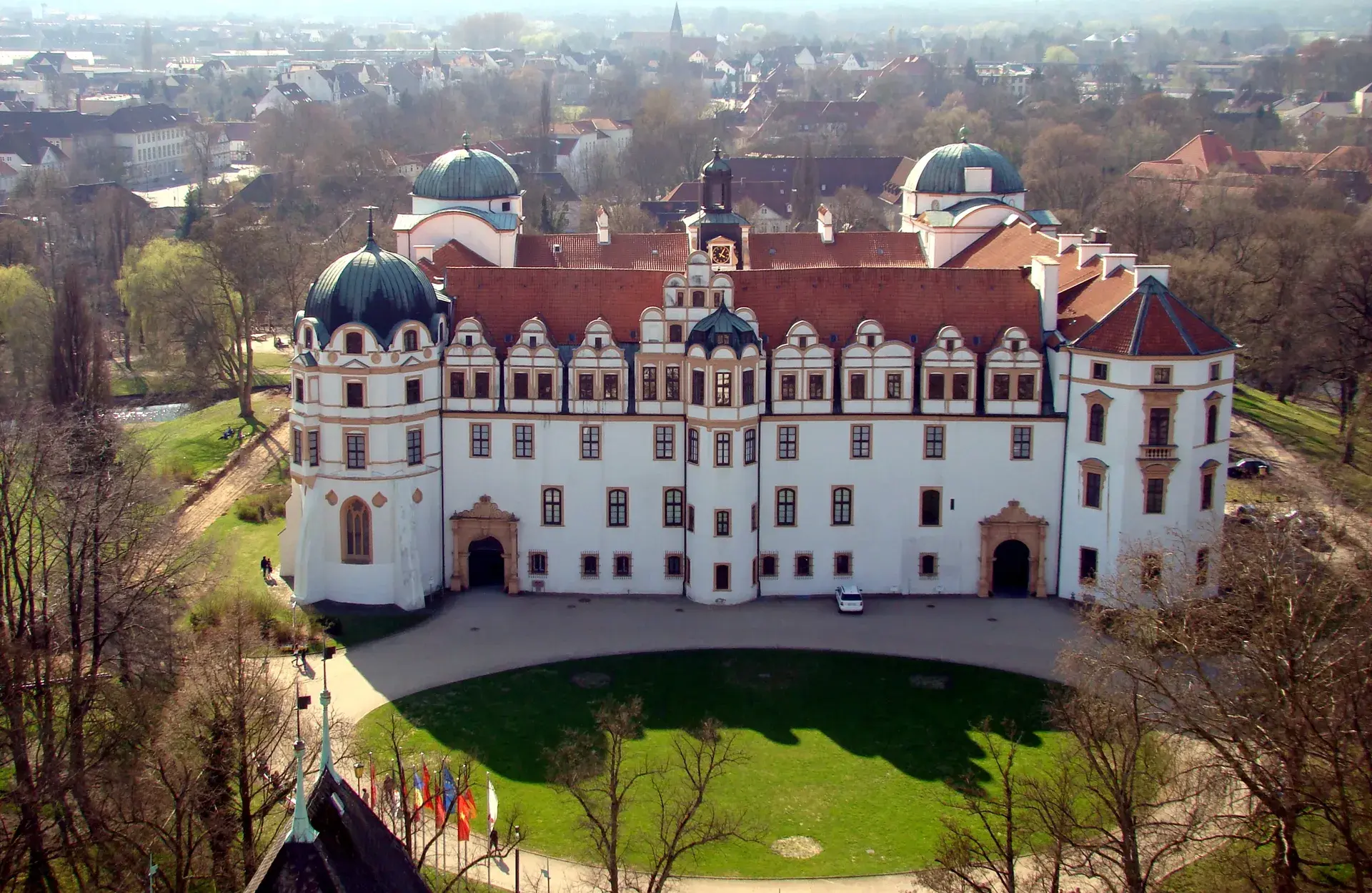
Today, the Hoppener Haus is a protected historic monument. It anchors Celle's pedestrian heritage trail, situated along the essential route connecting Celle Castle and the Market Square. The structure's conserved ground-floor spaces remain fully integrated into the city's commercial and retail core.
FAQ
Who built the Hoppener Haus?
The building was constructed in 1532 for Simon Hoppener, an official scribe and treasurer for Duke Ernst the Confessor. The elaborate woodcarvings are attributed to master carver Simon Stappen.
What is the Pipenposten in front of the Hoppener Haus?
The Pipenposten is a historic Renaissance fountain topped with a gilded lion. It is one of only three surviving fountains from Celle's 16th-century municipal pipeline network.
Did the Hoppener Haus ever burn down?
The original roof was destroyed by a fire in October 1932. The carved timber facades were saved by firefighters, and the upper gable was subsequently reconstructed in a simplified form.