Stechinellihaus: Celle's Neoclassical Landmark
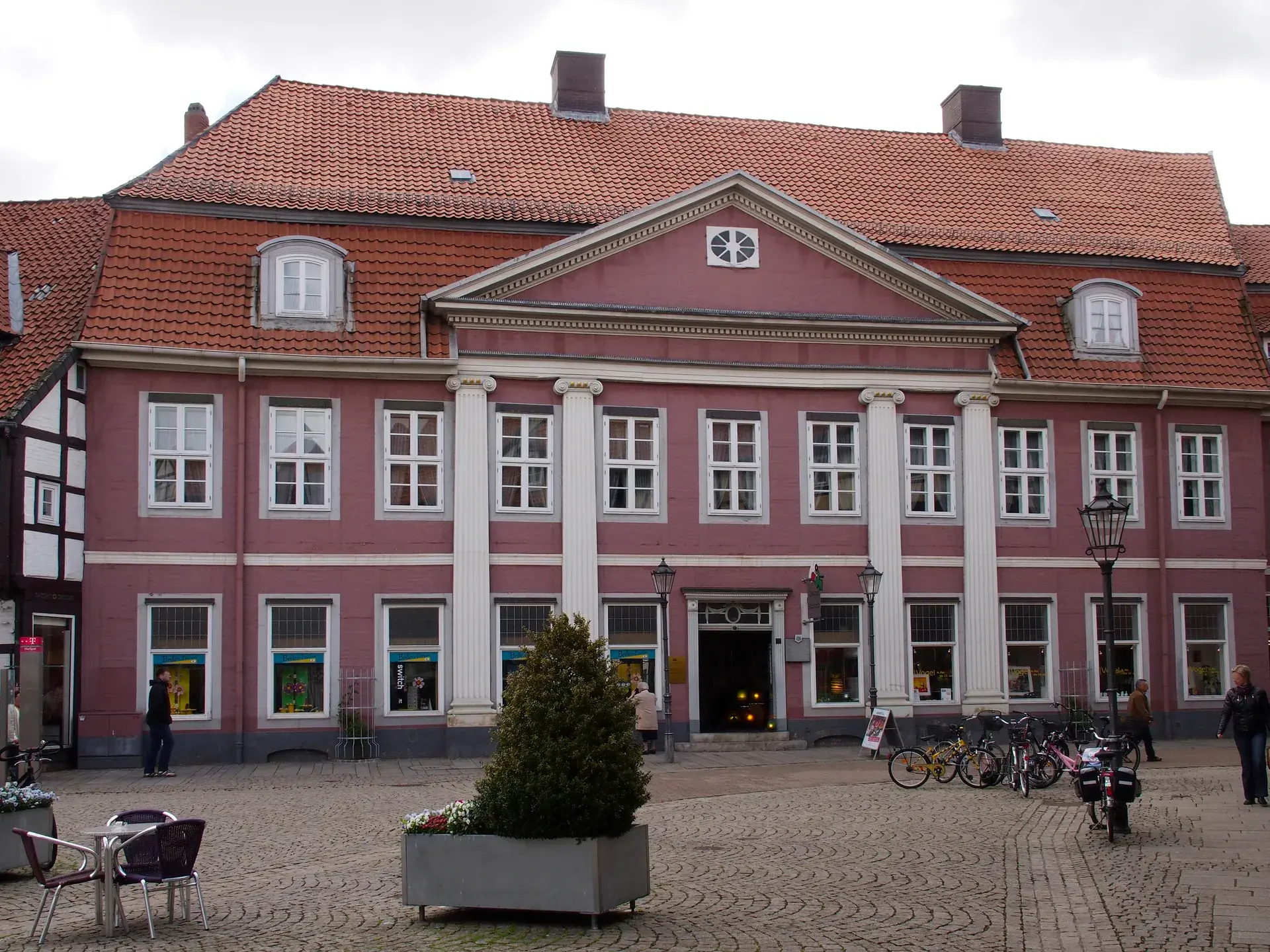
The historic facade of Stechinellihaus on Großer Plan showcases an architectural style rich with local heritage. Anchoring the western edge of the square in the historic Altstadt of Celle, Lower Saxony, this Neoclassical urban mansion serves as a bridge between the Residenzschloss (Ducal Palace) and the main pedestrian shopping streets.
From Valet to Postal Empire
The mansion is named after Francesco Maria Capellini (1640–1694), who was born in Rimini and met Duke Georg Wilhelm of Brunswick-Lüneburg in Rome. Initially entering the Duke's service as a valet, Capellini moved to Celle in 1665 and swiftly ascended the social ranks.
He amassed immense wealth and earned a noble title by securing monopolies over wine and cloth imports, as well as establishing postal routes across the Guelph lands. Ultimately, he became the court banker and General Hereditary Postmaster to the Guelph dukes.
The Origin of the "Stechinelli" Name
Despite his high-ranking status, Capellini was best known by his affectionate court nickname, "Stechinelli." Derived from the Italian word stecchino, meaning toothpick, the moniker playfully mocked his ultra-thin legs.
The Capellini family coat of arms featured a wide-brimmed black hat (cappello in Italian), serving as a canting heraldic pun on their surname. Stechinelli's architectural legacy also extended beyond Celle to nearby Wieckenberg, where he commissioned an estate chapel cleverly disguised as a timbered barn to comply with local religious restrictions.
Architectural Transformation and Cultural Hub
The site at Großer Plan 14 originally housed two 16th-century townhouses that were destroyed in a 1668 city fire. After being rebuilt, the property was transferred to Capellini in 1675.
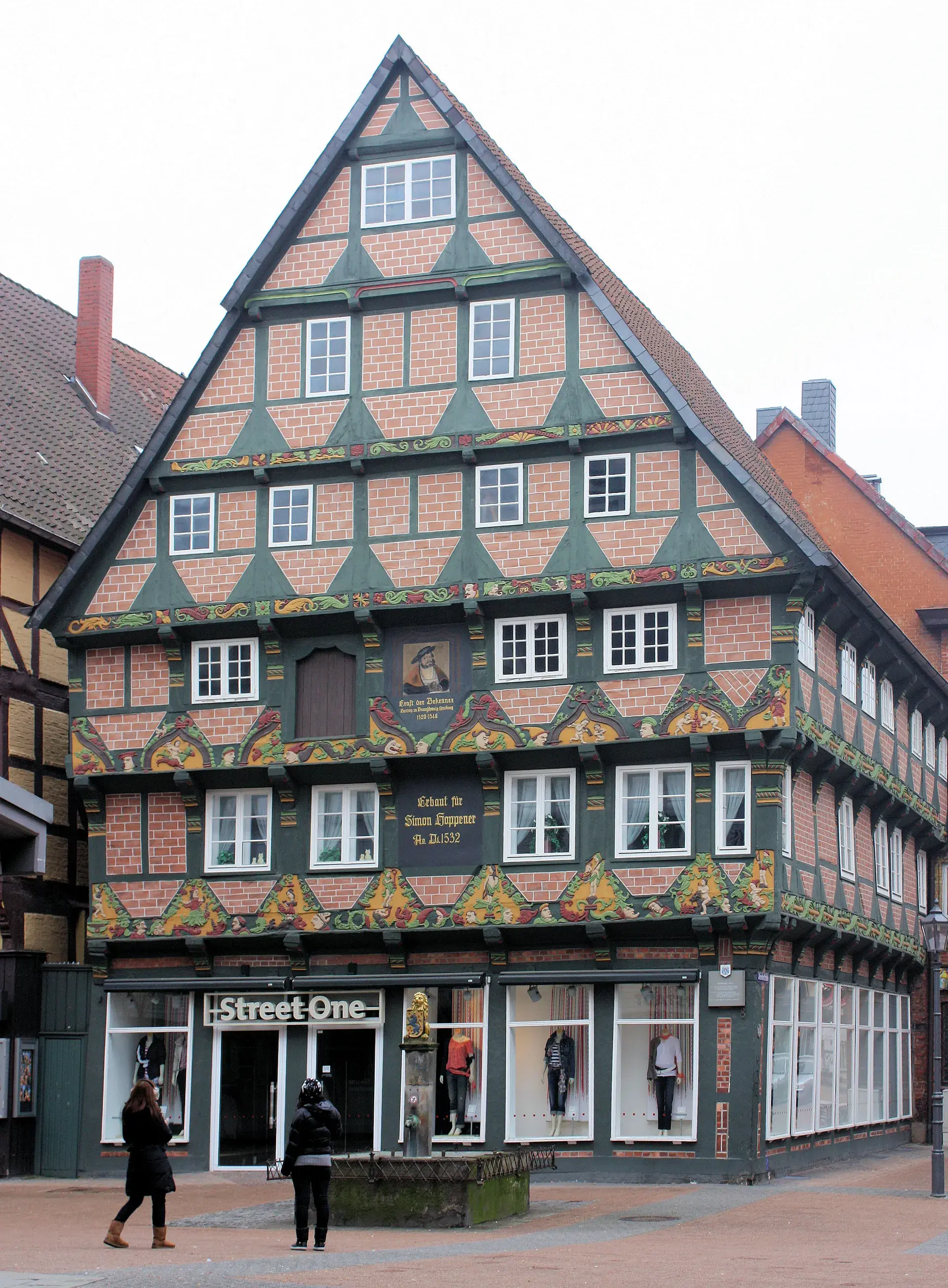
The structure seen today, however, was commissioned between 1795 and 1798 by wax manufacturer Jacob Christian Lampe. Lampe constructed the light-colored, symmetrical Neoclassical stone facade with its prominent pediment "to adorn the town," intentionally retaining the Stechinelli name. This imposing design provides a stark visual contrast to the surrounding rows of richly carved half-timbered (Fachwerk) houses.
In 1836, industrial pioneer and private banker Christian Hostmann purchased the mansion. Under his ownership, the residence was transformed into a prominent cultural salon that hosted renowned artists, including violinist Niccolò Paganini and composer Johannes Brahms.
Stechinelli's Legacy Today
Today, the Stechinellihaus operates as an active commercial property on the pedestrianized Großer Plan square. The historic building now accommodates street-level retail spaces, travel services, and professional business offices, keeping Capellini's namesake a vibrant part of modern Celle.
FAQ
Where is the Stechinellihaus located?
The Stechinellihaus is located at Großer Plan 14 in the historic Altstadt of Celle, Germany. It anchors the western edge of the central square between the Ducal Palace and the main pedestrian shopping streets.
Who was Stechinelli?
"Stechinelli" was the nickname of Francesco Maria Capellini, an Italian-born valet who rose to become a wealthy nobleman, court banker, and General Hereditary Postmaster to the Guelph dukes in the 17th century.
Why is it called the Stechinellihaus?
The building is named after Francesco Maria Capellini, nicknamed "Stechinelli" (meaning toothpick) in reference to his thin legs. Although the current Neoclassical building was constructed by Jacob Christian Lampe in the 1790s, Lampe retained the historic name.
What is the Stechinellihaus used for today?
Today, the Stechinellihaus is an active commercial building that houses street-level retail, travel services, and professional business offices.