Altes Rathaus Celle: Renaissance History & Architecture
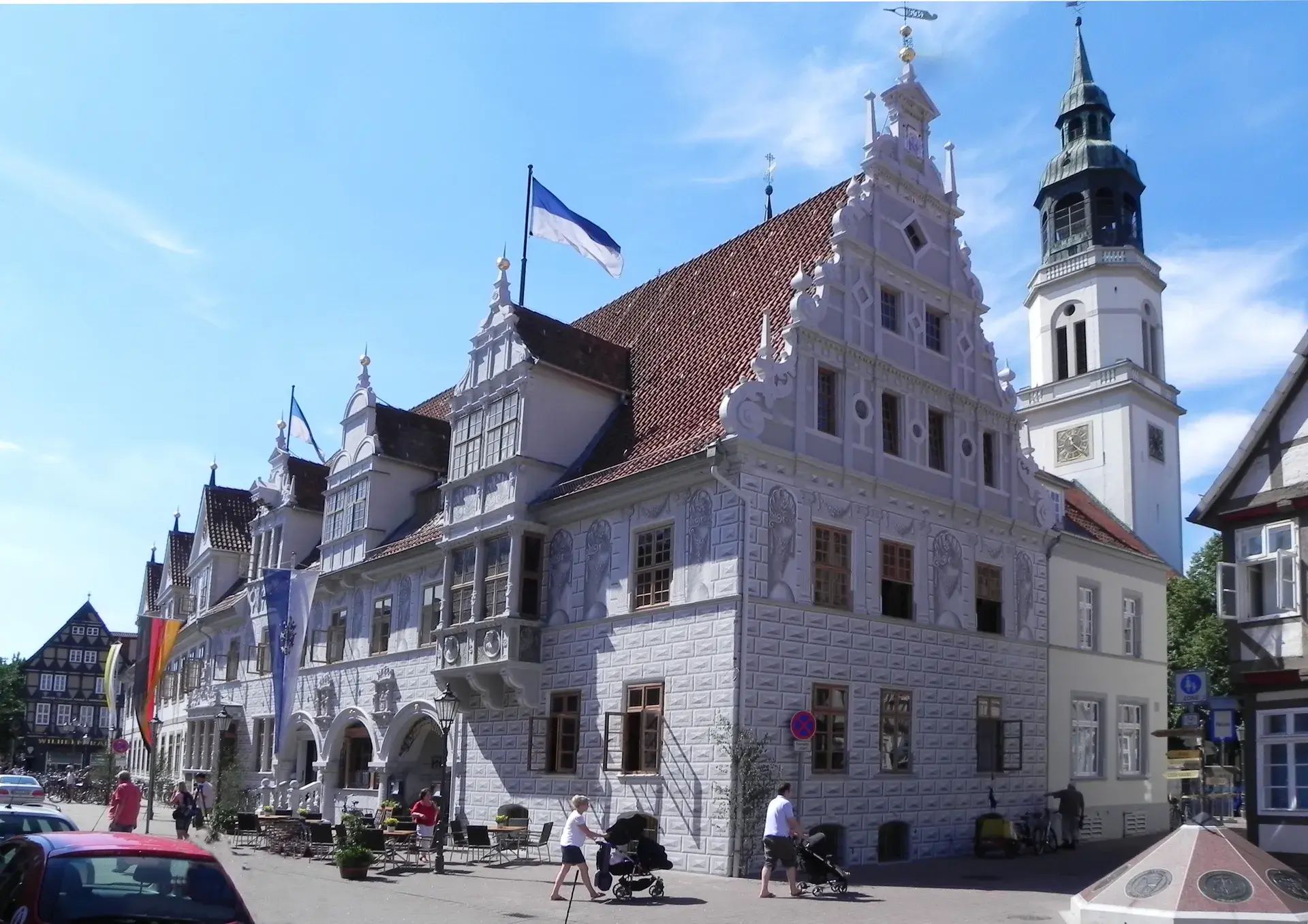
Standing directly on the market square, Celle's Old Town Hall (Altes Rathaus) hides over seven centuries of civic administration behind a masterfully deceptive painted facade. Positioned as a civic counterweight to the Ducal Castle, the building provides a distinct visual pause within one of Europe's densest concentrations of half-timbered architecture.
Centuries of Civic History
The origins of the Altes Rathaus date back to the planned founding of Celle around 1292 under Duke Otto the Strict. The original structure underwent several expansions throughout the 14th century before a major Renaissance transformation began in the 1560s.
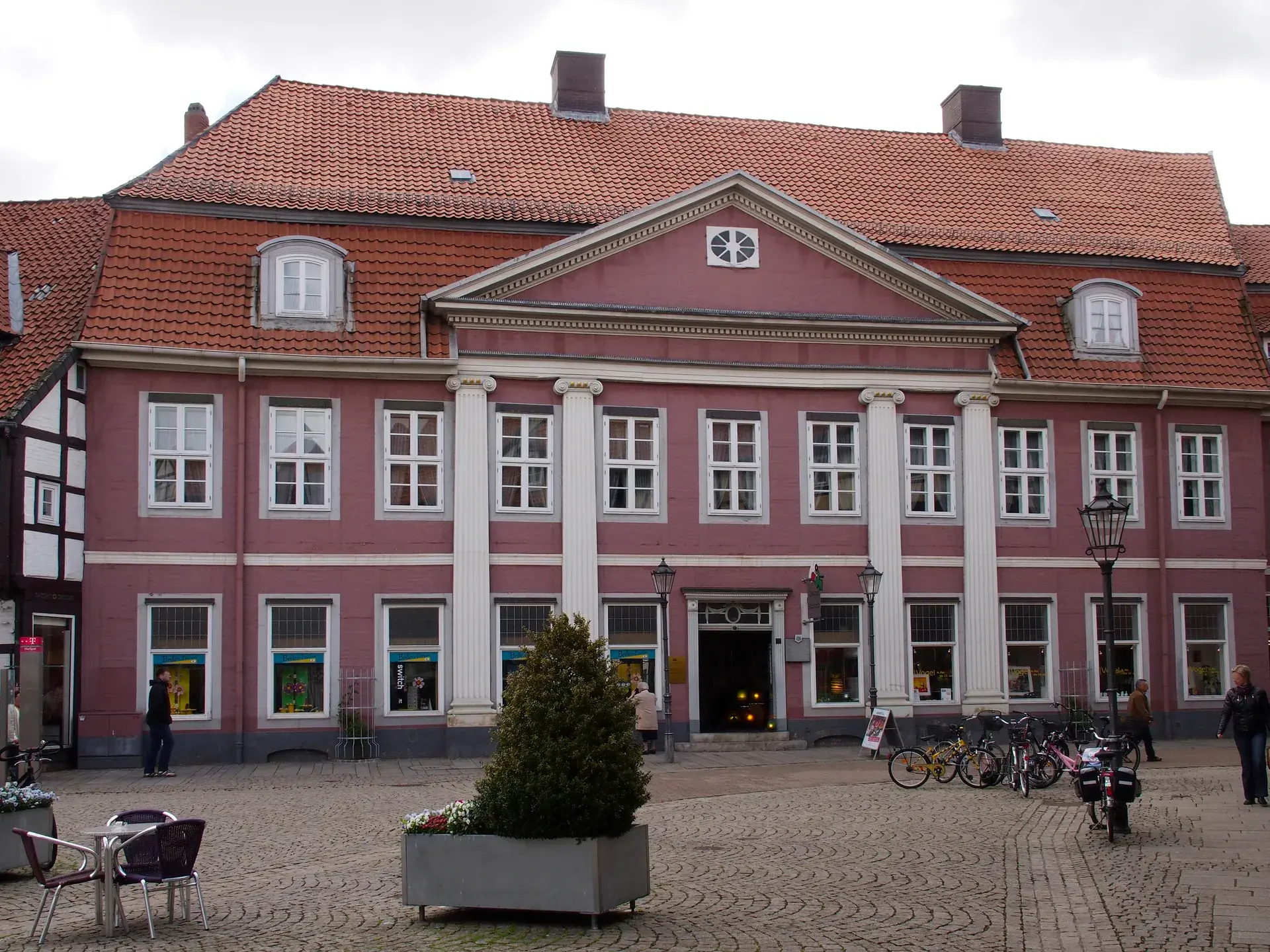
Between 1580 and 1581, adjoining houses were demolished to construct a southern timber-framed wing. Known locally as the Hochzeitshaus, or wedding house, this addition accommodated town markets, court proceedings, and civic celebrations. In 1785, the Hochzeitshaus was reconstructed in solid masonry featuring a neoclassical style. The Altes Rathaus served as the headquarters for Celle's municipal administration for centuries until the local government relocated to the Neues Rathaus in 1999.
Weser Renaissance and Illusionistic Art
The building's iconic northern facade features a Weser Renaissance gable that was completed in 1579. This architectural element was brought to life by master mason Jakob Rieß, Salzburg stonemason Frederic Soltersborg, and a team of sculptors from Hamelin.
The north wing stands out from the surrounding half-timbered buildings due to its elaborate trompe-l'œil exterior painting. This illusionistic artwork features painted diamond-cut ashlar, simulated architectural niches, fruit garlands, and cast shadows that mimic three-dimensional stone relief. For decades, this ornate exterior was hidden beneath monochrome ocher-toned paint. During a restoration between 1984 and 1985, conservators removed 13 layers of paint to reveal rare 1697 Baroque murals layered over fragments from the 17th century.
Architectural Curiosities
The exterior of the Altes Rathaus is adorned with historic heraldry and sculptures. Above the market entrance portal, visitors can observe the carved coats of arms of Duke Wilhelm the Younger and his wife, Princess Dorothea of Denmark. A two-story bay window features sculpted figures that are traditionally identified as the Holy Roman Emperor and his consort. A smaller, hidden curiosity is a sculpted portrait of master builder Jakob Rieß, carved into the base of the left entrance portal pillar.
Mounted on the eastern entrance wall by the market is the Celler Elle, a historic public measurement rod. The current 62.5-centimeter metal bar is a 1931 replica installed after the historical 1692 standard was stolen in 1855.
Modern Functions and the Historic Ratskeller
Today, the Altes Rathaus remains an active part of city life. The upper levels house the official Celle Tourist Information office, the Schlosstheater administration, and historic ceremonial halls utilized for official city receptions and weddings.
The building's lower level accommodates the Ratskeller restaurant, which operates beneath preserved medieval Gothic ribbed vaulting. The cellar received a ducal privilege to serve wine and foreign beers in June 1378, making the Ratskeller one of the oldest documented dining establishments in Lower Saxony.
FAQ
When was the Altes Rathaus in Celle built?
The origins of the Altes Rathaus date back to the planned founding of the town around 1292 under Duke Otto the Strict. The building later underwent significant expansions in the 14th century and a major Renaissance transformation starting in the 1560s.
What is the Celler Elle?
The Celler Elle is a historic public measurement rod mounted on the eastern entrance wall of the Altes Rathaus. The current version is a 1931 replica of the original 1692 standard, which was stolen in 1855.
Does the Altes Rathaus still function as a town hall?
The building served as Celle's municipal administration headquarters until 1999, when the government relocated to the Neues Rathaus. Today, it houses the Celle Tourist Information office, ceremonial halls, and the historic Ratskeller restaurant.