Balduinstor: Cochem’s Medieval Town Gate
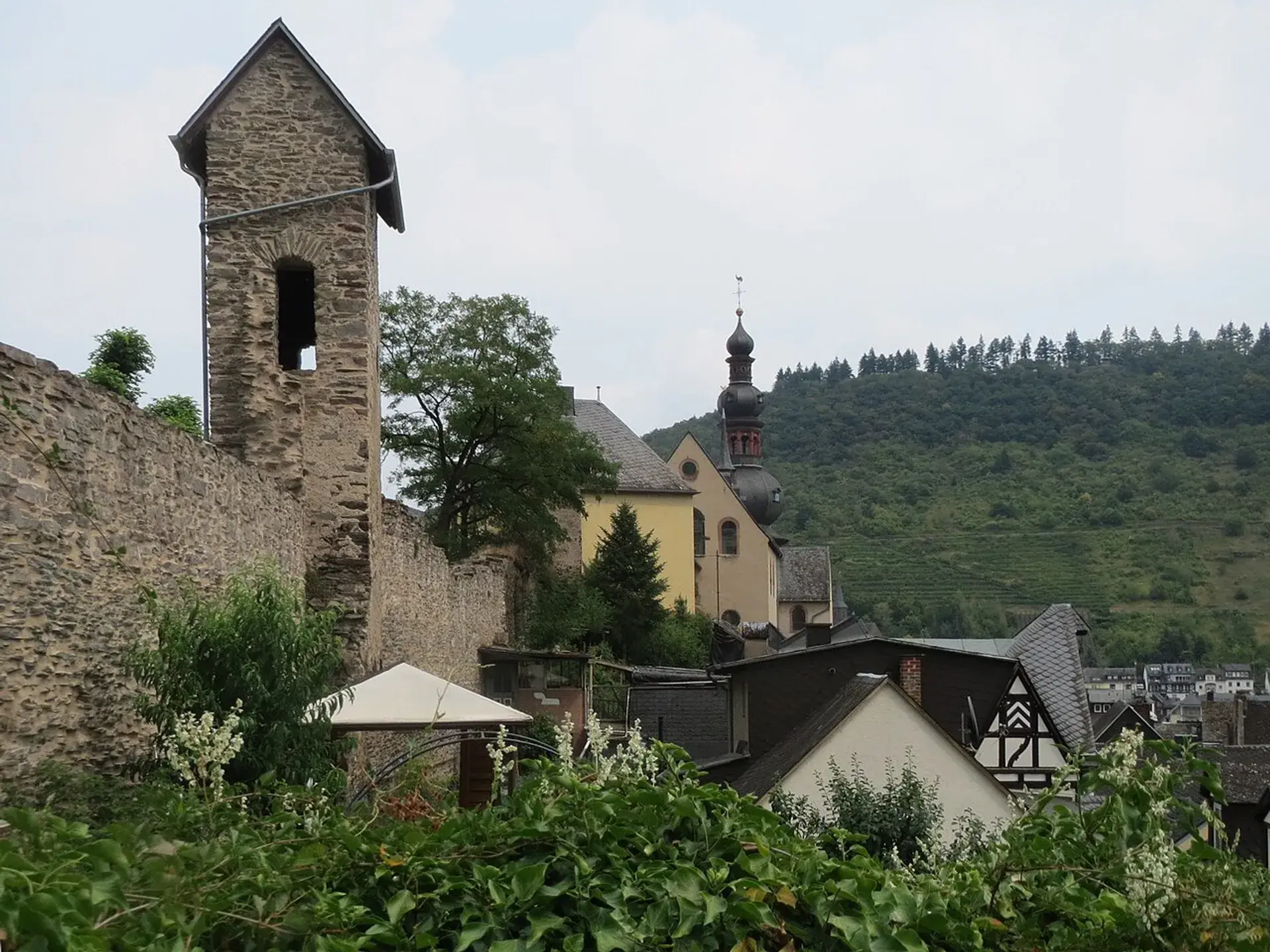
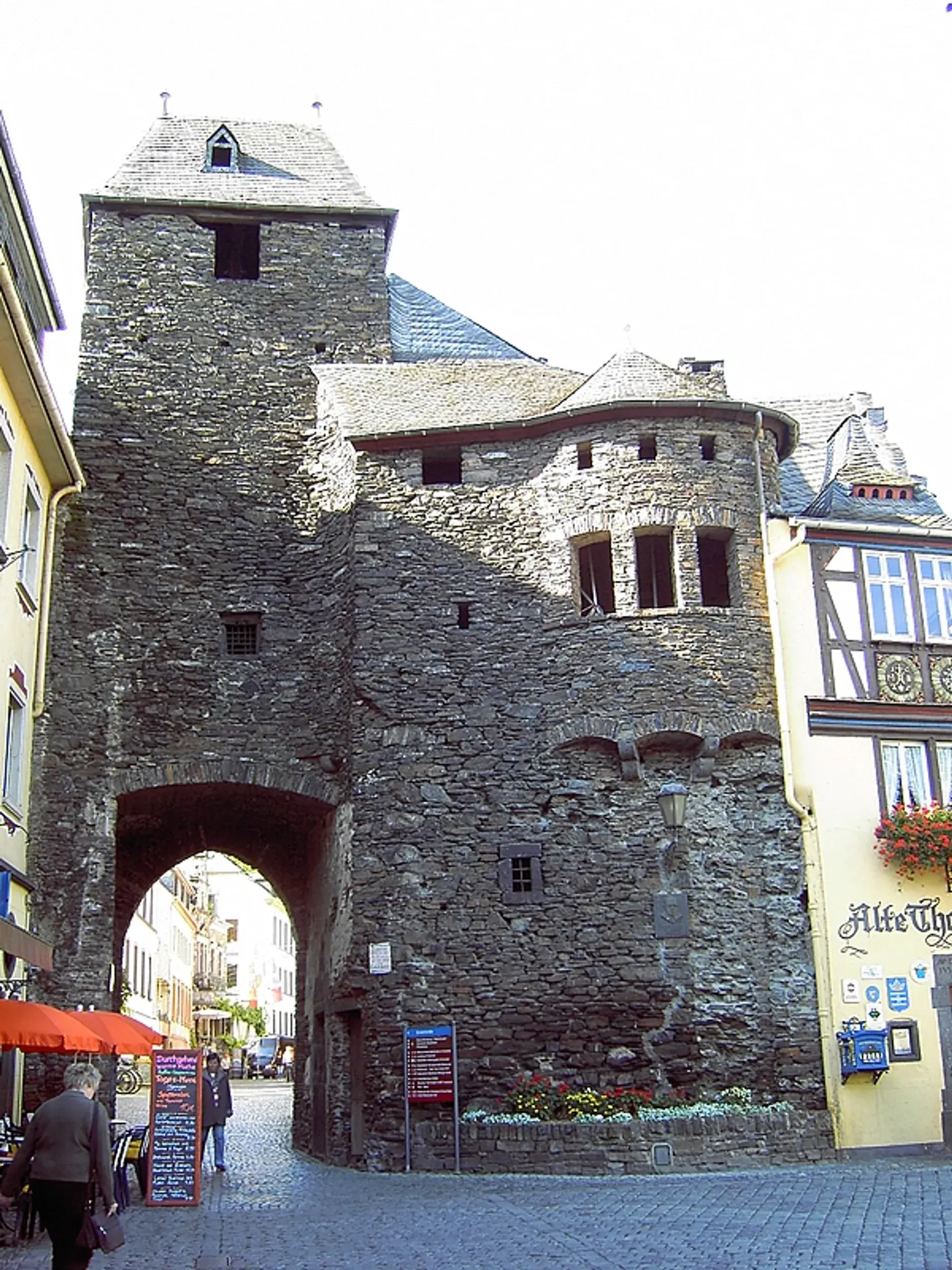
Standing along the upper edge of Cochem’s Old Town, the Balduinstor (Baldwin’s Gate) is a fortified medieval stone gate and surviving defensive tower remnant (Wehrturm). Located on Obergasse adjacent to the historic cemetery and churchyard wall, it is one of only three medieval town gates that still stand in Cochem, alongside the Enderttor and the Martinstor. Today, the gate is classified as a protected monument in the Rhineland-Palatinate heritage inventory.
Origins and the Fortification of Cochem
The origins of the gate trace back to the late 13th and early 14th centuries. In 1294, King Adolf of Nassau pledged the Imperial estate of Cochem to the Archbishopric of Trier, formally incorporating the settlement into Electoral-Trier territory. Decades later, Archbishop-Elector Baldwin of Luxembourg—who reigned as Prince-Archbishop of Trier from 1307 to 1354—granted Cochem formal town rights in 1332.
Following the grant of town rights, Archbishop Baldwin initiated the construction of a comprehensive stone fortification system. This defensive ring linked the lower river-valley settlement directly to the hillside and the Reichsburg above. Baldwin was one of the Holy Roman Empire’s most influential territorial figures, recognized for his extensive administrative programs, bridge building, and regional fortifications throughout the Moselle and Rhine valleys. The gate was named in his honor and became a core component of this defensive perimeter. While French troops destroyed the majority of Cochem's town fortifications and the Reichsburg in 1689 during the Nine Years' War, the Balduinstor survived.
Defensive Architecture and the Pechnase
Balduinstor showcases medieval defensive engineering tailored to steep terrain. Positioned directly above the stone portal is an intact Pechnase (machicolation or pitch chute). This overhanging stone opening allowed defenders inside the tower to target attackers attempting to breach the entrance below.
While popular folklore frequently claims that boiling oil was poured through medieval machicolations, historical military records demonstrate that oil was far too scarce and costly to be used in this manner. Instead, garrison defenders dropped heavy stones, quicklime, boiling water, and hot pitch onto assailants. While external defensive stonework remains preserved, surviving municipal records regarding the Balduinstor's interior rooms and gatekeeper facilities are notably sparse compared to documentation preserved for the larger Enderttor.
Spatial Context and Modern Function
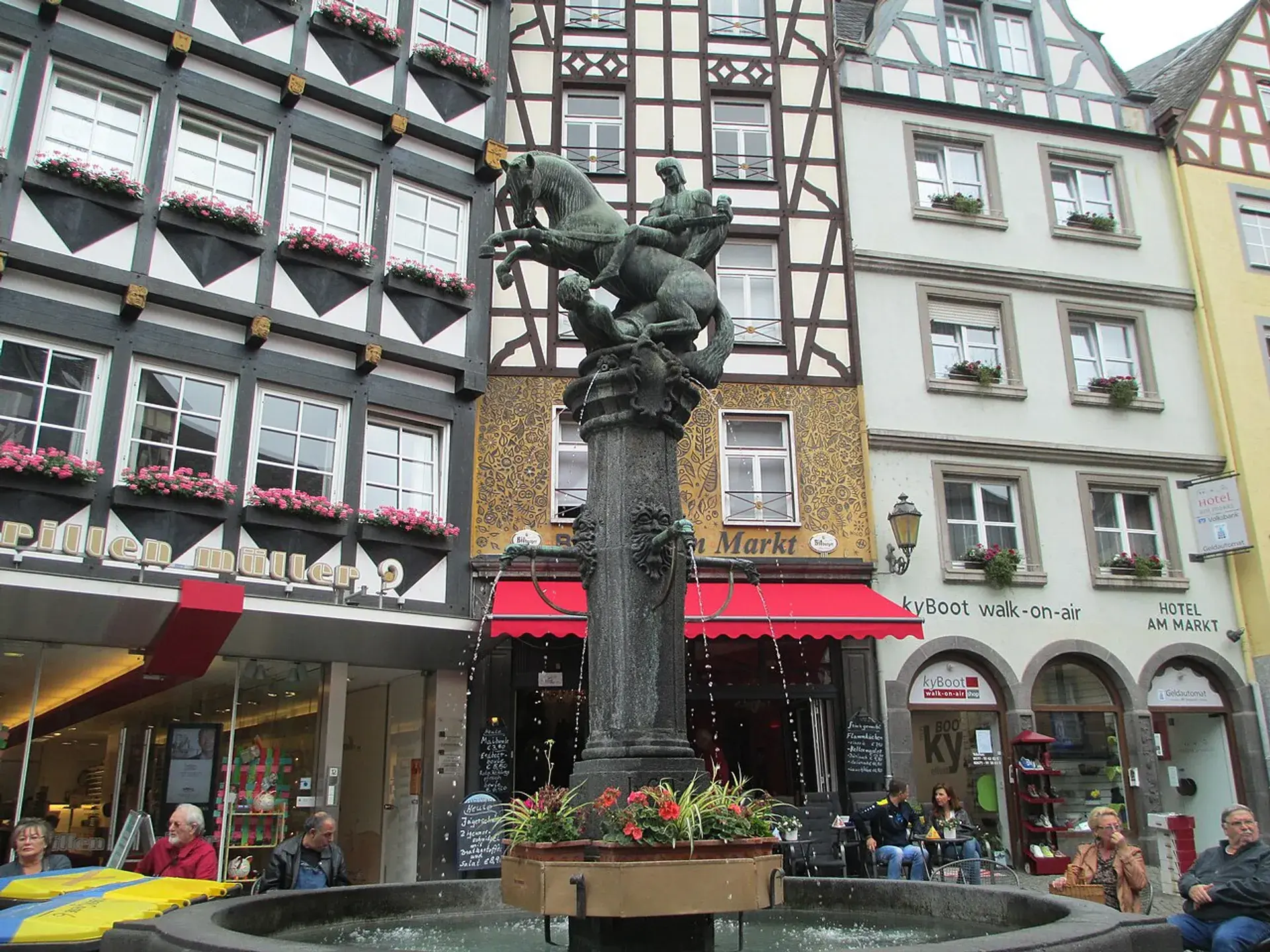
Historically, the Balduinstor marked the physical boundary between Cochem's dense river-valley settlement around the Marktplatz and the ascending hillside approach to the Reichsburg. It stands as an architectural record of Cochem's 14th-century transformation from an Imperial toll post into a fortified Electoral-Trier stronghold.
In modern times, the structure serves as an open, publicly accessible pedestrian archway. It connects the upper lanes of Obergasse with the network of footpaths leading up to the Reichsburg, remaining an enduring monument to medieval civic defense in the Moselle region.
FAQ
When was the Balduinstor built?
Construction of the Balduinstor began after 1332, following Archbishop Baldwin of Luxembourg's granting of town rights to Cochem and the commissioning of a comprehensive stone wall system.
What is the function of the Pechnase above the gate?
The Pechnase is an intact overhanging stone chute directly above the archway designed for defense. From this opening, defenders could drop stones, pitch, quicklime, or boiling water onto attackers attempting to force the gate.
Did the Balduinstor survive the Nine Years' War?
Yes. Although French forces destroyed the Reichsburg and large portions of Cochem's stone fortifications in 1689, the Balduinstor remained intact.