Enderttor in Cochem: History and Architecture
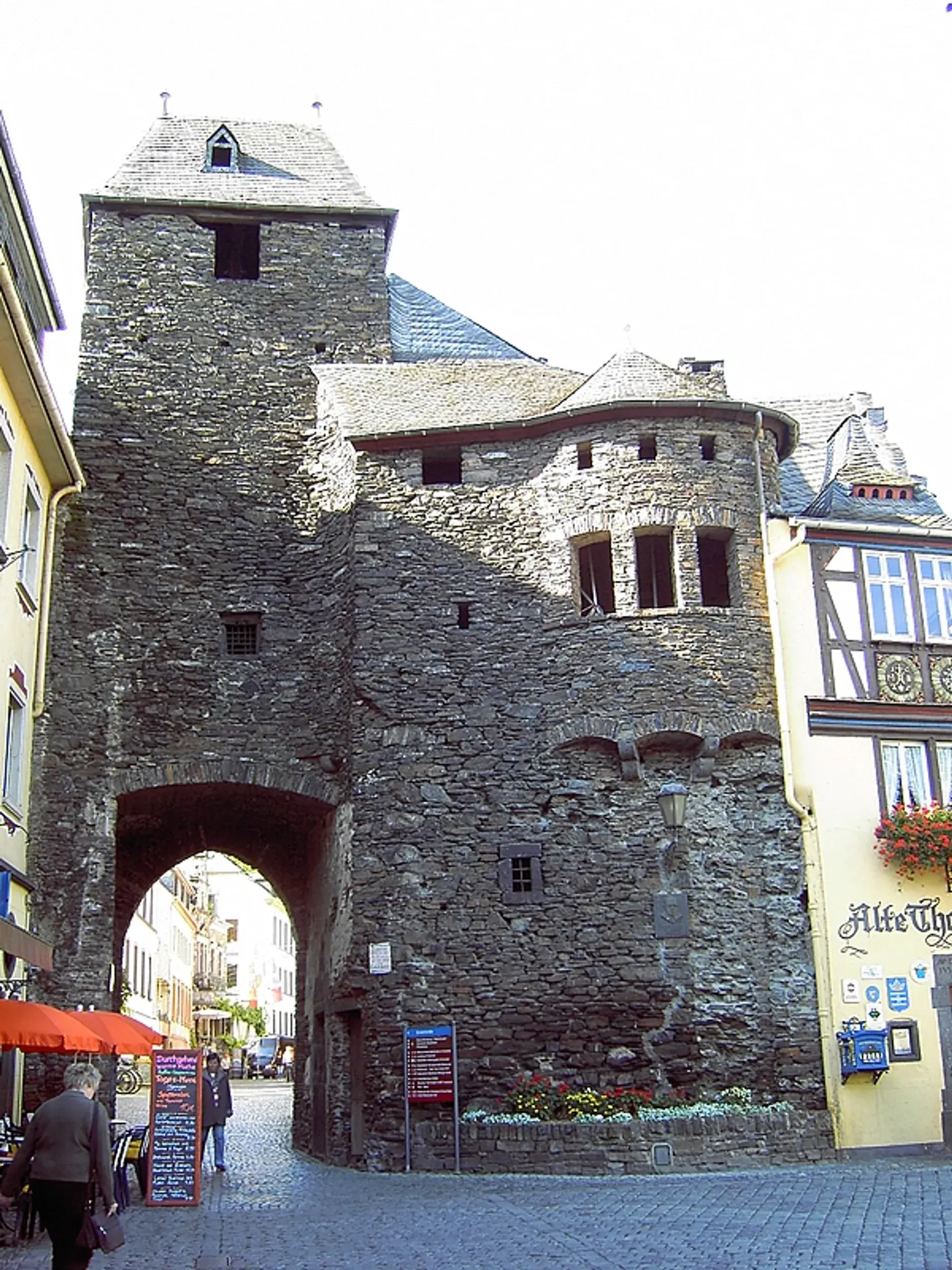
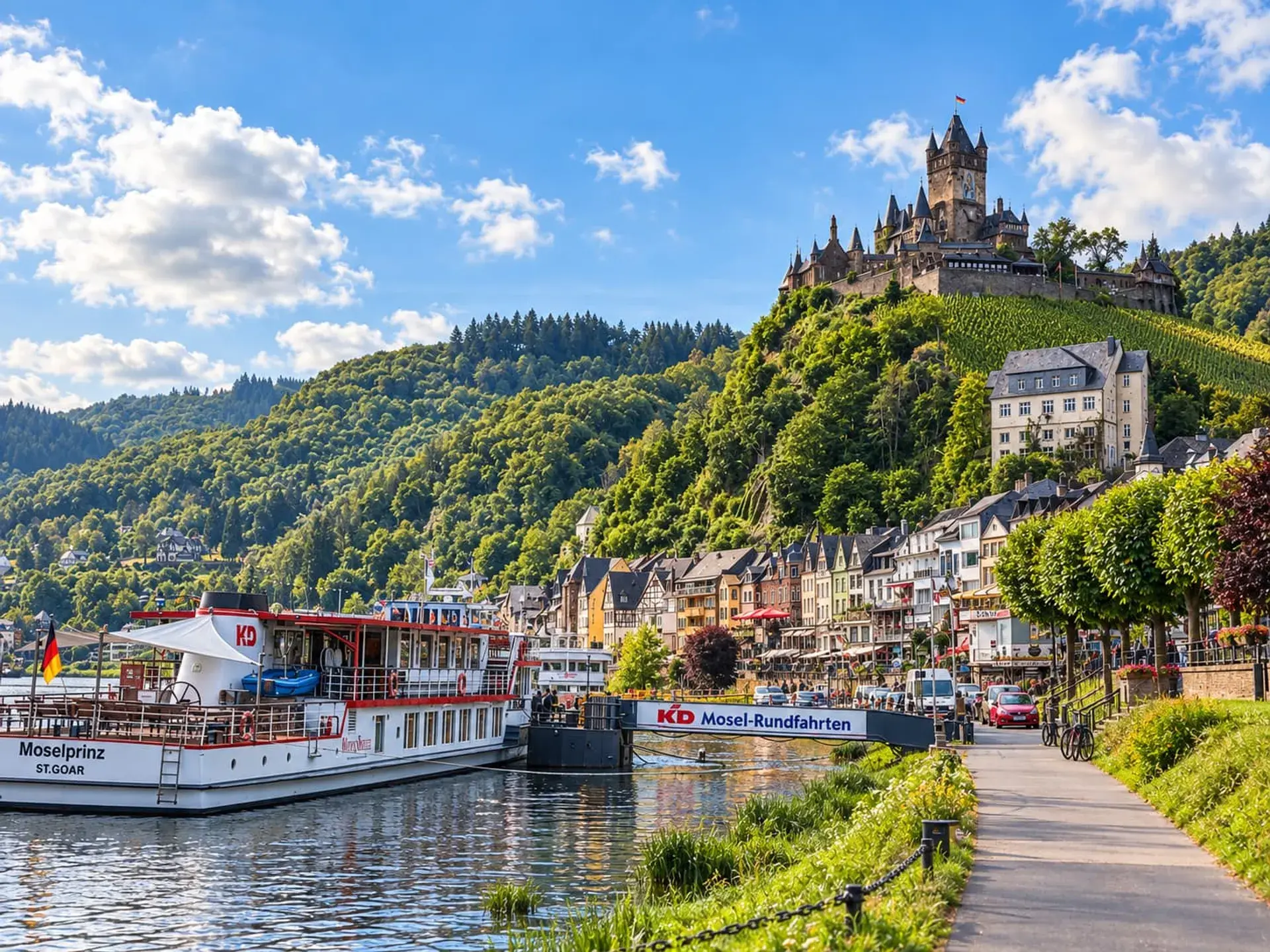
Standing at the northern perimeter of Cochem where the Endertbach valley meets the Moselle riverbank, the Enderttor is the largest of three surviving medieval town gates in the town, alongside the Balduinstor and Martinstor. Built from heavy quarry stone (Bruchstein), this multi-story defensive tower anchors the northern end of the historic town corridor, directly counterbalancing the hilltop Reichsburg to the south. Today, the structure is officially recognized on the Rhineland-Palatinate register of cultural heritage monuments.
Origins and Medieval Fortifications
The construction of Cochem's town fortifications began after Emperor Louis IV granted town rights in 1332. The Enderttor itself was erected around 1352 under Archbishop-Elector Baldwin of Luxembourg. Positioned at the mouth of the steep Endert Valley, the gate tower was designed as a northern bulwark to protect the settlement from armed raids originating in the Eifel highlands.
Architecturally, the gate features a vaulted passage on the ground level, reinforced upper chambers for defenders, and high roof battlements. Although the defensive system was reinforced in 1675, later urban expansion led to the demolition or residential absorption of the surrounding stone curtain walls. The Enderttor survived intact due to its sheer structural durability and continued usefulness as a municipal checkpoint.
Prisons, Stagecoaches, and the Alte Thorschenke
As the military threat subsided, the Enderttor took on civic and commercial functions. The fortified upper chambers were repurposed to serve as Cochem's municipal prison (Stadtgefängnis). Directly adjoining the tower stands the Alte Thorschenke (Old Gate Tavern), a half-timbered building bearing a 1626 inscription that incorporated the original medieval gatekeeper quarters.
Between the 17th and 19th centuries, the gate and the adjoining inn evolved into a critical staging post. Passengers, draft horses, and mail carriages regularly assembled at the gatehouse along long-distance postal routes operating between Frankfurt and Cologne.
Art and Local Folklore
The Enderttor's architectural character drew the attention of British landscape painter J.M.W. Turner during his travels along the Moselle. In 1839, Turner rendered the Enderttor and the Alte Thorschenke in gouache and watercolor on blue paper, a work that is preserved today in the Tate Collection in London.
Local tradition also associates the gate with the 16th-century military campaigns of the knight Franz von Sickingen. According to folklore, invading mercenaries attempted to breach Cochem via the Endert Valley. Defending citizens reportedly stacked empty wine barrels within the upper gate area. When the attackers forced their way through, the barrels were rolled down the steep incline, crushing the advancing ranks. The surviving mercenaries purportedly withdrew under the assumption that a town filled with empty barrels held no valuable wine or plunder worth taking.
The Gate Today
The Enderttor serves as a pedestrian entrance connecting modern transit areas around Endertplatz with the town's historic center and pedestrian shopping zone. Passing through the vaulted stone archway brings a distinct change in acoustics and temperature, dampening nearby street noise and opening up views of narrow cobblestone lanes framed by dark Moselle slate roofs. The attached Alte Thorschenke continues to operate as a historic hotel and traditional Moselle wine restaurant.
FAQ
When was the Enderttor built?
The gate tower was built around 1352 under Archbishop-Elector Baldwin of Luxembourg, following Emperor Louis IV's granting of town rights to Cochem in 1332.
What secondary purposes did the gate serve in later centuries?
The upper chambers functioned as Cochem's municipal prison, and between the 17th and 19th centuries, the gate served as a stagecoach hub for routes connecting Cologne and Frankfurt.
What is the Alte Thorschenke connected to the gate?
The Alte Thorschenke is an adjoining half-timbered building with a 1626 inscription that absorbed the original gatekeeper quarters. Today, it functions as a historic hotel and traditional Moselle wine restaurant.