Pfarrkirche St. Martin in Cochem: History & Art
Pfarrkirche St. Martin serves as the primary Catholic parish church of Cochem, dedicated to the town's patron saint, Martin of Tours. Christian tradition holds that while serving as a Roman cavalryman in Amiens during a severe winter, Martin encountered a freezing beggar outside the city gates. He drew his sword, split his military cloak in two, and shared it with the pauper, later experiencing a vision of Christ wearing the half-cloak. Because of his traditional association with travelers, soldiers, and civic defense, Cochem embraced Martin as its guardian, naming its central parish church, fortifications, and marketplace fountain after him.
Architectural History and Post-War Rebirth
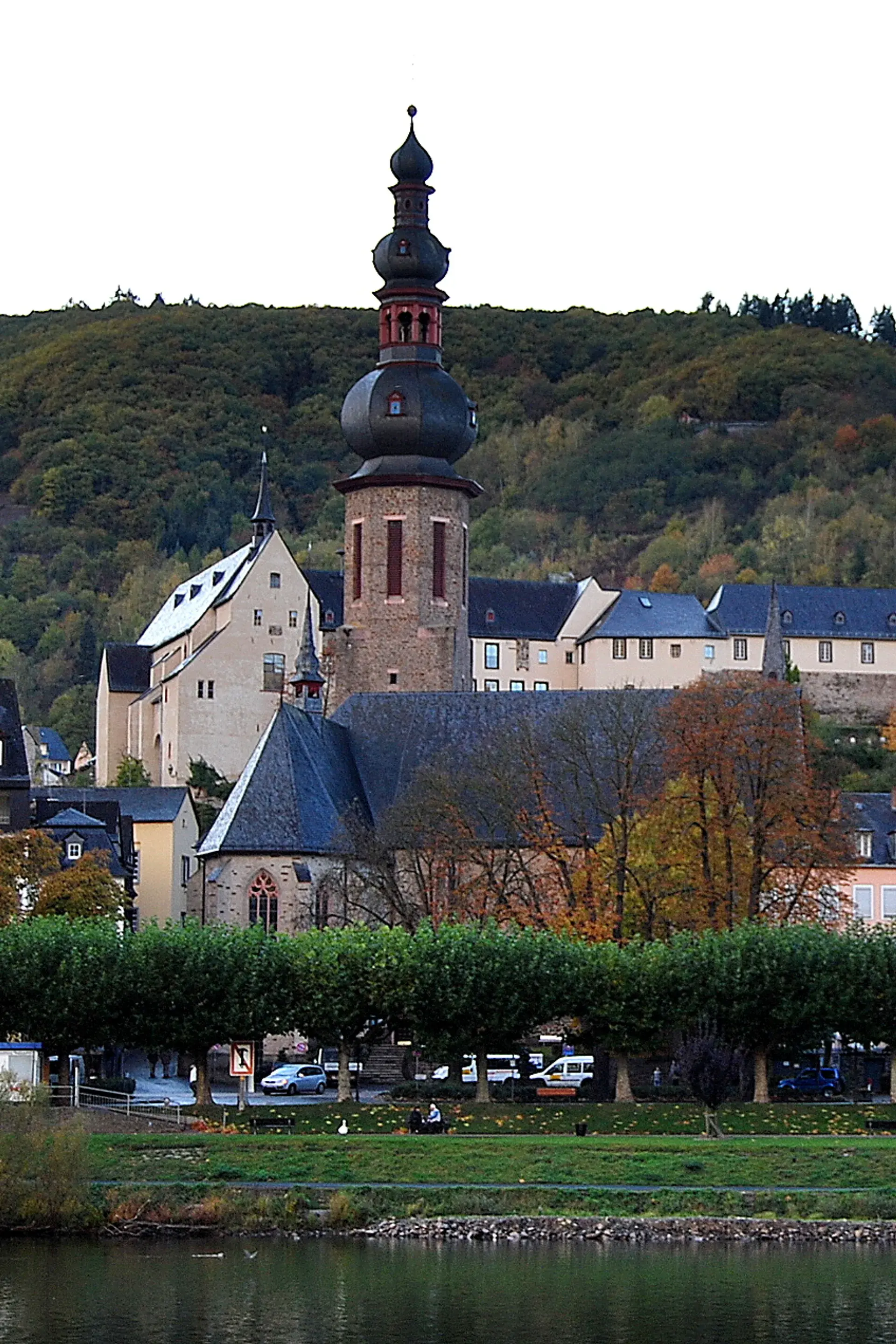
A church at this riverside location was first documented around 1130. A major late Gothic rebuilding took place between 1456 and 1503, producing the fifteenth-century Old Choir (Alter Chor), which remains the oldest surviving section of the building.
On January 5, 1945, Allied bombing destroyed the church's 1930s nave and brought down its tower. Amid the rubble, the fifteenth-century Gothic choir remained standing. Between 1950 and 1963, architect Dominikus Böhm of Cologne oversaw the reconstruction, erecting a new quarrystone structure topped with an onion dome (Zwiebelturm) and incorporating the surviving Gothic choir into the modern design.
Sacred Treasures and Contemporary Art
The church interior blends preserved historic artifacts with modern artistry. In the Old Choir, eight contemporary stained-glass windows installed in 2009 by British artists Graham Jones and Patrick Reyntiens cast fluid, watercolor-toned waves of pastel light across the plain white walls.
The sanctuary's modern stone altar, designed by artist Christoph Anders, incorporates decorative motifs of Moselle grapevine training and pruning as an allegory for the Passion of Christ. Among its historical treasures, the church holds a fifteenth-century silver reliquary bust of St. Martin adorned with rubies, sapphires, beryls, and topazes. Local tradition connects this masterwork to a 1512 visit by Holy Roman Emperor Maximilian I during his journey to the Imperial Diet in Trier.
The Steeple Arch and the Martinsbrunnen
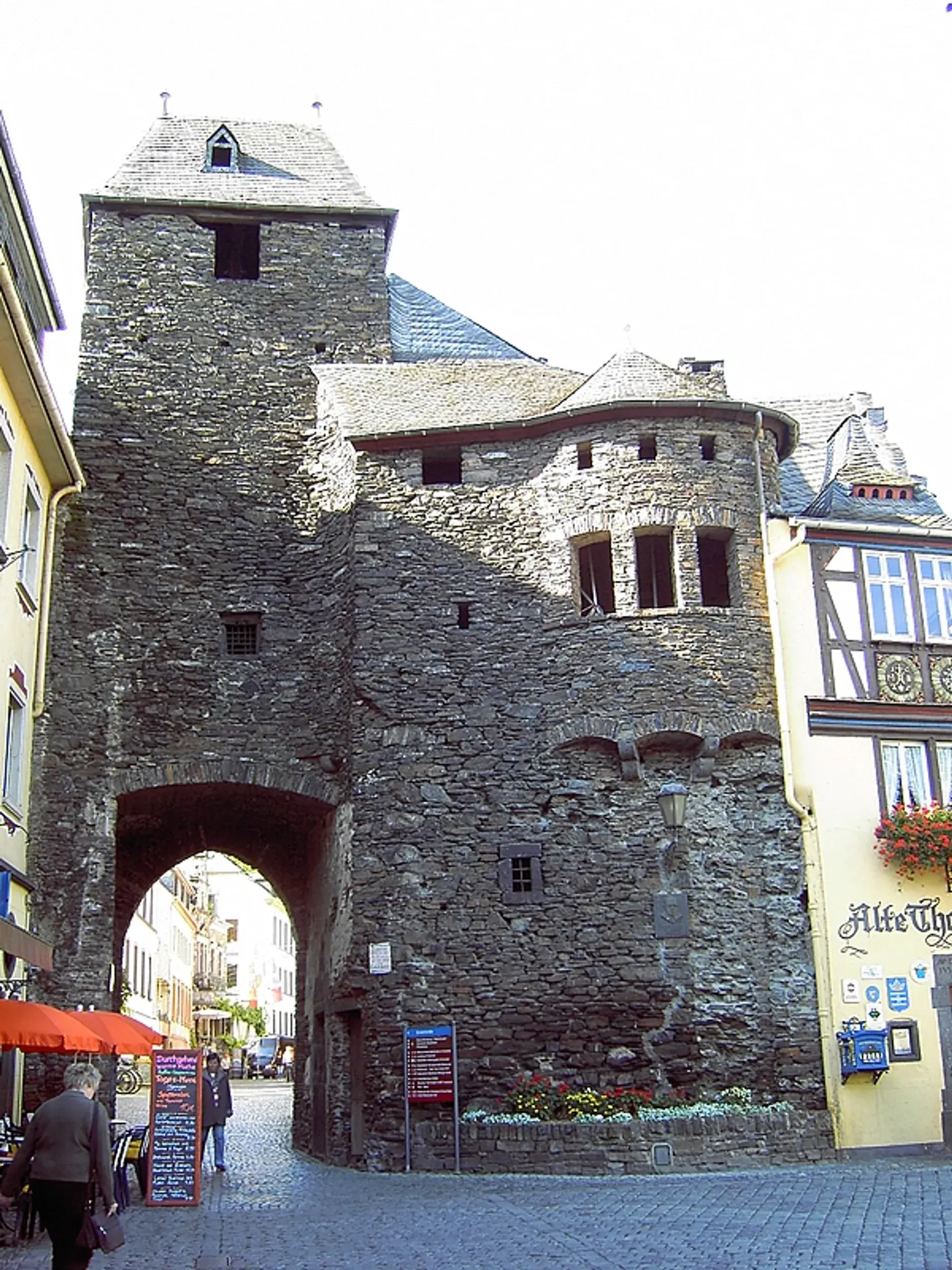
Pfarrkirche St. Martin forms a key link between the Moselle river promenade, the commercial corridor of Bernstraße, and the historic Marktplatz. Built directly into the town fabric, the base of the church tower contains a vaulted public pedestrian passageway that allows foot traffic to pass beneath the steeple between Bernstraße and the market square.
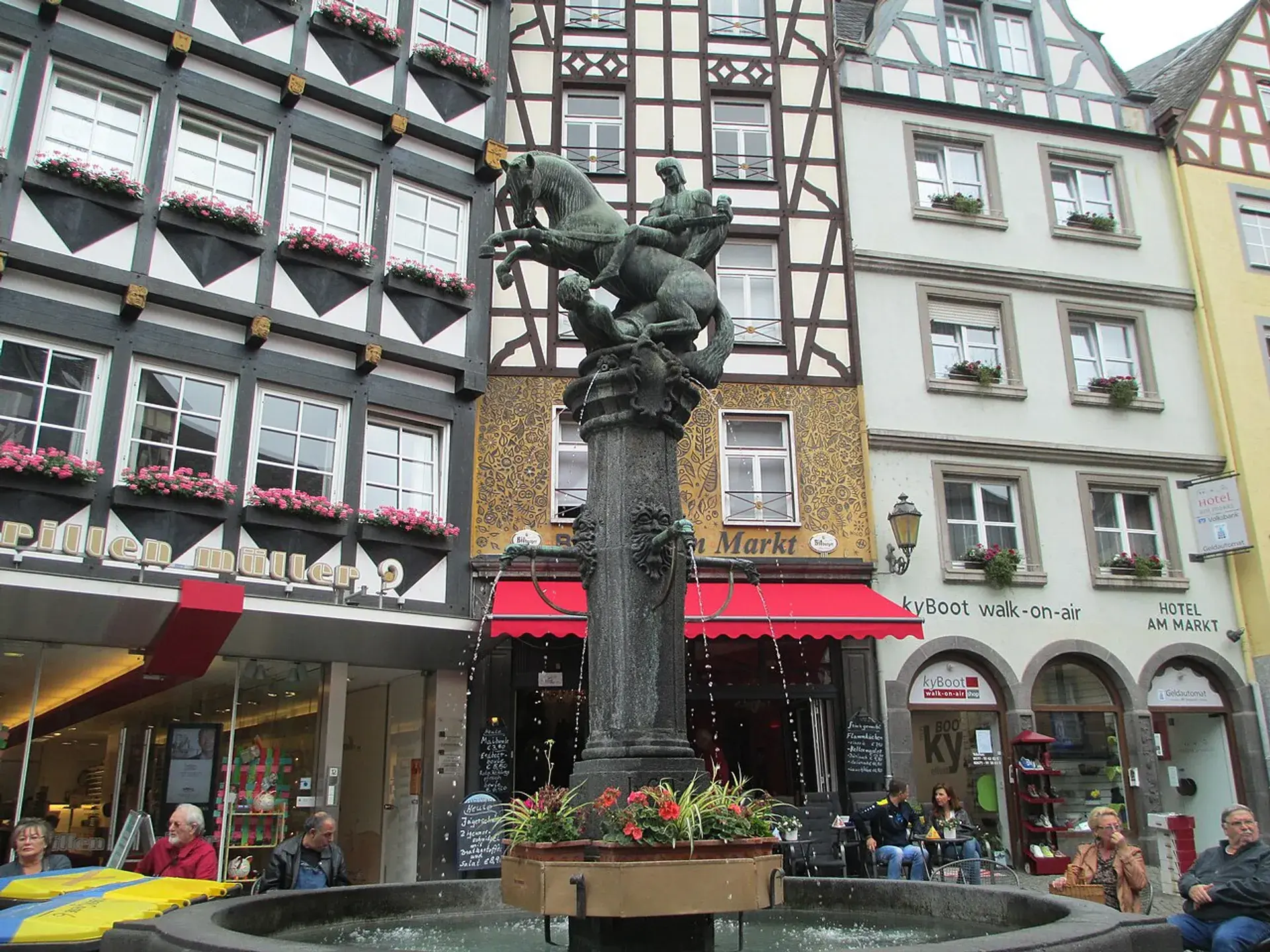
St. Martin's iconography extends onto the central Marktplatz at the Martinsbrunnen. A public fountain dedicated to the saint has stood on the square since at least 1459. After the original fountain sculpture was moved near the Martinstor in 1863 and later replaced with a terracotta figure, the current bronze equestrian sculpture was created in 1935 by sculptor Anton Nagel of Trier. The monument depicts Martin on horseback cleaving his cloak for the beggar.
Today, Pfarrkirche St. Martin operates as an active house of worship under the Parish of St. Mary Magdalene, holding Catholic masses, sacraments, and sacred concerts while remaining open for daytime visits.
FAQ
Why is Saint Martin significant to Cochem?
Saint Martin of Tours is the town patron of Cochem. The fourth-century soldier turned bishop is celebrated for cleaving his cloak to share with a freezing beggar, and Cochem adopted him as a guardian figure, naming its parish church, central fountain, and historic town gate after him.
What is unique about the tower of Pfarrkirche St. Martin?
The church tower features a vaulted public pedestrian passageway built directly through its base, allowing pedestrians to walk under the steeple to travel between Bernstraße and the Marktplatz.
How was Pfarrkirche St. Martin reconstructed after World War II?
Following the destruction of the 1930s nave and tower by Allied bombing on January 5, 1945, architect Dominikus Böhm rebuilt the church between 1950 and 1963 using quarrystone and an onion dome, integrating the intact fifteenth-century Gothic choir.
What notable artwork is preserved inside the church?
Key interior works include eight 2009 stained-glass windows by Graham Jones and Patrick Reyntiens, a stone altar by Christoph Anders inspired by Moselle vineyards, and a fifteenth-century gemstone-studded silver reliquary bust of St. Martin.