Cochem Market Square: History, Rathaus & Highlights
The Historic Heart of Cochem
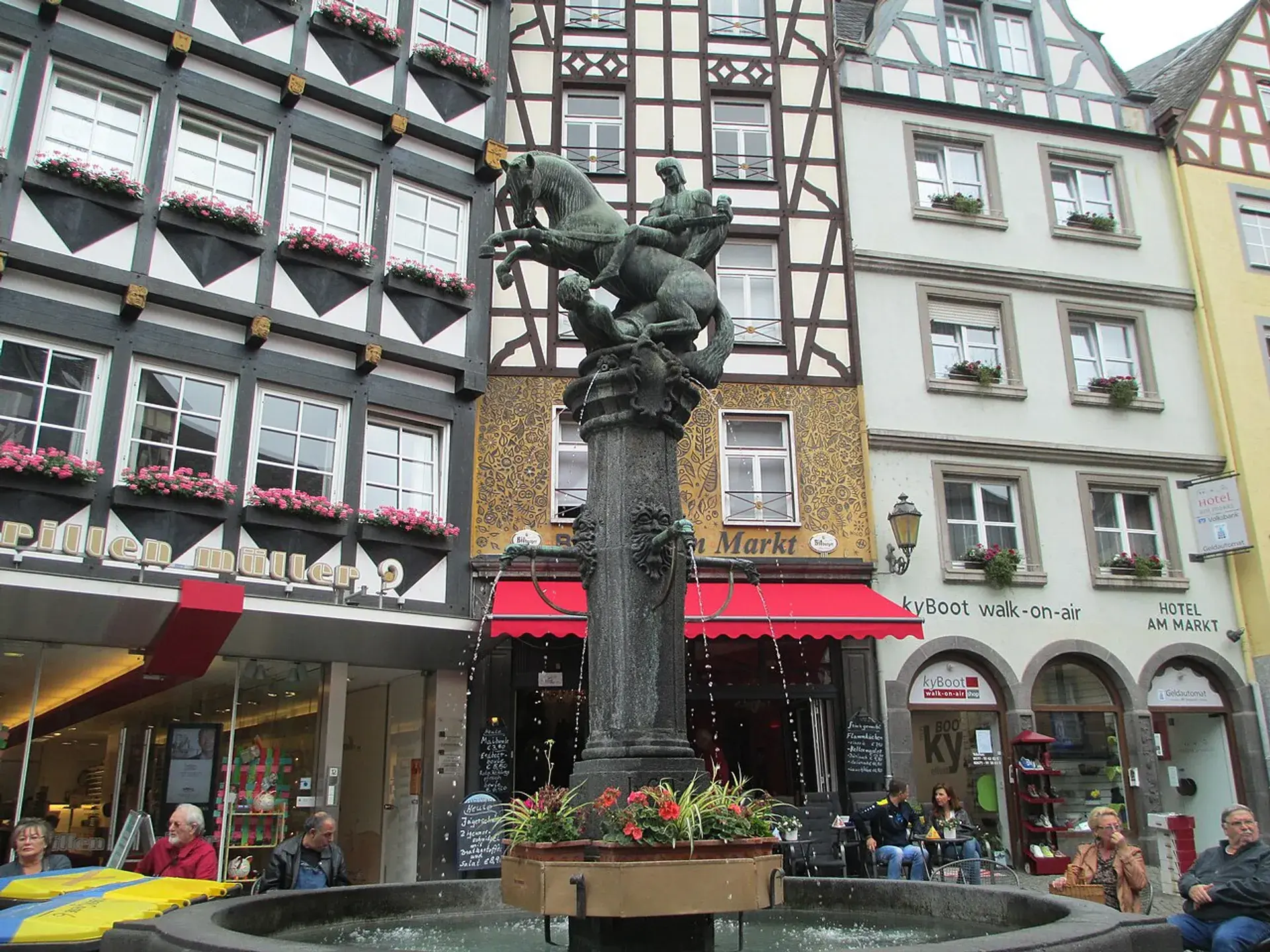
Cochem’s Marktplatz serves as the central pedestrian plaza of the town's historic Old Town (Altstadt). Affectionately known by locals as the Gute Stube ("parlor" or "living room"), the square represents the civic core of the community. It is framed by a dense ring of narrow, multi-story half-timbered gabled houses (Fachwerkhäuser). In keeping with traditional regional architecture, the steep roofs and upper facades of these buildings are extensively clad in dark indigenous Moselle slate (Moselschiefer).
Today, the square is entirely pedestrianized and bustling with activity. It hosts outdoor cafe terraces, wine taverns, gelaterias, and specialty retail shops, while remaining the primary venue for open-air cultural celebrations and seasonal winter markets.
The Baroque Rathaus and St. Martin's Fountain
Two major architectural landmarks define the Marktplatz. On the northern perimeter stands the Baroque Town Hall (Rathaus), constructed in 1739 as an electoral administrative building (kurtrierisches Amtshaus) based on plans by architect Ravensteyn. The structure features 1.3-meter-thick stone walls coated in reddish plaster, doorframes crafted from Mayen basalt, a prominent mansard roof, and a central stone balcony situated above a pilastered portal. The Rathaus remains an active center of local government, housing the mayor’s office, the municipal registry office (Trausaal), the town archive, and the public library.
At the center of the square sits St. Martin's Fountain (Martinsbrunnen). While municipal records document a market fountain on this spot as early as 1459, the medieval structure fell into disrepair and was dismantled in 1863. The current octagonal stone layout dates to 1906. Rising from the center of the basin is a stone column crowned with a bronze equestrian statue created in 1935 by Trier sculptor Anton Nagel, depicting Saint Martin dividing his cloak to share with a beggar.
Medieval Origins and the Regional Wine Hub
Market activity in Cochem was formally established after the town secured municipal rights (Stadtrechte) during the reign of Archbishop-Elector Balduin of Luxembourg (1307–1354). Initially restricted to Saturdays, market privileges were extended in 1454 to include Tuesdays. Earlier administrative buildings dating to 1388 once stood here, but they were destroyed alongside much of the town in 1689 by French forces during the Nine Years' War.
Following its reconstruction in the 18th century, the Marktplatz operated as the administrative clearinghouse for the regional wine industry. While the Moselle riverfront accommodated docks and shipping, the market square served as the location where local vintners, municipal bailiffs, and merchants negotiated transactions and published official civic decrees.
The Wine Festival Tradition
The town's deep viticultural identity is showcased during the annual Cochem Wine Festival (Heimat- und Weinfest) held in late August. For this celebration, the regular water supply to the Martinsbrunnen is shut off. An underground pipeline connects the fountain's spouts directly to an oak barrel stored inside the historic cellar (Ratskeller) beneath the town hall, allowing local Moselle wine to flow directly from the monument into festival glasses.
Historic Gateways and Uphill Paths
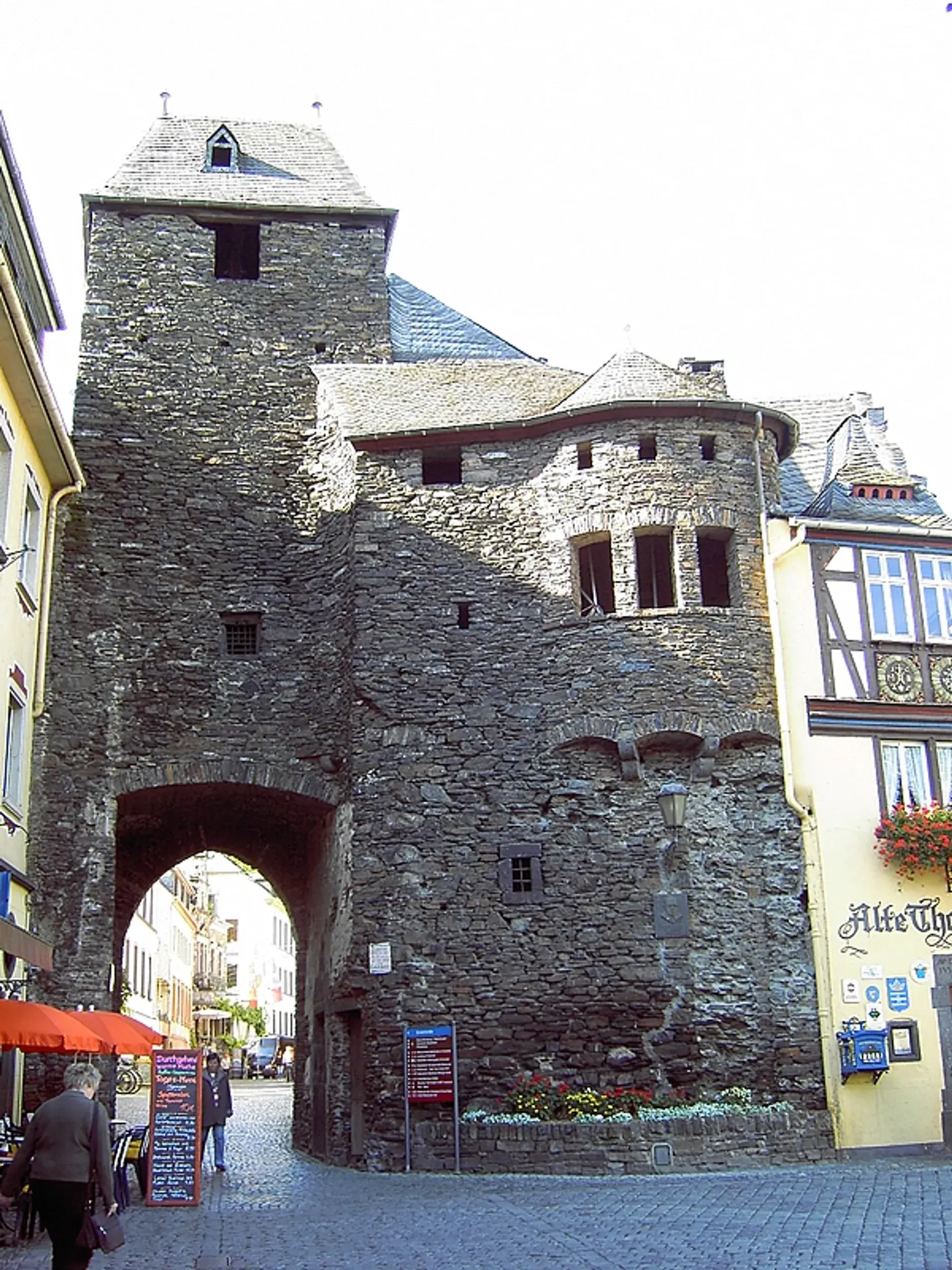
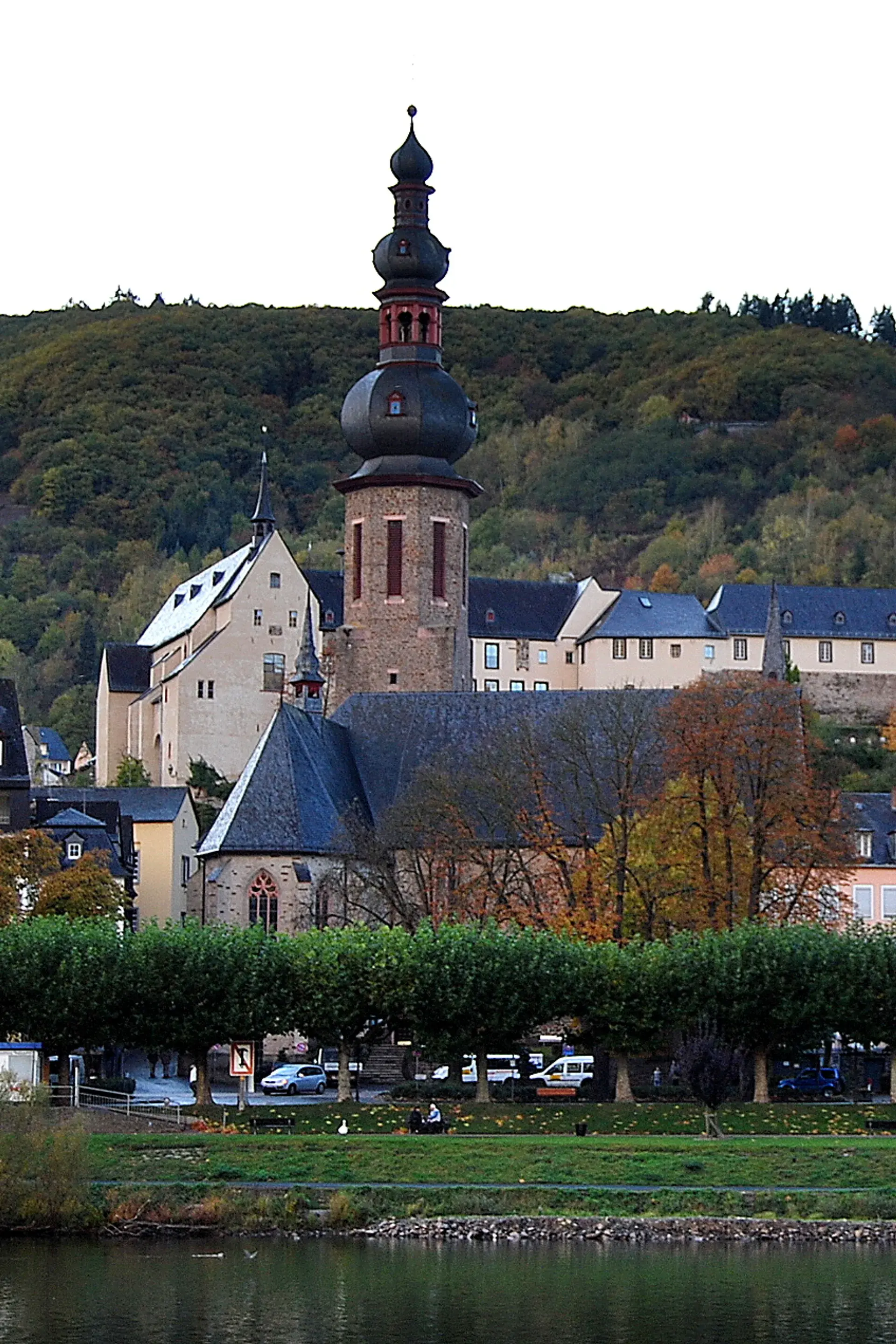
The Marktplatz also acts as a central transit crossroad linking the river promenade and merchant streets, such as Bernstraße, with paths ascending toward Reichsburg Castle. One of the square's most distinctive historic access routes passes directly beneath the church tower of St. Martin's Catholic Church through an open barrel-vaulted archway. Directly off the square, a flight of narrow, winding stone steps climbs the slope of the Klosterberg to a former Capuchin Monastery built around 1630, which now operates as the municipal cultural center.
FAQ
Why is Cochem Market Square known as the "Gute Stube"?
Locals refer to the square as the "Gute Stube" (parlor or living room) because of its cozy, enclosed atmosphere, framed by historic half-timbered houses, cafes, and central civic monuments.
Does wine really flow from St. Martin's Fountain?
Yes. During the annual Cochem Wine Festival in late August, the water supply is shut off, and the fountain is connected via an underground line to an oak barrel in the town hall cellar to dispense local Moselle wine.
What is the history of the Town Hall on the square?
The Baroque Rathaus was built in 1739 according to designs by architect Ravensteyn, replacing an earlier administrative building destroyed in 1689 during the Nine Years' War. It continues to house municipal offices today.
Discover Cochem like never before
Dive into Cochem hidden stories and secret spots with Ciceru interactive tours.
Explore tour
Audioguide
Quizzes
Maps
Solo
Couples
Groups & families

© Avi1111 dr. avishai teicher | CC BY-SA 4.0