Reichsburg Cochem: History of Cochem Castle
Origins of the Imperial Hilltop Fortress
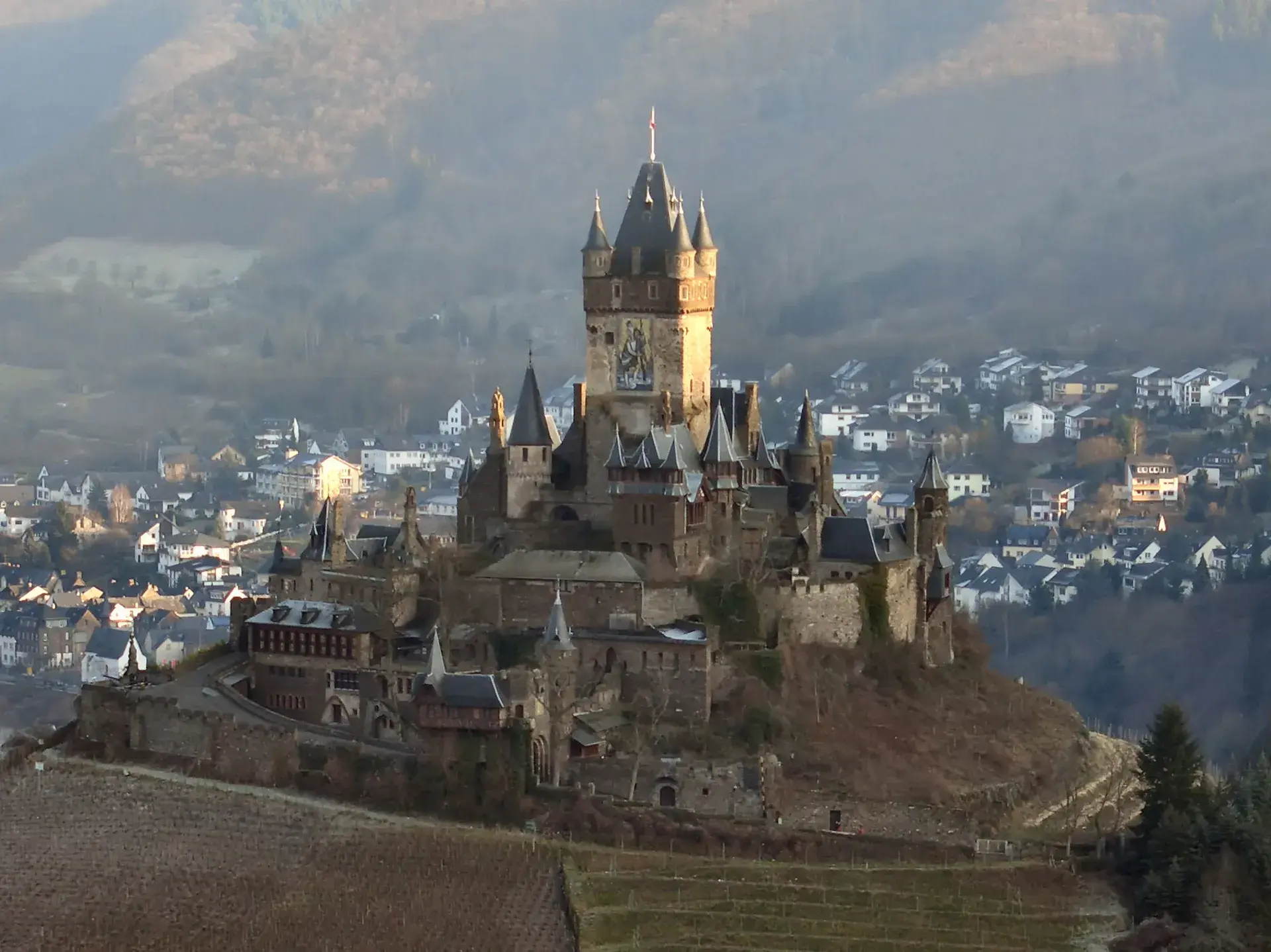
Perched roughly 100 meters above the Moselle River, Reichsburg Cochem crowns a solitary conical hill that forms the architectural and visual centerpiece of Cochem in Rhineland-Palatinate, Germany. The site first appeared in historical documents in 1130. By 1151, King Conrad III elevated the fortification to an Imperial Castle (Reichsburg). During the High Middle Ages, it operated as a vital imperial stronghold and toll-collection station regulating river traffic along the Moselle.
This early medieval era came to a sudden close during the Nine Years' War (also known as the War of the Palatine Succession). On May 19, 1689, French forces undermined, set ablaze, and blew up the stronghold. Following this destruction, the fortress stood as a charred, overgrown ruin above the town for nearly 180 years.
The 19th-Century Neo-Gothic Reconstruction
The castle’s modern form originated with Louis Fréderic Jacques Ravené, a wealthy Berlin iron merchant and Councillor of Commerce. While helping to finance the regional Koblenz–Metz railway line during the 1860s, Ravené grew enamored with the Moselle valley and the era's prevailing movement of German castle romanticism (Burgenromantik). In 1868, he acquired the ruined property from the Prussian state for a nominal sum.
Ravené commissioned prominent architects Hermann Ende and Julius Carl Raschdorff to design an imaginative Neo-Gothic summer retreat rather than a strict archaeological restoration. Between 1868 and 1877, the architects integrated surviving Romanesque and late-Gothic walls into a dramatic profile complete with romantic turrets, spires, dormers, and battlements.
Louis Ravené passed away in 1879, shortly after the completion of the exterior shell. His son, Louis Auguste Ravené, oversaw the final historicist interior furnishing around 1890, outfitting the rooms with eclectic collections spanning the Renaissance and Baroque styles. The Ravené family retained ownership of the castle until 1942–1943. Since 1978, the municipality of Cochem has owned and preserved the landmark.
Architecture, Art, and Local Curiosities
The exterior of Reichsburg Cochem displays a deliberate blend of authentic medieval masonry and 19th-century architectural embellishments. One of its most notable exterior elements is installed on the south face of the central keep: a four-by-eight-meter mosaic depicting Saint Christopher, the patron saint of travelers and Moselle boatmen. The current mosaic is a post-World War II recreation replacing the 1870 original.
Inside, the castle contains richly appointed historic staterooms, including the Knights' Hall (Rittersaal), the Dining Hall, the Trophy Room, and the Bower. These spaces showcase heavy timber construction, carved wooden ceilings, cool stone staircases, and substantial open hearths. Display collections inside include oversized pewter tankards (Zinnkrüge) holding three to five liters, traditionally presented by guides as the purported daily wine ration of a medieval knight. Castle folklore also tells of the "White Lady" (Weiße Dame), a ghost alleged in local tradition to wander the upper ramparts.
The reconstruction was also connected to a prominent 19th-century German social scandal. At the castle’s dedication celebration in 1877, Ravené’s much younger wife, Elisabeth, was absent following an extramarital affair with a younger bank associate. The dramatic social fallout surrounding the Ravené family served as the direct basis for Theodor Fontane’s celebrated Berlin novel L'Adultera.
Visiting Reichsburg Cochem
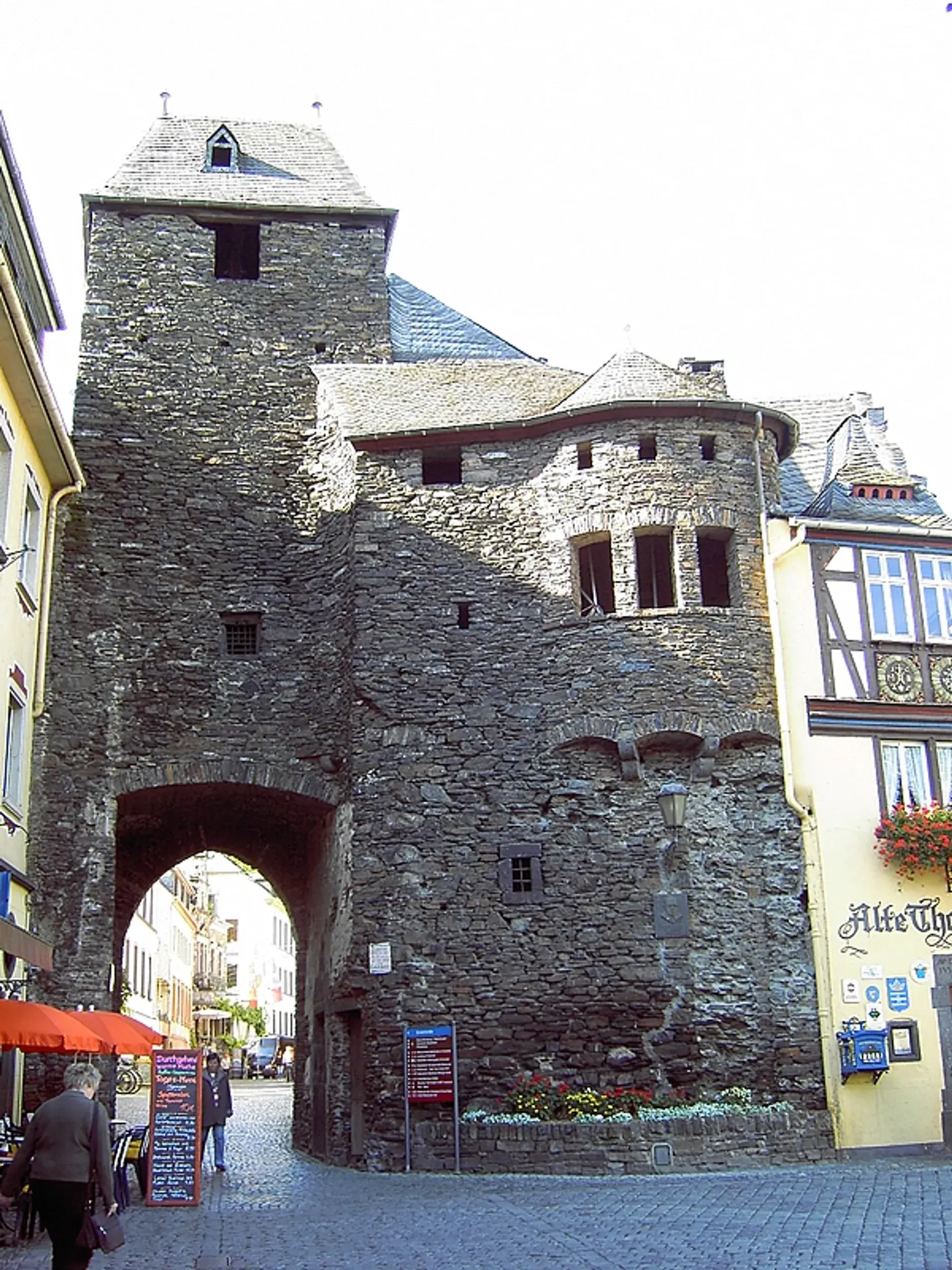
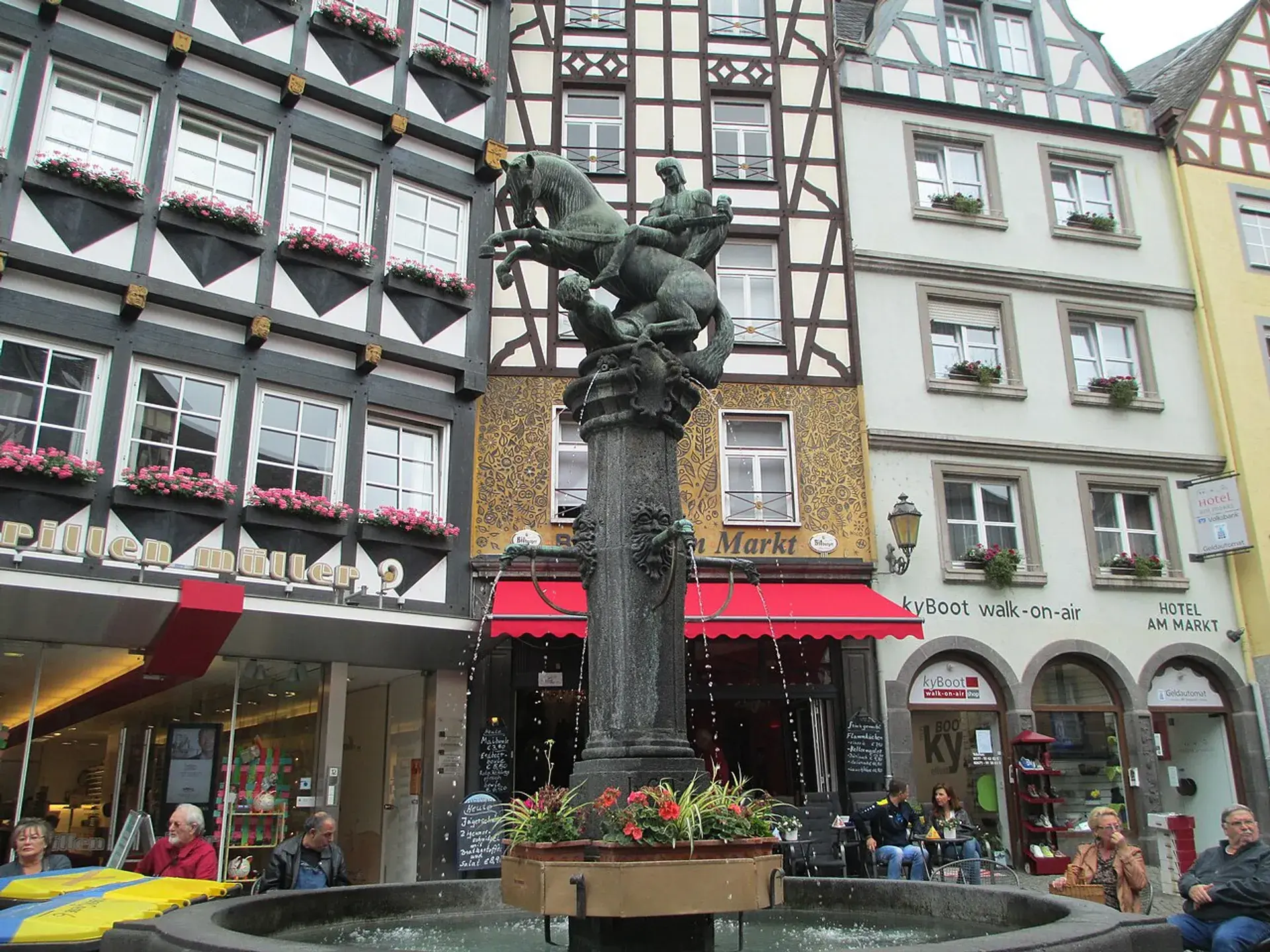
Today, the site is managed on behalf of the town by Reichsburg Cochem GmbH and serves as the region’s principal visitor attraction. The hilltop complex is approached from the town's historic Marktplatz and medieval town gates—such as the Balduinstor and Enderttor—by following Schloßstraße up through hillside vineyards and slate retaining walls.
The castle is open daily, offering regular guided tours in German and English, complemented by foreign-language audio and text aids. In addition to interior tours of the courtyards and state apartments, the property hosts the Burgschänke tavern and stages historical-themed events throughout the year, such as traditional "Knights’ Feasts" (Rittermahl) and an annual medieval Castle Festival held every August.
FAQ
Who rebuilt Cochem Castle in the 19th century?
Berlin iron merchant Louis Fréderic Jacques Ravené purchased the ruin in 1868 and hired architects Hermann Ende and Julius Carl Raschdorff to construct a romantic Neo-Gothic summer residence between 1868 and 1877. The interior furnishings were completed by his son, Louis Auguste Ravené, around 1890.
How was the medieval castle destroyed?
On May 19, 1689, French troops undermined, burned, and blew up the fortress during the Nine Years' War, leaving it as a ruin for almost 180 years until its purchase and reconstruction.
What literary work was inspired by events surrounding Cochem Castle?
Theodor Fontane's novel L'Adultera was inspired by the real-life society scandal involving Louis Ravené’s younger wife, Elisabeth, whose affair caused her absence from the castle's completion festival in 1877.
What is featured on the south face of the castle keep?
The south face of the keep features a four-by-eight-meter mosaic of Saint Christopher, the patron saint of travelers and Moselle boatmen. The current mosaic is a post-World War II replacement of the 1870 original.