Moselpromenade Cochem: Castle Views & River Heritage
Cochem’s Riverside Esplanade
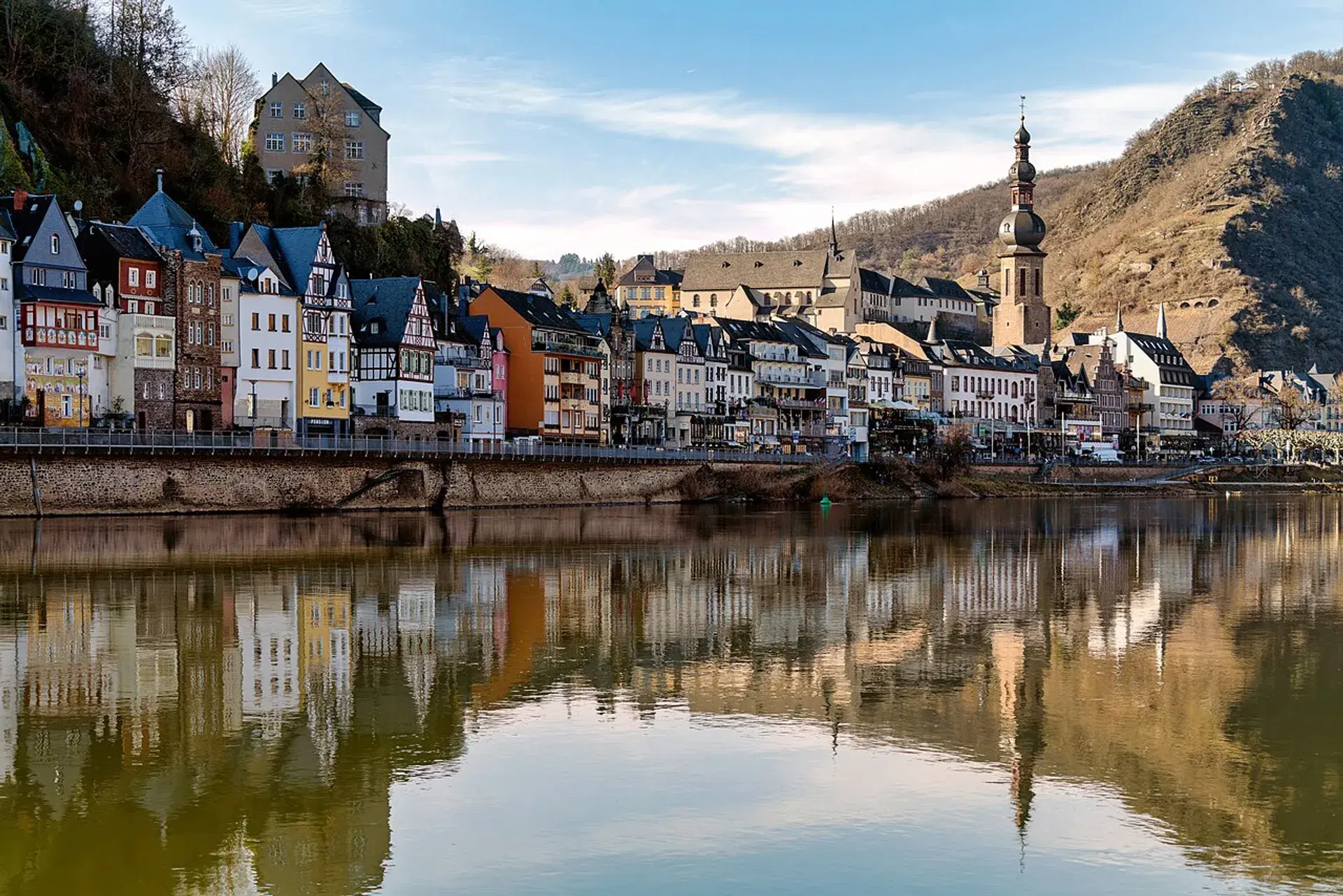
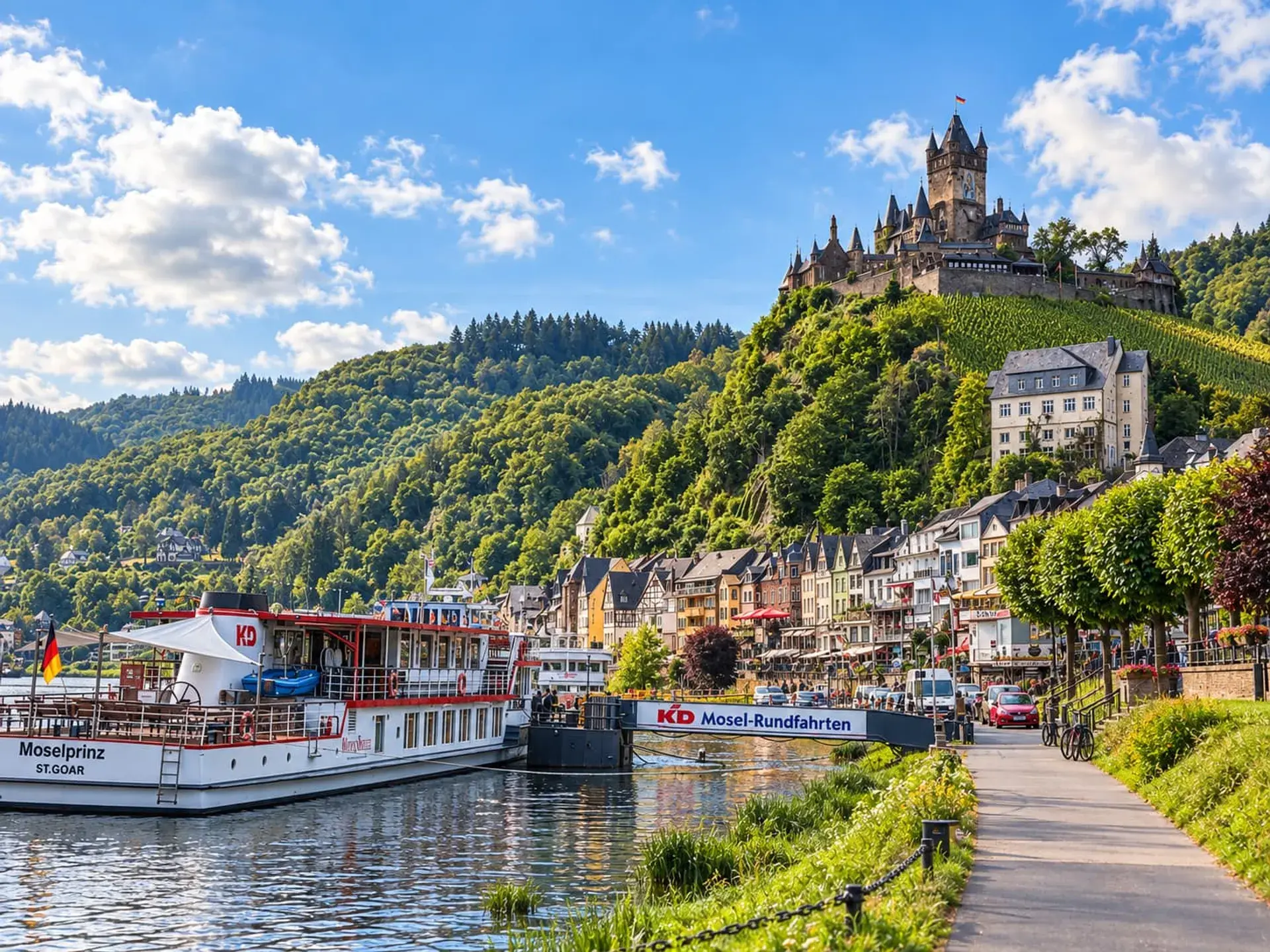
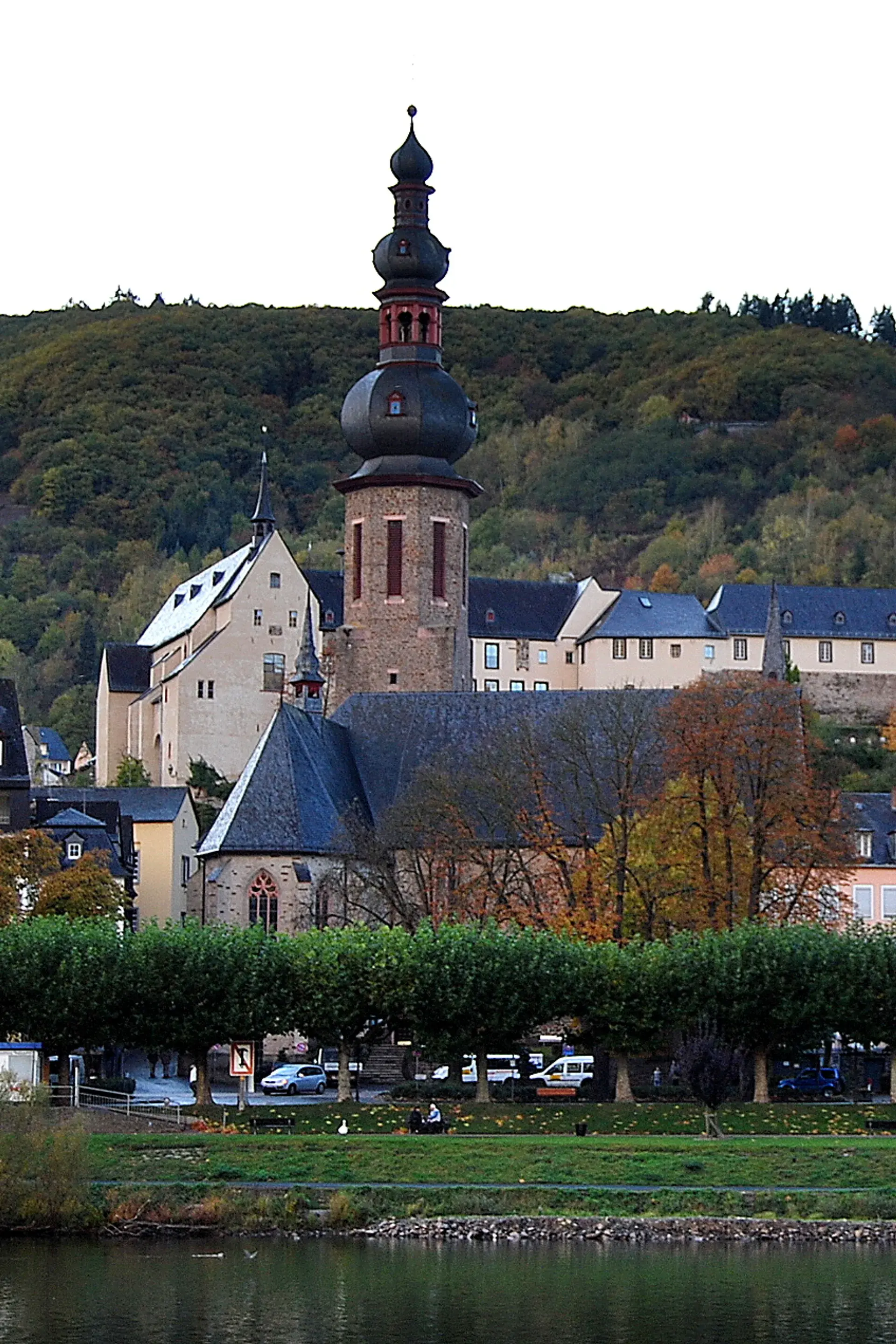
The Moselpromenade is Cochem’s central riverfront esplanade, stretching along the left bank of the Moselle River directly beneath the historic Old Town (Altstadt) and steep vineyard terraces. Serving as a primary pedestrian corridor, the tree-lined path provides an open ground-level panorama of the river and functions as the main docking hub for regional excursion boats and passenger cruise ships.
Today, the promenade is a gathering place lined with flowerbeds, benches, open-air wine taverns, and outdoor cafés where visitors gather over local Riesling. The atmosphere blends the sound of ferry whistles and boat wakes lapping against the stone river wall with the activity of waterfront terraces.
The Postcard View of Reichsburg Cochem
The promenade is best known as the viewpoint for Reichsburg Cochem (the Imperial Castle), which crowns a conical hill approximately 100 meters above the Moselle. Founded around 1000 AD by Palatine counts, the fortress once controlled river commerce as an imperial toll station. In the Middle Ages, garrison guards raised a heavy iron chain across the river from the shore below to halt passing cargo boats and enforce tax duties.
In May 1689, during the Nine Years' War, French troops under King Louis XIV blew up and burned the fortress, leaving it in ruins for nearly two centuries. Between 1868 and 1877, Berlin merchant Louis Ravené acquired the ruin and reconstructed it in the romantic Neo-Gothic style visible today. Following the expansion of the railway and the rise of "Moselle Romanticism" in the late 19th and early 20th centuries, Cochem’s shoreline shifted from a utilitarian working landing for fishermen and boatmen into an ornamental boulevard designed around river scenery.
Historic Gates and Riverside Curiosities
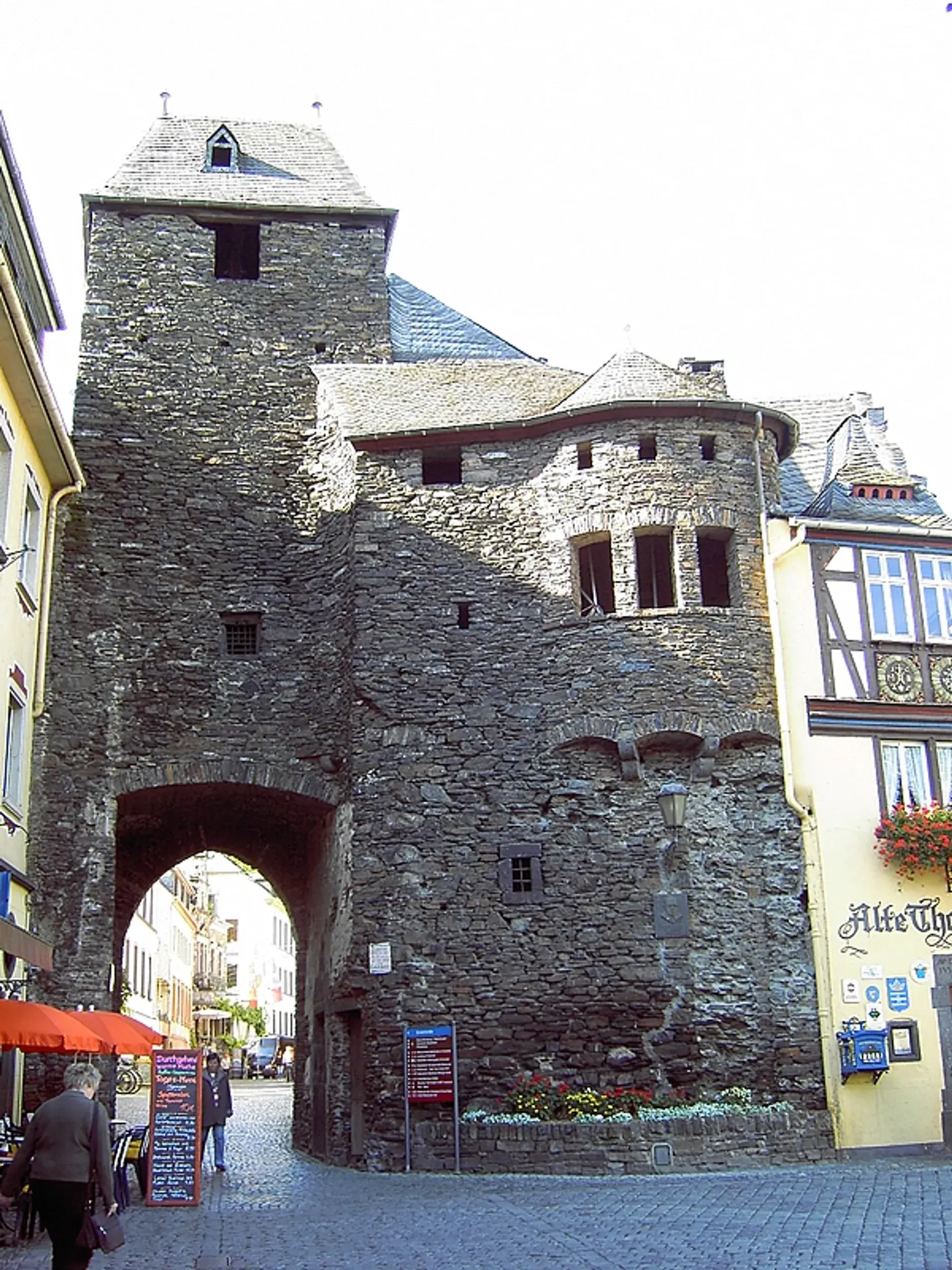
The Moselpromenade connects directly to several landmark structures in Cochem's medieval defensive network. Historic portals such as the Martinstor and the Enderttor link the riverbank to the cobbled lanes of the Old Town. Set into the promenade's embankment wall is Das Fuchsloch ("The Fox Hole"), a narrow arched passage that originally served as the smallest defensive gate in the town fortifications, leading into Bernstraße.
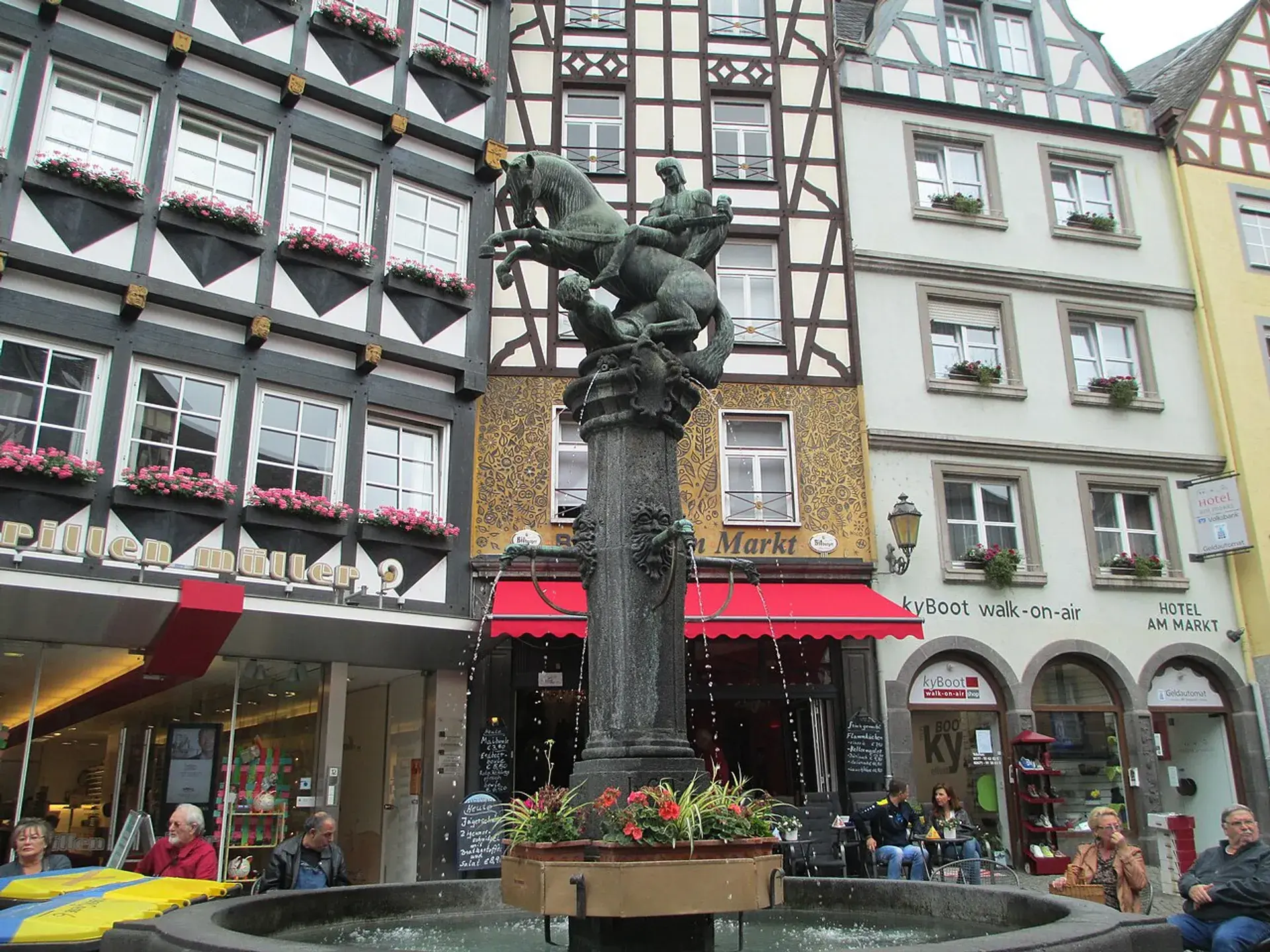
Further along the promenade stands the Bockbrunnen (Billy Goat Fountain). This bronze installation depicts two winemakers placing a goat into a grape press, commemorating a humorous piece of town folklore (Cochemer Stückelchen). According to legend, when a goat was accused of devouring white grapes, town elders squeezed the animal in a wine press; when it yielded only red juice, the council declared the creature innocent.
At the end of the promenade stands the Skagerak-Brücke, a road-and-footbridge completed in 1927. The crossing takes its name from the World War I naval Battle of Jutland (Skagerrakschlacht), introducing a maritime military reference to an inland river valley.
Life on the Water and Moselle Floods
Because the esplanade sits flush with the waterline, the Moselpromenade is regularly subject to seasonal flooding (Moselhochwasser), typically in winter and early spring. Carved high-water marks (Hochwassermarken) on the facades of adjacent waterfront buildings record the crests of past inundations. During historic events, including the severe surge of December 1993, waters from the Moselle have risen well into the ground- and first-floor quarters along the riverbank.
FAQ
What is the best ground-level spot to view Reichsburg Cochem?
The Moselpromenade offers the primary ground-level view of Reichsburg Cochem, looking up at the Neo-Gothic castle perched roughly 100 meters above on its conical, vineyard-covered hill.
What is the Fuchsloch along the Moselpromenade?
Das Fuchsloch ('The Fox Hole') is a narrow arched passage built into the river wall that originally served as the smallest fortified gate in Cochem's medieval town defenses.
Why does the Skagerak-Brücke have a naval name?
Completed in 1927 at the end of the Moselpromenade, the bridge was named in commemoration of the World War I naval Battle of Jutland, known in German as the Skagerrakschlacht.
Does the Moselpromenade flood?
Yes. Sitting directly at river level, the promenade regularly floods during seasonal high-water periods. High-water marks on adjacent buildings indicate that major floods, such as the one in December 1993, have climbed into first-floor rooms.
Gallery