Bartholomäusturm: Erfurt's Medieval Carillon Tower
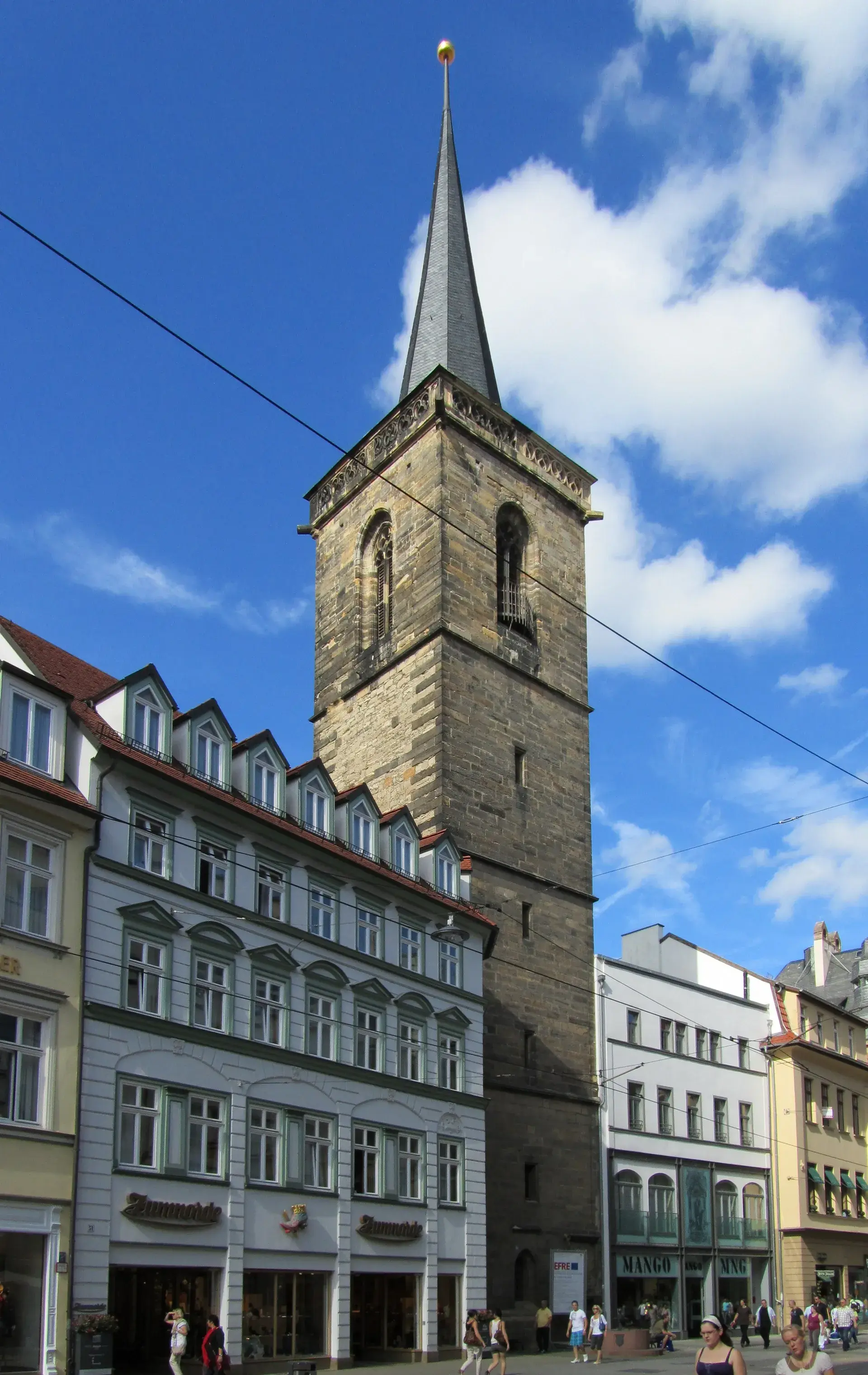
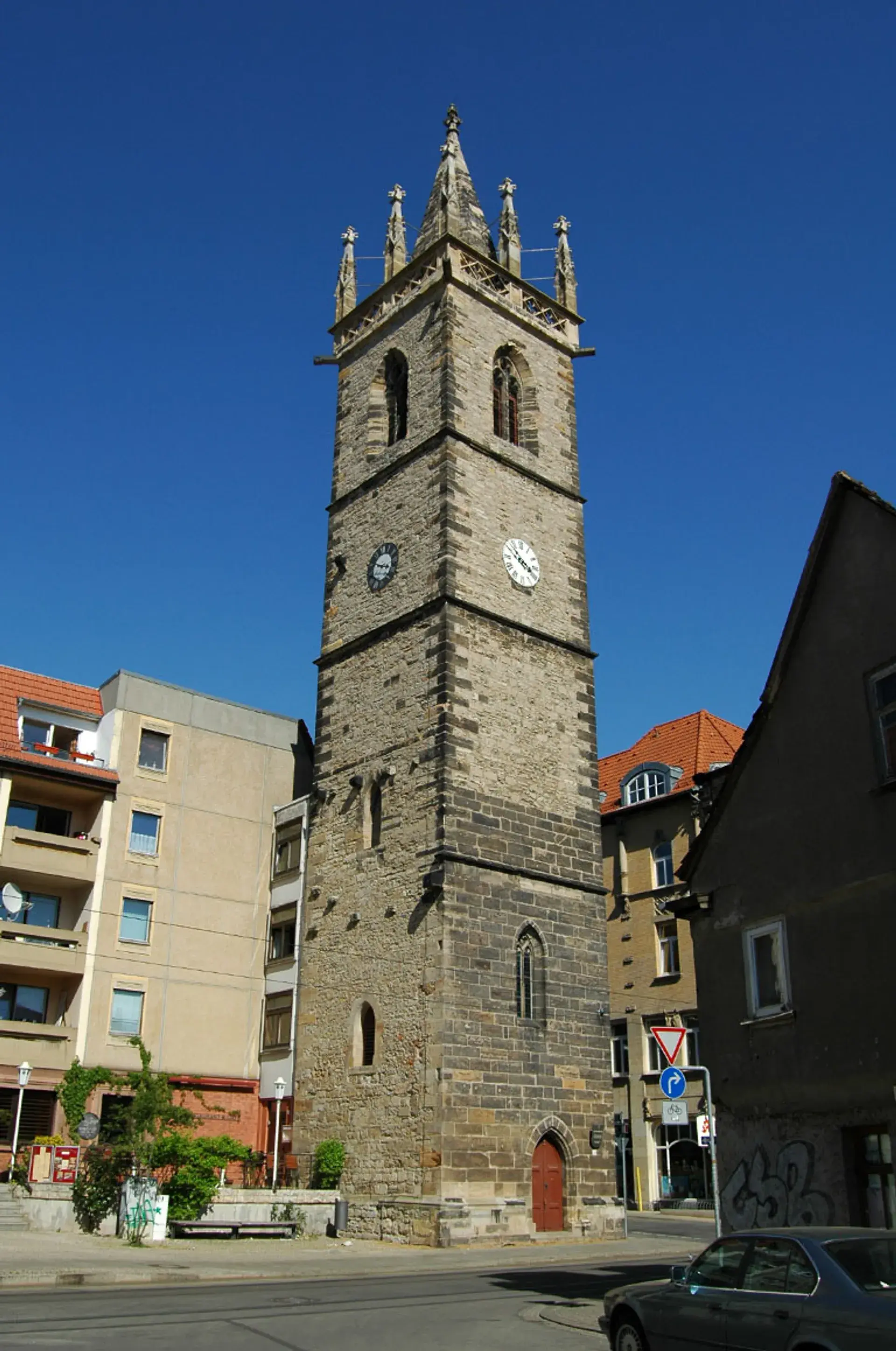
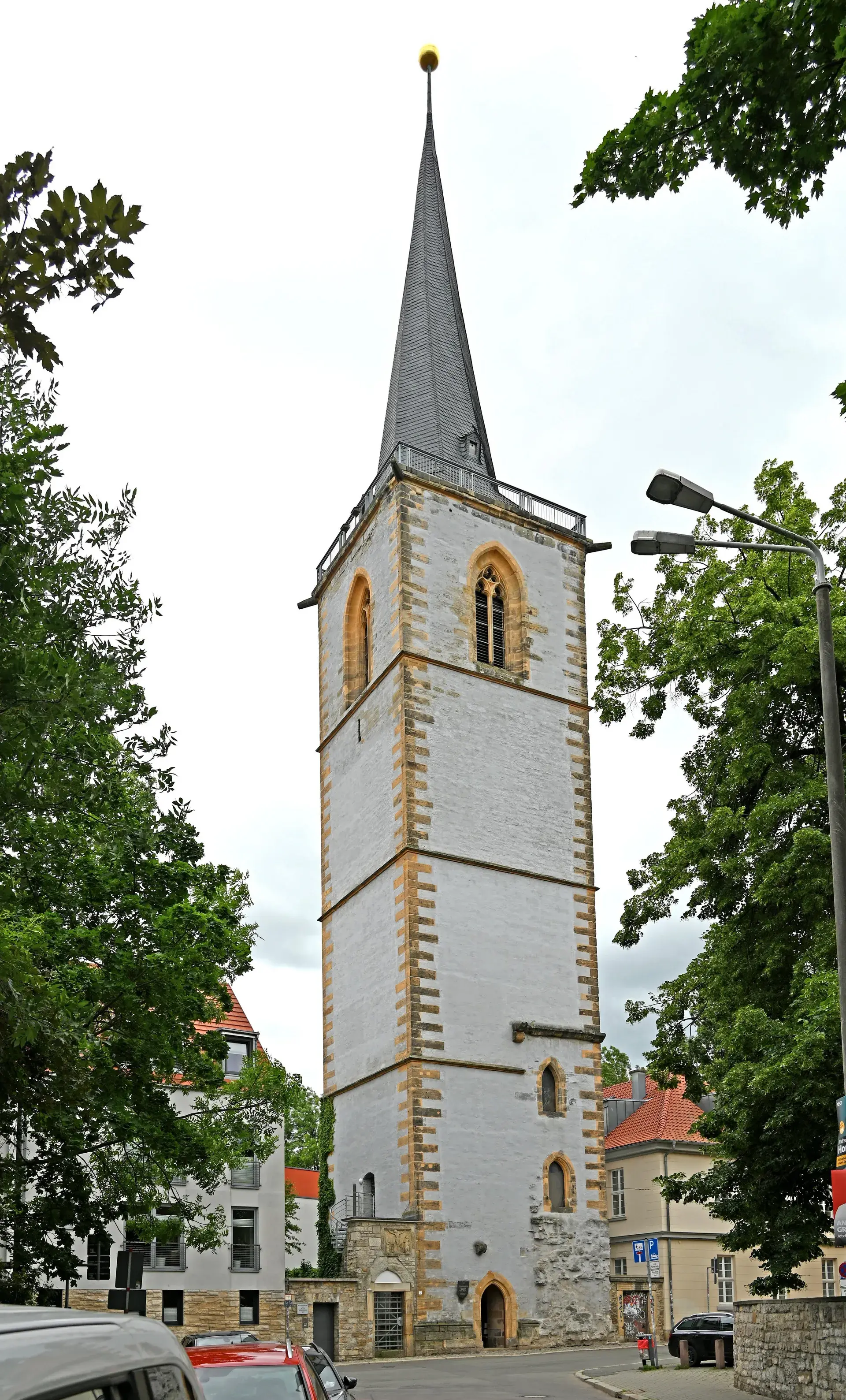
The Bartholomäusturm, or St. Bartholomew's Tower, is a prominent Gothic landmark in Erfurt and the sole surviving structure of the former St. Bartholomew's Church. First documented in 1182, the church was a significant medieval parish, but today only its tower remains, a silent witness to centuries of history on Anger square.
Construction of the current tower began in 1412, as noted by a stone inscription on its ground floor, and was completed in 1468. It stands as a testament to the city's prosperous medieval past, a time when the original church was richly adorned with at least twelve altars and supported by patrons like the Earls of Gleichen.
A History of Adaptation
The history of the Bartholomäusturm is one of dramatic change. The original church was devastated by fire in 1291 and subsequently rebuilt. However, the Reformation's arrival in Erfurt around 1525 led to the church's decline. It was assigned to a Protestant congregation but fell into disrepair and was officially closed in 1571. Another fire in 1660 destroyed the unused nave, though the tower remained intact.
In a surprising turn, the nave was completely demolished in 1715, but the tower was preserved for a new purpose. From 1591 until 1942, it served as the bell tower for the nearby Barfüßerkirche, which lacked its own. The tower's bells were melted down for war materials during both World Wars, leaving it silent for periods.
Destruction and Rebirth
The 20th century brought further challenges. In April 1945, American artillery fire destroyed the tower's wooden spire, which was replaced by a temporary flat roof. For decades, the spire-less tower stood largely empty, famously becoming a breeding ground for the city's pigeons.
A significant restoration occurred for Erfurt's 1250th anniversary in 1992, when its octagonal Gothic cupola was reconstructed, returning the tower to its historic silhouette. This followed a major transformation in 1979 with the installation of a massive carillon, an event that redefined the tower's identity.
The Carillon of Erfurt
Today, the Bartholomäusturm is primarily known for its carillon. Installed in 1979, it was the largest in the German Democratic Republic at the time. Designed by Peter and Margarete Schilling, the instrument consists of 60 bronze bells with a total weight exceeding 13 tons. The largest bell alone weighs 2,393 kg.
The carillon fills Anger square with automated melodies three times daily, at 10 AM, 12 PM, and 6 PM. It also chimes on the quarter, half, and three-quarter hours. From March to October, live concerts are performed by carillonneurs on the last Saturday of each month. Now part of the Stadtmuseum Erfurt (City Museum), the tower also houses an exhibition about its history within its staircase.
FAQ
What is the Bartholomäusturm?
The Bartholomäusturm is the surviving 15th-century Gothic tower of the former St. Bartholomew's Church in Erfurt. The church itself was demolished, but the tower was preserved and now functions as a musical carillon tower.
When can you hear the carillon at Bartholomäusturm?
The carillon plays automated melodies three times a day at 10 AM, 12 PM, and 6 PM. Live concerts by carillonneurs are also held on the last Saturday of each month from March to October.
Why is the Bartholomäusturm standing alone without a church?
The original church nave fell into disuse after the Reformation and was closed in 1571. After suffering fire damage, the nave was completely demolished in 1715, leaving only the tower standing, which was then repurposed.