Nikolaikirchturm: Erfurt's Medieval Merchant Tower
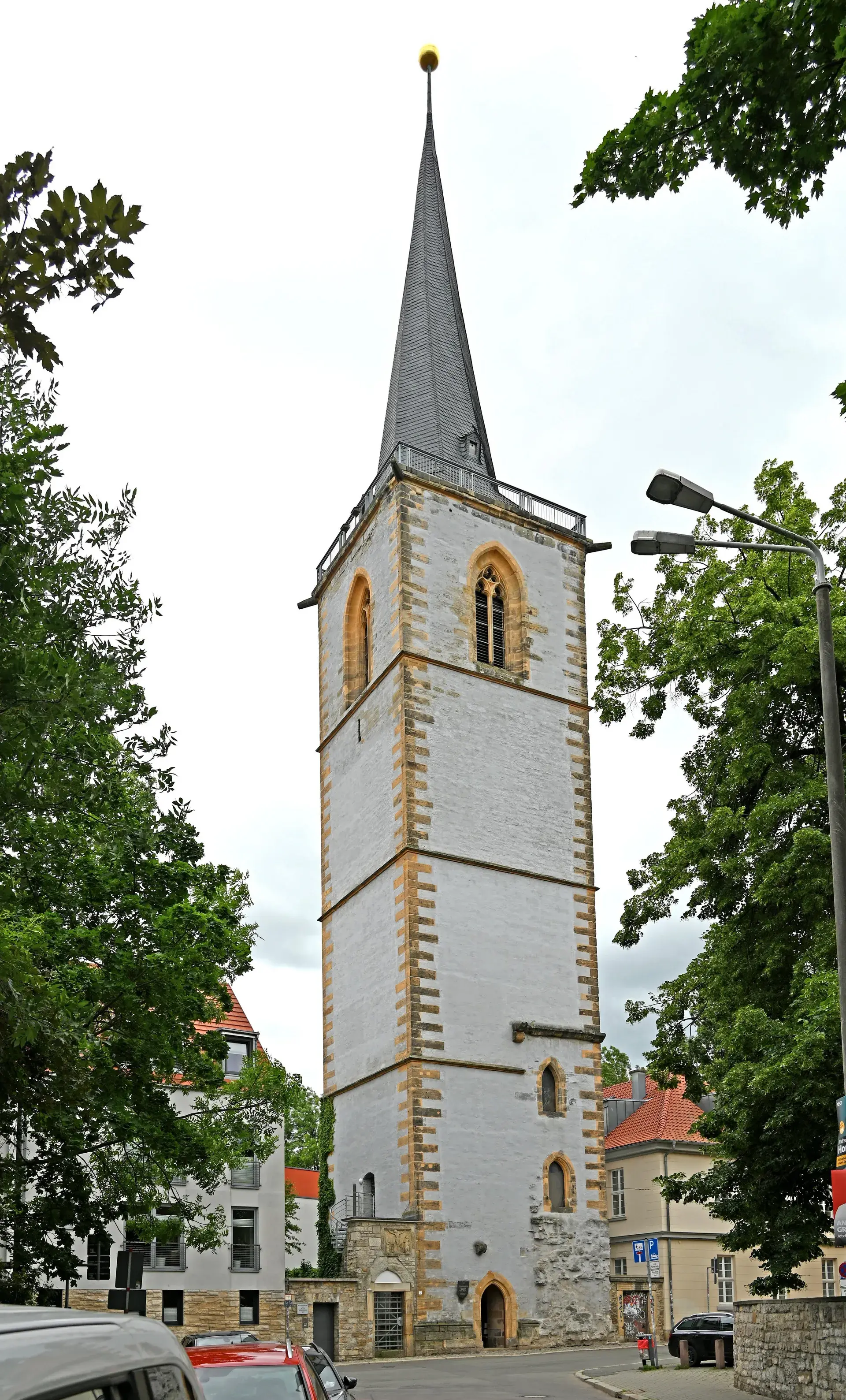
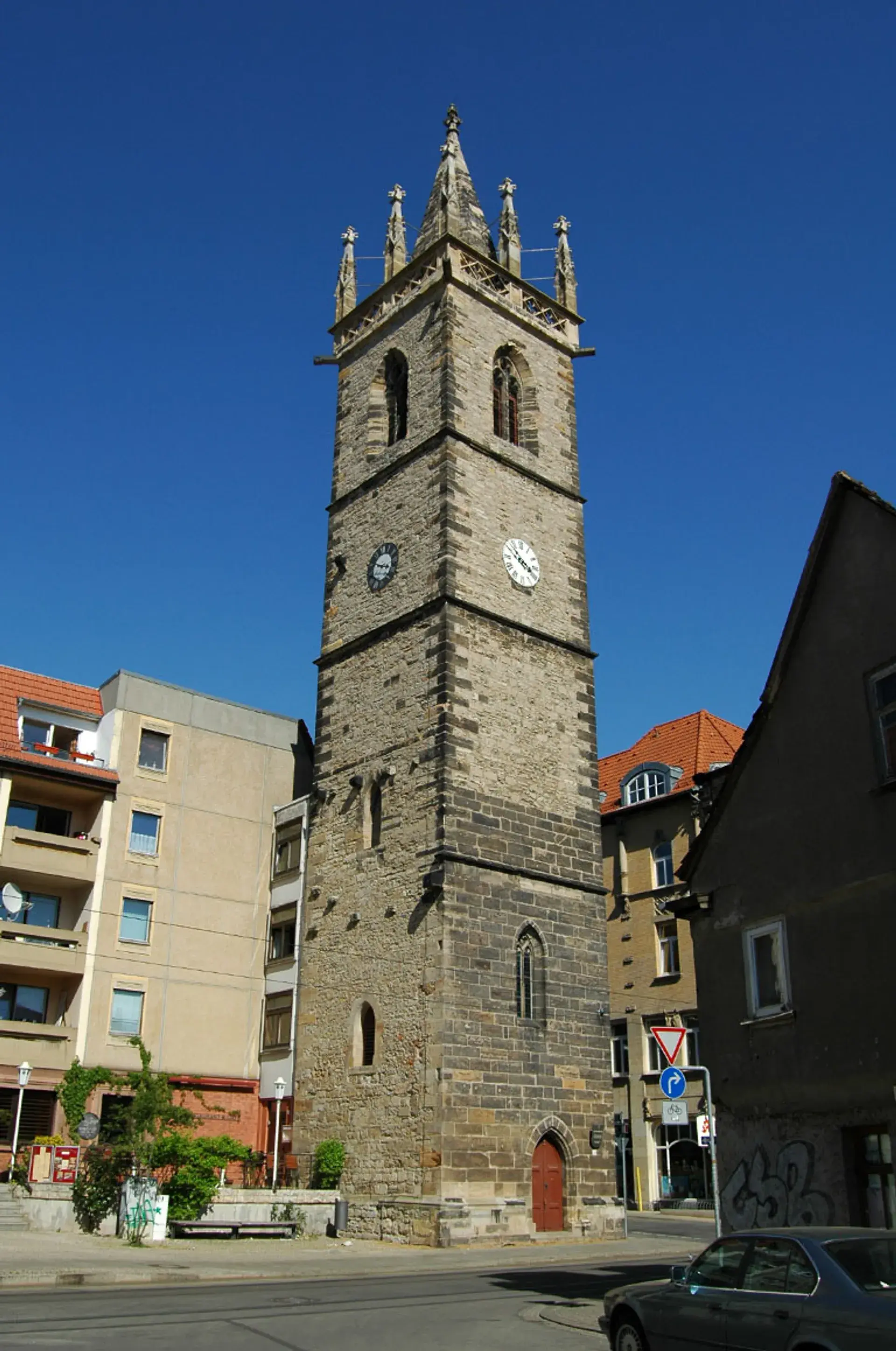
The Nikolaikirchturm stands in Erfurt's Old Town as the sole surviving structure of the former Nikolaikirche, a parish church first documented in 1013. Dedicated to St. Nicholas, the patron saint of traveling merchants, the church embodied the city's vibrant commercial life. The tower itself, constructed in 1360/61, is now recognized as one of Erfurt's most valuable cultural and artistic objects.
A Legacy of Trade on the Via Regia
The original Nikolaikirche held a strategic position as a 'Brückenkopfkirche', or bridgehead church, at the Lehmannsbrücke. This bridge, first mentioned in 1182, was a crucial crossing on the Via Regia, a historic long-distance trade route connecting Eastern and Western Europe. The church's dedication to the patron saint of merchants directly reflected its connection to the bustling trade that defined medieval Erfurt. From 1284, the German Order held patronage rights over the church.
From Fire to Preservation
A severe fire in 1744 caused significant damage to the Nikolaikirche, leading to the demolition of the main church building in 1747. Only the tower was preserved. Following the demolition, the Nikolaikirchturm served various practical purposes, including as a watchtower where a watchman (Türmer) resided until the last century. At one point, the historic tower was even repurposed as a storage space for furniture.
The Elisabeth Chapel
The ground floor of the Nikolaikirchturm houses the Elisabethkapelle (Elisabeth Chapel). This chapel features a cross-ribbed vaulted ceiling and walls constructed of lime rubble stone. Its most significant feature is a series of medieval wall paintings depicting scenes from the life of Saint Elisabeth of Thuringia (1207–1231). These murals are considered the oldest of their kind in Thuringia.
The Tower Today
After extensive restoration, the Elisabethkapelle was reopened to visitors on November 19, 2006. Since that time, the nearby Augustinian Monastery has held usage rights for the chapel, and the tower's bells now ring for the monastery. The chapel is accessible to the public, often as part of guided tours, with regular tours offered on Mondays at 12:15 PM and other times by prior arrangement for an admission fee.
The Legend of the Silent Clock
A local legend offers a dramatic explanation for why the Nikolaikirchturm's clock never strikes the full hour. According to the tale, a watchman deliberately stopped the clock to foil a planned midnight uprising by citizens against the city's patricians, forever silencing its chime at the crucial moment.
FAQ
Why is only the tower of the Nikolaikirche left standing?
The main church building was severely damaged by a fire in 1744 and subsequently demolished in 1747. The tower was intentionally preserved and later served as a watchtower and storage space.
What is inside the Nikolaikirchturm?
The tower's ground floor contains the Elisabethkapelle, a chapel featuring a cross-ribbed vaulted ceiling and medieval wall paintings depicting the life of Saint Elisabeth of Thuringia.
What is the historical significance of the Nikolaikirchturm's location?
It was a 'bridgehead church' at the Lehmannsbrücke on the Via Regia, a major medieval trade route. Its dedication to St. Nicholas, the patron saint of merchants, highlights Erfurt's historical importance as a commercial center.
Can visitors go inside the Nikolaikirchturm?
Yes, the Elisabethkapelle within the tower is open to visitors. Access is typically available through guided tours, which are offered regularly or by prior arrangement for an admission fee.