Johannesturm: Erfurt's Historic Gothic Bell Tower
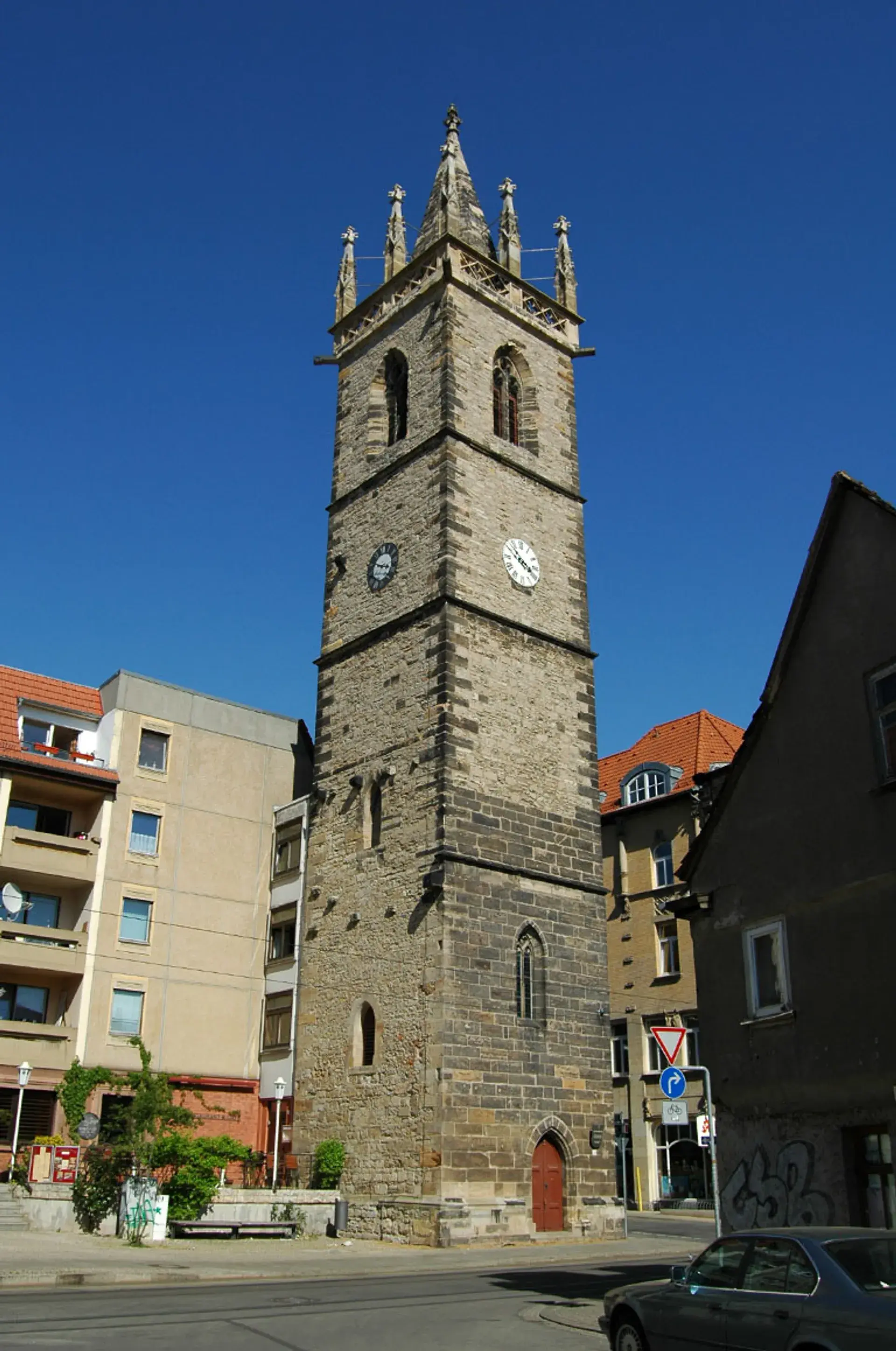
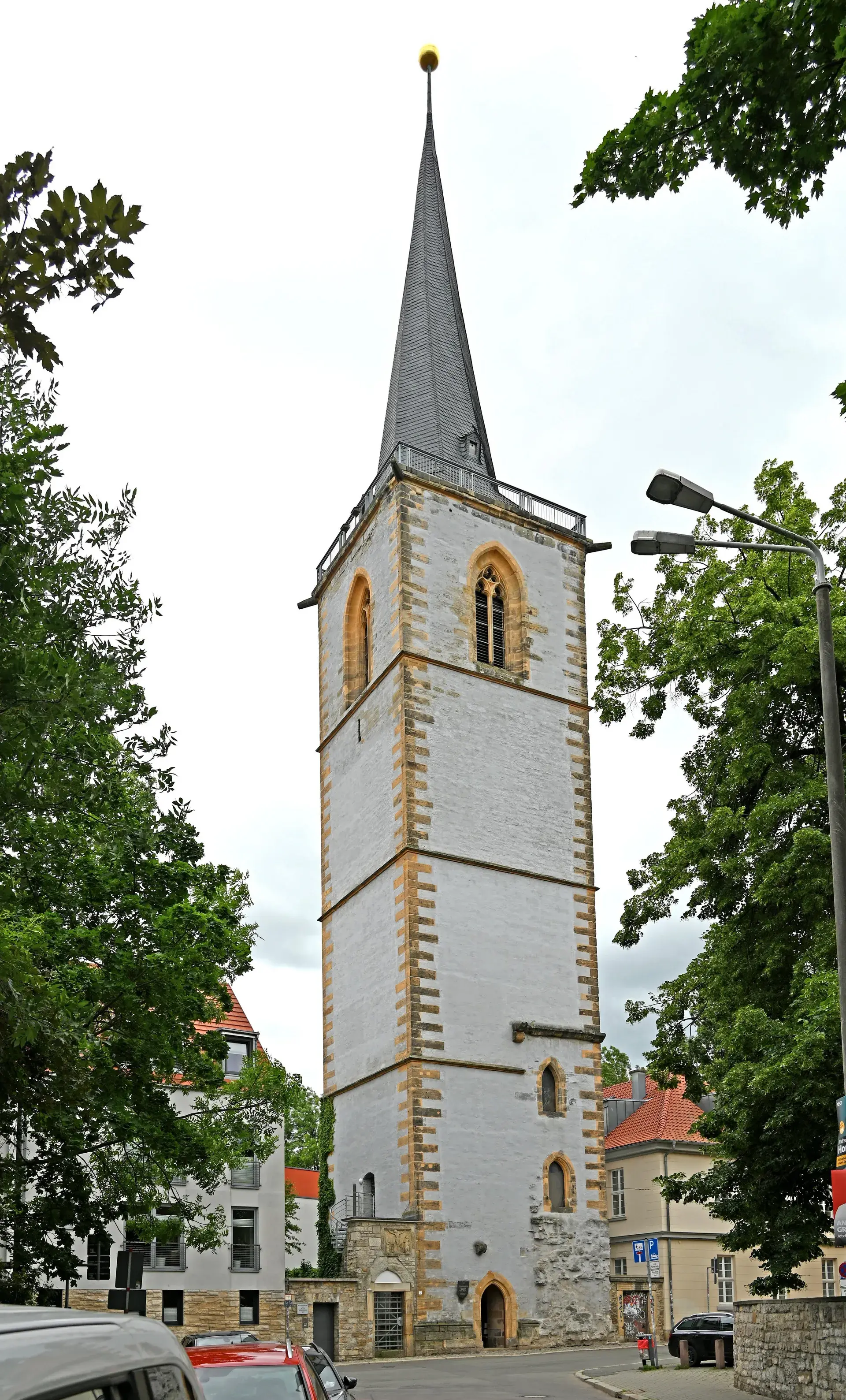
The Johannesturm, or St. John's Tower, stands as a prominent Gothic landmark in Erfurt and the sole surviving remnant of the former Johanneskirche (St. John's Church). Its story reflects centuries of urban transformation, from religious significance to wartime destruction and modern cultural revival.
Medieval Origins
The history of the Johannesturm begins with the Johanneskirche, a church with origins dating back to the 12th century and first documented in 1217. The current Gothic tower was a later addition, constructed between 1469 and 1486. It is a key feature of 'Erfordia Turrita' ('tower-rich Erfurt'), a name possibly coined by Martin Luther to describe the city's skyline of numerous church towers.
From Sacred to Secular Use
The Reformation and the Peasants' War brought significant change. In 1525, religious services at the Johanneskirche ceased, and the building was repurposed for secular needs. Over the years, it served as a military depot and a storage facility for hay and straw. This period of transformation culminated in 1819 with the demolition of the church's nave, leaving only the tower standing.
20th Century Destruction and Restoration
The Johannesturm faced immense hardship during World War II. In 1942, its bells were melted down for armaments. The tower suffered severe damage from American artillery fire in April 1945. This damage led to the collapse of its spire in December of the same year, a tragic event that resulted in one fatality. The tower was eventually restored in 1972.
The Tower Today
Today, the Johannesturm has a new purpose, functioning as the bell tower for the nearby Augustinerkloster (Augustinian Monastery), where Martin Luther once lived as a monk. In 1979, a carillon with 60 bronze bells was installed, which was the largest of its kind in the former German Democratic Republic. As an object of the Erfurt City Museum, the tower is accessible to visitors, offering panoramic views of the city.
FAQ
What is special about the bells in the Johannesturm?
The Johannesturm houses a carillon installed in 1979, which features 60 bronze bells. At the time of its installation, it was the largest carillon in the former German Democratic Republic (GDR).
Why is only the tower of the Johanneskirche left?
Following the Reformation, the church was closed for worship in 1525 and used for secular purposes like storage. The main church building, the nave, was ultimately demolished in 1819, leaving only the tower.
Was the Johannesturm damaged during World War II?
Yes, the tower was heavily damaged by American artillery in April 1945. Its spire collapsed in December of that year, tragically causing one death. The tower was later restored in 1972.
Can you go up the Johannesturm?
Yes, the Johannesturm is accessible to visitors and offers panoramic views of Erfurt as part of the city's 'Erfordia Turrita' ('tower-rich Erfurt') initiative.