Old Synagogue Erfurt: A UNESCO World Heritage Site
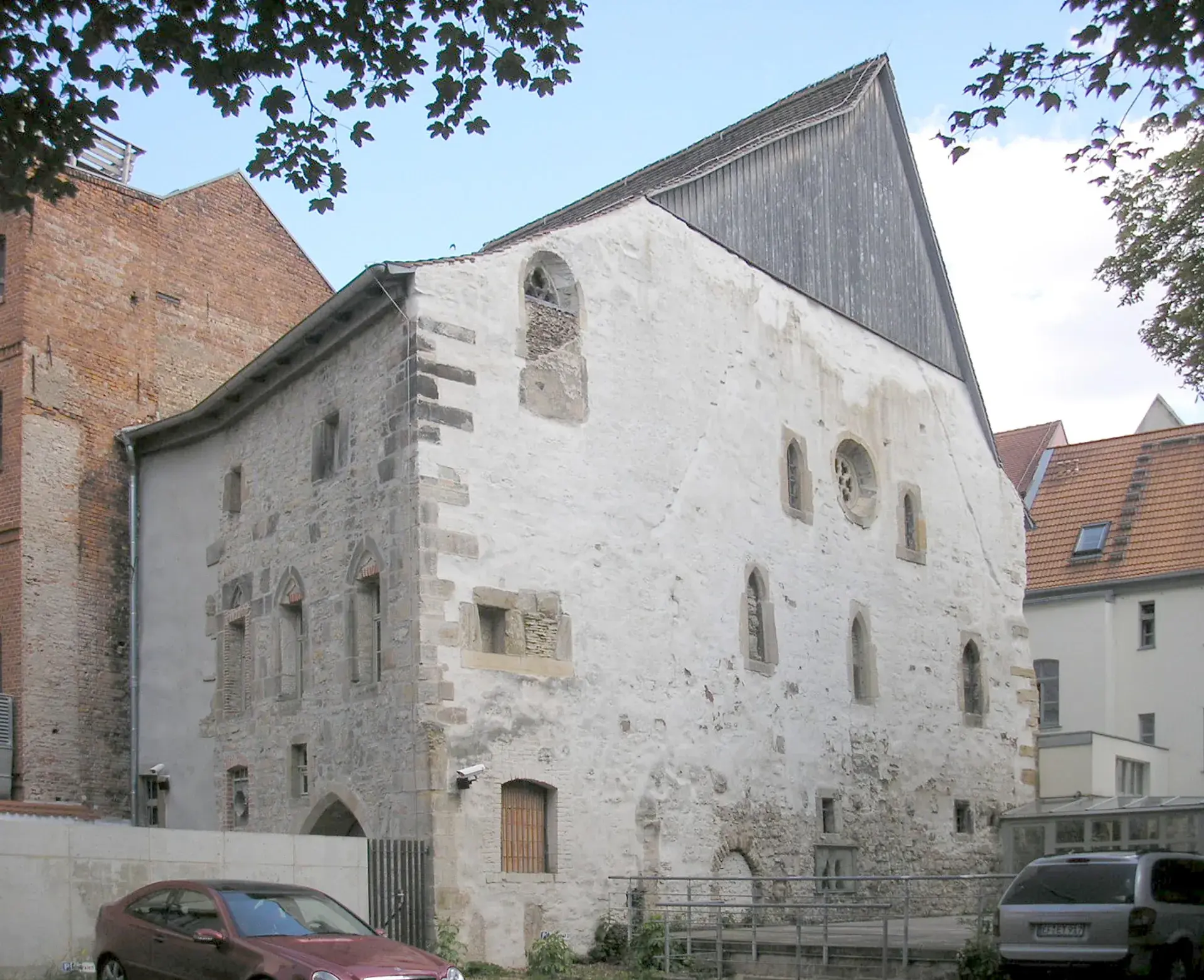
The Old Synagogue in Erfurt stands as a profound monument to medieval Jewish life in Europe. Recognized as a UNESCO World Heritage site in 2023, it is the continent's oldest, exceptionally preserved synagogue. Its story is one of a flourishing community, tragic loss, centuries of obscurity, and remarkable rediscovery.
Medieval Origins and Flourishing Community
The earliest parts of the Old Synagogue date back to 1094, with the main structure built between 1250 and 1320. Its architecture blends Romanesque and Gothic styles, reflecting its development over time. The synagogue served a prosperous Jewish community that was integral to Erfurt's life as a commercial hub. This community, first recorded in the late 11th century, engaged in banking and trade across the Holy Roman Empire, living near the famous Krämerbrücke.
The 1349 Pogrom and a Change of Purpose
A devastating turning point came on March 21, 1349, with the Erfurt Massacre. This pogrom wiped out the city's entire Jewish community, with up to 900 people losing their lives. Following the massacre, the damaged synagogue was acquired by the city and sold to a merchant. It was converted into a warehouse, with a vaulted cellar added, and its sacred purpose was erased. For the next five centuries, it was used for storing goods.
An Unlikely Preservation
In a strange twist of history, the synagogue's original identity was so completely forgotten that it was repurposed again in the 19th century. It became an inn, complete with a ballroom, restaurant, and even bowling alleys. This secular use, born from historical amnesia, inadvertently protected the building. Because its Jewish origins were not recognized, it escaped the widespread destruction of synagogues during the Nazi era.
Rediscovery and Museum
The building's immense historical significance was finally rediscovered in the late 1980s, with intensive research beginning in 1992. The City of Erfurt purchased the building in 1998 and undertook a major restoration. On October 27, 2009, the Old Synagogue opened its doors as a museum of local Jewish history.
The building itself is the main exhibit, but it also houses extraordinary artifacts that illuminate the story of Erfurt's first Jewish community. In the cellar, visitors can see the Erfurt Treasure, a stunning hoard of coins, silver, and jewelry believed to have been buried by a Jewish merchant during the 1349 pogrom. The upper floor displays facsimiles of the Erfurt Hebrew Manuscripts, a significant collection of religious texts from the 12th to 14th centuries.
FAQ
Why is the Old Synagogue in Erfurt significant?
It is Europe's oldest, exceptionally preserved synagogue, with its earliest parts dating to 1094. Its survival is unique as its identity was forgotten for centuries, which protected it from destruction. It is now a UNESCO World Heritage site.
What is the Erfurt Treasure?
The Erfurt Treasure is a hoard of over 3,000 silver coins, 14 silver ingots, and more than 700 pieces of jewelry from the 13th and 14th centuries. It was discovered near the synagogue in 1998 and is believed to have been hidden during the 1349 pogrom.
What happened to Erfurt's Jewish community in 1349?
On March 21, 1349, the entire Jewish community was wiped out in a violent pogrom known as the Erfurt Massacre. Following this event, the synagogue was secularized and converted into a warehouse.
When did the Old Synagogue become a UNESCO World Heritage site?
The Old Synagogue, along with the Medieval Mikveh and the 'Stone House' in Erfurt, was inscribed on the UNESCO World Heritage List in 2023 as part of the 'Jewish-Medieval Heritage of Erfurt'.