Krämerbrücke: Erfurt's Inhabited Medieval Bridge
The Krämerbrücke, or Merchants' Bridge, is a globally recognized architectural landmark in Erfurt and a testament to the city's medieval prosperity. As the longest continuously inhabited bridge in Europe, it stands as a unique monument to history, lined with half-timbered houses that echo with tales of bustling trade. Spanning a branch of the Gera River, the bridge is a centerpiece of Erfurt's historic identity.
History and Construction
The origins of the Krämerbrücke trace back to a crossing on the vital Via Regia trade route. A wooden bridge, first mentioned as a 'market bridge' in 1156, originally occupied the site. After suffering numerous fires, the city council acquired the rights to build a more durable structure. A stone arch bridge was completed in 1325, initially flanked by a church at each end.
A major city fire in 1472 destroyed the market stalls and much of the bridge. This event prompted a significant rebuilding effort, completed in 1486. The bridge was made wider and higher, and the iconic half-timbered houses were constructed. Originally, there were 62 narrow, three-story structures, which were later consolidated into the 32 houses seen today to create more living space.
Architecture and Commerce
The Krämerbrücke is approximately 125 meters long, with the houses creating a 5.5-meter-wide pedestrian thoroughfare between them. These medieval half-timbered structures were designed for merchants to live directly above their ground-floor shops, a common practice in the Middle Ages. A surprising architectural feature is that the cellars are not located beneath the street but are ingeniously built into the bridge's stone piers.
Erfurt's wealth was largely built on the woad trade, a plant used to create a valuable blue dye known as 'Erfurt Blue.' The bridge was a center for this commerce. In some houses, brewery workers' urine was collected to be used as a mordant in the dyeing process, which would have created a distinct ammonia smell around the workshops.
The Bridge Today
Today, the Krämerbrücke is a vibrant pedestrian zone and a major tourist attraction. The 32 houses are home to a variety of artisan shops, galleries, and antique dealers selling hand-painted ceramics, blown glassware, jewelry, and wood carvings. The upper levels of many buildings remain private residences, continuing the bridge's long tradition of being a place to live and work.
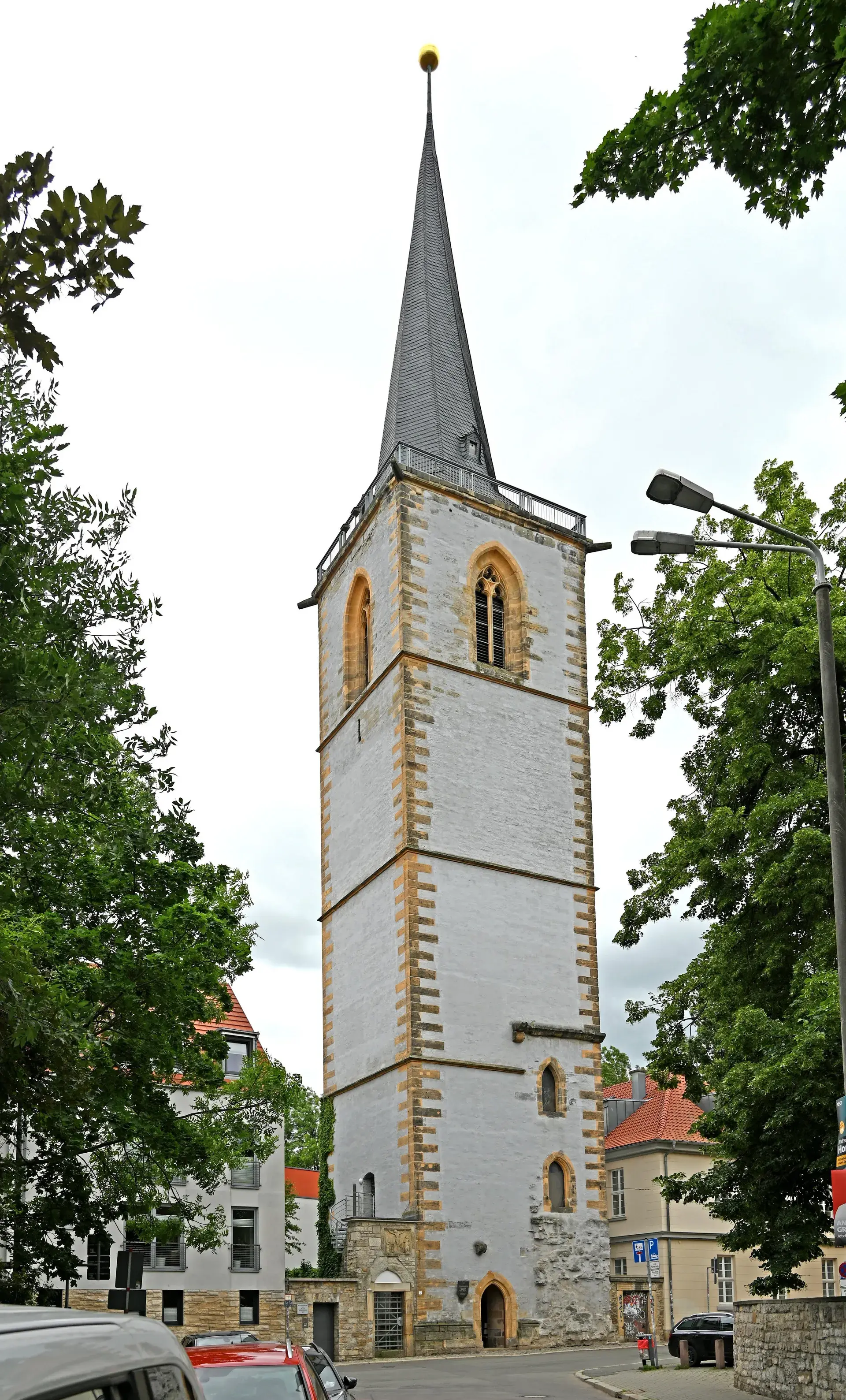
Of the two original churches, only St. Giles' Church (Ägidienkirche) remains at one end of the bridge. At Krämerbrücke 31, the 'House of Foundations' hosts a permanent exhibition on the bridge's history, which includes a detailed 1:100 scale model. The bridge is also the site of the popular annual festival, the Krämerbrückenfest.
FAQ
What is the Krämerbrücke in Erfurt?
The Krämerbrücke (Merchants' Bridge) is a medieval arch bridge in Erfurt, Germany. It is famous for being the longest continuously inhabited bridge in Europe, lined with 32 half-timbered houses.
How old is the Krämerbrücke?
A wooden version of the bridge was first mentioned in 1156. The stone structure was completed in 1325, and the current half-timbered houses were built after a major fire in 1472, with completion in 1486.
Can you live on the Krämerbrücke?
Yes, the upper levels of the buildings on the Krämerbrücke continue to serve as private residences, maintaining a tradition that dates back to the Middle Ages.
What can you find on the Krämerbrücke today?
The bridge is a pedestrian zone with shops on the ground floor specializing in arts and crafts, antiques, and local handmade products. It also houses private residences and an exhibition about its history in the 'House of Foundations' (Krämerbrücke 31).