Steinernes Haus: Erfurt's UNESCO Medieval Gem
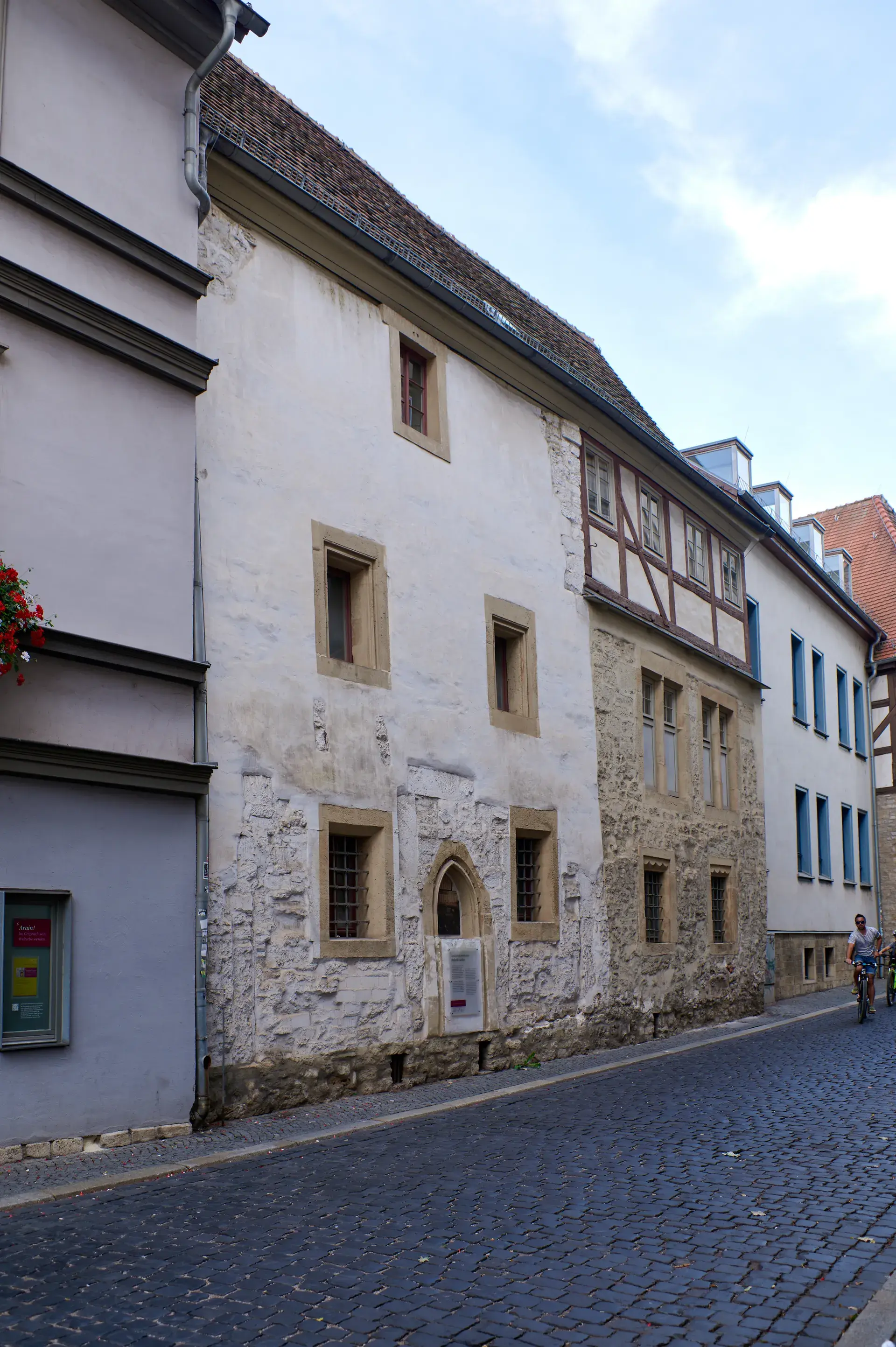
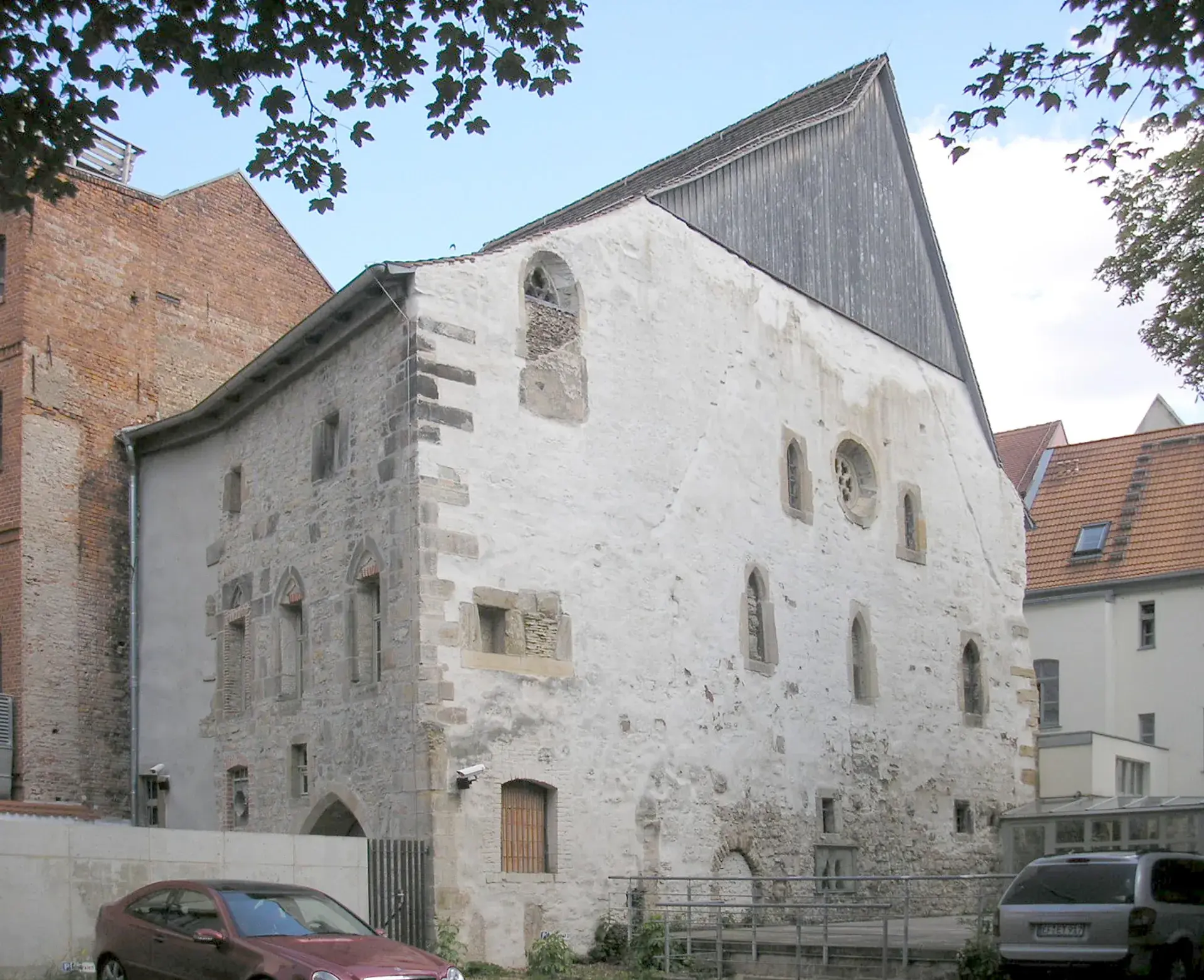
The Steinernes Haus (Stone House) at Benediktsplatz 1 is a remarkably preserved medieval residential and commercial building in Erfurt's Old Town. Constructed around 1250, it stands as an exceptional testament to High Middle Ages architecture and Jewish life. In 2023, it was inscribed as part of the UNESCO World Heritage Site 'Jewish-Medieval Heritage in Erfurt,' alongside the Old Synagogue and the Mikveh.
Architectural History
The building's origins trace back to the 12th century, with a Romanesque cellar and portal forming its earliest structural elements. The main stone house, or 'Kemenate,' was built around 1250. Dendrochronological dating of the wooden ceiling beams in the upper floor confirms their placement in 1241/42 or 1247. The architecture also features Gothic elements, such as a pointed-arch light niche and a stepped gable, which was later covered by an annex in 1385.
A Center of Medieval Jewish Life
By the late 13th century, the Steinernes Haus was in Jewish possession, serving as a home and business. This period highlights the active role of Erfurt's Jewish community in the city's trade and commerce. This era came to a tragic end with the Pestpogrom of 1349, which resulted in the murder or expulsion of the city's Jewish residents and the end of Jewish ownership of the property.
Accidental Preservation and Rediscovery
Ironically, the building's exceptional state of preservation is due to its subsequent use. After 1349, the Steinernes Haus was repurposed as a warehouse. This utilitarian function protected its original medieval substance from significant alterations over the centuries. From 2015 to 2017, extensive investigation by experts like Dr.-Ing. Barbara Perlich and Prof. Christoph Merzenich began to fully uncover and document its immense historical value.
A Unique Medieval Interior
One of the building's most astonishing features is located on its upper floor: the oldest known profane (non-sacred) painted wooden beam ceiling north of the Alps. Dating from the 1240s, the ceiling is exceptionally well-preserved. It features distinct ornamentation on its beams and a consistent wheel motif painted on the ceiling boards, offering a rare glimpse into medieval secular interior design.
The Schaudepot and Current Use
Today, the Steinernes Haus building complex houses offices for the City of Erfurt administration. While the main building is not generally accessible to the public, its cellar contains a 'Schaudepot' (visible storage). This study collection displays approximately 110 medieval Jewish gravestones and fragments from the 13th to 15th centuries, recovered from a former Jewish cemetery. Access to the Schaudepot is available exclusively through guided tours.
FAQ
What is the Steinernes Haus in Erfurt?
The Steinernes Haus (Stone House) is a medieval residential and commercial building from around 1250. It is a key part of the UNESCO World Heritage site 'Jewish-Medieval Heritage in Erfurt', recognized for its exceptional preservation and history as a Jewish home.
Can I visit the Steinernes Haus?
The main building is generally not open to the public as it houses city offices. However, its cellar contains the Schaudepot (visible storage) of medieval Jewish gravestones, which can be visited on guided tours only.
What is special about the Steinernes Haus?
It contains the oldest known profane (non-sacred) painted wooden beam ceiling north of the Alps, dating to the 1240s. Its preservation is also unique, as its long-term use as a warehouse protected its original medieval structure.
What is the Schaudepot in the Steinernes Haus?
The Schaudepot is a visible storage or study collection in the building's cellar. It exhibits around 110 medieval Jewish gravestones and fragments, dating from the 13th to 15th centuries, that were recovered from Erfurt's medieval Jewish cemetery.