Lower Market Square: Historic Heart of Görlitz
A Medieval Merchant Hub
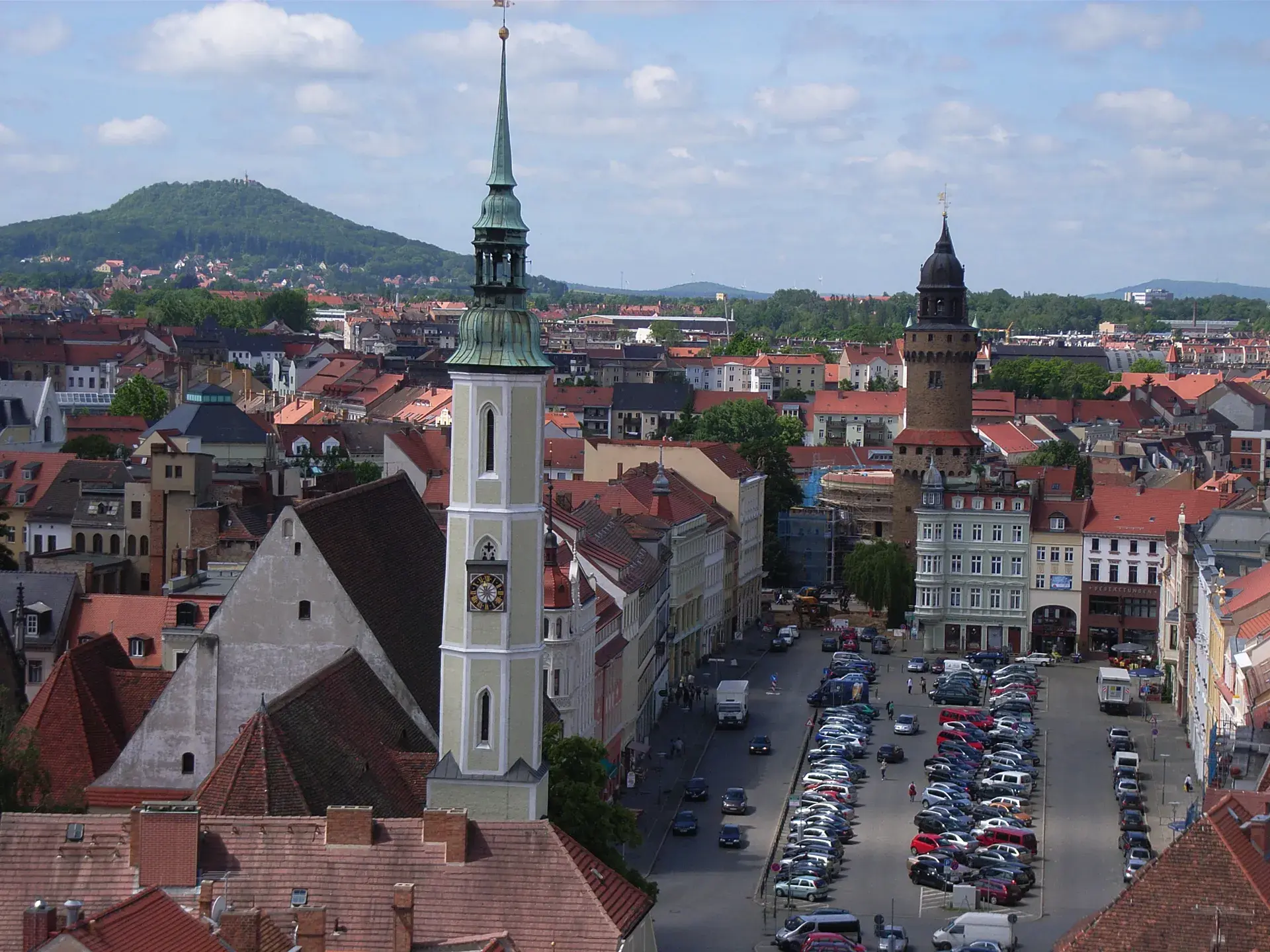
The Lower Market Square, known locally as the Untermarkt, has served as the geographic and historical anchor of the Görlitz Altstadt since it was laid out around 1200. Connecting the uphill Obermarkt toward the Neisse River and the Polish border town of Zgorzelec, the square flourished as a central trading hub along the medieval Via Regia.
The square is bisected into northern and southern sections by a central island of buildings known as the Zeile, or Mittelzeil, which historically housed the city's weigh house and tax station. Trade was strictly divided; merchants dealing in luxury goods like spices and silks operated on the south side, while farmers, market gardeners, and fishermen traded on the north.
As the exclusive domain of wealthy woad and cloth merchants, the Untermarkt features unique "Hallenhäuser" (hall houses). These structures boast multi-story internal central vaults and wide portals, originally designed to allow horse-drawn transport wagons to drive directly inside for weather-protected unloading.
Architectural Landmarks
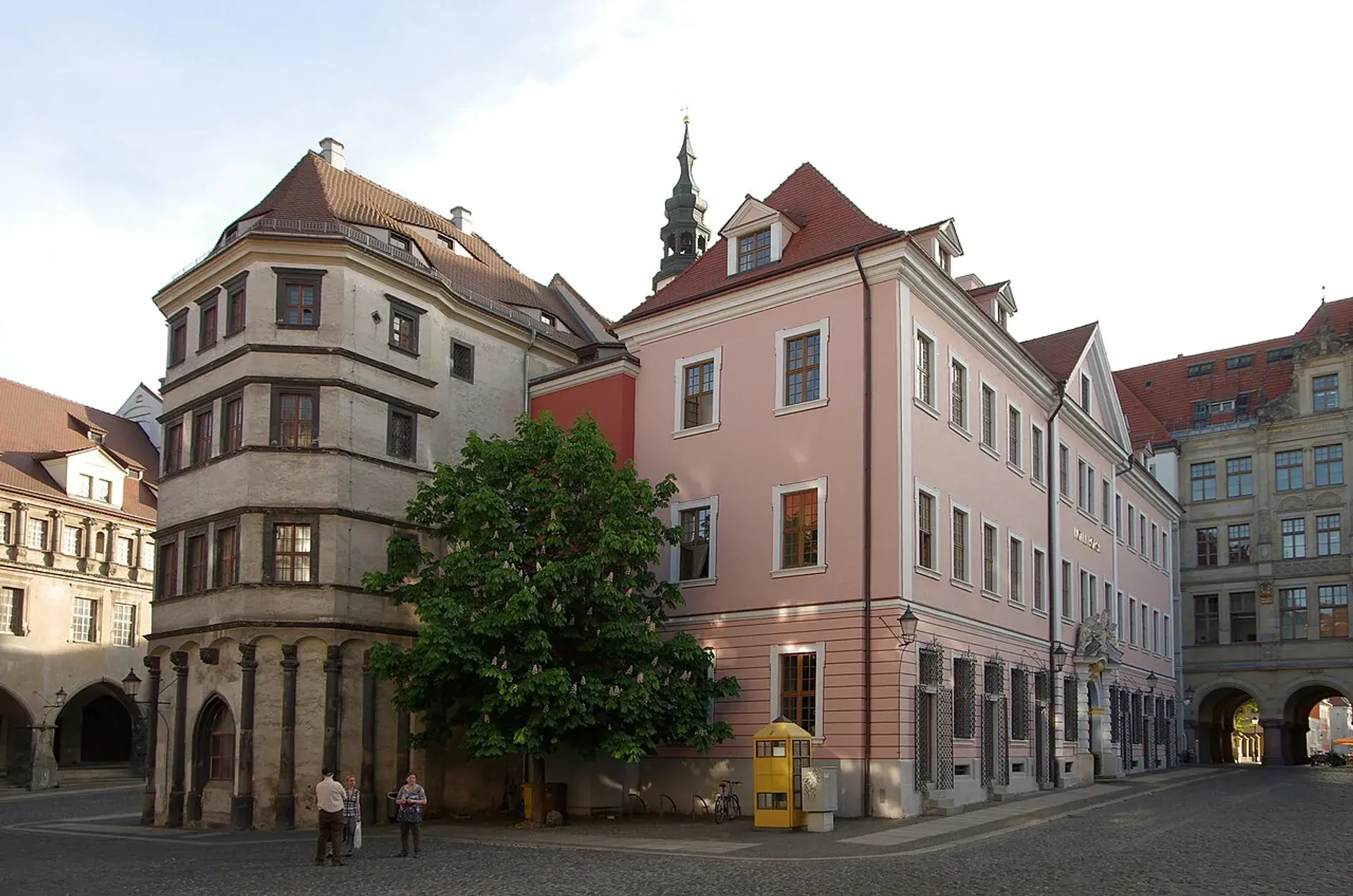
The Untermarkt is ringed by centuries of preserved historic structures. The 14th-century Rathaus (Town Hall) commands attention with a 1471 Bohemian portal, an astronomical clock, and an open Renaissance staircase. Notably, the stone statue of Justitia adorning the staircase lacks the traditional blindfold, representing clear-eyed rather than blind judgment.
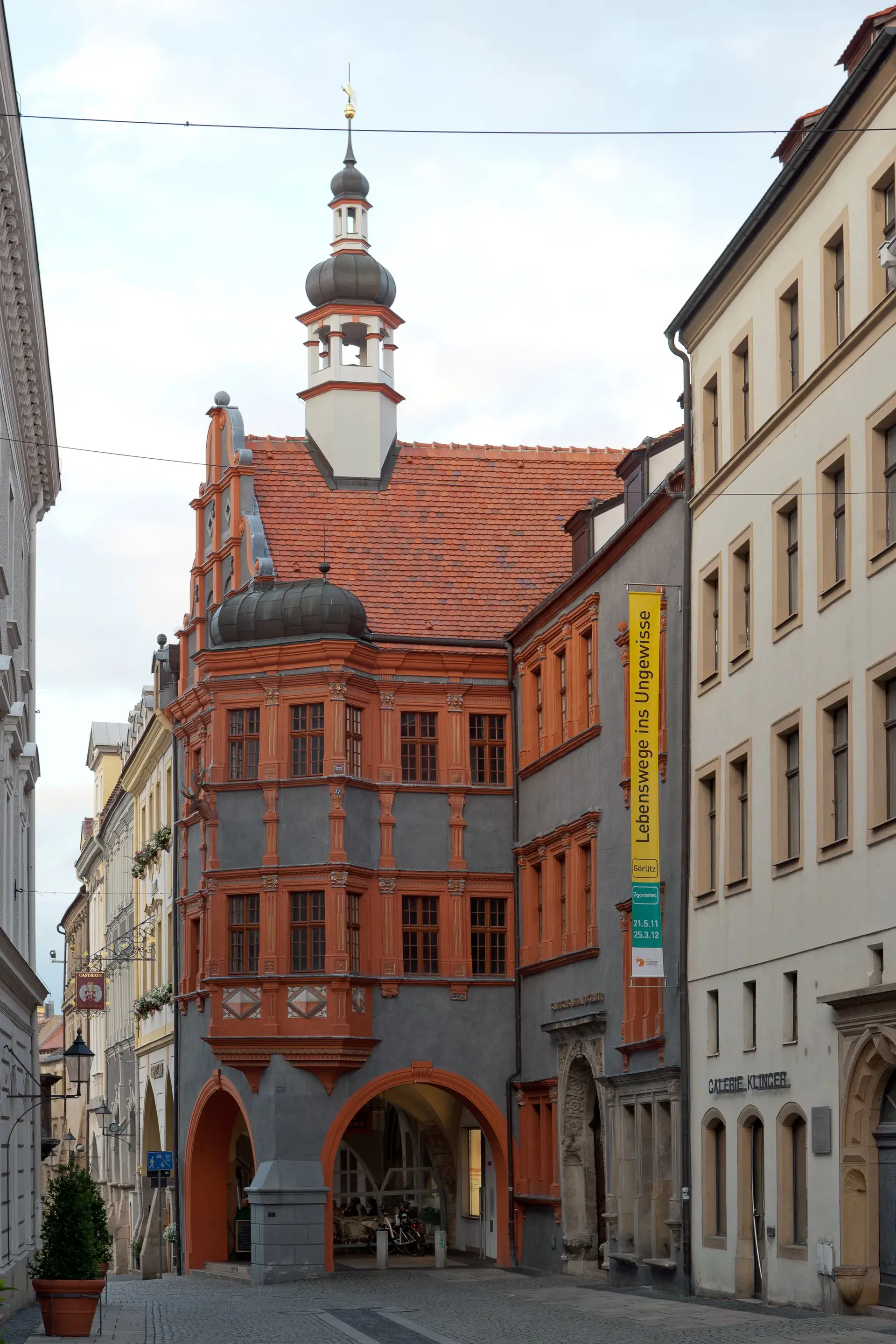
Nearby stands the Schönhof, constructed in 1526 by master builder Wendel Roskopf following a fire. Widely recognized as Germany’s oldest secular Renaissance townhouse, it currently houses the Silesian Museum. The Waage, rebuilt in 1600 by Jonas Roskopf on earlier Gothic foundations, dominates the central Zeile.
Curiosities of the Square
The Renaissance Ratsapotheke (Council Pharmacy) features colorful facades and a unique pair of dual sundials crafted by a former mayor and astronomer. One sundial displays standard daylight hours, while the other calculates unequal planetary or Babylonian hours.
Another notable feature is the 18th-century Baroque Neptunbrunnen fountain, affectionately referred to by locals as the "Gabeljürgen." At Untermarkt 22, the Flüsterbogen, or Whispering Arch, presents a fascinating acoustic anomaly. The deeply carved groove of this late-Gothic sandstone portal captures soft whispers and channels the acoustic waves clearly along its arc to anyone listening on the opposite side.
Modern Era and Görliwood
Today, the Lower Market Square is a pedestrian-friendly gathering space lined with restaurants, outdoor cafés, and boutique accommodations like the Emmerich Hotel. It remains a focal point for community life, hosting regular events such as the Silesian Pottery Market (Tippelmarkt) and the Silesian Christmas Market.
Thanks to its pristine medieval, Renaissance, and Baroque facades, the square frequently serves as a historical movie set for both German and international film productions, earning Görlitz the popular nickname "Görliwood."
FAQ
Why does the Justitia statue at the Rathaus not have a blindfold?
The stone statue of Justitia on the Rathaus staircase was carved without the traditional blindfold to represent clear-eyed, rather than blind, judgment.
What is a Hallenhaus?
A Hallenhaus, or hall house, is a historic merchant home featuring a wide portal and multi-story internal vault. They were designed so horse-drawn transport wagons could drive directly inside to unload goods away from the weather.
How does the Whispering Arch at Untermarkt 22 work?
The late-Gothic sandstone portal features a deeply carved groove. When words are whispered softly into one side of the curvature, the acoustic waves are channeled clearly along the arc to a listener on the opposite side.