Upper Market Square: Görlitz's Historic Obermarkt
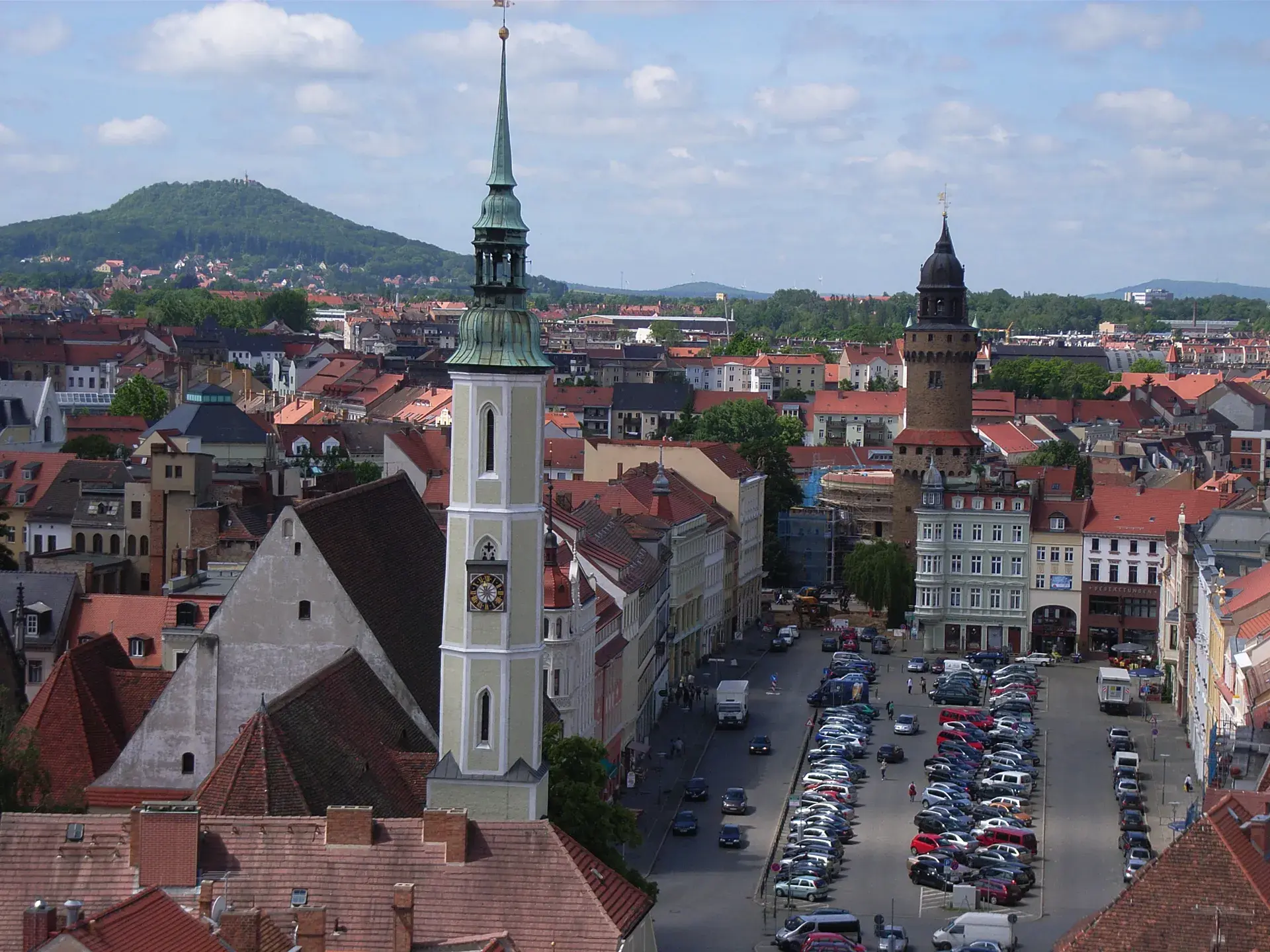
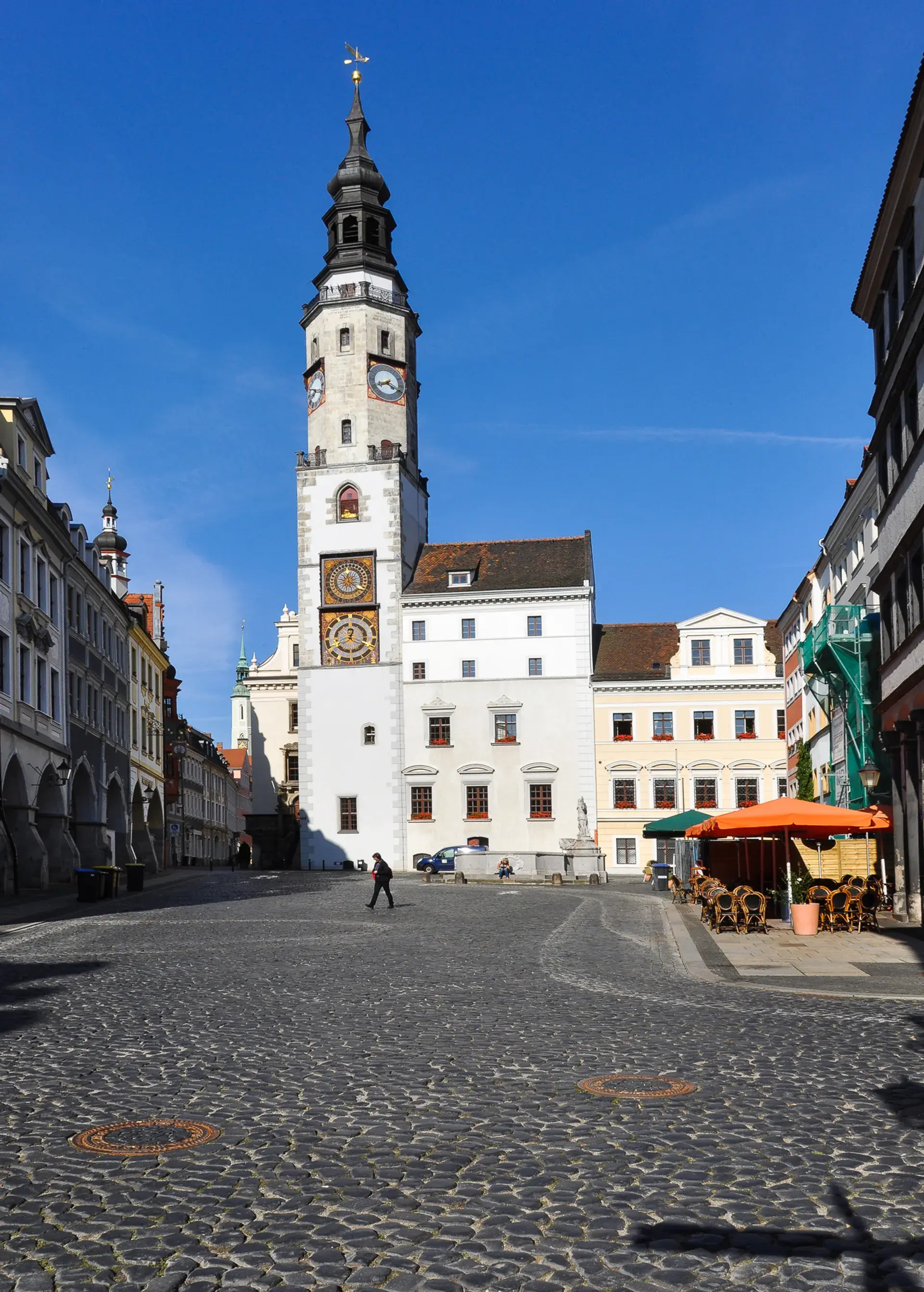
The Upper Market Square (Obermarkt) forms a 250-meter-long public expanse covering approximately 7,500 square meters in the historic center of Görlitz. Acting as a threshold between the city's medieval core and the late 19th-century Gründerzeit expansion, the square features granite cobblestones framed by pastel-toned Baroque facades and towering fortifications.
A Medieval Trading Hub
Created around 1250 during the city's westward expansion, the square served as a vital staging post along the Via Regia, a medieval trade route linking Western Europe to Bohemia and Silesia. Due to staple rights, merchants were legally required to halt at the square to weigh and sell commodities like salt, woad (cloth dye), and spices.
From roughly 1400 until the mid-19th century, the center of the square was filled with a block of buildings, including merchant stalls and a salt house, which were eventually cleared to create the open plaza seen today. Following a devastating fire in 1717, much of the north side was rebuilt in an elegant Baroque style. During the GDR era, the square was officially renamed Leninplatz in 1951, though locals continued to use its historic name.
Architectural Landmarks
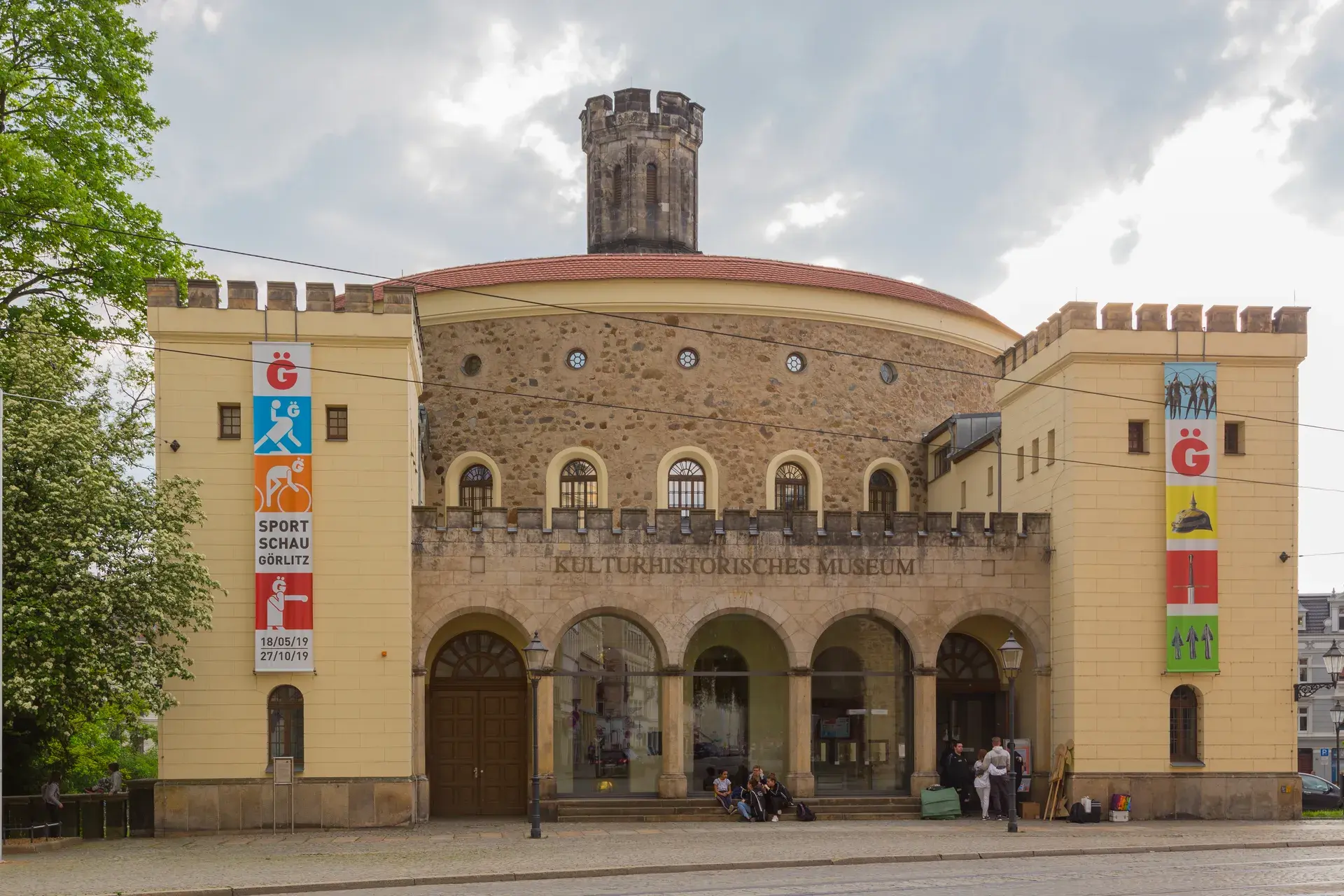
Several major landmarks define the perimeter of the square. At the western edge stands the Reichenbacher Turm, a 51-meter-tall medieval defensive tower, alongside the Kaisertrutz, a round bastion built in 1490. Both structures originally protected municipal autonomy and now house branches of the Kulturhistorisches Museum Görlitz.
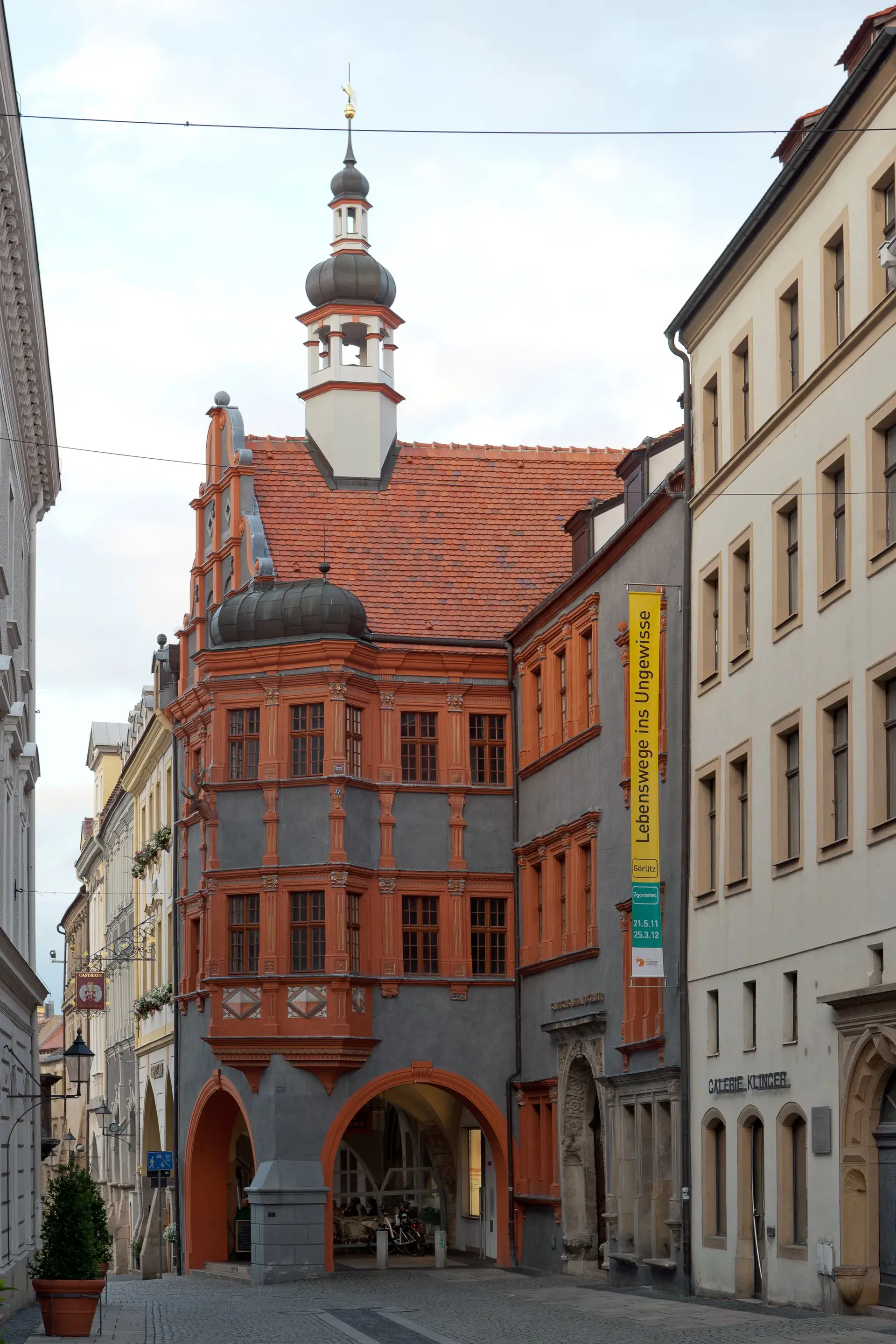
On the southeast corner sits the Dreifaltigkeitskirche, founded in 1234 as a Franciscan monastery church. Near the eastern end stands the Georgsbrunnen, a 1590 Renaissance fountain topped with a knight statue bearing the Saxon coat of arms. Another prominent building is the Napoleonhaus (Obermarkt 29), a grand three-story Baroque merchant house built in 1718.
Legends and Historical Curiosities
The Upper Market Square contains several hidden historical details. The Reichenbacher Turm features twelve painted heraldic shields representing rulers and cities of the Upper Lusatian League. These shields conceal structural steel anchors inserted into the masonry during 1936 restoration work to stabilize the tower.
The Napoleonhaus holds a history of its own. Its prominent stone balcony was built by merchant Johann Wilhelm Schaumburg, violating contemporary building codes that reserved such features for nobility. Records suggest he secured approval through bribes. In 1813, Napoleon Bonaparte used this exact balcony to review troops marching through the square.
A notable local legend surrounds the Dreifaltigkeitskirche clock, which traditionally chimes seven minutes early. According to local lore, this honors a 1527 incident where the city council advanced the time to prematurely flush out a clothmakers' revolt into the arms of the city guard. A nearby stone face carving called the Klötzelmönch is tied to another legend of a murderous monk haunting the local cloisters in wooden clogs.
A Modern Civic Center
Today, the square functions as a major pedestrian promenade connecting different eras of Görlitz's urban development. While sections of the wide cobblestone expanse serve as municipal parking, the space remains a central gathering place for civic and cultural events. Throughout the year, it hosts the Altstadtfest, the ViaThea street theatre festival, local pottery markets, and the annual Christmas market. The surrounding historic buildings now accommodate cafes with outdoor seating, restaurants, vacation lodgings, and retail shops.
FAQ
Why does the Dreifaltigkeitskirche clock chime early?
The clock traditionally chimes seven minutes early due to a local legend. Lore states that during a 1527 clothmakers' revolt, the city council advanced the time to trick the rebels into rushing out prematurely, where the city guard captured them.
What is the history behind the Napoleonhaus balcony?
Built in 1718 by merchant Johann Wilhelm Schaumburg, the stone balcony violated building codes that reserved such features for nobility. He likely secured approval through bribes. In 1813, Napoleon Bonaparte used this balcony to review his troops.
How was the Upper Market Square used during medieval times?
The square was a staging post on the Via Regia trade route. Because of staple rights, merchants were required to stop there to weigh and sell goods like salt, cloth dye (woad), and spices.