Silesian Museum in Görlitz: Inside the Schönhof
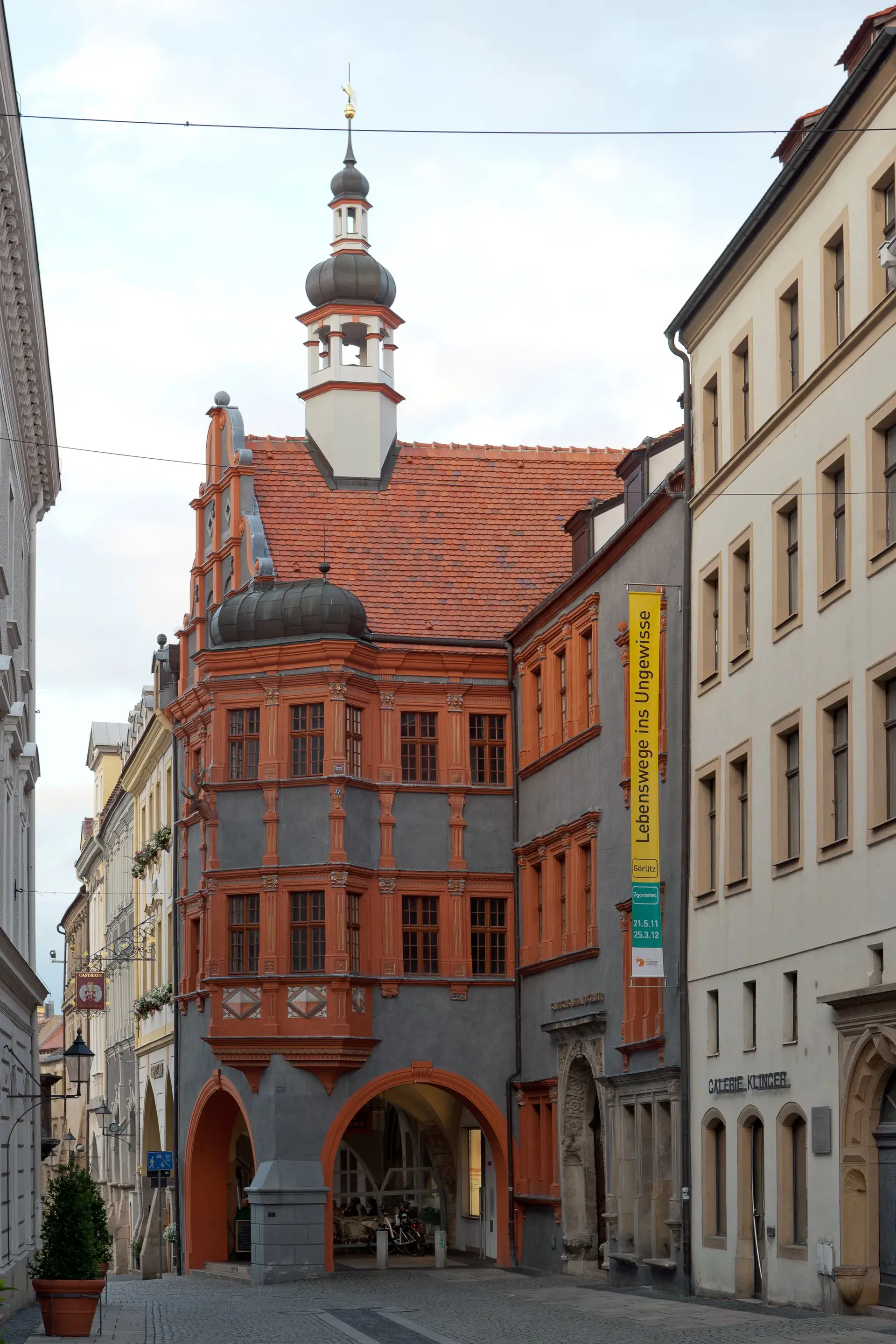
The Silesian Museum in Görlitz anchors the intersection of Brüderstraße and Untermarkt, serving as a focal point for the region's cultural heritage. Housed within the historic Schönhof and the adjacent Haus zum Goldenen Baum, the institution operates as a bilingual, cross-border cultural center. The museum's 2,000-square-meter permanent exhibition covers 900 years of Silesian history, applied arts, and significant 20th-century events.
The Architectural Legacy of the Schönhof
The Schönhof's origins trace back to the late 13th and 14th centuries when it functioned as a major merchant residence along the Via Regia trade route, frequently hosting visiting royalty. Following a devastating city fire in 1525, master builder Wendel Roskopf reconstructed the surviving Late Gothic hall house. Completed in 1526, the Schönhof became the oldest secular Renaissance building in Görlitz and one of the earliest of its kind north of the Alps.
From the 18th to the early 20th century, the building operated as a brewery and inn. It was nearly demolished by a private owner in 1908, but an early heritage conservation effort led by the city secured its purchase in 1909 using Prussian state subsidies. Following German reunification, extensive architectural restorations in the 1990s recovered the building's original Renaissance layouts and wall paintings, paving the way for the museum's permanent exhibition opening in May 2006.
Silesian Craftsmanship and Heritage
The museum's comprehensive collection highlights prominent regional artisanal traditions. Notable displays include cut and polished crystal glass from the Giant Mountains, intricate Breslau goldsmith work, and distinctive Bunzlau ceramic pottery.
Because the portion of the historical Prussian Province of Silesia west of the Lusatian Neisse remained German after 1945, Görlitz serves as a direct bridge to this regional heritage. The museum routinely collaborates with Polish cultural and academic institutions on research and digital projects, such as the bilingual Schönhof digital initiative, to preserve this shared history.
A Unique Freestanding Exhibition
To protect the delicate 16th- and 17th-century plaster and restored wall paintings, the exhibition spaces feature a custom-engineered freestanding display system. Apart from safety equipment, no artifacts or display cases are hung directly on or anchored into the historic walls.
This careful preservation allows the architecture to stand as an exhibit of its own. Natural light filtering through the central hall structure illuminates elaborate, exposed timber beam ceilings and painted Renaissance friezes. The soft-toned historic plaster and richly articulated early Renaissance pilasters contrast uniquely with neighboring transitional structures that still retain Late Gothic trompe-l'œil details.
FAQ
Where is the Silesian Museum in Görlitz located?
The museum is located at the intersection of Brüderstraße and Untermarkt, housed within the historic Schönhof and the adjacent Haus zum Goldenen Baum.
What is the historical significance of the Schönhof building?
Built in 1526 by master builder Wendel Roskopf after a devastating city fire, the Schönhof is the oldest secular Renaissance building in Görlitz and a pioneering architectural prototype for the region.
Why are the museum displays freestanding?
Exhibition displays are custom-engineered to be completely freestanding to protect the building's delicate 16th- and 17th-century plaster and wall paintings. Nothing is anchored into the historic walls.