Görlitz Old Town Hall: Renaissance Architecture Guide
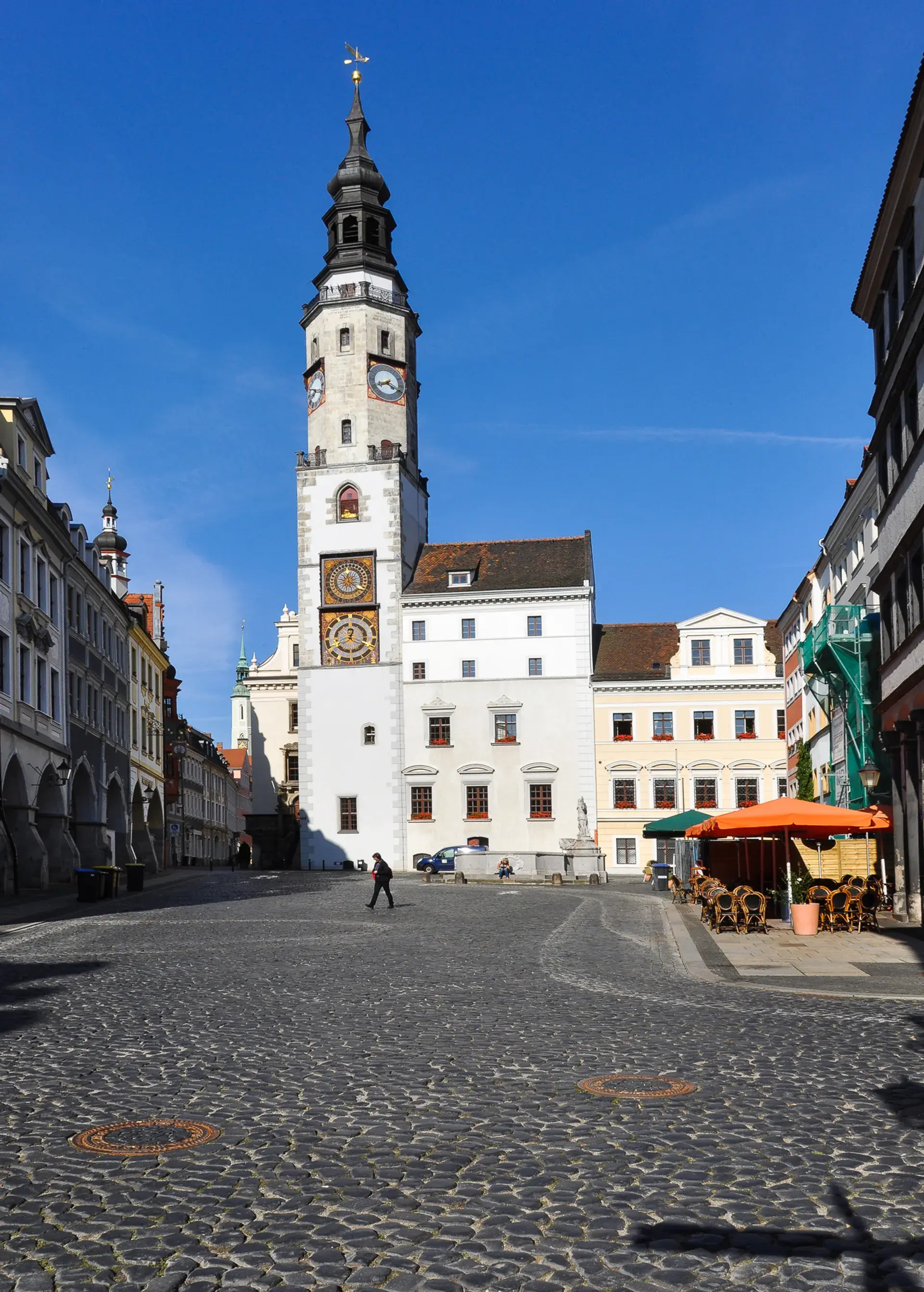
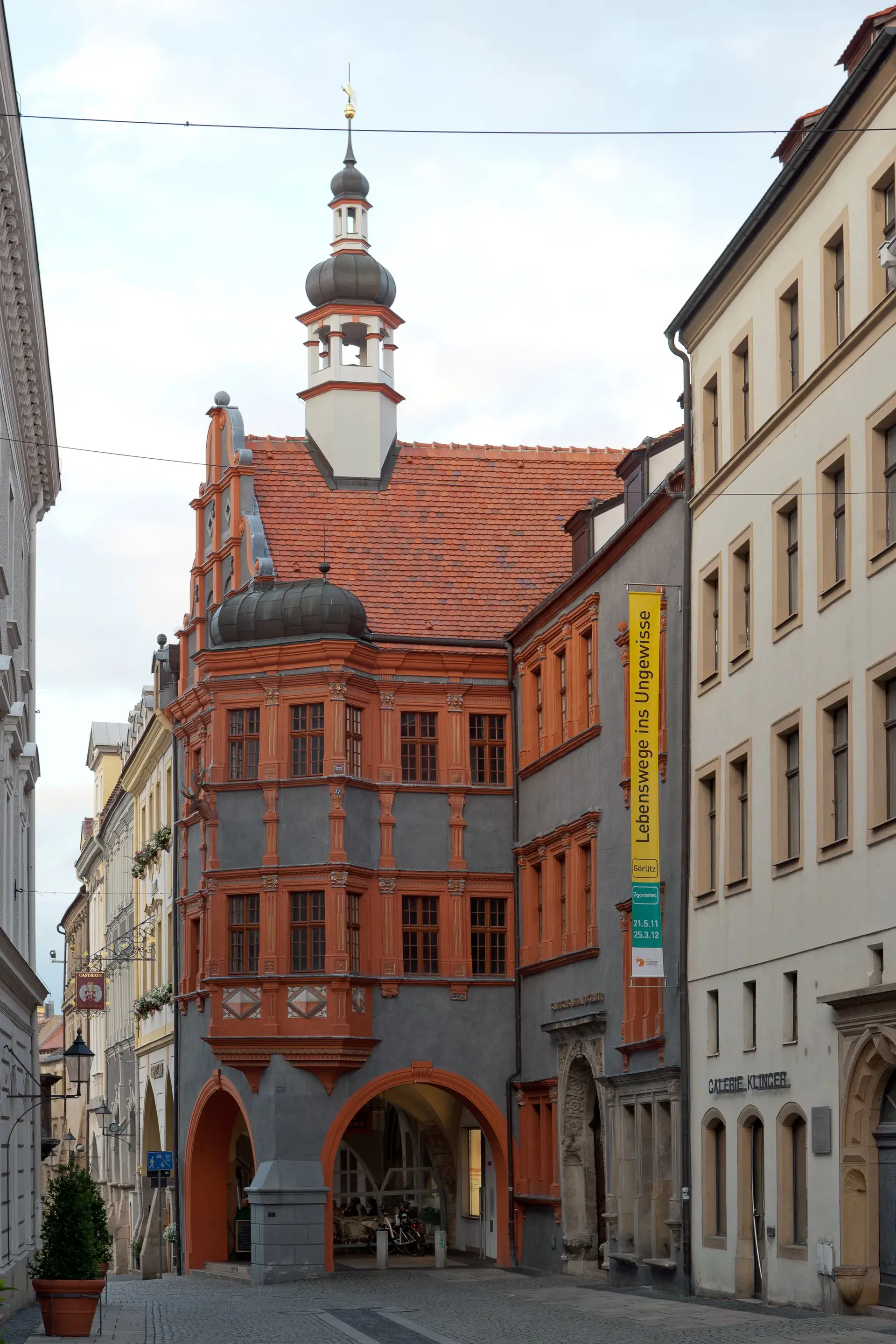
Admire the impressive facade and historic details of the Old Town Hall anchoring the vibrant Untermarkt. Situated at the southwestern corner of this historic commercial center, the building stands opposite the Schönhof. Together, these structures showcase the early 16th-century Renaissance prosperity that Görlitz amassed from its strategic position on the Via Regia trade route.
A Stage for Civic Power
Designed and built between 1537 and 1538 by master builder Wendel Roskopf the Elder, the Town Hall features a prominent Early German Renaissance open-air staircase. Rather than concealing access inside the building, the city council commissioned this highly visible exterior structure to publicly stage municipal authority and court proceedings.
The sweeping spiral stone staircase leads up to the late-medieval judicial wing. Integrated into the design is a cantilevered proclamation pulpit supported by slender twin columns. Historically, this elevated platform served as the primary spot for city magistrates to announce laws, decrees, tax orders, and judicial verdicts to the populace gathered on the cobblestones below.
Artistry and the Clear-Sighted Justitia
In 1591, sculptor Andreas Walther enhanced the staircase with a statue of Lady Justice, known as Justitia, alongside decorative relief friezes. These additions were designed to visibly project the high judicial authority and sovereign legal status of the city. Unlike conventional depictions where Lady Justice wears a blindfold to represent impartial blindness, the Görlitz statue features wide-open eyes. This artistic choice symbolized a local civic justice system that was vigilant and clear-sighted.
The sweeping sandstone balustrade is intricately carved with a mix of solemn and whimsical details. Walther's stonework depicts the biblical Fall of Adam and Eve alongside fruit garlands, sirens, and small sculpted children, known as putti, appearing to slide down the banister rails. The current relief panels and Justitia figure are replicas installed in 1950. The original pieces were evacuated across the Neisse River for safekeeping during World War II and were never returned.
The Modern Municipal Seat
Today, the Old Town Hall remains the active administrative seat of the local government. The striking sandstone masonry, contrasting against the high vertical wall of the Gothic-Renaissance clock tower, makes it a prominent photographic landmark. The historic steps function as a ceremonial route for couples heading toward the municipal wedding hall. Additionally, the staircase serves as the main gathering point for guided historical tours that climb the 60-meter clock tower.
FAQ
Why does the Justitia statue at the Görlitz Old Town Hall not have a blindfold?
Unlike traditional depictions of Lady Justice, the Görlitz statue has wide-open eyes. This was designed to symbolize a local civic justice system that was vigilant, clear-sighted, and exercised with open eyes.
When was the Old Town Hall staircase built?
The Early German Renaissance open-air staircase was designed and constructed between 1537 and 1538 by master builder Wendel Roskopf the Elder.
Are the sculptures on the Old Town Hall staircase original?
No, the current relief panels and the Justitia statue are 1950 replicas. The original 1591 works by Andreas Walther were evacuated across the Neisse River during World War II and were never returned.