Peterskirche Görlitz: The Gothic Sun Organ Church
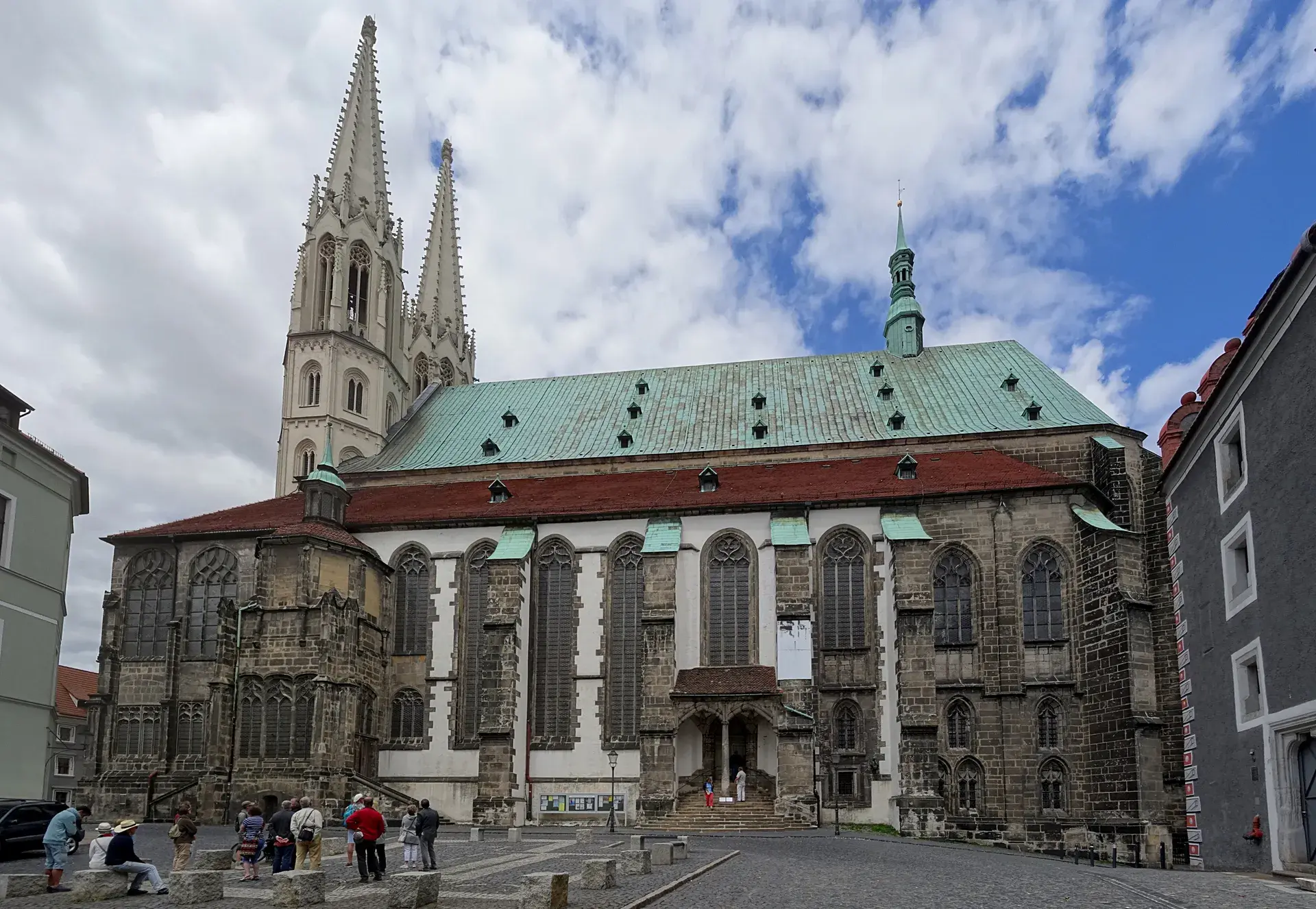
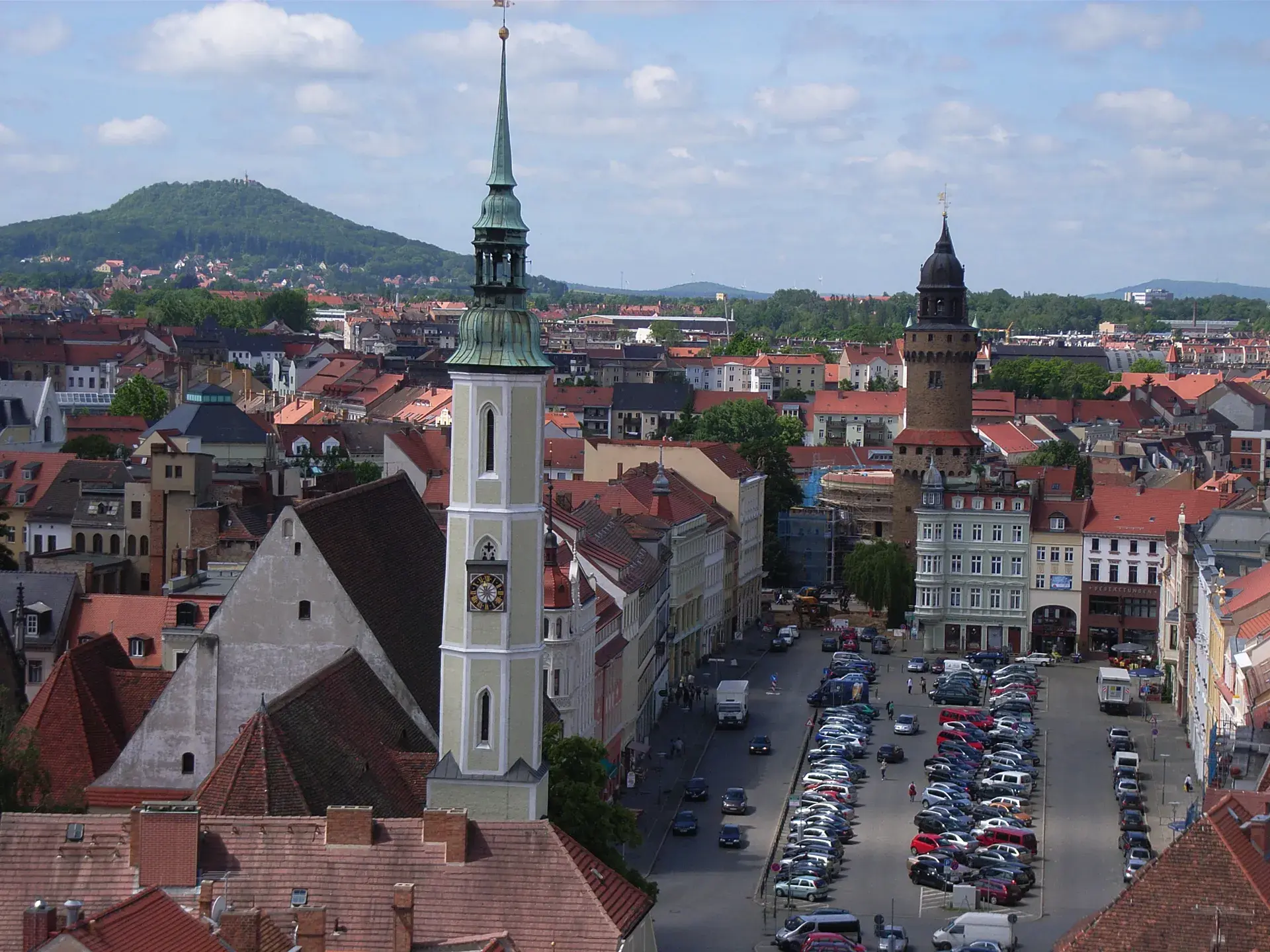
Gaze up at the soaring twin spires and copper roof of Pfarrkirche St. Peter und Paul as they dominate the skyline above the river. Anchoring the eastern edge of Görlitz's historic core beside the Waidhaus, the church (commonly known as the Peterskirche) marks the transition from the Old Town down to the border bridge connecting to Polish Zgorzelec. Its silhouette serves as an essential orientation point throughout the old quarter.
A Gothic Landmark
Measuring roughly 72 by 39 meters with an interior vault height of 24 meters, the Peterskirche is a prominent five-aisled late Gothic hall church. Slender stone pillars branch out into complex star and net vaults, creating the impression of an illuminated stone forest beneath a steep, patinated copper roof. Because the site slopes steeply downward toward the Lusatian Neisse river valley, massive masonry substructures were built to support the choir. This created the two-level underground George Chapel (Georgenkapelle), which was consecrated in 1457. Between 1889 and 1891, the distinctive twin neo-Gothic spires were elevated to 84 meters and topped with concrete helmets.
Destruction and Rebirth
A Romanesque basilica originally stood on this site around 1230. The current expansive hall church was vaulted between 1490 and 1497 under master builder Conrad Pflüger. In 1691, a devastating city fire destroyed the church's interior, prompting a grand Baroque reconstruction. This refitting introduced an ornate pulpit and a sandstone and stucco marble high altar designed by George Heermann in 1695. The church suffered further damage during the final days of World War II. On May 7, 1945, retreating German forces blew up the nearby Old Town Bridge. The resulting shockwave destroyed almost all of the church's stained-glass windows and heavily damaged its stone tracery and roof.
The Legendary Sun Organ
The church houses the famous Sonnenorgel (Sun Organ), built between 1697 and 1703 by Eugenio Casparini and his son. The instrument's baroque facade features 17 golden sunbursts. Twelve of these sunbursts incorporate radially arranged pipes that sound the distinct pitches of a 12-rank pedal mixture. The organ's stiff tracker touch once frustrated Johann Sebastian Bach when he examined it between 1729 and 1741. He reportedly called it a 'horse organ' because it required horse-like physical strength to depress the keys. In contrast, Russian Tsar Peter the Great was so impressed by the instrument during a 1715 visit that he commissioned the church's organist to design a mammoth organ for Saint Petersburg, though the project was never realized.
A Resonant Cultural Space
Today, the Peterskirche serves as an active Evangelical-Lutheran parish church open to worshippers and tourists. The wide five-aisled hall produces long, reverberant acoustics that amplify the mechanical and tonal resonance of the Sun Organ. The building frequently hosts musical performances and organ demonstrations, most notably the noon series 'orgel • punkt 12'.
FAQ
What is the Sun Organ in the Peterskirche?
Built by Eugenio Casparini between 1697 and 1703, the Sonnenorgel features a baroque facade with 17 golden sunbursts. Twelve of these contain radially arranged pipes that sound a distinct 12-rank pedal mixture.
What is the underground George Chapel?
Because the church sits on a steep rocky rise above the Lusatian Neisse river, massive substructures were needed to support the choir. This created the two-level underground George Chapel, which was consecrated in 1457.
How did the Peterskirche get damaged in 1945?
On May 7, 1945, retreating German forces blew up the nearby Old Town Bridge. The resulting shockwave blew out almost all of the church's stained-glass windows and heavily damaged its roof and stone tracery.