Das Breite Tor: Goslar's Mighty Medieval Gate
Guarding the eastern edge of Goslar stands a medieval gate so fortified it once rivaled freestanding castles. Situated along Breite Straße in Lower Saxony, Das Breite Tor is the only primary medieval city gate in Goslar to retain substantial fortification structures.
A Fortress Born from Silver Wealth
Goslar’s immense wealth as a free imperial mining and Hanseatic city derived largely from the Rammelsberg silver and copper mines. This prosperity made the city a prime target for external powers, particularly the neighboring Dukes of Braunschweig-Wolfenbüttel. Intense jurisdictional conflicts necessitated formidable defenses.
While the gate was first mentioned in 13th-century records, the arrival of early modern gunpowder artillery around 1500 prompted a radical architectural shift. Goslar upgraded the site from a simple wall tower into a deep, multi-layered gate fortress, known as a Torburg.
Architecture of a Defensive Kill Zone
During the 16th century, the gate complex was designed to trap enemy forces. If attackers penetrated the outer gate, they were funneled into a confined kill zone between the outer wall and the inner gate. Here, they were exposed to intense crossfire from flanking towers and the Werderhof, the former gate-guard barracks and garrison building.
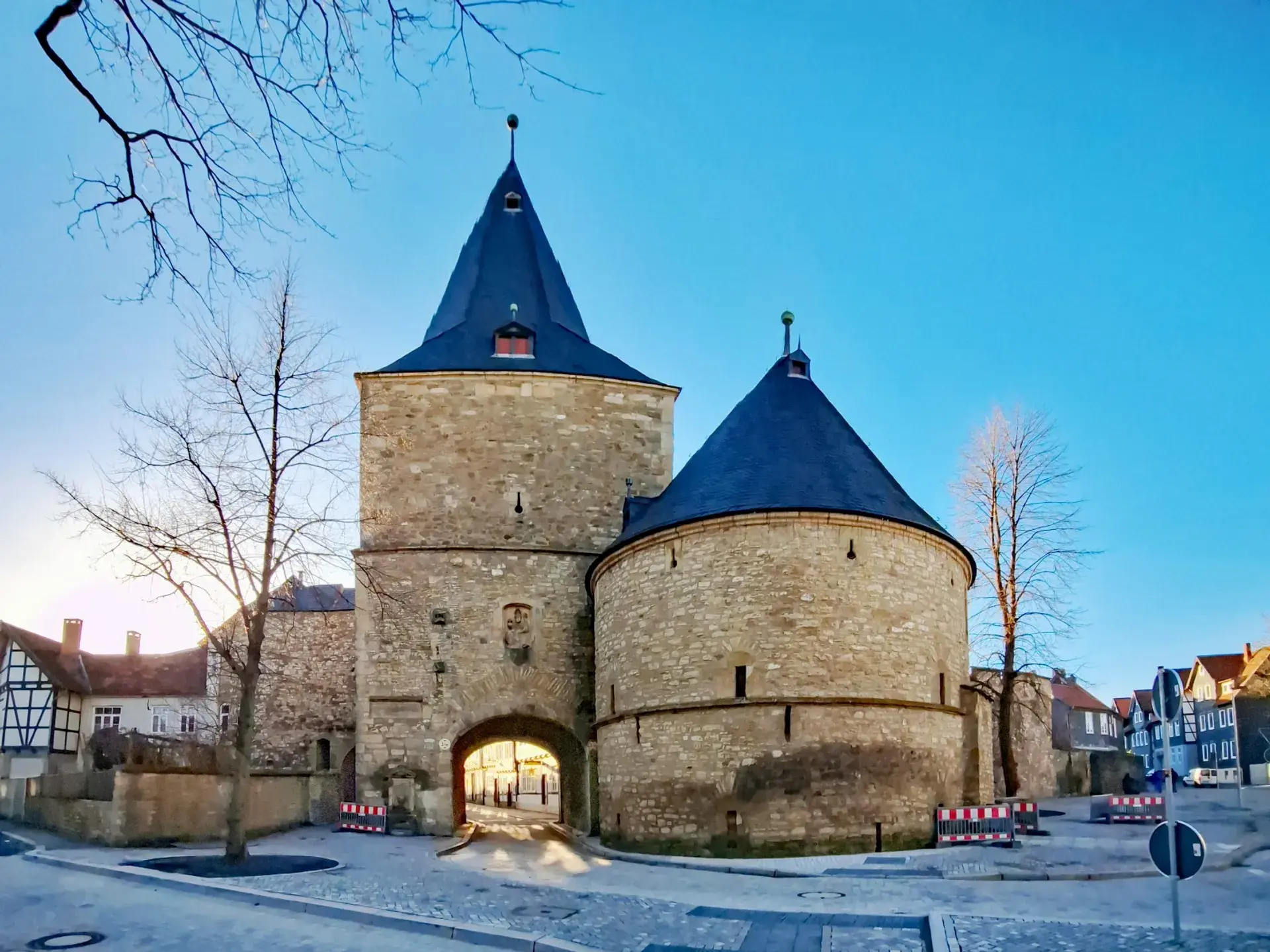
Today, the inner security threshold—the Inner Gate, rebuilt in 1443—still survives. Its stout proportions feature thick sandstone masonry punctuated by narrow defensive arrow slits and cannon embrasures overlooking the eastern roadway.
The Imposing Rieslingsturm
Looming directly beside the narrower stone passage of the inner gate is the Rieslingsturm. This massive circular flanking artillery tower measures roughly 20 meters in diameter and 21 meters in eaves height. Interestingly, while traditionally called the Rieslingsturm, historical inventories also record the bastion as the Danielsturm.
While the inner structures survived, parts of the complex were lost to time. The outer gate and a second flanking tower were torn down in the 19th century to accommodate urban modernization and expanding city traffic.
Modern Access and the Green Ramparts
A public paved road and pedestrian pathway currently run directly through the gate arch, leading directly into the historic old town. While the striking exterior is freely accessible at all times, the interior spaces of the fortress can only be entered as part of official guided city walking tours.
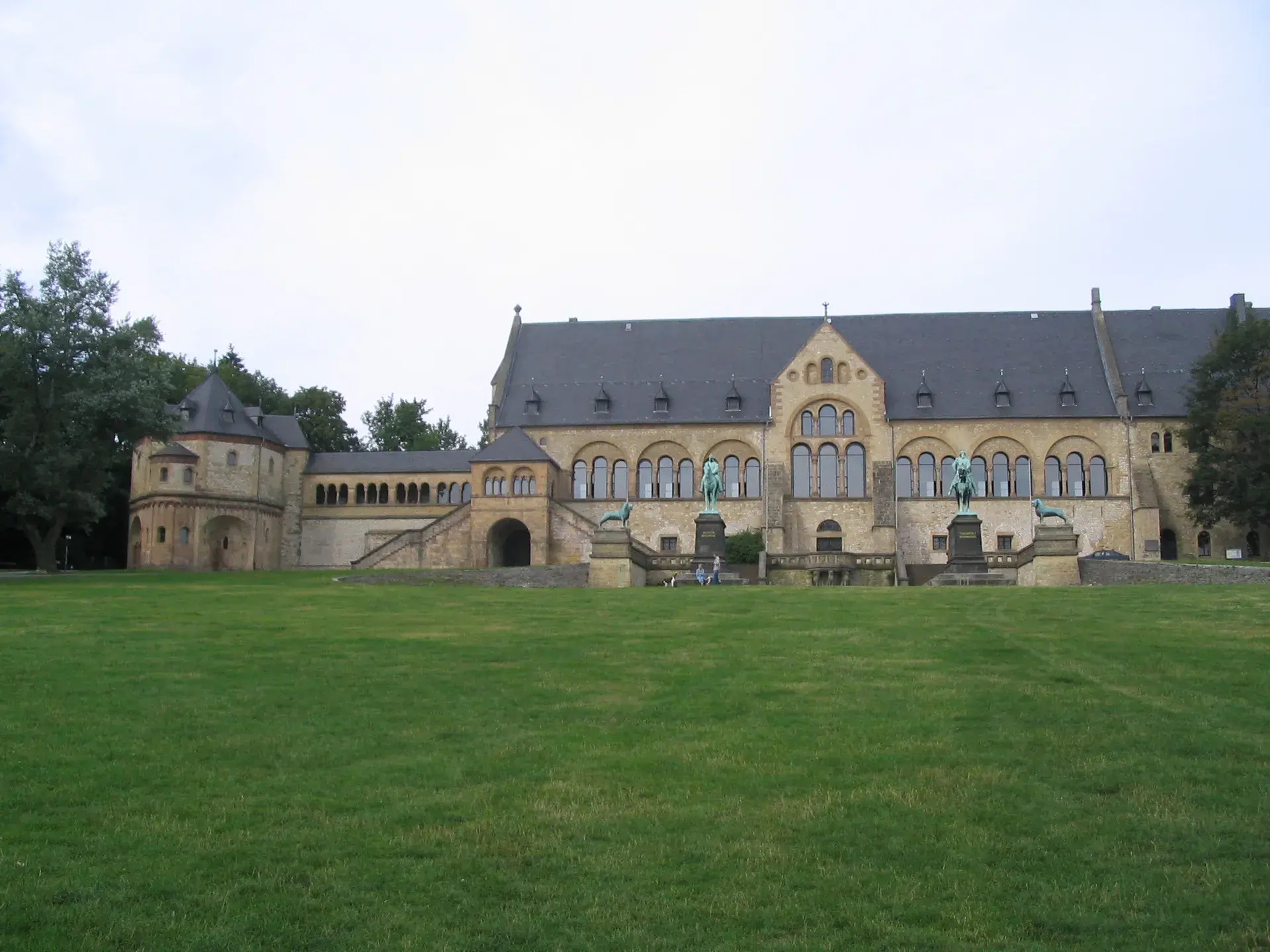
Das Breite Tor also serves as the eastern anchor for the walking trail along Goslar’s southern green ramparts. This pathway traces the line of moat remnants, outer earthen walls, and artillery zwingers, connecting the historic gate to the Kaiserpfalz imperial palace and the rest of the UNESCO-listed town center.
FAQ
What parts of Das Breite Tor still stand today?
Surviving structures include the pointed Inner Gate, the Werderhof garrison building, and the massive 20-meter-wide Rieslingsturm artillery tower. The outer gate and a second tower were demolished in the 19th century.
Can visitors go inside Das Breite Tor?
The exterior of the gate complex and the roadway passing through it are freely accessible to the public. However, the interior spaces can only be visited during official guided city walking tours.
Why was Das Breite Tor so heavily fortified?
Goslar's wealth from the Rammelsberg silver and copper mines made it a target for external powers. The introduction of gunpowder artillery around 1500 prompted the city to expand the gate into a formidable, multi-layered bastion.
Discover Goslar like never before
Dive into Goslar hidden stories and secret spots with Ciceru interactive tours.
Explore tour
Audioguide
Quizzes
Maps
Solo
Couples
Groups & families

© Photo by Christine Herold via Google Maps · Google Places