Goslar Glockenspiel: Moving Figures & Mining History
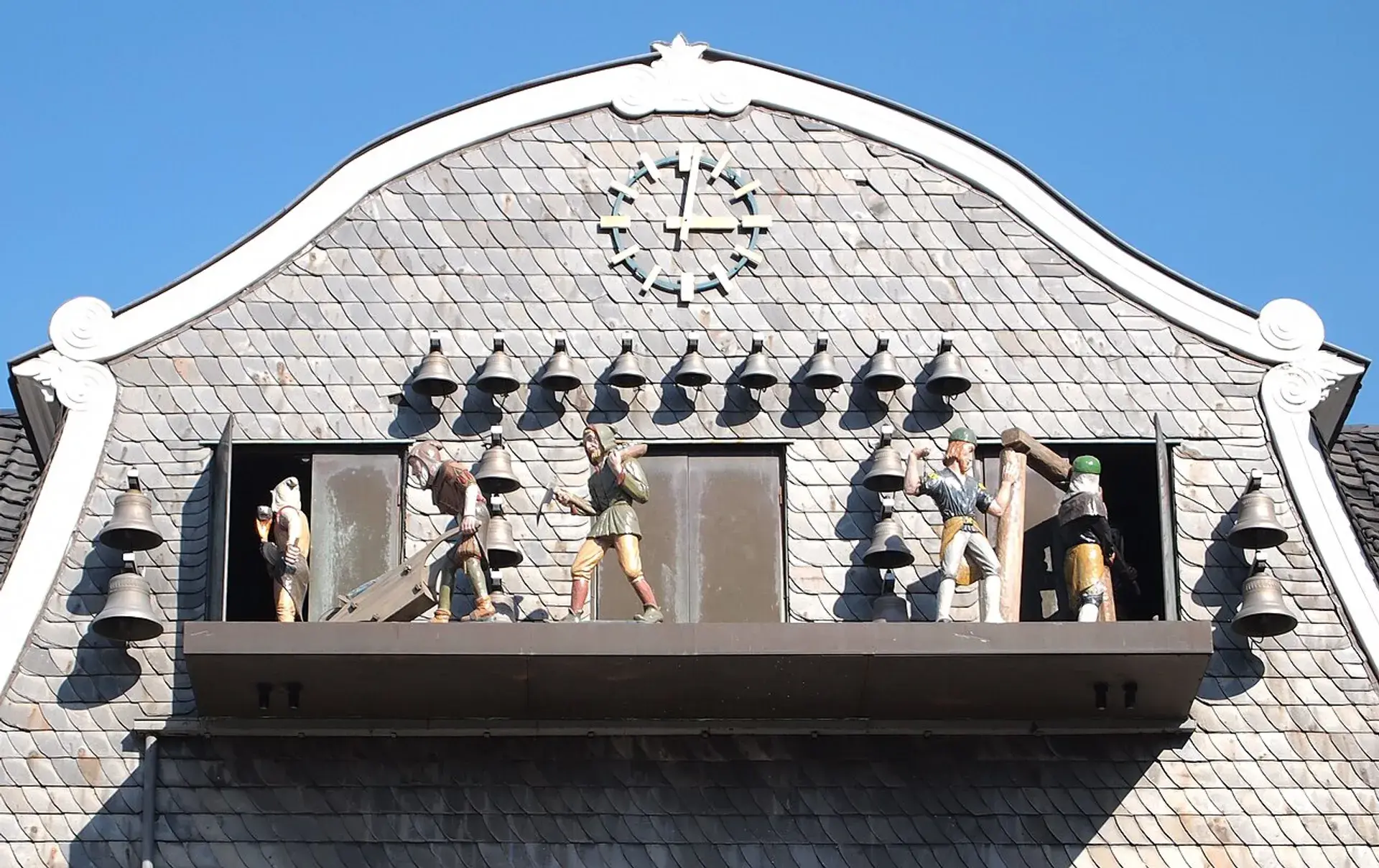
High above the market square, a mechanical procession reveals the underground source of Goslar's historic wealth. Mounted in the cross-gable of the Kaiserringhaus on the eastern side of Goslar's central Market Square, the Glockenspiel und Figurenspiel stands directly opposite the historic Rathaus. It serves as a narrative link connecting the civic center with the nearby Rammelsberg mine, emphasizing that the town's imperial prominence was funded by centuries of continuous silver, copper, and lead extraction.
A Gift of Mining Heritage
Donated in 1968 by the mining company Preussag AG, the installation was created to celebrate the 1,000th anniversary of ore mining at Rammelsberg. The structure housing it was formerly the municipal treasury, known as the Kämmereigebäude. Today, it is called the Kaiserringhaus in honor of an internationally renowned modern art prize awarded annually in Goslar since 1975.
The Mechanical Procession
During a full performance, the metallic chiming of bells echoes across the cobblestones, followed by the clanking mechanical opening of three copper roof hatches. A motorized conveyor then moves a procession of painted figures against the slate-clad gable facade. The mechanical tracks, master clock, and idling figures are secretly housed directly behind the attic wall inside the upper floors of the building.
The figures illustrate the chronological history of Rammelsberg mining. The display begins with the legend of Knight Ramm, whose tethered white horse pawed the ground to expose a glittering vein of silver ore. Next, an emperor—traditionally Otto I or Heinrich—initiates formal mining operations. The procession then shows historical miners equipped with medieval hand tools and pickaxes. Despite the surrounding medieval and Renaissance architecture of the market square, the display unexpectedly concludes with 20th-century industrial miners operating modern mechanized drilling equipment.
Chimes and Anthems
The electronic and mechanical carillon pairs the visual procession with traditional regional mining anthems, most prominently the "Steigerlied" ("Glück auf, der Steiger kommt").
The full mechanical figure procession operates four times a day at 09:00, 12:00, 15:00, and 18:00, drawing crowds to the square. Bell-only tunes chime at 08:30 for a morning song and 18:30 for an evening song without any figure movement. During the Advent market, the carillon features seasonal melodies and Christmas carols.
FAQ
When does the Goslar Glockenspiel play?
The full carillon with the mechanical figure procession operates four times a day at 09:00, 12:00, 15:00, and 18:00. Additionally, bell-only melodies play at 08:30 and 18:30.
What story do the moving figures tell?
The moving figures illustrate the chronological history of Rammelsberg mining. The scene starts with the legend of Knight Ramm's horse discovering a silver vein, progresses through medieval mining with hand tools, and ends with 20th-century miners using mechanized equipment.
Where is the Glockenspiel located in Goslar?
It is mounted on the cross-gable of the Kaiserringhaus (the former municipal treasury) on the eastern side of Goslar's Market Square, directly opposite the historic Rathaus.