Goslar Dukatenscheißer: History of the Kaiserworth Carving
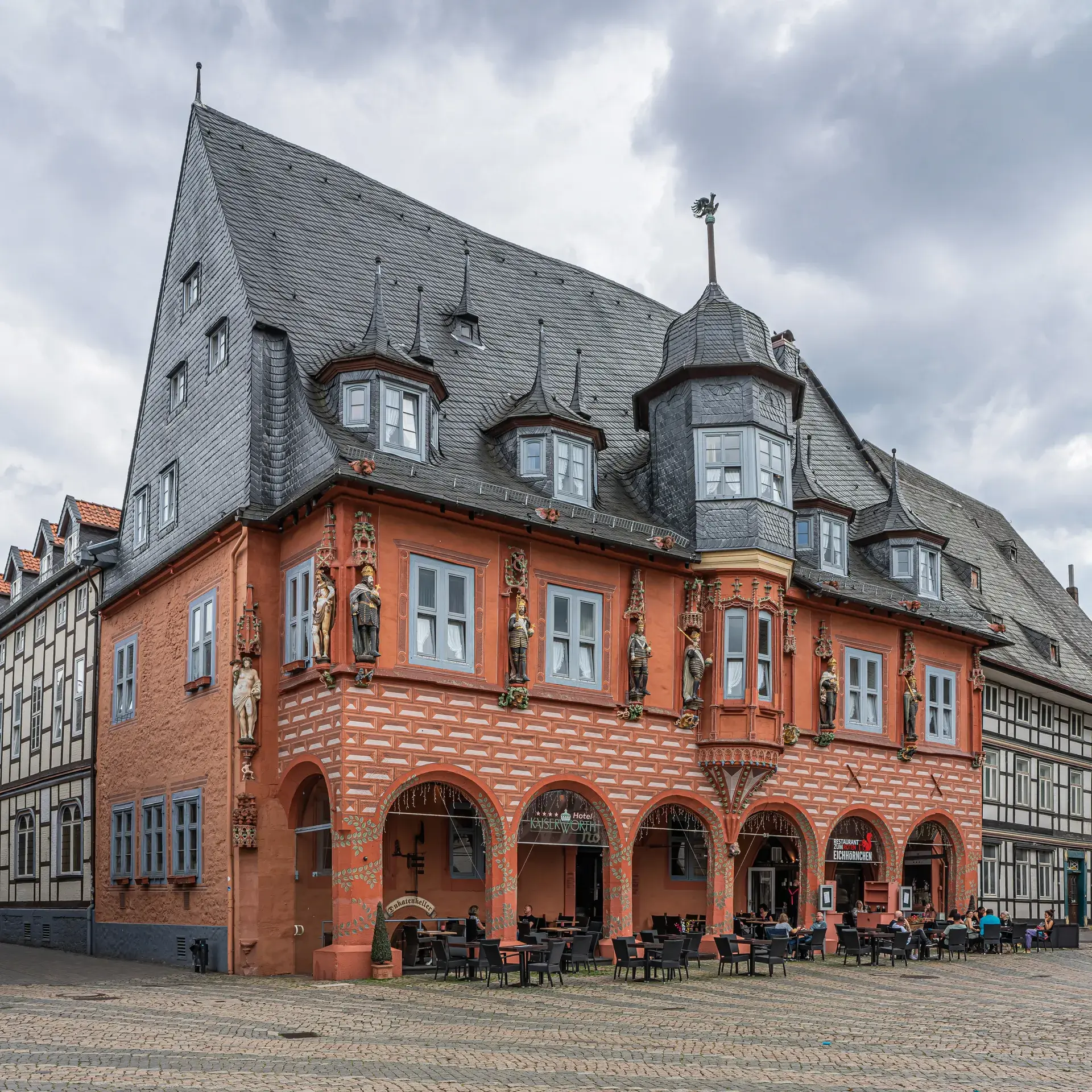
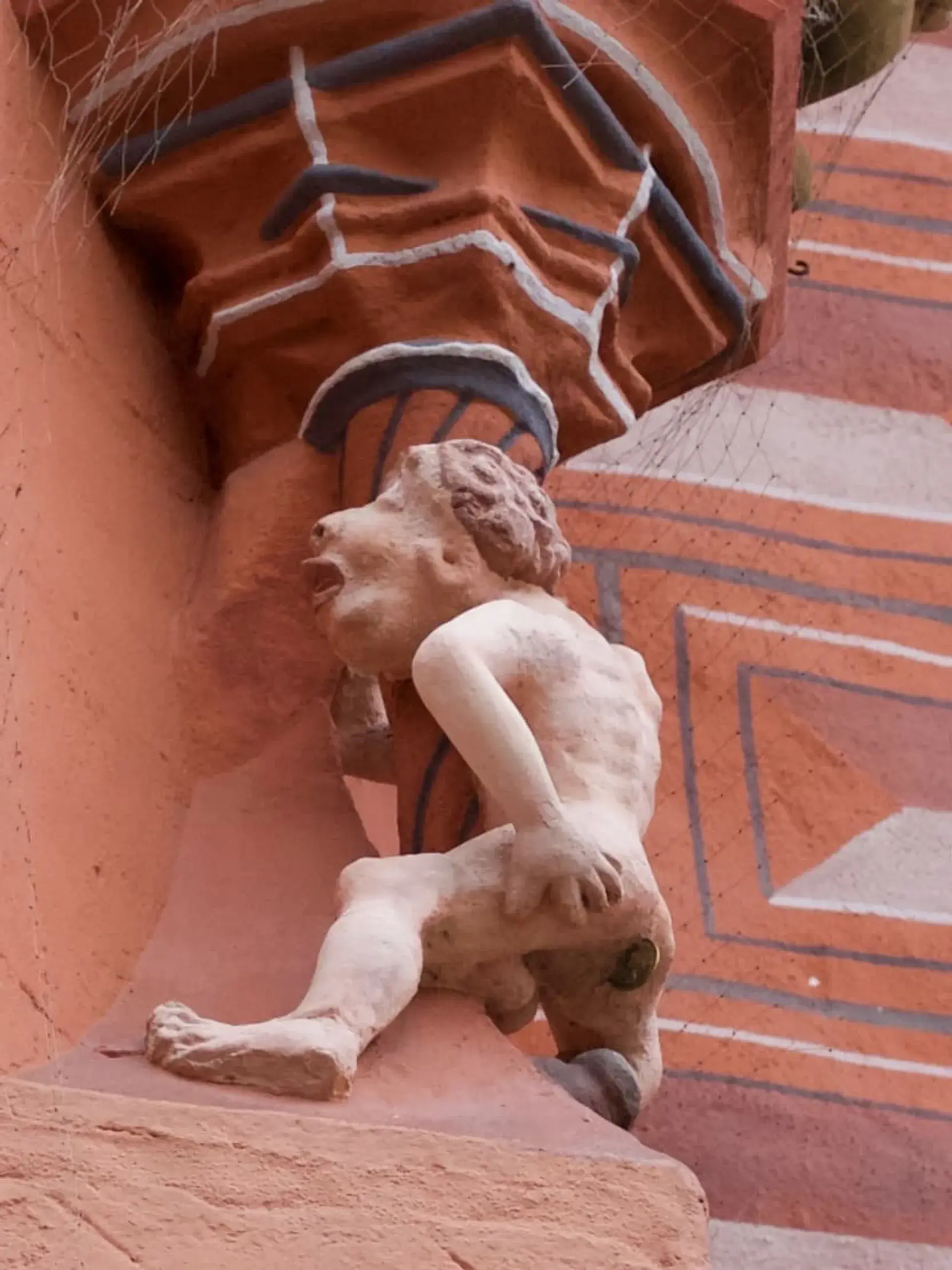
High above the deep red facade of the Kaiserworth building in Goslar's central marketplace sits a small, humorous architectural detail known as the Dukatenscheißer. Translated literally as the "ducat pooper," this 1494 carving depicts a crouching, bare-bottomed man expelling gold coins. Today, the figure remains in its original exterior location at Marktplatz 3, serving as a frequently photographed curiosity in the UNESCO World Heritage-listed Old Town.
A Satirical Symbol of Merchant Wealth
The late-Gothic Kaiserworth was originally erected to serve as the guildhall for Goslar's affluent cloth merchants and long-distance traders. To project their immense affluence during the city's economic zenith, the guild adorned the building with stately statues of emperors and mythological figures. The Dukatenscheißer sits on a northeast corner console, deliberately positioned directly beneath a larger statue of Abundantia, the Roman goddess of wealth and prosperity.
Historians view the smaller, exposed figure as a satirical commentary on the merchants' vast fortunes, alleged illicit money-lending practices, and the universal human fantasy of effortlessly producing wealth.
The Humiliating Ritual of Butarschen
According to local tradition, the carved figure and the stone pedestal beneath it were linked to a severe public insolvency hearing. Defaulting debtors who were unable to repay the merchant guild faced a humiliating public ritual known as "Butarschen."
Individuals were allegedly required to turn their empty pockets inside out to prove their insolvency, pull down their pants, and sit bare-bottomed on the stone block beneath the Dukatenscheißer. While this process legally absolved their financial debts, the public exposure permanently stripped the debtors of their civic honor.
A Legacy of Earthy Folk Humor
In 1831, the former guild building was repurposed into a guesthouse and is currently known as the Hotel Kaiserworth. The historic transition preserved the exterior sculptures, allowing the Dukatenscheißer to survive intact.
The carving is part of a broader tradition of playful, ribald Gothic and Renaissance exterior artworks in Goslar. Much like the nearby Butterhanne carving on the Brusttuch building, the Dukatenscheißer demonstrates how the city's immense mining and trade wealth coexisted alongside irreverent folk humor.
FAQ
Where is the Dukatenscheißer located in Goslar?
The carving is located on a northeast corner console of the Hotel Kaiserworth (Marktplatz 3), a historic building in Goslar's central marketplace. It sits directly beneath a statue of the Roman goddess Abundantia.
What does the Dukatenscheißer carving represent?
Installed in 1494, the figure acts as a satirical commentary on the immense wealth of Goslar's cloth merchant guild, poking fun at illicit money-lending practices and the fantasy of effortlessly producing gold coins.
What was the "Butarschen" ritual?
According to local lore, Butarschen was a public insolvency ritual where defaulting debtors had to turn their empty pockets inside out and sit bare-bottomed on the stone block below the figure. This legally erased their debt but permanently stripped them of their civic honor.
Gallery