Goslar Market Square: Historic Heart & UNESCO Site
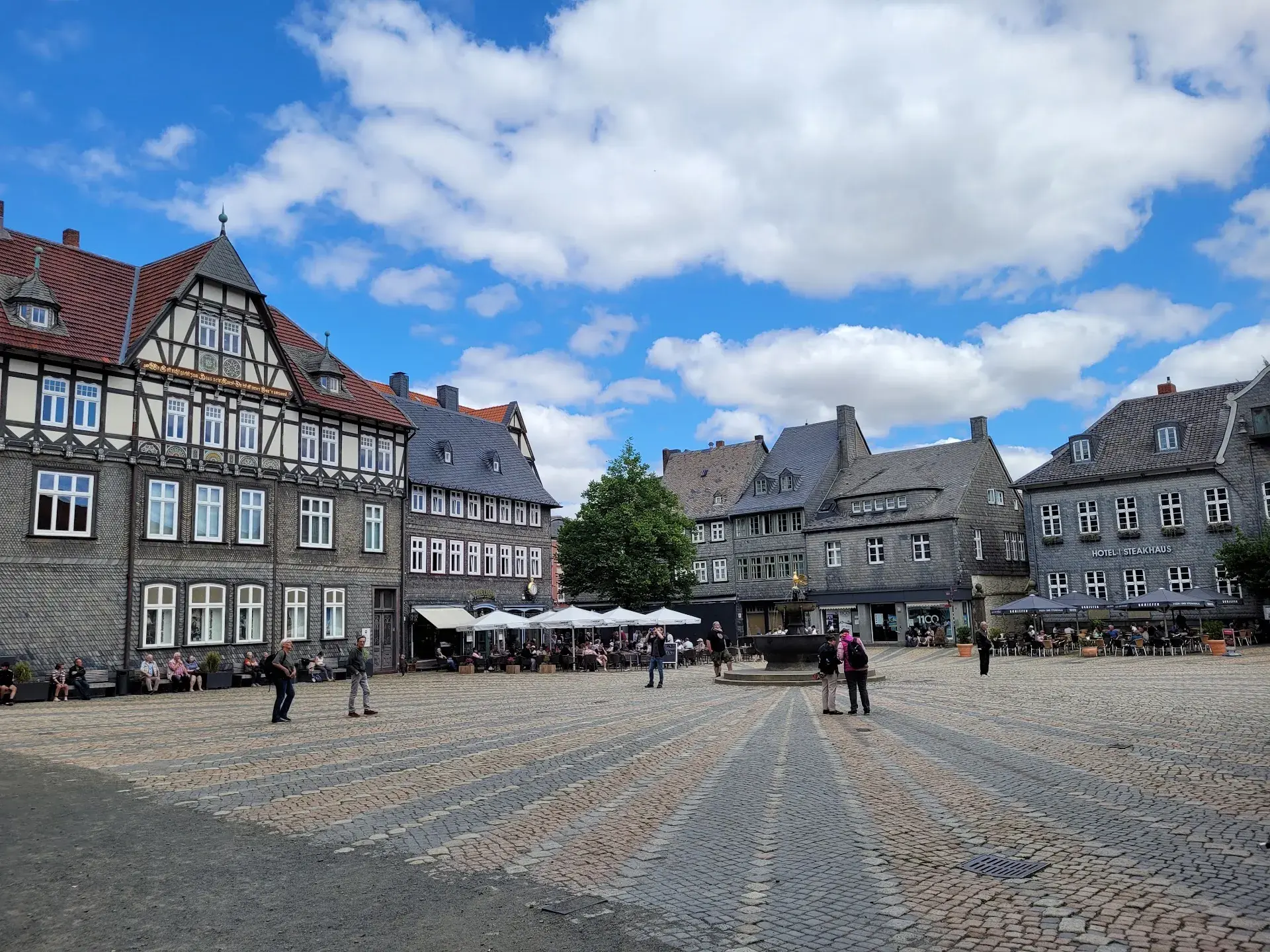
The charming Market Square boasts a historic atmosphere and monumental buildings that define the civic heart of Goslar. Recognized as part of Goslar's 1992 UNESCO World Heritage designation, the Market Square (Marktplatz) connects the city's most important landmarks and a surrounding network of roughly 1,500 historic half-timbered houses.
A Legacy of Imperial Wealth
Goslar's historical development was deeply tied to the wealth generated by the nearby Rammelsberg ore mines. As a Free Imperial City, Goslar used the square as a focal point for municipal autonomy, legal administration, and trade, operating independently of local feudal princes. During the 15th and 16th centuries, wealthy merchant guilds and the city council funded the square's monumental stone and half-timbered buildings. This architectural display was a deliberate effort to assert civic status against regional dukes and the imperial crown. The medieval layout and historic building fabric survived World War II intact without major strategic bombing damage, allowing the square to remain the Old Town's primary hub for open-air gatherings and seasonal markets today.
Guildhalls and Civic Power
The structures framing the square reflect the city's prosperous past. The Kaiserworth, constructed in 1494 as the cloth merchants' guildhall, features a striking red facade adorned with statues of Holy Roman emperors. Today, the Kaiserworth operates as a hotel and restaurant. Opposite the Kaiserworth stands the Rathaus (Town Hall). Begun between 1295 and 1326 and expanded over the following centuries, the Rathaus features a Gothic arcade and houses the late-Gothic Tribute Hall (Huldigungssaal). The Town Hall continues to serve municipal functions and provides tourism information.
The Composite Market Fountain
At the center of the square sits the Marktbrunnen, crowned by a gilded imperial eagle representing the town's historic heraldic symbol. Rather than a single contemporaneous piece, the fountain is a composite monument engineered into a tiered structure using bronze basins cast decades apart. The upper basin dates to the 13th century, while the lower bronze basin was cast in the 12th century. This lower tier features curious cast dragon heads with donkey-like ears, two of which appear to be swallowing small human figures.
The Kaiserringhaus Carillon
On the eastern side of the square, the Kaiserringhaus features a 27-bell carillon that plays four times daily. As the bells ring across the open cobblestone square, mechanical wooden doors open to reveal revolving carved figures. These figures depict the traditional founding legend of Goslar's mineral wealth, showing the knight Ramm, whose horse allegedly scraped the earth to uncover the first silver vein.
FAQ
Why is Goslar's Market Square historically significant?
The Market Square is the historic center of the Free Imperial City of Goslar and part of a 1992 UNESCO World Heritage designation. In the 15th and 16th centuries, wealthy merchant guilds built the square's monumental buildings to assert their autonomy and status against regional dukes and the imperial crown.
How old is the fountain in the Market Square?
The central Marktbrunnen is a composite monument made of pieces from different eras. Its lower bronze basin dates to the 12th century, while the upper basin was added in the 13th century. It is topped with a gilded imperial eagle.
What do the mechanical figures on the Kaiserringhaus represent?
The mechanical figures that emerge from the Kaiserringhaus carillon depict the traditional founding legend of Goslar's mineral wealth. They show the knight Ramm, whose horse is said to have uncovered the first silver vein by scraping the earth.
Discover Goslar like never before
Dive into Goslar hidden stories and secret spots with Ciceru interactive tours.
Explore tour
Audioguide
Quizzes
Maps
Solo
Couples
Groups & families

© Photo by Ingeborg De Jonghe via Google Maps · Google Places