Imperia Statue in Konstanz: A Satirical Harbor Landmark
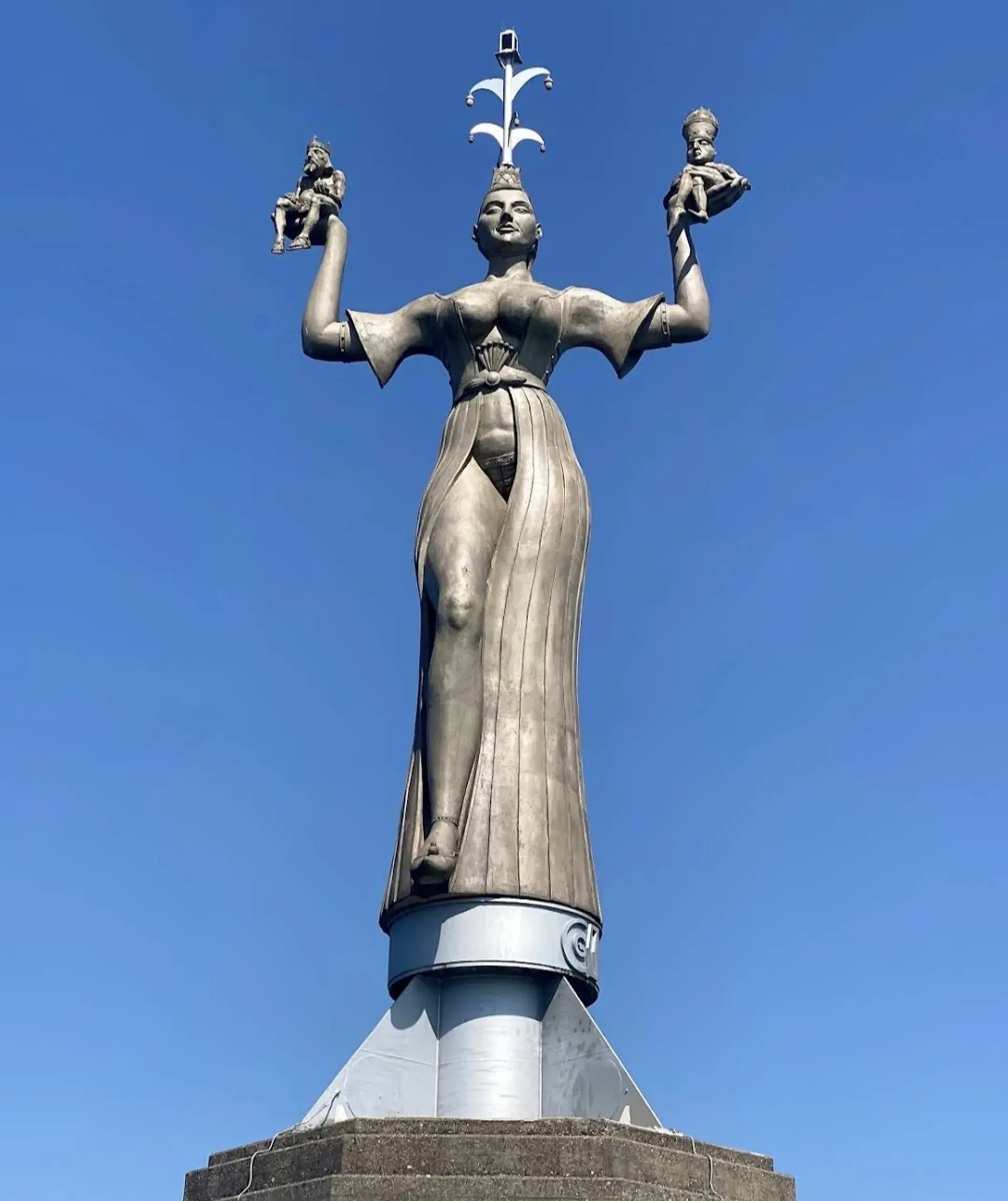
Erected in secret to bypass outraged city officials, a rotating, nine-meter-tall courtesan now welcomes every visitor to Konstanz's harbor. Standing at the tip of the pier where Lake Constance feeds into the Rhine, the Imperia statue has become the defining visual symbol of the waterfront.
A Secret Installation
Sculpted by regional artist Peter Lenk, the cast-concrete Imperia was unveiled on April 24, 1993. The monument's arrival was highly unorthodox. To bypass fierce objections from local conservative politicians and church authorities, the 18-metric-ton statue was transported secretly by night. It was erected on harbor land owned by the German Federal Railways, which left the municipal council without the legal jurisdiction to remove it.
Satirical Symbolism
The 30-foot sculpture depicts a voluptuous courtesan holding two miniature, completely naked figures in her open palms. One figure wears an imperial crown and holds an orb, representing Emperor Sigismund and secular authority. The other wears a papal tiara, representing Pope Martin V and ecclesiastical authority. Stripped of their robes and left only with oversized ceremonial headwear, the artist noted that the men represent fools who acquired the insignia of power rather than literal historical figures. Additionally, Imperia wears an oak branch on her headgear, a satirical allusion to the Della Rovere papal family coat of arms.
Literary Origins and Historical Fact
The statue references the Council of Constance (1414–1418), an ecumenical council that ended the Western Schism by electing Pope Martin V. However, the monument's concept is rooted in fiction. Lenk based the work on Honoré de Balzac’s 19th-century satirical tale "La Belle Impéria," which mocked the hypocrisy of clergy and nobility during the council. While Balzac placed her at the council, the historical Italian courtesan Imperia Cognati lived nearly a century later in Renaissance Rome and never actually visited Konstanz.
A Modern Cultural Anchor
Today, the Imperia rests on a revolving pedestal that completes a full 360-degree rotation every four minutes. This slow, continuous motion creates shifting viewing angles from the shore, transitioning from the courtesan's provocative smile to the small figures silhouetted against the open lake. In 2024, the sculpture was officially listed as a recognized cultural monument of Baden-Württemberg. Beyond its artistic and historical significance, the base structure of the monument also serves a practical purpose by integrating an active water-level gauging station for Lake Constance.
FAQ
Who does the Imperia statue in Konstanz depict?
The statue depicts a fictionalized courtesan based on Honoré de Balzac's satirical story "La Belle Impéria." She is shown holding two naked miniature figures representing secular and ecclesiastical authority, specifically Emperor Sigismund and Pope Martin V.
Why was the Imperia statue installed in secret?
Sculptor Peter Lenk transported and erected the statue secretly at night on railway-owned land to bypass fierce objections from local conservative politicians and church authorities, leaving the city without the jurisdiction to remove it.
How often does the Imperia statue rotate?
The monument is mounted on a revolving pedestal that completes one full 360-degree rotation every four minutes.
Discover Konstanz like never before
Dive into Konstanz hidden stories and secret spots with Ciceru interactive tours.
Explore tour
Audioguide
Quizzes
Maps
Solo
Couples
Groups & families

© Photo by Natascha H.T. via Google Maps · Google Places