Konstanz Cathedral: Münster Unserer Lieben Frau
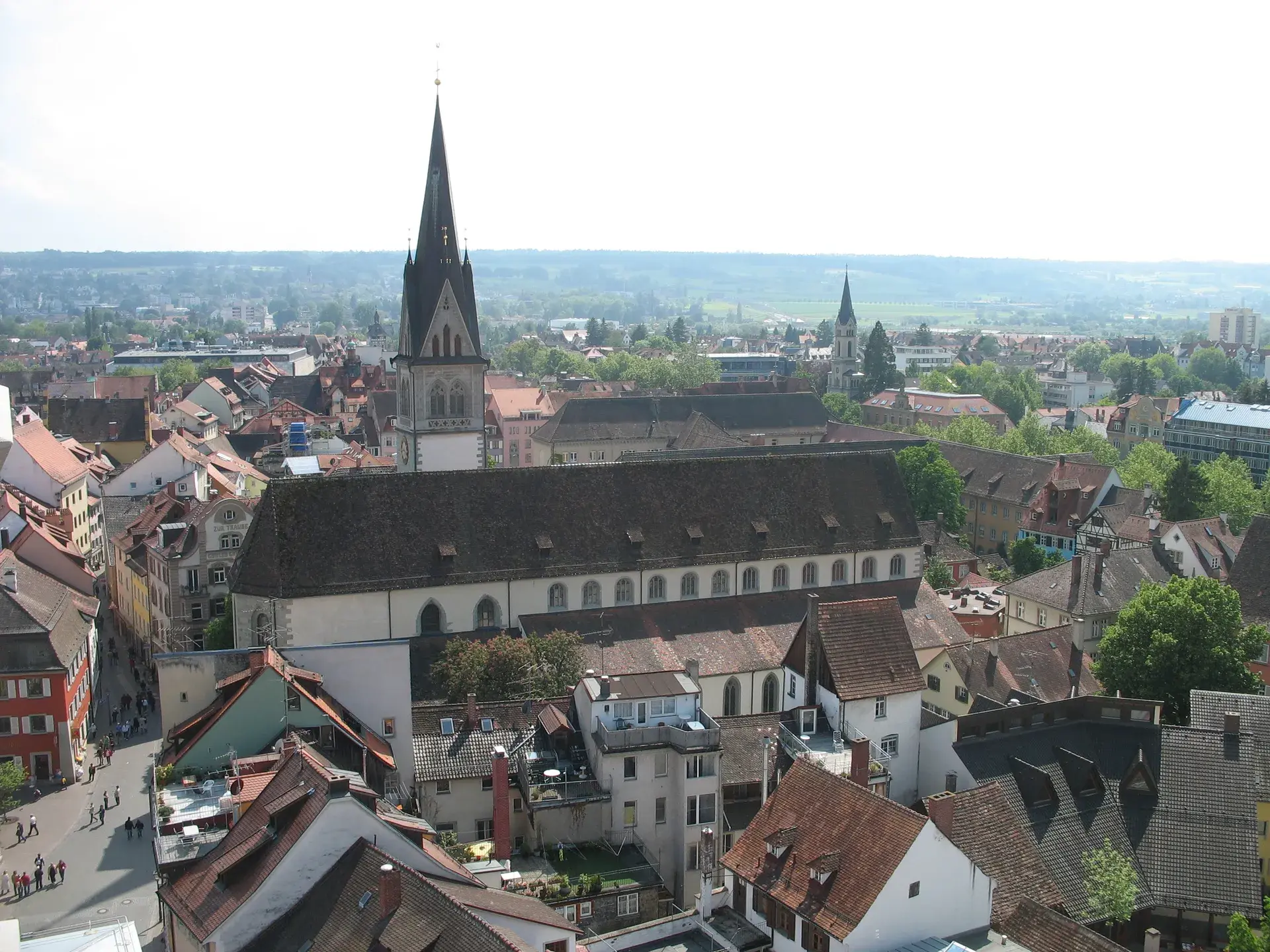
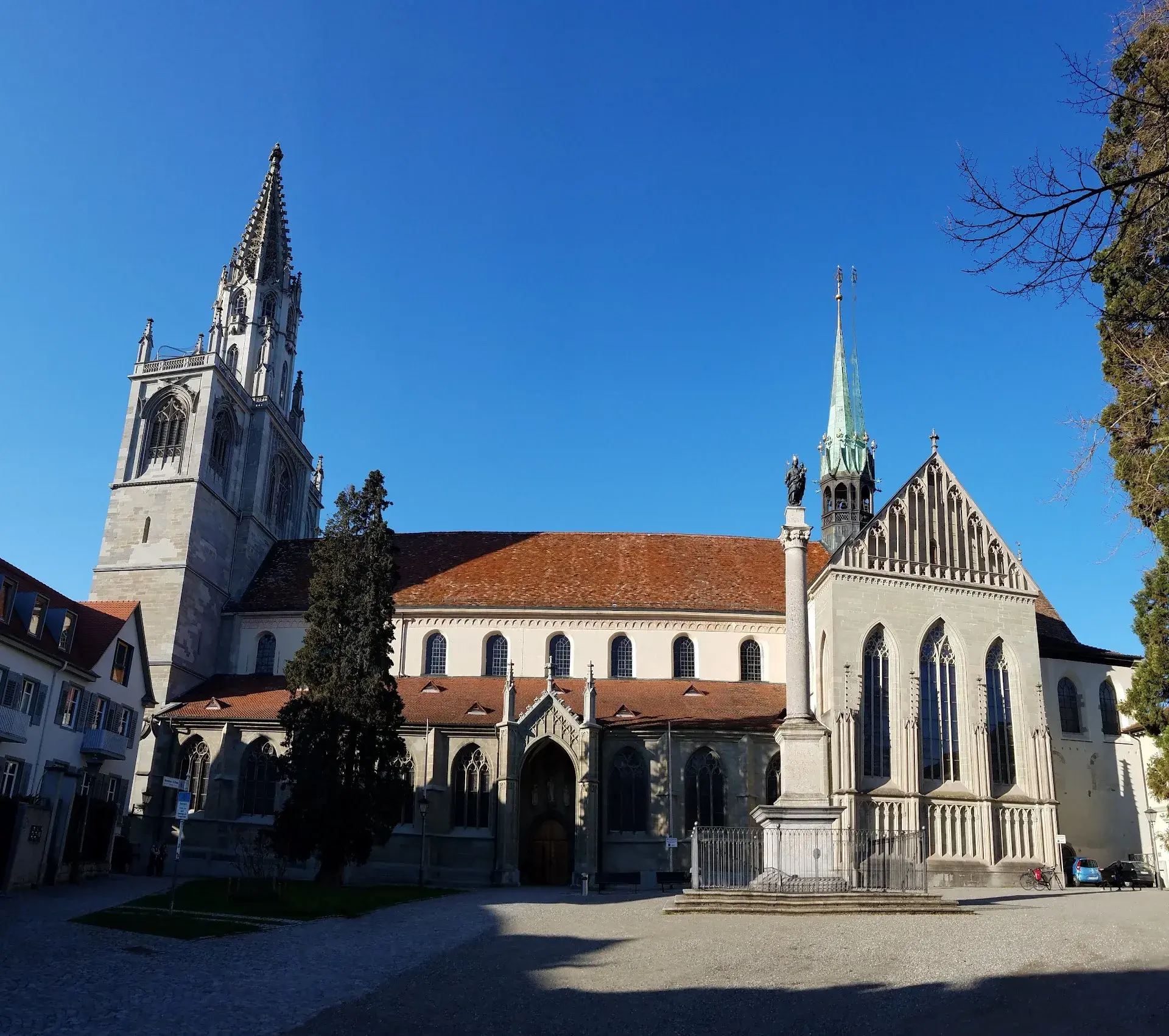
Admire the grand exterior of Münster Unserer Lieben Frau on Münsterplatz, featuring soaring architecture and a historic observation tower that dominates the old town skyline. Situated on the highest natural elevation in the historic center, known as the Münsterhügel, the spire functions as the ultimate navigational anchor for Konstanz. It defines the city skyline from almost every angle and serves as a major visual landmark.
A History of Councils and Cheese Covers
A bishop's church was first documented on this site in 780. Following a structural collapse in 1052, a monumental Romanesque basilica was reconstructed and consecrated in 1089. The minster later held a prominent place in European history when it served as the primary assembly hall for the Council of Constance between 1414 and 1418. This event marked the only papal election ever held north of the Alps.
The towering neo-Gothic spire seen today is actually a 19th-century addition. Between 1846 and 1860, Baden building director Heinrich Hübsch led a comprehensive restoration of the cathedral. Hübsch openly derided the minster's existing late-Gothic rounded tower roofs, dismissing them pejoratively as 'Käseglocken' (cheese covers). He removed them and capped the central tower with a stone octagon and an openwork filigree tracery spire between 1850 and 1853. In 1955, the minster was officially elevated to the status of Basilica Minor.
The Monumental Bell Peal
The cathedral houses 19 bells weighing approximately 35,000 kilograms in total. This immense installation is the second heaviest peal in Germany, surpassed only by Cologne Cathedral. On the hour, the deep reverberations of this massive ensemble ring out, echoing forcefully across the entire Münsterplatz.
Among the collection is the historic Ursulaglocke, cast in 1584 by Hans Christof Löffler. During archaeological excavations in 1990, researchers rediscovered the exact foundry pit just south of the minster where this historic bell was originally cast. The peal is also supplemented by a 12-bell set gifted to the church in 1966.
Ascending the Tracery Spire
The central tower rises between 76 and 78 meters above the streets of Konstanz. The viewing platform is accessible via a climb of 193 steps through narrow, dim stone shafts. An additional 52 steps lead upward to higher balconies, totaling approximately 245 steps. From the wind-swept platform enveloped by perforated Gothic tracery, the panoramic view contrasts the terracotta rooftops of the medieval Old Town against the expansive waters of Lake Constance and the distant Swiss Alps.
Today, the minster operates as an active Roman Catholic parish church holding regular services and daily prayers. The tower and viewing terrace open seasonally, typically from April through October, for ticketed climbs. Outside of service times, the cathedral interior and its Romanesque crypt are open daily for general visitation.
FAQ
How tall is the tower at Münster Unserer Lieben Frau?
The central tower and neo-Gothic spire rise between 76 and 78 meters above the Konstanz Old Town. Visitors can climb 193 steps to reach the main viewing platform, with an additional 52 steps leading up to higher balconies.
Are the cathedral bells historically significant?
Yes, the cathedral features 19 bells weighing approximately 35,000 kilograms, making it the second heaviest peal in Germany. The installation includes the historic 1584 Ursulaglocke, as well as a 12-bell set gifted in 1966.
What was the Council of Constance?
Between 1414 and 1418, the cathedral served as the primary assembly hall for the Council of Constance. This major historical event hosted the only papal election ever held north of the Alps.
Discover Konstanz like never before
Dive into Konstanz hidden stories and secret spots with Ciceru interactive tours.
Explore tour
Audioguide
Quizzes
Maps
Solo
Couples
Groups & families

© Photo by Christopher626 via Google Maps · Google Places