Kaiserbrunnen Konstanz: Satire & History in Stone
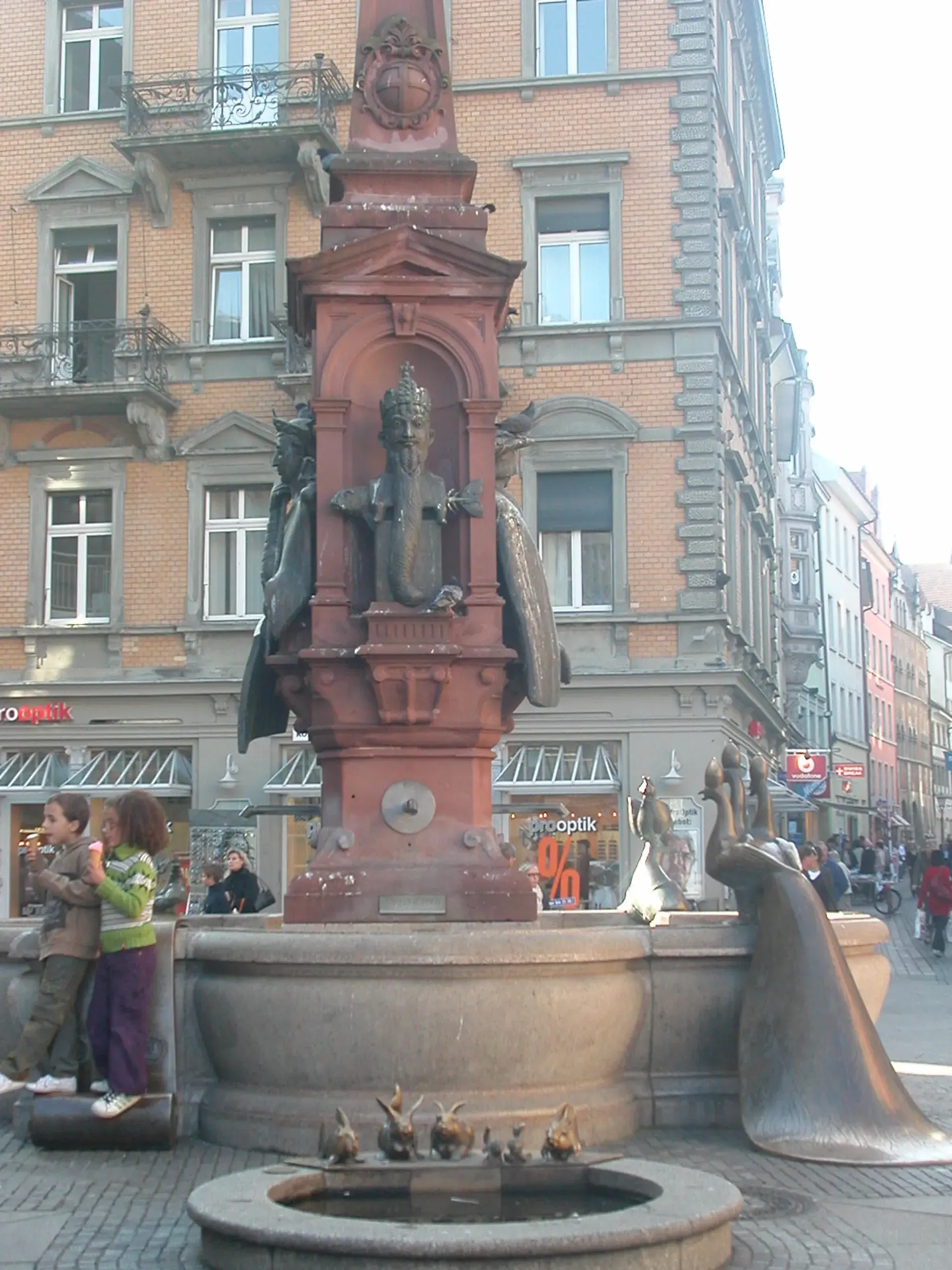
Positioned at the gateway connecting the harbor and railway station to the medieval old town, the Kaiserbrunnen anchors the historic Marktstätte square. What began as a serious monument to German emperors has been transformed into a satirical masterpiece. Set against prominent historic facades like the 1774 Haus zum Wolf, the fountain is defined by the striking visual contrast of its deep red sandstone obelisk standing inside a light granite basin, adorned with dark bronze figures.
From Imperial Monument to Satirical Masterpiece
Designed by local sculptor Hans Baur, the original fountain was inaugurated on October 30, 1897, replacing a dilapidated market fountain. It was built as a patriotic Wilhelmine monument linking Emperor Wilhelm I to medieval dynasties, presenting the newly unified German Empire as the heir to the Holy Roman Empire.
During a 1942 World War II scrap drive, the original bronze statues of four emperors—Heinrich III, Friedrich I Barbarossa, Maximilian I, and Wilhelm I—were dismantled and melted down for weapons production. Between 1990 and 1993, sculptors Gernot and Barbara Rumpf redesigned the monument. Rather than restoring the pompous 19th-century imperial iconography, they embraced a postmodern subversion, reinterpreting the site with humor, regional self-deprecation, and anti-authoritarian satire.
Anti-Authoritarian Details and The Peace Dove
The most surprising detail of the modern Kaiserbrunnen lies in the obelisk niches. While three niches feature caricatures of historical rulers, the fourth niche intentionally omits Emperor Wilhelm I. In his place sits an open bronze shutter from which a peace dove emerges. This dove is accompanied by the text of the 1183 Peace of Constance, swapping a warlord for a symbol of historical diplomacy.
Hidden Curiosities and Local Folklore
The Rumpf duo populated the fountain with numerous satirical and mythical details. A bronze peacock crowned with three papal tiaras satirizes the Council of Constance and the Western Schism, when three rival popes claimed the Holy See simultaneously.
Water gently splashes into the basin from hidden spouts and the mouths of Seehasen. These mythical hybrid creatures, featuring hare ears and fish tails, are deeply rooted in regional Lake Constance folklore. Additionally, small bronze mice—the traditional trademark signature of sculptor Gernot Rumpf—are hidden among the figures along the base and basin.
A Central Hub in the Marktstätte
Today, the Kaiserbrunnen serves as a primary meeting spot and central landmark within the pedestrianized Marktstätte. The fountain benches and granite basin ledges function continuously as outdoor seating. It remains a bustling hub where locals and visitors gather, accompanied by the gentle splashing of the fountain water.
FAQ
Why are the bronze emperor statues on the Kaiserbrunnen missing?
The original 1897 bronze statues of four German emperors were dismantled and melted down for weapons production during a World War II scrap drive in 1942. They were replaced with satirical caricatures during a 1990s redesign.
What do the hybrid creatures on the Kaiserbrunnen represent?
The fountain features Seehasen, which are mythical hybrid creatures with hare ears and fish tails. These figures are rooted in regional Lake Constance folklore and serve as water spouts for the basin.
Who redesigned the Kaiserbrunnen in Konstanz?
Sculptors Gernot and Barbara Rumpf redesigned the fountain between 1990 and 1993. They replaced the missing imperial statues with a satirical ensemble of bronze caricatures and hidden curiosities, including Gernot Rumpf's trademark bronze mice.