St. Stephan: Konstanz's Oldest Parish Church
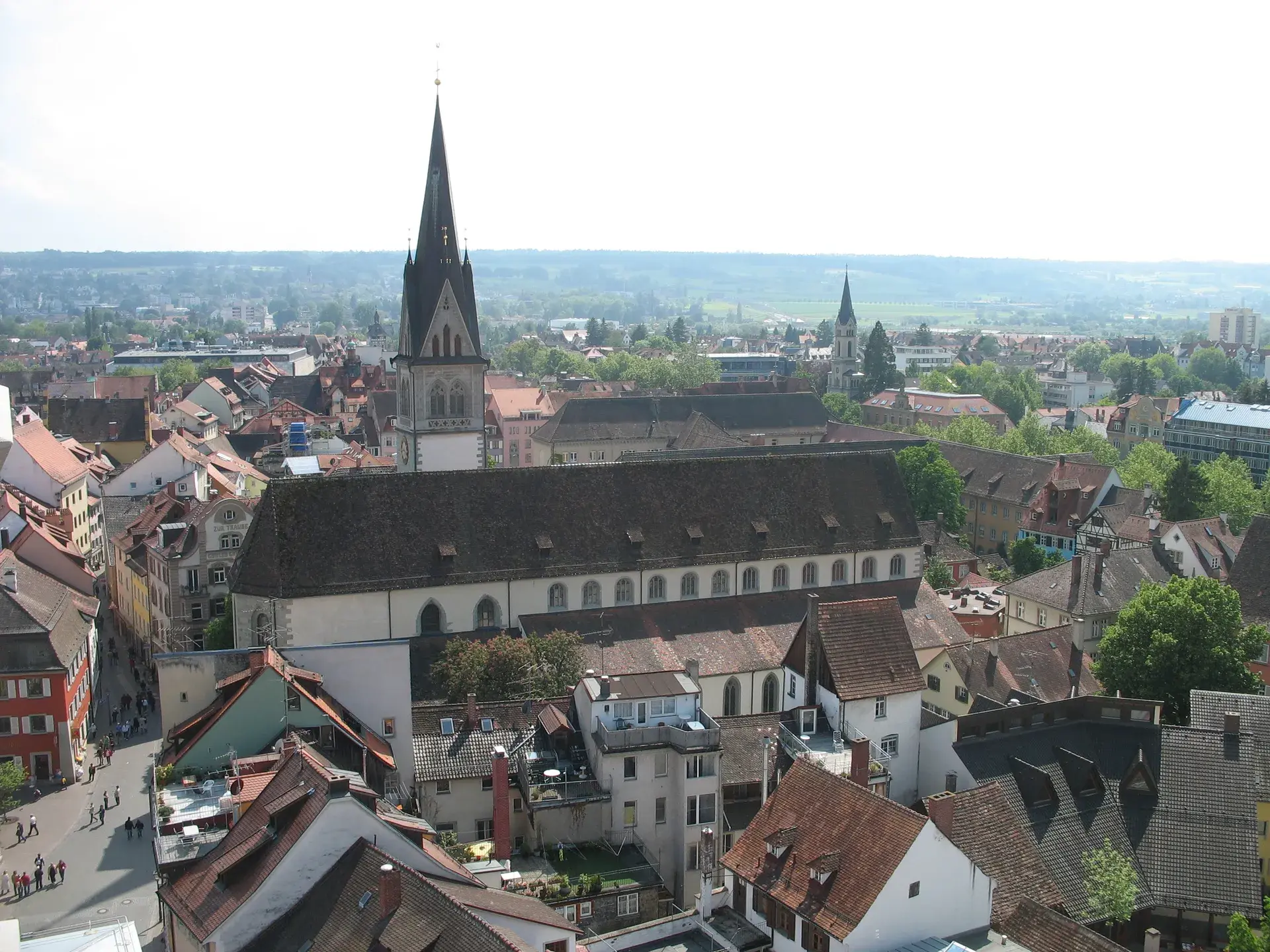
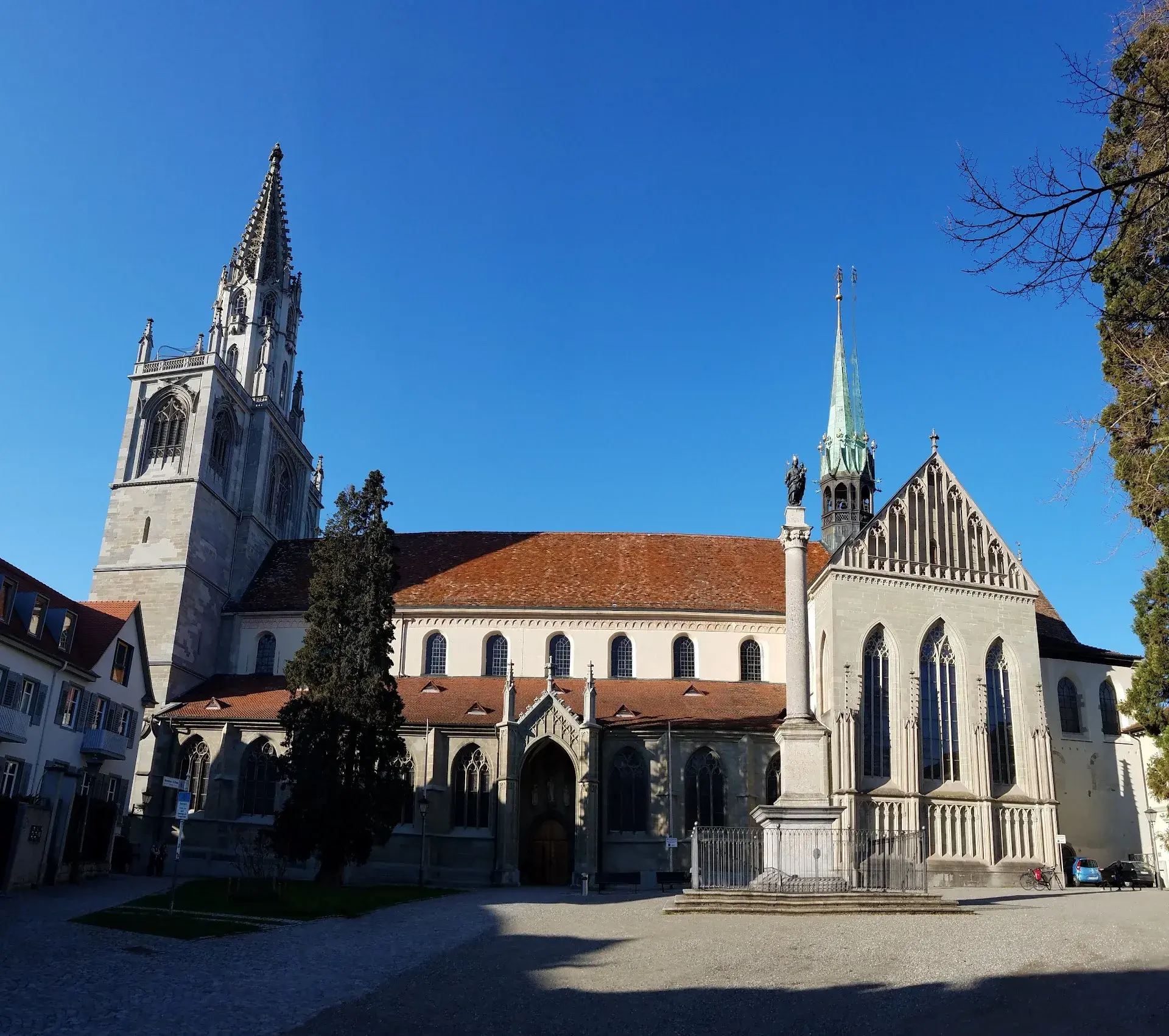
Look up at the striking architectural details of St. Stephan from the quiet cobblestones of Sankt-Stephans-Platz. Located just south of the Minster, St. Stephan holds the title of Konstanz's oldest church foundation and its original parish church.
A Civic Counterweight
Historically positioned outside the late Roman fortifications, St. Stephan is believed to have originated over a late Roman cemetery. First documented around 680 CE, a collegiate chapter was established at the site around 900 CE. After suffering destruction during the Hungarian invasions, Bishop Noting reconstructed the church around 934. By 1130, it was rebuilt as a Romanesque basilica, serving as the proud civic and market church for the town's patrician burghers. This positioned St. Stephan as a prominent counterweight to the Prince-Bishop's ecclesiastical quarter at the nearby Minster.
Courtroom of the Council of Constance
During the Council of Constance from 1414 to 1418, St. Stephan took on a surprising role. While theological debates raged elsewhere in the city, this medieval citizens' church transformed into the Roman Rota, functioning as the seat of the Catholic Church's supreme legal appellate court. Evidence of the Council remains on the northern nave wall, which preserves a 1415 sandstone epitaph commemorating Adolf Dominicus Bruwer. Bruwer served as the city chamberlain of Cologne and was buried inside the church after dying while attending the historic council.
The Great Architectural Reversal
Beginning in 1428, St. Stephan underwent an extensive late-Gothic reconstruction that radically altered its footprint. The side aisles were doubled in width, the nave was extended, and work began on an off-center southern bell tower in 1483. Most notably, builders flipped the church's orientation entirely. The 12th-century Romanesque basilica originally featured a west-facing choir, but the 15th-century project reversed the interior 180 degrees to create a traditional east-facing layout with a polygonal eastern choir.
From Iconoclasm to Baroque Elegance
The church interior experienced significant upheaval during the 16th century. St. Stephan adopted Zwinglian Protestantism in 1527, leading to a period of iconoclasm that stripped the medieval interior. Following the imperial reintegration of Konstanz in 1548 and 1550, the church was recatholicized. Today, the high, restrained Gothic nave arcades with simple pillars stand in contrast to later additions. Weathered sandstone relief carvings, Gothic inscriptions, and a 16th-century stone Apostle Peter decorate the nave. The choir vault features a major Baroque redesign from around 1770, highlighted by large ceiling frescoes painted by Franz Ludwig Herrmann.
St. Stephan Today
Although its collegiate chapter was dissolved during secularization in 1807, the building never lost its core purpose. Dedicated to Saint Stephen, and later Saint Nicholas in the early modern era, St. Stephan continues to operate as an active Roman Catholic parish church. It hosts regular liturgical services and concerts, remaining open to daytime visitors exploring the historic old town thoroughfares.
FAQ
What is the architectural style of St. Stephan?
St. Stephan is primarily a three-aisled late-Gothic basilica. It features a nave, widened side aisles, an off-center southern bell tower, and a polygonal eastern choir, though the choir vault includes 1770 Baroque frescoes by Franz Ludwig Herrmann.
How did St. Stephan participate in the Council of Constance?
During the Council of Constance (1414–1418), St. Stephan functioned as the Roman Rota, serving as the official meeting hall for the papal supreme court of appeals.
Why was the interior layout of the church reversed?
During the 15th-century late-Gothic reconstruction starting in 1428, builders flipped the interior orientation 180 degrees. This changed the 12th-century Romanesque basilica's west-facing choir into a traditional east-facing layout.