Rheintorturm: Konstanz's Historic Rhine Gate Tower
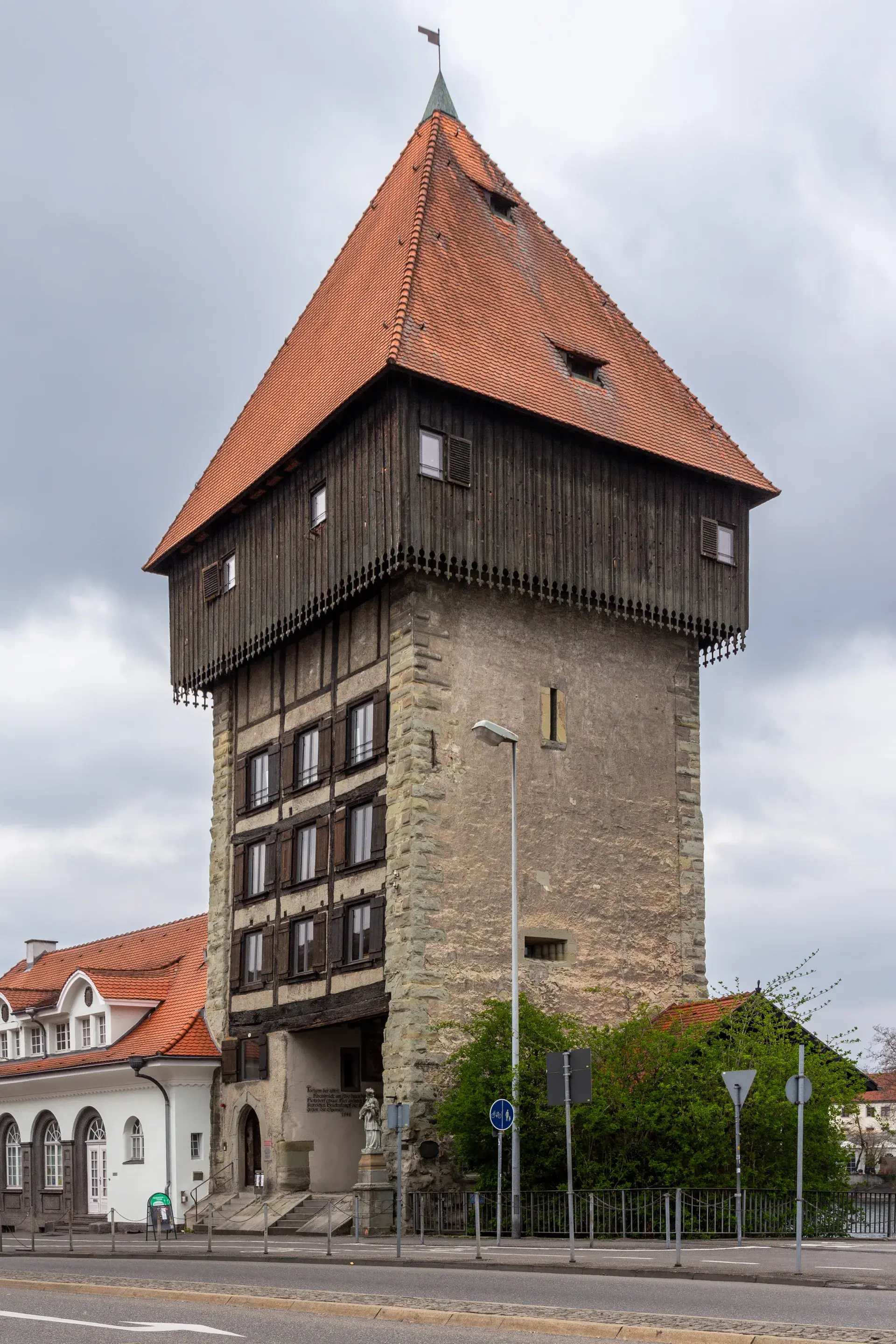
Guarding "Rhine Kilometer 0", this 13th-century tower once controlled the sole bridge connecting the German interior to Italy. The historic Rheintorturm along the Rhine stands as an imposing medieval tower that once guarded the city's river crossing.
A Medieval Guardian of the Rhine
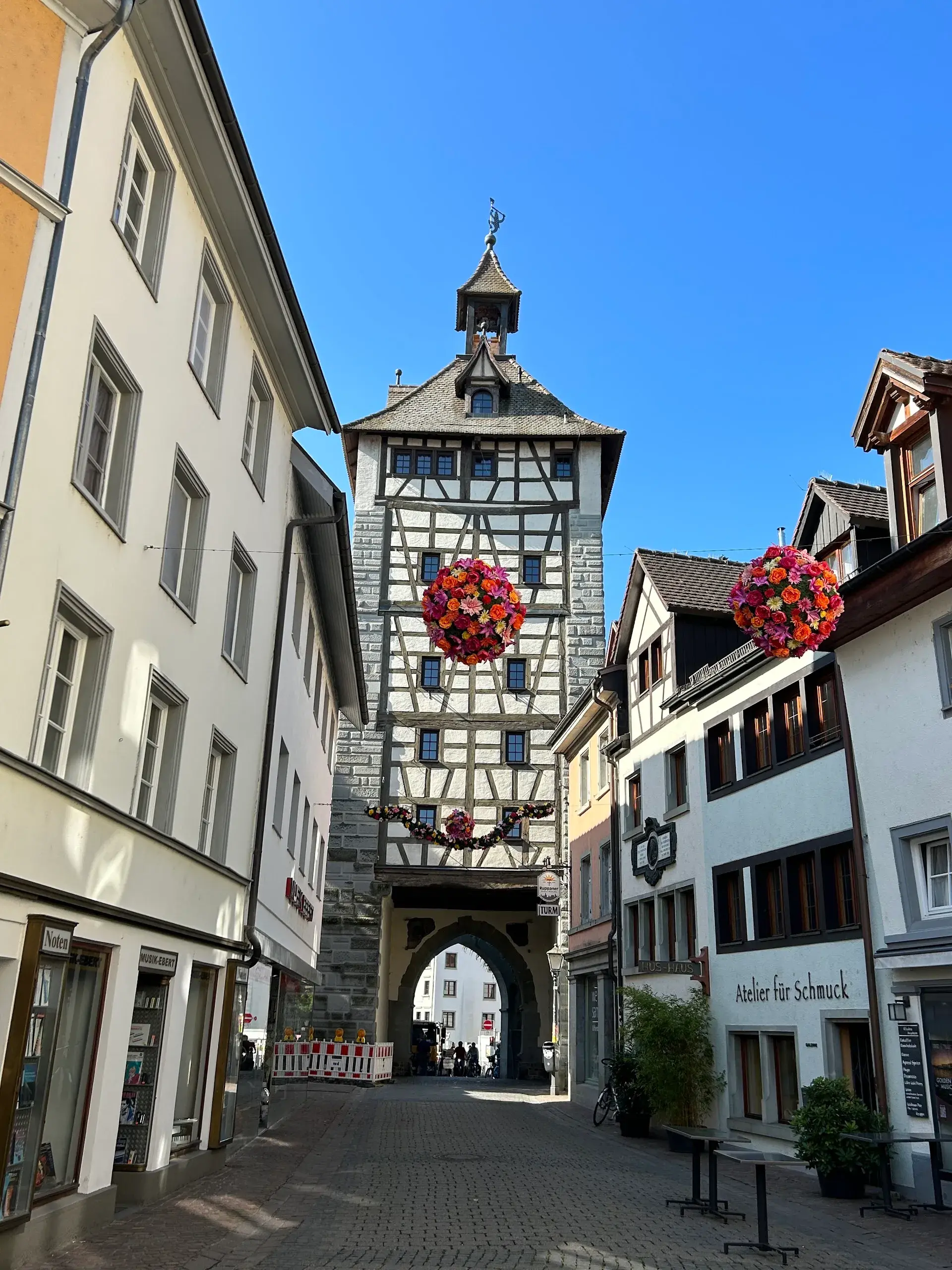
Originally erected around 1200 during the Hohenstaufen era and reinforced around 1360, the Rheintorturm was historically known as the Petershausener Tor. It is one of only three surviving towers from Konstanz's original medieval ring wall, alongside the Schnetztor and Pulverturm. Standing 30 to 35 meters tall with a 9 by 9 meter footprint, the structure rests on pile foundations and Rorschach sandstone. Its architecture is characterized by heavy stone masonry, an arched ground-level gateway passage, and late-medieval stepped gables.
Trade, Tolls, and Sieges
For centuries, the tower controlled the region's sole bridge across the Rhine, channeling international commerce between Swabia and Italy. The original wooden bridge led directly through the gate's arched passage, allowing Konstanz to easily levy transit tolls on goods and travelers. To further control the passage, iron chains could be stretched across the river to block ship traffic.
The tower also served as a vital military and political asset. Holy Roman Emperor Frederick II passed through this gate during his visits to the city. On August 6, 1548, local citizens used the fortification to successfully repel an assault by the Spanish mercenary forces of Emperor Charles V.
Near Destruction and Unique Adaptations
The structure suffered severe damage during the Coalition Wars against France between 1796 and 1801. By 1861, municipal plans to demolish the tower were drafted, but the structure was saved by a civic intervention led by city councilor Ludwig Leiner and archivist Johann Marmor. Seventeen years later, in 1878, the city council drafted a surprising proposal to gut the medieval tower and install a high-capacity elevated water cistern, though this plan was eventually abandoned.
Following World War II, the French military administration ordered the tower converted into an autonomous youth club. Deeming the available furnishings insufficient, the French governor requisitioned furniture directly from private local residences to outfit the interior rooms.
The Fasnachtsmuseum Today
Maintained by the civic association Initiative Rheintorturm e. V., the tower now houses the Konstanzer Fasnachtsmuseum. Opened in 2008, the museum displays carved wooden masks, costumes, and the historical traditions of local Swabian-Alemannic carnival guilds.
Inside, 134 internal wooden steps climb through the thick, rough sandstone walls, leading up to 35 meters above the river waterline. The museum and historic tower rooms operate for public visits, cultural gatherings, and heritage tours seasonally on weekends from April to October.
FAQ
When was the Rheintorturm built?
The Rheintorturm was originally erected around 1200 during the Hohenstaufen era and was later reinforced in the 14th century, around 1360.
What is inside the Rheintorturm today?
Today, the tower houses the Konstanzer Fasnachtsmuseum, which opened in 2008. It displays carved wooden masks, costumes, and traditions of local Swabian-Alemannic carnival guilds.
What is the significance of the Rheintorturm's location?
The tower historically controlled the only bridge across the Rhine connecting Swabia to Italy. It also stands at the exact geographical point where Lake Constance narrows into the river Seerhein, formally designated as "Rhine Kilometer 0".