Altes Rathaus Lindau: History and Facade Murals
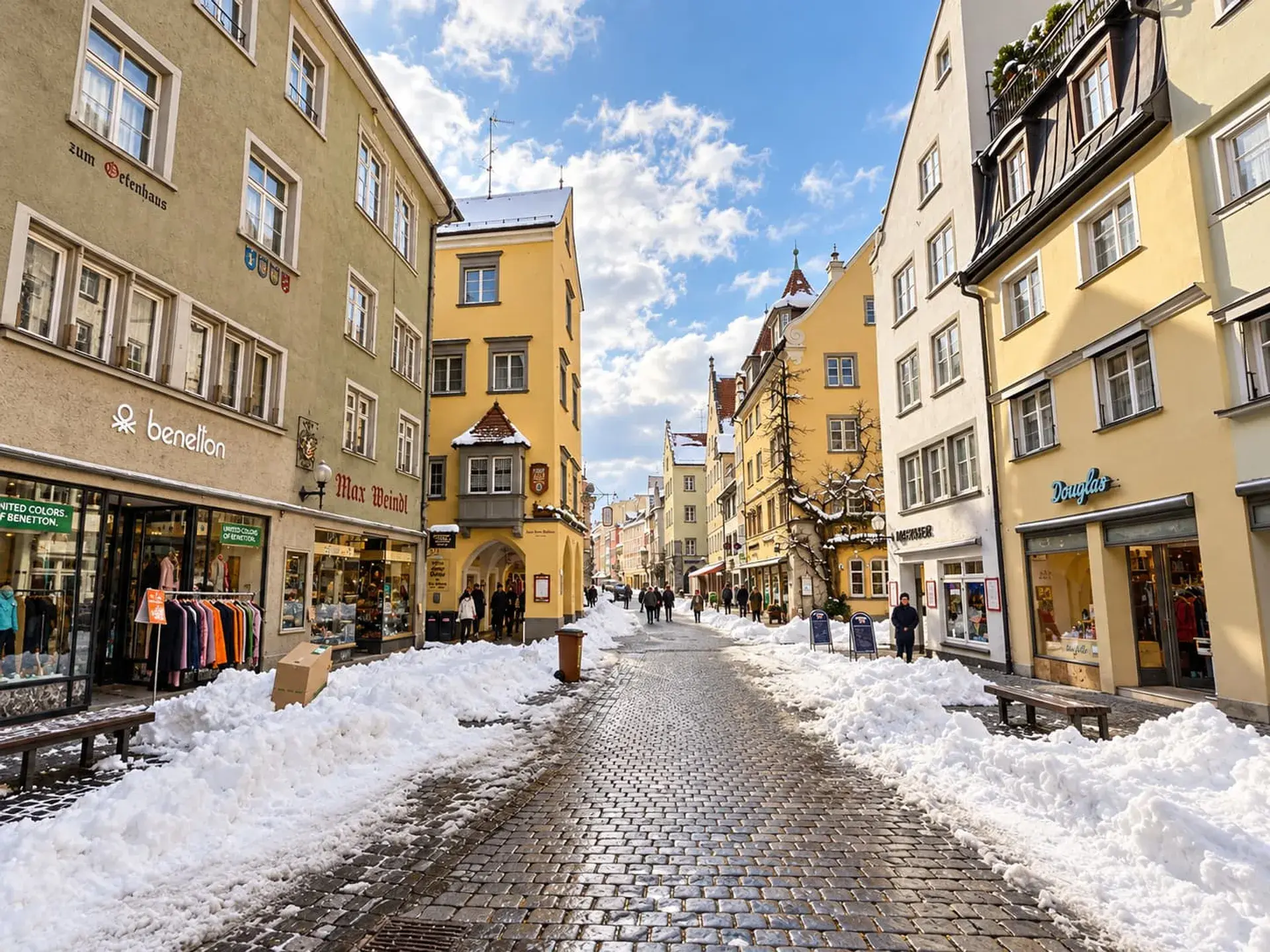
The Altes Rathaus (Old Town Hall) is one of the most recognizable architectural landmarks on the island of Lindau. Positioned along the pedestrian thoroughfare of Maximilianstraße between Bismarckplatz and Reichsplatz, the building forms a visual and civic link between the island's primary commercial street and the squares leading toward the harbor.
Alongside the Bavarian Lion and lighthouse at the port, the Old Town Hall stands as a primary monument to Lindau’s historical status as an autonomous Imperial Free City.
Origins and the 1496 Imperial Diet
Construction began in 1422 and concluded in 1436, creating a Gothic town hall intended to display Lindau's civic sovereignty in defiance of regional nobility. The wood-panelled council chamber (Ratssaal) gained empire-wide significance in 1496 when King Maximilian I summoned the Imperial Diet (Reichstag) of the Holy Roman Empire to convene within its walls.
Although King Maximilian called the assembly, he was engaged in warfare in Italy and never attended the sessions in person. Instead, his son, Philip the Handsome, presided over the council in his absence.
Architectural Evolution and Storybook Facades
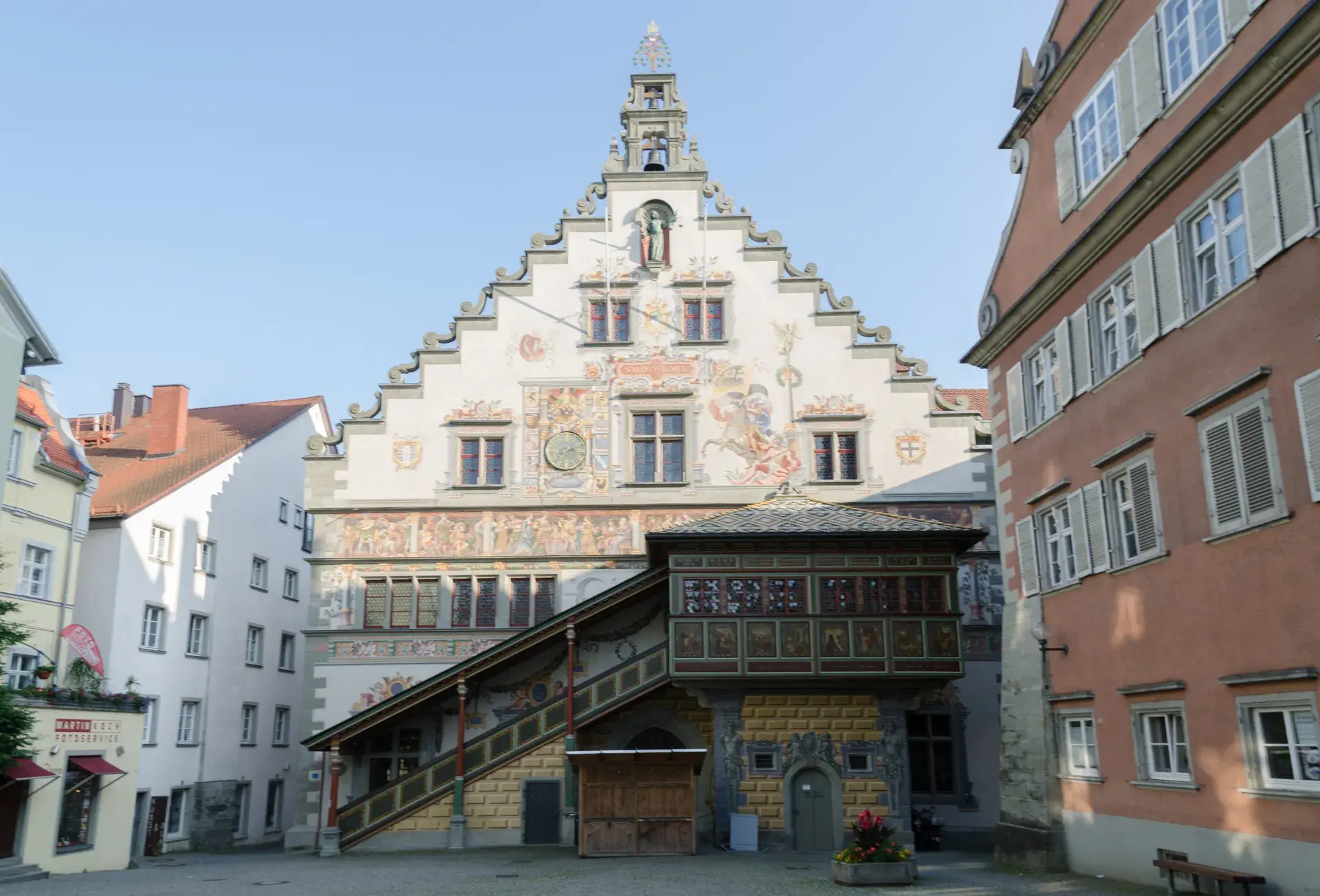
The town hall's appearance reflects several centuries of stylistic updates. In 1576, the upper structure was remodeled with Renaissance stepped gables, and bells cast in 1617 were later installed along the roofline.
Between 1885 and 1887, Munich architect Friedrich von Thiersch oversaw a major historicist restoration of the exterior. This project produced the vibrant narrative fresco cycles that cover the building. Restored between 1972 and 1975, the murals depict episodes from Lindau's municipal history, scenes from the 1496 Imperial Diet, and allegories of justice and piety.
The exterior features distinct elements across its two main facades:
- North Facade (Bismarckplatz): Defined by a covered, projecting wooden staircase that leads to a proclamation bay window (Verkünder-Erker). Above it sits a clock decorated with local patrician coats of arms, stepped gables, and a sculpted linden tree.
- South Facade (Reichsplatz): Marked by extensive historical fresco cycles, an astronomical sundial, and stepped Renaissance gables.
The Verkünder-Erker on the wooden staircase served as the official platform where town magistrates announced new statutes, decrees, and judicial rulings to the populace. Painted panels illustrating the Ten Commandments adorn the bay, serving as a reminder of moral law to presiding officials.
The 1930 Mural Controversy
Not all decorative additions to the facade were met with immediate approval. In 1930, artist Wilhelm Nida-Rümelin painted a series of new scenes on the building, including a Totentanz (Dance of Death).
The depiction of an allegorical skeleton embracing a nude young woman ignited a public controversy. The conservative Bavarian People's Party protested the artwork and campaigned for its immediate removal, creating a notable municipal scandal during the interwar era.
The Imperial City Library and Modern Civic Use
While Lindau’s routine administrative operations have moved to offices on the mainland, the Altes Rathaus remains central to civic life. The historic wood-panelled chambers on the upper floors host city council meetings, official municipal receptions, committee sessions, and civil weddings. Because these rooms remain active civic venues, they are closed to daily walk-in tourists and can generally be accessed only via guided heritage tours.
The ground floor, which originally served as a covered market hall, houses the Former Imperial City Library (Ehemals Reichsstädtische Bibliothek). Founded in 1538 during the Reformation, this collection preserves more than 13,000 historical volumes, including over 140 incunabula (books printed before 1501) and an original, complete 1534 Luther Bible. The library functions as an exhibition room open on seasonal visiting schedules.
FAQ
Can the public tour the inside of the Altes Rathaus?
The historic upper-floor council chambers are closed to regular walk-in visitors and are accessible primarily through guided heritage tours. The ground-floor Former Imperial City Library operates as an exhibition space open on a seasonal schedule.
What historical event took place at the Altes Rathaus in 1496?
In 1496, King Maximilian I convened the Imperial Diet of the Holy Roman Empire in the wood-panelled council chamber. However, because Maximilian was fighting in Italy, his son Philip the Handsome presided over the sessions.
What is the Former Imperial City Library housed inside the building?
Located in the ground-floor former market hall, the library was established in 1538 during the Reformation. It preserves over 13,000 rare volumes, including more than 140 incunabula and a complete 1534 Luther Bible.
Why was the 1930 mural addition controversial?
Artist Wilhelm Nida-Rümelin added a Dance of Death (Totentanz) scene in 1930 that featured a skeleton embracing a nude woman. The imagery sparked public outrage and led the Bavarian People's Party to demand its removal.