Diebsturm Lindau: Medieval Watchtower and Prison
A Sentinel on Lindau's Heights
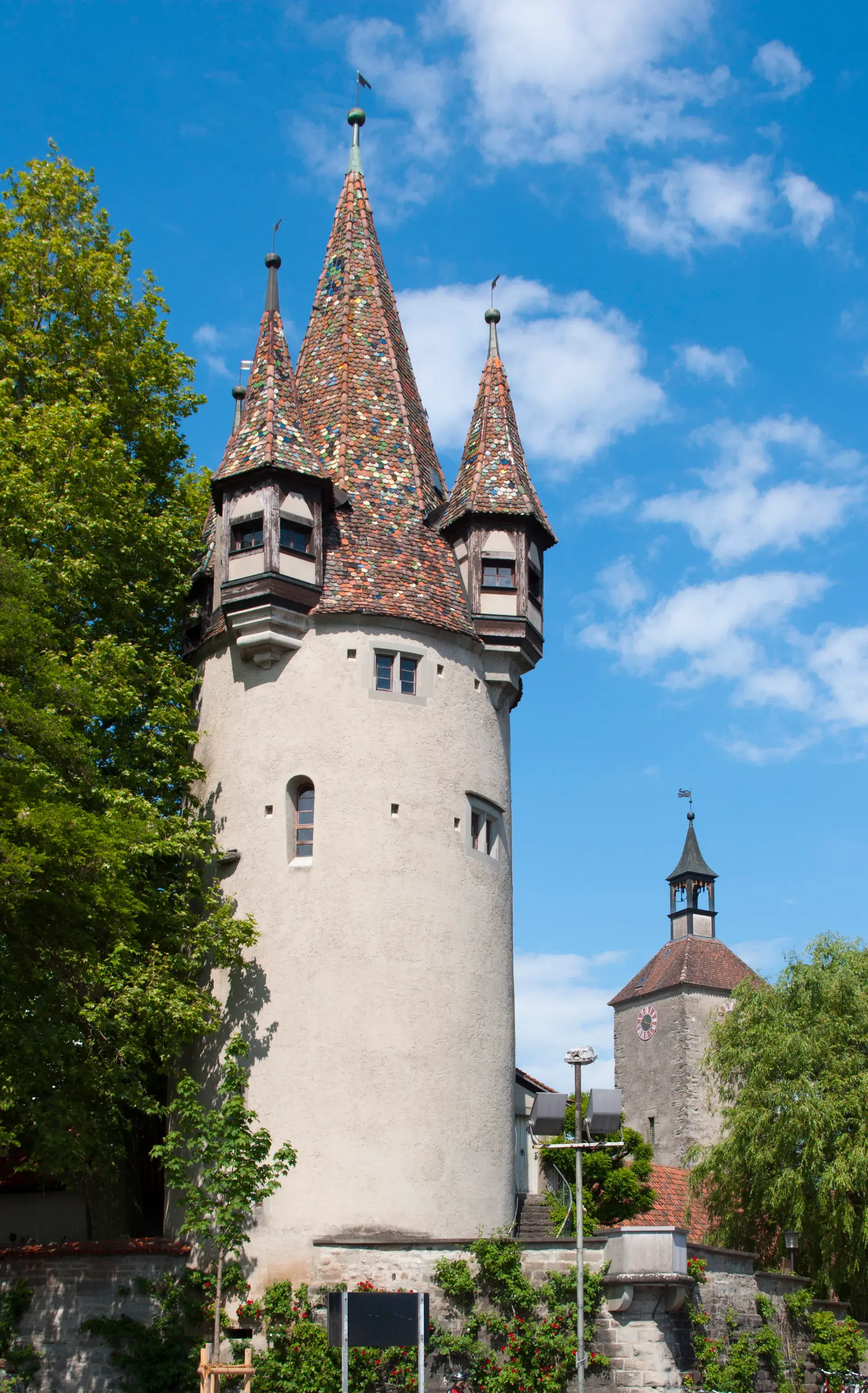
Standing beside Peterskirche at Oberer Schrannenplatz, the Diebsturm occupies the highest natural elevation on Lindau's historic island. Built around 1370–1380 (documented as c. 1350–1380 in Bavarian heritage records), this four-story round stone tower measures roughly 35 meters in height and approximately 8 meters in diameter.
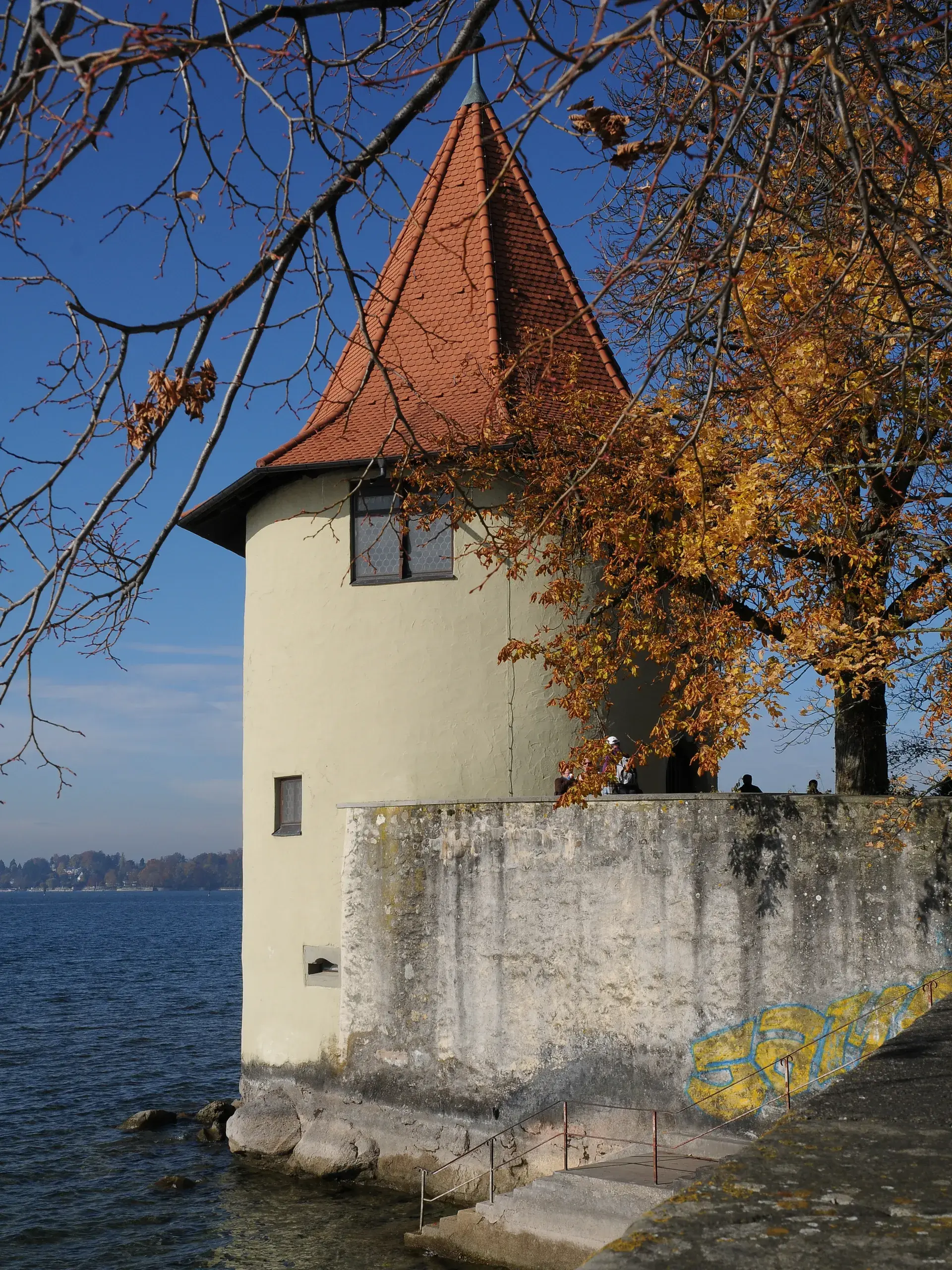
The structure originally functioned as an essential defensive watchpost marking the westernmost point of Lindau's medieval ring wall. Together with the harbor's Mangturm and the Pulverturm, the Diebsturm remains one of the few surviving fortified towers from the island's medieval and early-modern defenses.
From Watchtower to Municipal Prison
Over the centuries, the defensive sentinel was adapted into a municipal lockup. It held debtors, petty thieves, and criminal suspects awaiting trial, a repurposing that cemented its common name—Diebsturm, or "Thieves' Tower." In official records, it was also referred to as the Malefizturm (referencing severe criminal jurisdiction) and the Stadtknechtsturm (town bailiff's tower).
Local tradition preserves a play on words regarding the building's dual nature: while guards posted high at the top enjoyed the finest vantage point (Aussicht) over Lake Constance, prisoners held in the cells below were expected to attain moral insight and repentance (Einsicht).
Distinctive Architectural Features
The silhouette of the Diebsturm is defined by the contrast between its stark, heavy stone drum and its ornate upper reaches. Crowning the stone structure is a steep octagonal spire flanked by four protruding half-timbered oriels. These roof alcoves were deliberately positioned to face the four cardinal directions—north, south, east, and west—offering former guards an uninterrupted panoramic view across the lake and island approaches.
A comprehensive restoration in 2013 revitalized this upper profile. The project replaced approximately 300 square meters of roof tiles with historic hand-glazed replicas across 14 distinct color hues, while restoring the framing of the corner turrets in traditional blood-red pigment.
Salvation from Demolition and Present State
Following the loss of Lindau's imperial city status in the early 19th century, the island began dismantling its obsolete medieval ring walls. Slated for demolition alongside neighboring fortifications, the Diebsturm was narrowly preserved in 1817 when master mason Johann Jacob Götzger purchased the tower for 250 Gulden.
Today, the Diebsturm forms a quiet historic ensemble on Oberer Schrannenplatz with the neighboring Peterskirche, the old armory (Zeughaus), and the historic bell foundry. While the interior is closed to the general public, the tower remains a striking exterior architectural monument and photo subject on the island.
FAQ
Can the public tour the interior of the Diebsturm?
No, the interior of the tower is closed to the general public. It functions as an exterior landmark and architectural monument.
How did the Diebsturm survive 19th-century demolition?
When Lindau dismantled its city fortifications in the early 1800s, master mason Johann Jacob Götzger bought the tower in 1817 for 250 Gulden, sparing it from destruction.
Why are the corner turrets aligned to the cardinal directions?
The four half-timbered oriels face precisely north, south, east, and west, which provided medieval watchmen with an unobstructed panoramic view across Lake Constance and approaching paths.