Pulverturm Lindau: History & Lake Constance Views
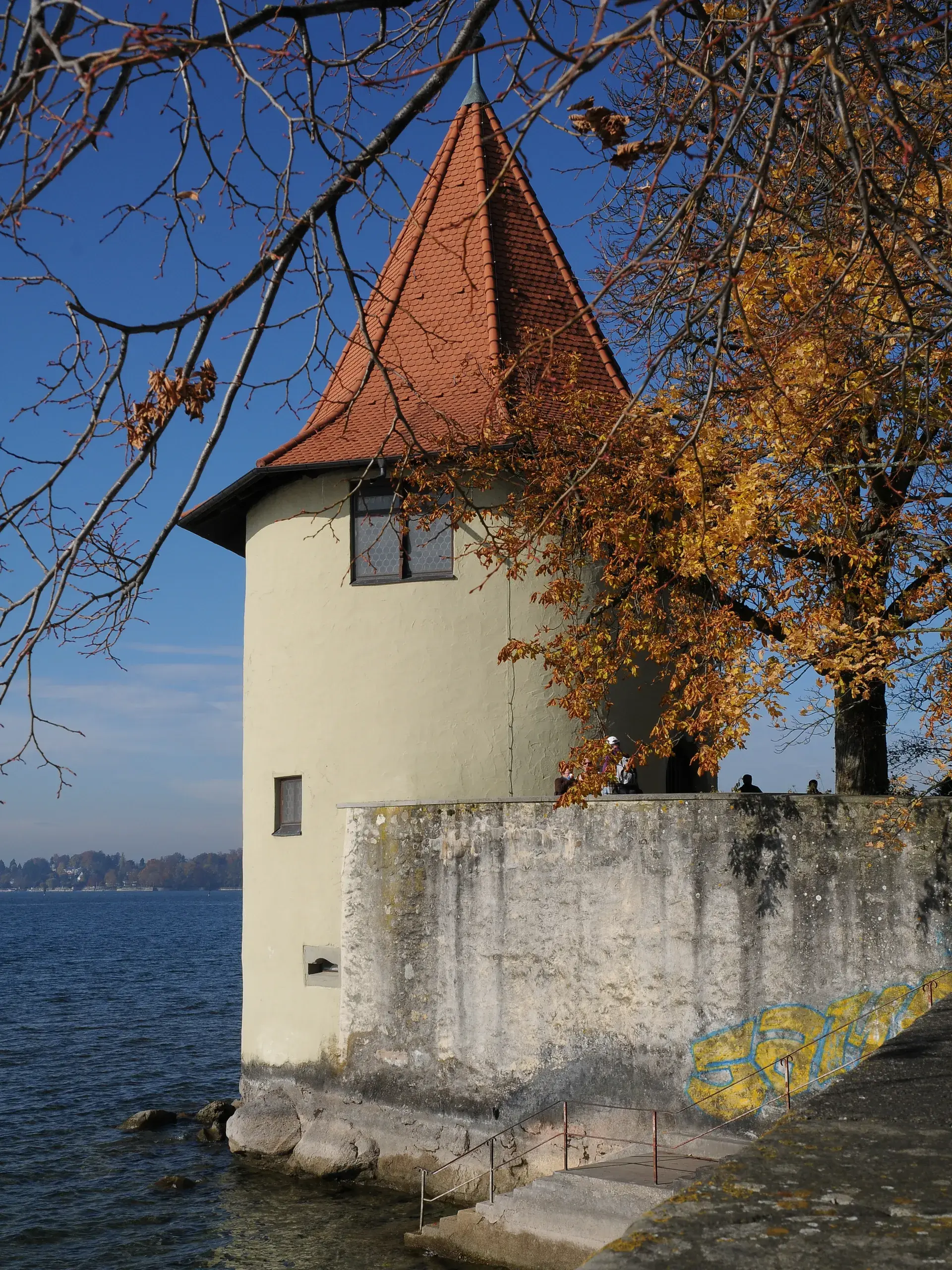
Standing at the western tip of Lindau Island on Lake Constance, the Pulverturm is a circular stone fortification tower anchoring the historic perimeter of the Hintere Insel. Unlike the densely built medieval town core and harbor to the east, this stretch of shoreline integrates defensive heritage into an open park setting. The tower features masonry walls approximately two meters thick, capped by a low conical tent roof, and rests along the waterfront path exposed to the lake breeze.
Defensive Architecture and Wartime Adaptation
The Pulverturm was constructed in 1508 following the Swabian War of 1499 to guard the island's outer perimeter, which then consisted of fields, vineyards, and a cemetery. Built with sturdy stone walls to withstand assault, the tower underwent a critical defensive modification in 1629. In anticipation of military conflict, defenders deliberately lowered the peaked roof by two meters, intentionally reducing its silhouette to prevent Swedish artillery batteries from using it as an easy target. This adjustment proved successful, allowing the fortification to survive the Swedish siege of 1646 to 1647 without sustaining damage.
From Gunpowder Storage to Private Residence
Toward the end of the 18th century, Lindau's civic guard repurposed the building as a gunpowder magazine, giving the structure its enduring name. After centuries of military service, the tower underwent an extensive transformation between 1897 and 1898 under Lindau Mayor Heinrich Schützinger. Collaborating with architect Friedrich von Thiersch, Schützinger remodeled the interior into a private summer residence while preserving the original exterior stone masonry.
A painted inscription on the woodwork in the upper chamber commemorates this peaceful transition: "Aus einer Warte gegen den Feindesüberfall ist eine Stätte heiterer Geselligkeit geworden" ("From a watchpost against enemy assault, it has become a place of cheerful conviviality"). Between 1898 and 1919, the mayor hosted more than 2,000 prominent guests at the tower, recording visits from notable figures such as airship designer Count Ferdinand von Zeppelin and Nobel laureate Paul Heyse in a personal Golden Book.
Post-War History and Modern Operation
Following World War II, French military forces occupied the Pulverturm in 1945 before returning custody to the town in the spring of 1952. The municipal utility, Stadtwerke Lindau, acquired the property in 1969, leading to a comprehensive restoration of the historic structure in 1988.
Today, the building is operated by Lindau Tourismus und Kongress GmbH. Across its three interior levels, the tower houses basement facilities, a ground-floor reception area, and an upper wood-finished event hall illuminated by narrow embrasure windows. While the tower does not operate as a drop-in museum, its exterior remains a focal point along the shoreline trail, and the interior serves as a venue for private gatherings, seminars, occasional storytelling events, open days, and civil wedding ceremonies coordinated with the municipal registry office.
FAQ
Why was the roof of the Pulverturm shortened in 1629?
Defenders intentionally removed two meters from the roof's height in 1629 to reduce the tower's visibility and deny Swedish artillery batteries an easy point of aim.
Can visitors access the interior of the Pulverturm?
The Pulverturm does not operate as a regular walk-in museum. The interior is accessible for booked private events, civil weddings, designated open days, and occasional public storytelling gatherings, while the exterior is visible from the lakeside path.
How did the tower receive the name Pulverturm?
The fortification became known as the Pulverturm (Powder Tower) in the late 18th century when Lindau's civic guard repurposed it as a gunpowder storage facility.