Haus Cavazzen: Lindau's Baroque Masterpiece
A High-Baroque Landmark on the Marktplatz
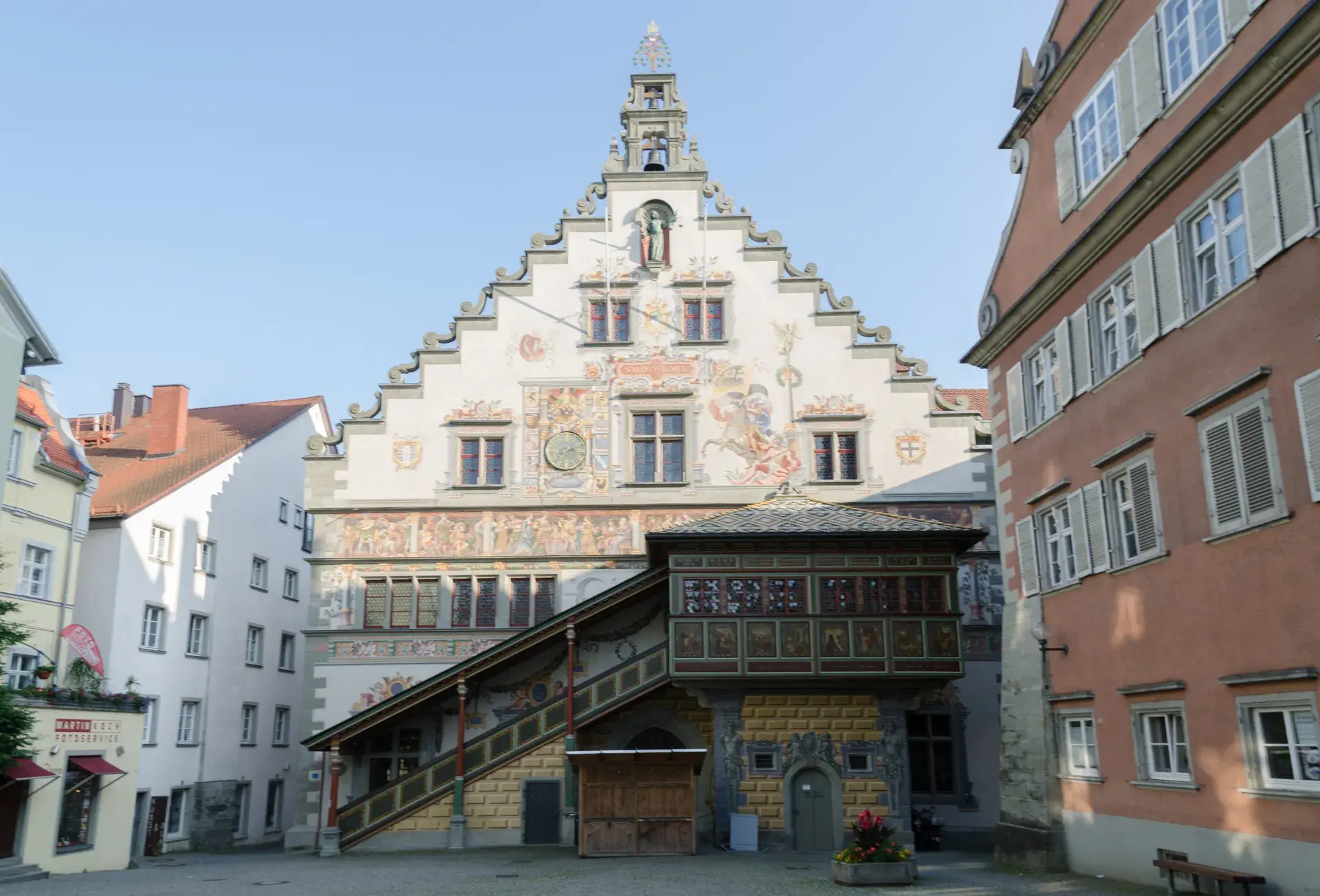
Haus zum Cavazzen stands prominently on the northern edge of the historic Marktplatz on the island of Lindau (Bodensee). Situated directly opposite the Catholic cathedral of Unserer Lieben Frau and the Protestant church of St. Stephan, this high-Baroque patrician townhouse anchors the market square along the corridor linking the island harbor to Maximilianstraße. Renowned art historian Georg Dehio once described it as one of the most beautiful Baroque townhouses in the Lake Constance region.
Origins and the Seutter von Loetzen Legacy
The property traces its name back to the de Kawatz family, merchants hailing from Lombardy who inhabited a building on the plot in the 16th century. Following a devastating city fire, the present palace was constructed between 1728/1729 and 1730 for the affluent patrician and merchant family Seutter von Loetzen. Serving as both a luxurious family residence and a bustling commercial hub, the mansion remained under the stewardship of the Seutter von Loetzen family across five generations as they directed regional and transalpine trade.
In 1929, local industrialists Ludwig and Lydia Kick purchased the estate and undertook its restoration. They subsequently transferred the property into a municipal foundation, allowing the building to open as Lindau's municipal museum in July 1930.
Grubenmann’s Pioneering Timber Engineering
The palace was designed by Swiss master builder Jakob Grubenmann from Appenzell. Celebrated primarily for his revolutionary timber bridges, Grubenmann translated his structural expertise into domestic architecture. Crowned by a curved mansard hipped roof, the building's upper roof truss rises nearly 11 meters high.
Remarkably, the massive roof truss is entirely column-free. By employing an intricate system of suspended beams adapted from bridge-building practices, Grubenmann achieved an open interior span decades ahead of contemporary residential carpentry.
Trompe-l’Œil Facades and Rediscovered Frescoes
The exterior of Haus Cavazzen is renowned for its elaborate trompe-l'œil facade paintings. Rendered onto flat plaster, the murals simulate stone pilasters, ornamental scrollwork, lions, and allegorical figures. Because Lindau's municipal building records from the era were lost, the exact master painter behind these vivid illusions remains unconfirmed.
Interior artistry was further highlighted during recent conservation efforts. Restorers working on the building uncovered original Baroque ceiling murals and decorative gilding that had been hidden beneath old layers of whitewash for generations.
Restoration and the Modern Museum Lindau
Facing structural issues caused by severe subsidence, moisture damage, and truss decay, the landmark closed in 2018 for a comprehensive six-year overhaul. In May 2025, the restored building reopened as the modernized Cavazzen – Museum Lindau.
The municipal museum features interactive exhibitions exploring Lindau's history across spaces ranging from the exposed roof framework down to the historic vaulted cellar. Displays highlight significant historical milestones, including the Lindauer Bote—a courier and transport service between Lindau and Milan dating back to the 15th century, which once ferried Johann Wolfgang von Goethe. Alongside rotating art exhibitions and cultural events, the building also houses an inner courtyard café named Il Cavazzo.
FAQ
Why is the building called Haus Cavazzen?
The name comes from the de Kawatz family, Lombard merchants who owned and lived in an earlier building located on the site during the 16th century.
What makes the architecture of Haus Cavazzen unique?
Swiss master builder Jakob Grubenmann applied advanced timber bridge engineering to the residence, resulting in an 11-meter-high upper roof truss that is entirely column-free and supported by suspended beams.
What is the current function of Haus Cavazzen?
After reopening in May 2025, the building houses the modernized Cavazzen – Museum Lindau, featuring interactive city history exhibits, rotating art displays, cultural events, and an inner courtyard café called Il Cavazzo.