Hexenturm: Marburg's Historic Witch's Tower
A Bastion Half-Buried in History
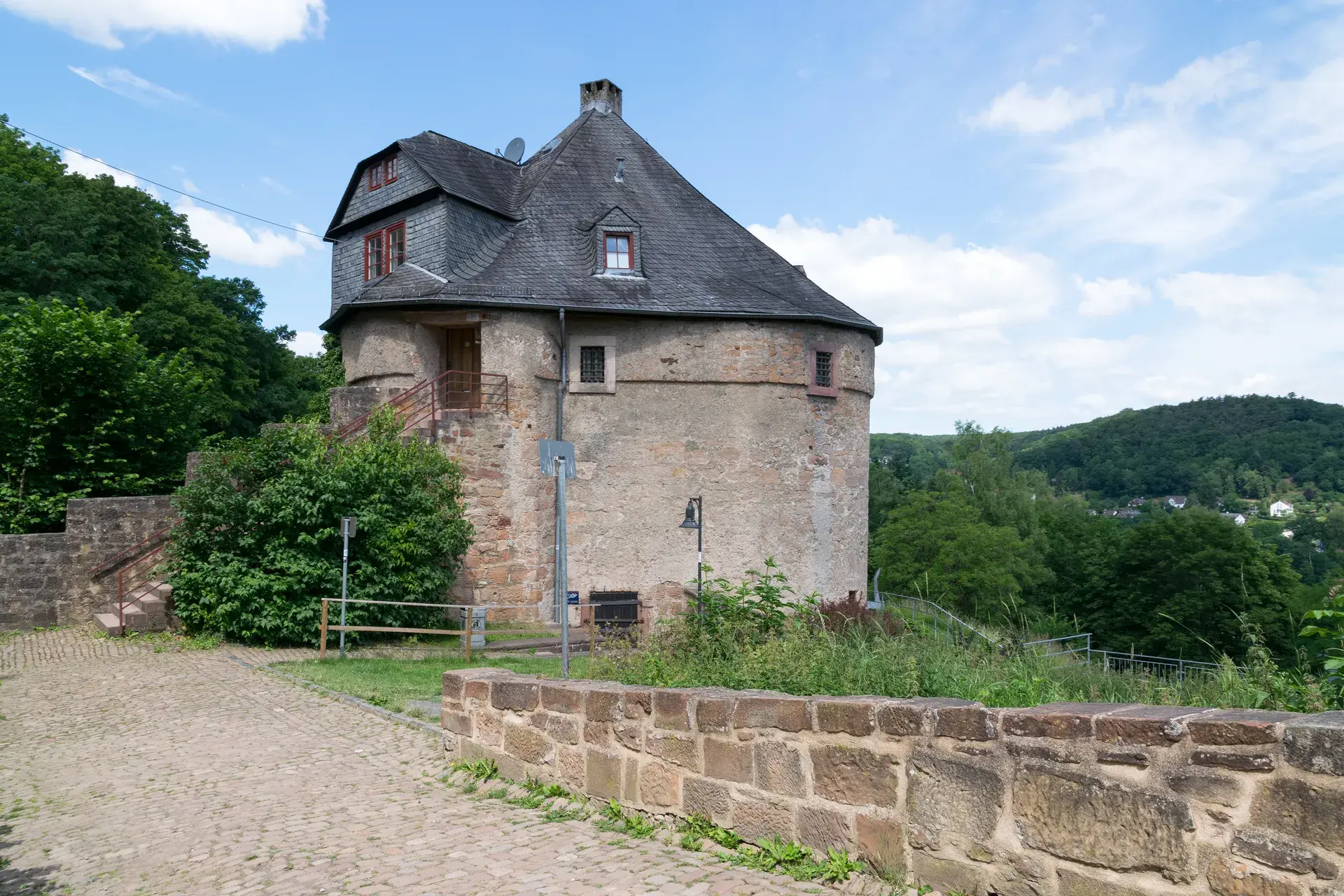
Half of this medieval tower was deliberately buried under earth in the 17th century. Originally constructed as a four-storey artillery bastion in 1478, the Hexenturm stands today as a rare freestanding remnant of Marburg's late-medieval defensive perimeter. Designed by master builder Hans Jakob von Ettlingen, the structure was initially known as the Weißer Turm. Its original purpose was to secure the Landgrafenschloss moat and protect the castle's northwestern flank.
In 1621, fortification engineer Wilhelm Dilich modernized the city's ramparts. During this process, he buried the lower two storeys of the tower in earth fill, concealing a massive portion of the original medieval structure beneath the ground. The tower later survived Napoleon's 1807 orders to demolish the surrounding Marburg fortress.
From Artillery Tower to Municipal Prison
Between 1550 and 1565, the defensive bastion underwent a dark transformation into a prison, a function it maintained until 1866. The structure features massive, weathered quarry-stone masonry up to four meters thick, pierced only by small, dark, iron-barred cell windows.
During the witch trials of the 16th and 17th centuries, the tower earned its modern namesake. Individuals accused of witchcraft awaited trial within its twelve cold confinement cells. Historical records document cases such as Katharina Staudinger, who was held in the tower in 1656 prior to her execution.
Myths and Modern Exploration
Despite popular local lore designating it primarily as a witch's dungeon, archival records prove the Hexenturm served as a general territorial and municipal prison for all types of criminals over its three centuries of operation.
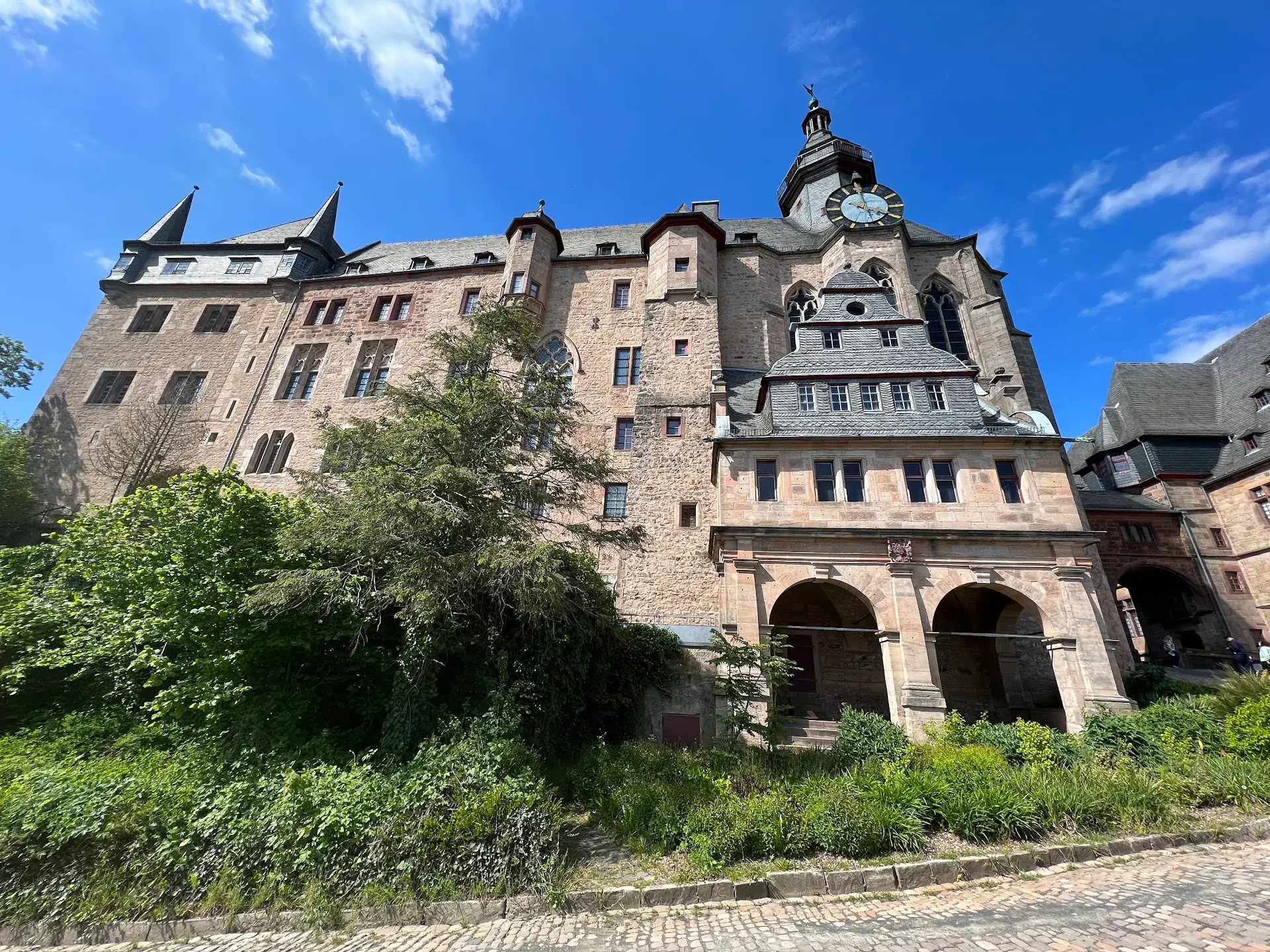
Today, the Hexenturm serves as a preserved historical monument situated along the pedestrian path near the Schlosspark. It remains an anchor point for thematic walks regarding Marburg's local history. An exterior stone staircase leads up to the tower's entrance, providing a panoramic vantage point that looks back across the northwestern walls of the Landgrafenschloss and down into the valley. A distinctive roof turret, which crowns the structure today, was added in 1885.
FAQ
When was the Hexenturm in Marburg built?
The Hexenturm was built in 1478 by master builder Hans Jakob von Ettlingen. It originally served as an artillery bastion known as the Weißer Turm to protect the Landgrafenschloss moat.
Why is it called the Witch's Tower?
During the 16th and 17th centuries, the tower's twelve cold cells were used to hold individuals accused of witchcraft, including Katharina Staudinger in 1656. However, archival records show it also served as a general municipal prison for all criminals until 1866.
Why is part of the Hexenturm underground?
In 1621, fortification engineer Wilhelm Dilich modernized Marburg's ramparts. During these modifications, the lower two storeys of the original four-storey medieval tower were deliberately buried under earth fill.